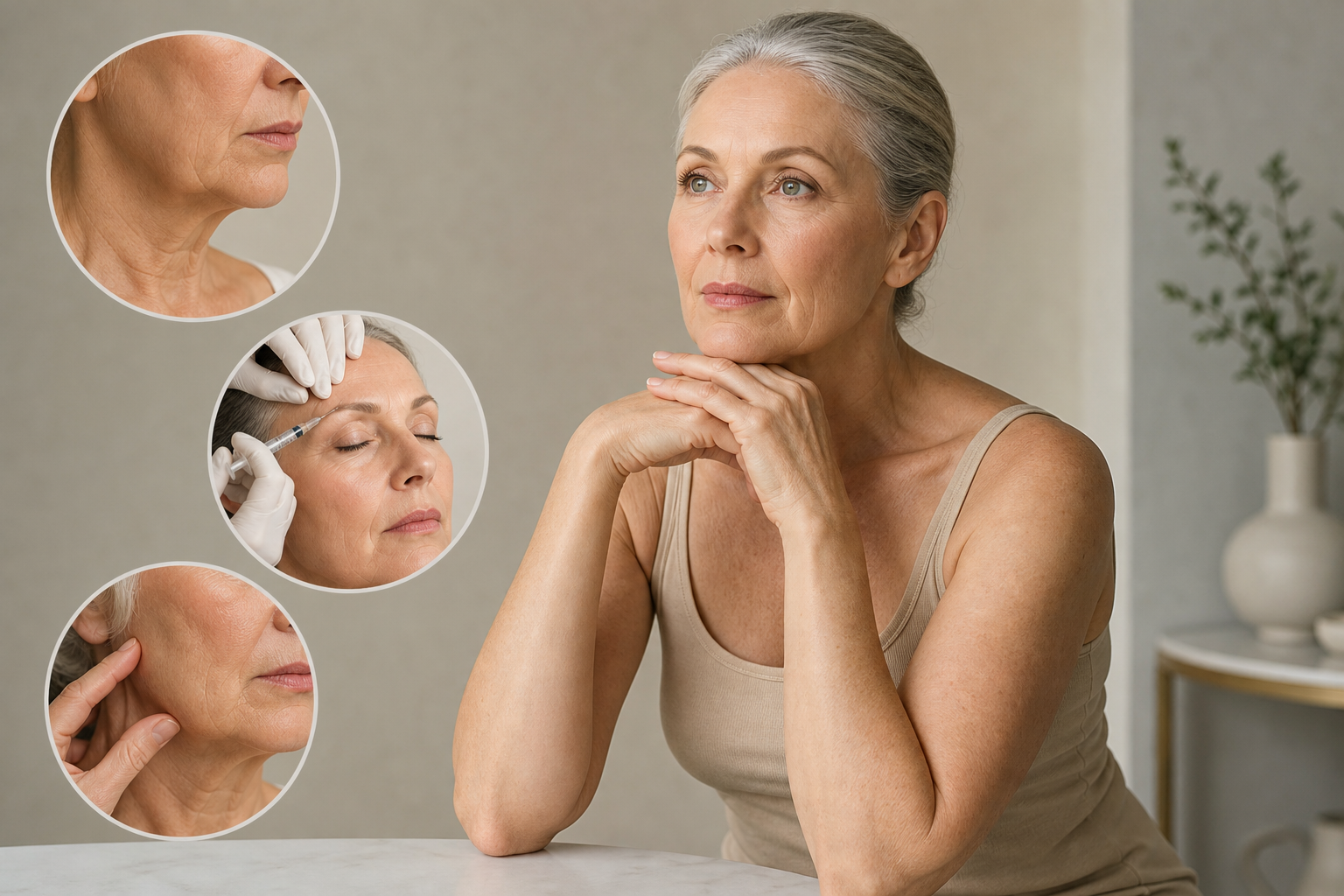
Sagging skin is a common concern that accompanies the natural aging process, often prompting individuals to seek solutions that restore a youthful facial appearance. Among the many cosmetic interventions available, Botox has emerged as a widely popular and trusted treatment for reducing wrinkles and rejuvenating the face. However, despite its efficacy in certain aspects of facial aging, Botox has distinct limitations when it comes to addressing sagging skin.
This article delves deeply into the relationship between sagging skin and Botox, aiming to clarify what Botox can and cannot achieve concerning skin laxity. It is intended for individuals considering cosmetic treatments to manage signs of aging, as well as for professionals in the aesthetic medicine field seeking a refined understanding of treatment scopes. By exploring the biological mechanisms of Botox, the nature of sagging skin, and realistic treatment expectations, this editorial provides a balanced perspective on how Botox fits into modern anti-aging protocols.
The knowledge of Botox’s limitations is crucial for anyone looking to refresh their appearance effectively without unrealistic hopes or unnecessary interventions. Grasping these nuances empowers patients and practitioners alike to pursue tailored strategies that combine the best of non-invasive and invasive options to address the multifactorial challenges posed by aging skin.
The Biological Mechanics of Botox in Facial Rejuvenation
Botox, or botulinum toxin type A, is a neurotoxin that works by temporarily blocking the transmission of nerve impulses to muscles. When injected into targeted facial muscles, it induces a relaxation effect by inhibiting muscular contraction. This mechanism primarily benefits the treatment of dynamic wrinkles, which are fine lines and creases formed through repetitive movements of facial musculature such as frowning, squinting, or smiling.
Dynamic wrinkles commonly appear in areas like the forehead, glabella (the area between the eyebrows), and periorbital region (crow’s feet). By reducing muscle activity in these regions, Botox smooths the surface appearance of these expression lines, thereby diminishing their prominence.
It is essential to distinguish dynamic wrinkles from static wrinkles. Static wrinkles are those that exist even when the face is at rest, often due to deeper skin changes such as collagen degradation, loss of elasticity, and diminished subcutaneous volume. While Botox’s muscle-relaxing effect can indirectly slow the progression of static wrinkles by reducing mechanical stress, it does not directly alter the underlying skin architecture or volume loss that contribute to sagging.
Understanding Sagging Skin: Structural Changes Behind Skin Laxity
Sagging skin is characterized by a loss of firmness and elasticity, resulting in drooping or lax appearance, particularly in the lower face, jawline, neck, and cheeks. This condition arises from a cascade of physiological changes associated with aging, including the decline in collagen and elastin production, depletion of hyaluronic acid, and redistribution or loss of subcutaneous fat. These biological shifts alter the skin's support and tensile strength, contributing to wrinkles, folds, and a drooping effect.
External factors accelerate these processes. Chronic sun exposure leads to photoaging, which damages collagen fibers and exacerbates skin sagging. Lifestyle choices such as smoking, poor nutrition, and inadequate skincare further deplete skin integrity. Genetic predispositions also determine the rate and extent of skin laxity for each individual.
Unlike dynamic wrinkles, sagging results not from the movement of muscles but from structural soft tissue changes and gravity’s cumulative effect. Therefore, addressing it requires interventions focused on tissue lifting, volume restoration, and skin tightening rather than muscle relaxation alone.
The Scope and Constraints of Botox for Wrinkle Reduction
Botox excels at managing wrinkles caused by facial expressions due to its ability to modulate muscle activity. Patients typically observe significant improvement in frown lines, forehead creases, and crow’s feet following treatment. The procedure’s minimally invasive nature, rapid administration, and relatively low risk profile also contribute to its widespread acceptance.
Moreover, repeated Botox treatments can serve a preventive function by limiting the habitual muscle contractions responsible for wrinkle formation, potentially delaying the deepening of lines over time. This makes it attractive as an early intervention in anti-aging facial care.
However, Botox does not restore volume lost beneath the skin nor does it enhance skin elasticity. It cannot counteract the gravitational descent of tissues or tighten loose dermal layers. As such, patients expecting Botox to "lift" sagging cheeks or jawlines, or to eliminate the appearance of jowls or loose neck skin, will likely be disappointed.
This distinction is vital: Botox targets the cause of dynamic lines — muscle movement — but sagging skin stems from volumetric loss, collagen degradation, and tissue laxity that Botox does not address.
Multimodal Approaches to Managing Sagging Skin Alongside Botox
Recognizing the limitations of Botox in treating skin laxity, aesthetic medicine increasingly embraces a comprehensive approach that combines treatments. Dermal fillers, often based on hyaluronic acid or other biocompatible substances, replenish lost volume in areas such as the cheeks, temples, and under-eye hollows, providing structural support that combats sagging.
Additionally, energy-based therapies like radiofrequency, ultrasound, and laser treatments stimulate collagen production, promoting firmer and more resilient skin. These techniques complement the wrinkle-reducing effects of Botox by improving texture and skin tone.
For patients with advanced skin laxity, surgical options such as facelifts or neck lifts remain the gold standard, offering more dramatic and long-lasting lifting effects. Integrating Botox with surgical or non-surgical lifting procedures can optimize aesthetic outcomes by harmonizing muscle relaxation with anatomical restoration.
An individualized treatment plan developed after a thorough assessment ensures that Botox is utilized effectively as part of a broader strategy rather than a stand-alone solution for sagging skin.
The Imperative of Professional Consultation and Safe Application
While Botox is generally safe when administered by qualified professionals, its success hinges on precise application tailored to each patient’s facial anatomy and aging pattern. Overuse or incorrect injection sites can cause undesirable effects, including asymmetry, drooping eyelids, or unnatural facial expressions.
Consultations with licensed dermatologists, plastic surgeons, or trained aesthetic practitioners are essential to determine candidacy, discuss realistic expectations, and design a personalized treatment pathway. Such evaluations also screen for contraindications like neuromuscular disorders or allergies that may preclude Botox use.
Safety considerations extend beyond the procedure itself. Patients must adhere to pre- and post-treatment guidelines and maintain open communication with their provider to promptly address any side effects or concerns.
Realistic Outcomes: Managing Expectations with Botox Regarding Sagging Skin
Understanding what Botox can realistically achieve is fundamental for satisfaction with results. When addressing sagging skin, Botox should be viewed as a treatment that improves certain wrinkles associated with muscle movement and can indirectly contribute to a fresher overall appearance by smoothing expression lines.
It does not directly tighten skin or reverse loss of facial volume, so expectations must be calibrated accordingly. Many patients find that combining Botox with other modalities yields a synergistic effect that enhances both skin texture and facial contours.
Clear communication between patients and clinicians about limitations, timelines, and maintenance schedules helps foster trust and optimizes therapeutic success.
The Future Landscape of Botox in Comprehensive Anti-Aging Treatments
Advancements in aesthetic medicine continually expand the potential uses of Botox. Emerging formulations with modified dosing and delivery techniques promise longer-lasting effects and more targeted applications. Research into combining Botox with biostimulatory agents or regenerative therapies may further improve outcomes related to skin quality and sagging.
Personalized medicine approaches, incorporating genetic and lifestyle factors, are evolving to guide more precise treatment planning. This holistic view will likely integrate Botox not only for wrinkle reduction but also as a component of regenerative strategies that address skin laxity within multifaceted protocols.
Ultimately, Botox remains a key pillar in facial rejuvenation, but its role must be balanced with complementary technologies to fully meet the complex needs presented by sagging skin in aging faces.


