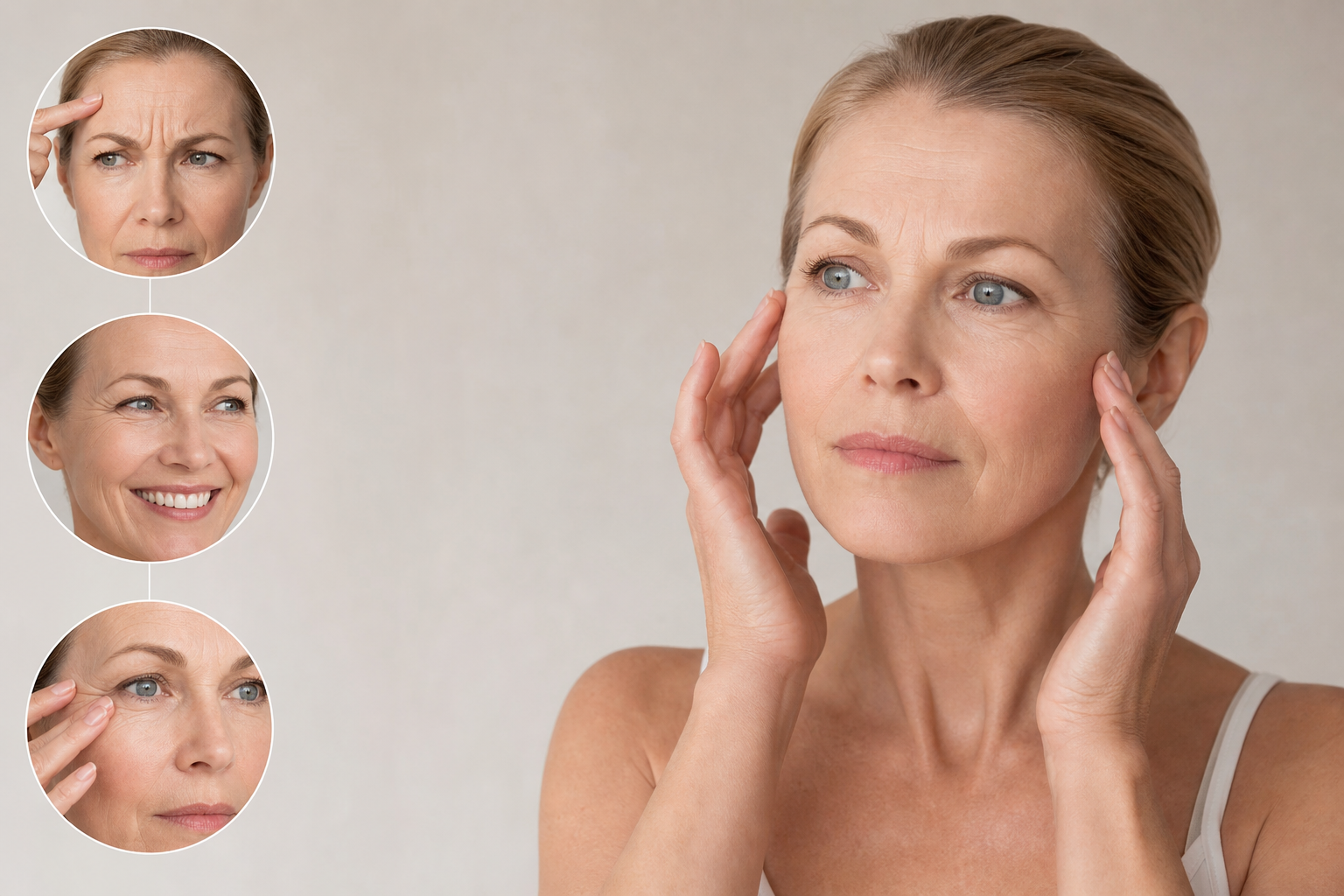
Facial expression lines are among the most recognizable signs of aging, often prompting individuals to seek out effective treatments to maintain a youthful appearance. Unlike wrinkles caused solely by the passage of time, these lines specifically arise from the active movements of facial muscles—manifesting through expressions such as laughter, frowning, or surprise. Understanding the mechanisms underlying the formation of these expression lines is crucial for selecting the most appropriate interventions, particularly when considering treatments like Botox, which play a prominent role in managing these changes.
This article offers an in-depth examination of the biological processes responsible for facial expression lines, highlighting their interaction with skin aging and the role Botox plays in their treatment. It is intended for anyone experiencing the onset of these lines and seeking expert guidance on preventive and corrective options. Emphasis is placed on clarifying realistic expectations from Botox therapy, outlining its limitations, and underscoring the importance of consulting a qualified specialist to tailor an individualized treatment plan.
By appreciating the complexity of facial expression lines and their interplay with skin physiology, readers can make informed decisions about aging interventions and recognize Botox's appropriate place within the broader spectrum of facial rejuvenation strategies.
The Biological Basis of Facial Expression Lines
Facial expression lines, often referred to in clinical terms as dynamic wrinkles, develop as a direct result of repeated muscle contractions beneath the skin. Each facial expression—whether a joyful smile, a furrowed brow, or raised eyebrows—engages specific muscle groups that tug on the overlying skin, creating temporary folds or creases. Over time, with repeated activation, these temporary lines can become etched into the skin's surface, gradually transitioning from transient to permanent features.
The most commonly affected areas include the periocular region (commonly known as "crow's feet"), the glabellar area between the eyebrows, the forehead, and areas surrounding the mouth. These dynamic wrinkles contrast with static wrinkles, which remain visible even at rest and are largely influenced by factors such as skin volume loss, sagging, and reduced elasticity due to intrinsic aging and environmental factors.
This distinction matters clinically because dynamic wrinkles respond differently to treatments compared to static wrinkles. Dynamic lines are primarily muscle-driven, making them particularly amenable to therapies that modulate muscle activity, such as Botox injections.
Skin Structure and Changes That Influence Wrinkle Formation
To understand how facial expression lines become permanent, it is essential to grasp the fundamental architecture of the skin and how it changes with age. The skin comprises three primary layers: the epidermis (outer layer), dermis (middle layer), and subcutaneous tissue (fat layer beneath). The dermis houses collagen and elastin—fibrous proteins responsible for skin strength and elasticity.
As we age, collagen and elastin production diminishes, weakening the skin’s structural framework. Concurrently, the skin’s ability to retain moisture decreases due to reductions in natural oils and hyaluronic acid, leading to dryness and decreased suppleness. These physiological alterations render the skin less capable of rebounding after repeated muscle-induced creasing, causing fleeting expression lines to deepen into lasting wrinkles.
Extrinsic aging factors, such as ultraviolet (UV) radiation exposure, tobacco use, poor nutrition, and genetic predisposition, exacerbate these structural declines. Accumulation of photodamage disrupts collagen fibers and promotes inflammation, accelerating wrinkle formation particularly in sun-exposed areas.
Therefore, addressing expression lines requires a comprehensive understanding that goes beyond muscle activity to include the skin’s compromised ability to tolerate mechanical stresses caused by facial movements.
Mechanism of Botox and Its Role in Treating Expression Lines
Botox, or botulinum toxin type A, is a neurotoxin that temporarily inhibits nerve signals responsible for muscle contraction. When strategically injected into specific facial muscles associated with dynamic wrinkles, Botox reduces their activity, leading to muscle relaxation. This diminished contraction smooths the overlying skin and diminishes the appearance of expression lines.
The action of Botox is highly targeted; it does not treat wrinkles caused by skin laxity or volume loss but is especially effective for lines that form due to repetitive muscle movements. By preventing excessive muscle engagement, Botox can also serve a preventive function by halting the deepening of existing lines during facial expressions.
It is important to emphasize that Botox's utility is primarily for dynamic wrinkles. Static wrinkles, which arise independently of muscle contractions, generally require alternative or adjunctive treatments such as dermal fillers, skin resurfacing, or volumizing procedures to restore lost tissue and improve skin texture.
As such, accurate diagnosis of the wrinkle type by a trained professional is paramount in deciding whether Botox is an appropriate intervention and designing a treatment plan that aligns with the patient's unique skin condition and aesthetic goals.
Setting Realistic Expectations for Botox Treatment
Understanding what Botox can and cannot achieve is essential for patient satisfaction. Post-injection, visible improvements in expression lines typically manifest within three to seven days, reaching peak effect within two weeks. The wrinkle reduction results persist on average four to six months before neuromuscular function gradually returns, necessitating repeat injections to sustain outcomes.
Factors such as individual metabolism, muscle mass, lifestyle, and injection technique influence the duration and quality of the results. Some patients may experience longer-lasting effects, while others may require more frequent treatments. Importantly, Botox does not halt the overall aging process and is not a curative measure for all kinds of wrinkles.
Patients with established static wrinkles or those with skin damaged by sun exposure should be counseled regarding the limitations of Botox alone. A multimodal approach, possibly combining Botox with fillers or skin rejuvenation therapies, often yields more comprehensive rejuvenation.
Clear communication between the patient and the clinician ensures that expectations are aligned with achievable results, minimizing disappointment and enhancing treatment satisfaction.
Safety Considerations and the Importance of Professional Consultation
When administered by qualified and experienced clinicians, Botox is considered a safe treatment with a well-established risk profile. Common side effects are typically mild and transient, including localized redness, swelling, bruising, or discomfort at the injection site.
More serious adverse events—such as asymmetry, drooping eyelids (ptosis), or muscle weakness beyond the targeted area—are rare and usually related to improper injection technique or dosing. Therefore, the selection of a practitioner with a comprehensive understanding of facial anatomy and tailored treatment protocols is crucial.
Pre-treatment consultation should include a thorough medical history assessment to identify contraindications like neuromuscular disorders, allergies to components of the toxin, or current medication use that may increase risks. Patients should also be briefed on aftercare measures to optimize results and reduce complications.
Ultimately, consulting a board-certified dermatologist or plastic surgeon specializing in cosmetic procedures ensures that Botox treatment is safe, efficacious, and suited to the individual’s needs.


