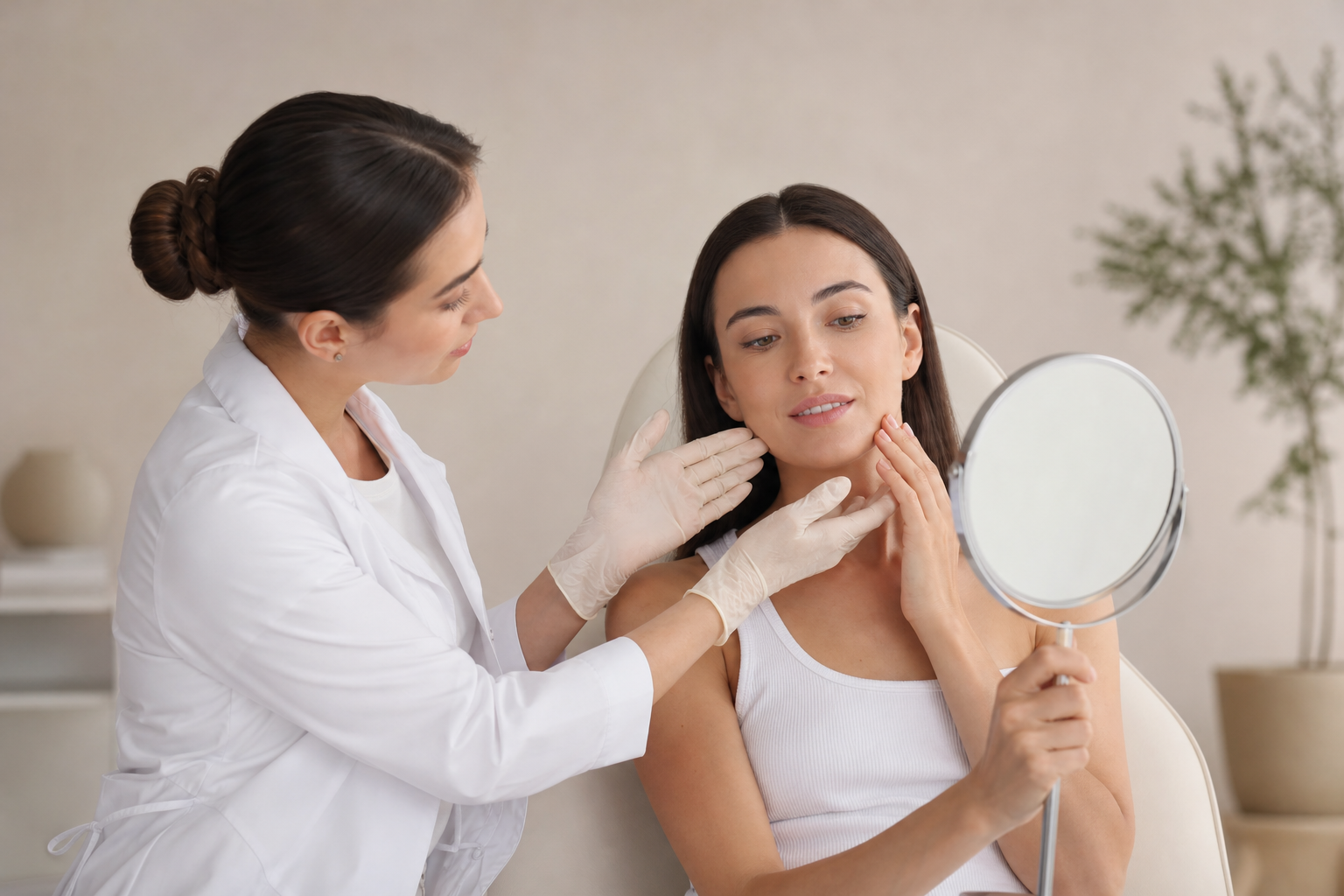
Smile asymmetry is a subtle yet impactful facial concern that goes beyond mere aesthetics. It influences how individuals perceive themselves and how others interpret their expressions in social interactions. For many, an uneven smile – where one side of the mouth lifts higher, gums are unevenly exposed, or muscle tone differs – can be a source of self-consciousness. In the realm of modern aesthetic medicine, particularly under the umbrella of minimally invasive procedures, botulinum toxin (Botox) has emerged as a pivotal tool for addressing smile asymmetry, especially when caused by uneven muscle activity around the nose and lips.
This topic holds paramount importance not only for individuals considering cosmetic correction but also for clinicians specializing in facial aesthetics and dermatology. A precise and insightful evaluation prior to any intervention significantly dictates the safety, effectiveness, and satisfaction with the outcome. Given that the smile results from a complex orchestration of facial muscles, understanding the underlying mechanisms, appropriate treatment options, realistic expectations, and safety measures is critical when considering Botox as a corrective modality for smile asymmetry.
Before embarking on treatment, it is essential to grasp what smile asymmetry entails, who is most affected, and why proper assessment is an indispensable step in the therapeutic journey. This editorial aims to carefully dissect these facets within the context of Botox applications targeted to the nose, lips, and smile lines, providing a comprehensive guide that balances expert insight with practical considerations.
The Intricate Muscular Dynamics Behind Smile Asymmetry
The human smile is more than a simple movement; it is the outcome of an intricate interplay among multiple facial muscles activated in harmony. Key players include the levator labii superioris, zygomaticus major and minor, mentalis, and orbicularis oris muscles. These muscles collaboratively orchestrate the elevation and shaping of the upper lip, the upward pull of the mouth corners, and the positioning of the nose during smiling.
Smile asymmetry develops when there is an imbalance in the activity or strength of these muscles on either side of the face. This imbalance might stem from congenital factors, nerve imbalances, muscular hyperactivity or hypotonia, previous trauma, or even dental and skeletal anomalies. For instance, the gummy smile—a condition marked by excessive gum exposure during smiling—is frequently attributed to hyperfunction of the levator labii superioris or muscles elevating the nasal tip, leading to disproportionate lifting of the upper lip.
Botox exerts its effect by temporarily reducing the overactive muscle contractions responsible for these imbalances, thus restoring a more symmetrical and aesthetically pleasing smile. However, because facial expressions involve a complex matrix of muscles and nerve pathways, no single treatment formula applies universally. Each case of smile asymmetry harbors unique characteristics requiring tailored assessment and intervention strategies.
Essential Considerations in Pre-Treatment Assessment of Smile Asymmetry
A thorough and methodical pre-treatment evaluation underpins successful correction of smile asymmetry. This process begins with a detailed clinical examination in both static (resting face) and dynamic (smiling, speaking, other facial movements) states. Capturing photographic and video documentation aids in assessing the degree of asymmetry and monitoring treatment progress.
Equally vital is an open dialogue between the practitioner and patient to establish realistic goals and align expectations. Understanding the patient’s aesthetic desires, psychological drivers, and knowledge of the limitations of Botox provides a foundation for mutual agreement on the treatment plan.
Medical history screening is indispensable—identifying contraindications such as neuromuscular disorders, allergies, prior facial surgeries, or recent cosmetic procedures influences both safety and treatment efficacy. Additionally, the practitioner must evaluate anatomical nuances like differences in bone structure, presence of scars, or tissue abnormalities that may require adjustment in technique or combination therapies.
This comprehensive assessment ensures that Botox administration targets the precise muscles causing asymmetry without compromising surrounding functional or aesthetic structures.
Botox as a Precision Tool for Addressing Smile Asymmetry
Botox treatment, when appropriately applied, serves as a precision instrument to modulate hyperactive or imbalanced facial muscles, creating a harmonious smile contour. By selectively weakening the overactive muscles such as the levator labii superioris or depressor anguli oris, the practitioner creates symmetry with their counterparts on the opposite side.
For gummy smiles, Botox injections into the levator muscles decrease the elevation of the upper lip and nasal tip, reducing excessive gum exposure without altering the natural expressiveness of the smile. Similarly, adjusting the tension of muscles around the mouth corners can correct uneven lip elevation, straightening the smile line and enhancing facial balance.
It is important to appreciate that Botox’s effects are temporary, typically lasting between four to six months. Regular maintenance treatments may be necessary for sustained results. Moreover, Botox addresses muscle-driven asymmetry and is not a solution for asymmetry caused by skeletal or dental discrepancies.
Realistic Expectations and Limitations in Treating Smile Asymmetry with Botox
Setting realistic expectations is a cornerstone of patient satisfaction. Botox can significantly improve the aesthetic balance of the smile by smoothing muscular disparities, but it does not alter bone structure, tooth positioning, or permanent soft tissue changes. Patients should understand that while Botox may reduce certain aspects of asymmetry and rejuvenate their smile’s appearance, it cannot produce dramatic structural corrections or permanent results.
Another limitation lies in the potential for subtleties in muscle interplay that may require multiple sessions or adjunctive treatments for optimal symmetry. Overcorrection or undercorrection risks must be carefully managed through conservative dosing and close follow-up to avoid unnatural expressions or functional impairment.
Moreover, inherent facial asymmetries exist naturally in all humans, and absolute perfect symmetry is often neither feasible nor necessary for a beautiful, natural smile.
Safety Protocols and the Importance of Specialist Consultation
The safety profile of Botox is robust when administered by qualified practitioners with expertise in facial anatomy and aesthetic procedures. The delicate musculature involved in smile dynamics demands precise injection technique to prevent adverse effects such as drooping lip, impaired speech or eating, and unintended muscle weakness.
Prior to treatment, obtaining informed consent that thoroughly discusses potential risks, benefits, and alternatives reinforces patient trust and compliance. Patients exhibiting neuromuscular illnesses or those on medications influencing neuromuscular transmission require additional caution or may be contraindicated.
Complex or severe smile asymmetries warrant interdisciplinary evaluation involving dermatologists, plastic surgeons, and dental or maxillofacial specialists to devise a comprehensive management plan that may extend beyond Botox alone.
Ultimately, selecting a practitioner with demonstrated knowledge in Botox applications for the nose, lips, and smile lines ensures the highest safety and quality of care.
Integrating Botox Treatments for Nose, Lips, and Smile Lines to Achieve Facial Harmony
The smile’s aesthetic harmony extends past the lips and includes the nose and surrounding facial areas. Botox treatments targeting nasal wrinkles, the nasal tip, and perioral muscles complement smile asymmetry correction by refining overall facial balance.
Addressing nasal lines (sometimes called elevens or bunny lines) softens the upper facial region, drawing attention to a youthful, natural smile. Modulating the muscle lifts at the nasal tip can prevent an exaggerated elevation when smiling, contributing to symmetry with the lower face.
Furthermore, combining Botox for smile lines and mild perioral wrinkles revitalizes the lower face texture and contour synergistically. This integrated approach maximizes aesthetic outcomes without resorting to invasive procedures, offering patients a refreshed and balanced expression.
Ultimately, the holistic treatment of smile asymmetry with Botox involves appreciating the interconnections among facial muscle groups, tailoring interventions to individual anatomy, and focusing on safe, subtle corrections that enhance natural beauty.


