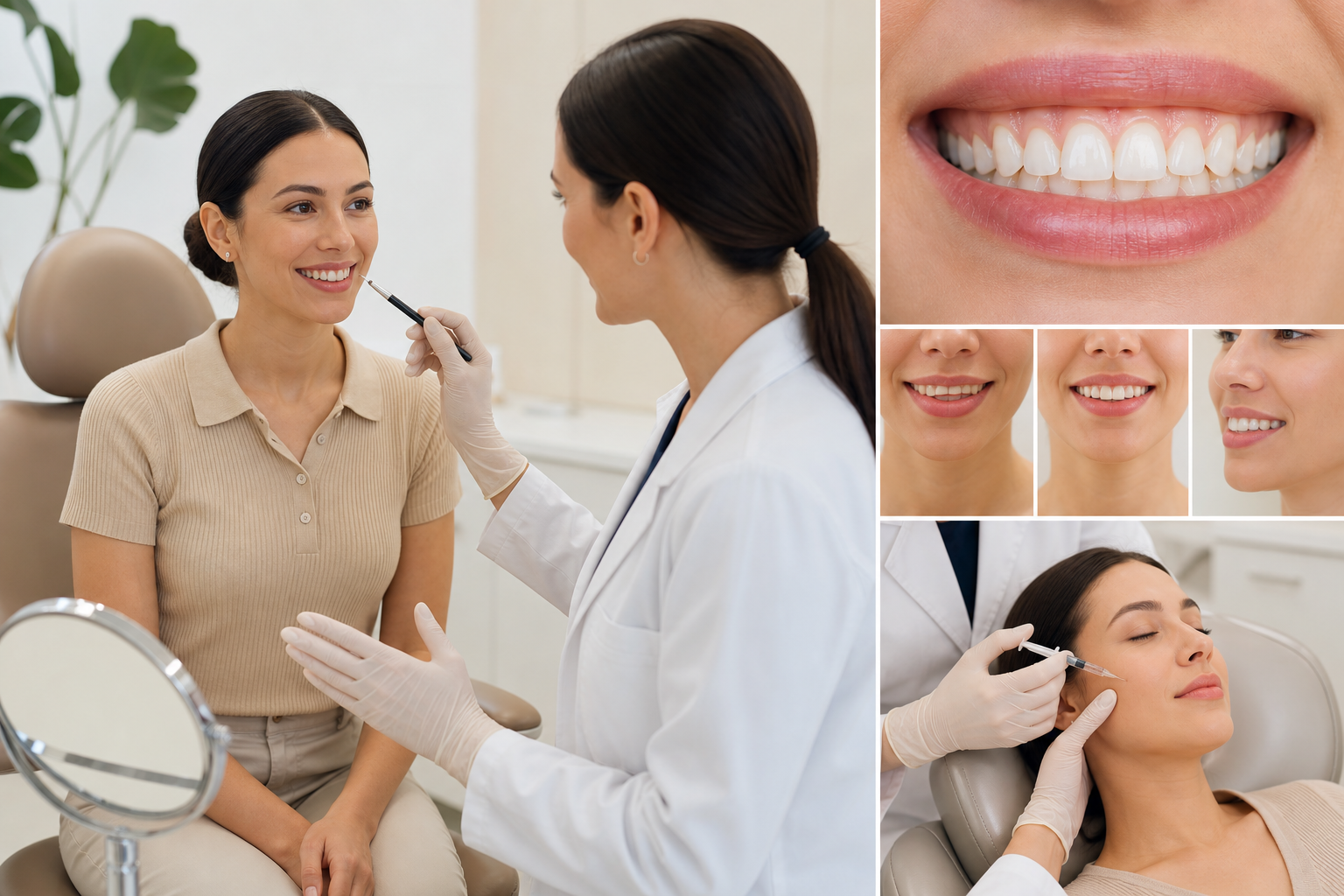
The phenomenon of a gummy smile, characterized by an excessive display of gum tissue during smiling, is a nuanced aesthetic concern that affects many individuals worldwide. It is not merely a cosmetic issue; for those impacted, a gummy smile can influence self-esteem, social interactions, and overall facial harmony. Understanding the different causes of a gummy smile is crucial since the nature and origin of the condition dictate the most suitable and effective treatment approach. Particularly in the realm of modern aesthetic medicine, where minimally invasive procedures like botox injections gain prominence, precise diagnosis is essential to ensure safety, efficacy, and natural-looking results.
This editorial is crafted for individuals seeking a comprehensive insight into gummy smiles—their underlying causes, diagnostic challenges, and the spectrum of available treatments, especially focusing on the role of botox as a corrective measure. The objective is to demystify why treatment varies significantly among patients and how a tailored approach serves as the cornerstone for patient satisfaction and long-term success.
In the intersecting spheres of cosmetic dentistry, maxillofacial orthopedics, and aesthetic medicine, gummy smile treatment embodies complexity demanding multidisciplinary evaluation. The article explores how various factors such as anatomic structure, muscle dynamics, and neuromuscular coordination interact to manifest the gummy smile. It further elucidates the mechanism of botox therapy within this framework, highlighting its benefits, limits, and the paramount importance of specialist consultation.
Diverse Origins Behind the Gummy Smile and Their Clinical Significance
The term “gummy smile” broadly describes an excessive gum show when smiling but is not a uniform condition. Identifying the precise cause from multiple potential factors underpins effective treatment planning. The etiology of gummy smiles can be segmented mainly into anatomical variations, functional muscular patterns, and neuromuscular imbalances.
Anatomically, individuals may naturally have a short upper lip, increased gum tissue volume, hyperactive maxillary growth patterns, or altered dentoalveolar structures causing more gum exposure. For example, vertical maxillary excess—where the upper jawbone protrudes downward—can create a disproportionate gum-to-teeth ratio. Similarly, the clinical appearance of a short upper lip or excessive upper lip mobility shapes the extent to which gums are displayed during facial expressions.
Functionally, hyperactivity of the muscles responsible for elevating the upper lip, such as the levator labii superioris alaeque nasi, results in exaggerated lip elevation when smiling, uncovering more gingival tissue. This excessive muscular contraction often responds favorably to neuromodulatory interventions like botox. However, if the root cause stems from bony anomalies or dental misalignment, botox serves only as an adjunct or temporary solution.
Neuromuscular contributors include asymmetry caused by uneven muscle tone or coordination issues, which may present as an unbalanced smile. Sometimes these are secondary to trauma or developmental discrepancies. Addressing such cases may involve complex strategies beyond simple muscle relaxation.
Understanding these divergent causes is not academic alone; it fundamentally alters treatment decisions. A treatment plan that does not align with the causative factors can lead to suboptimal outcomes and patient dissatisfaction, underscoring the need for careful evaluation before intervention.
The Role of Botox in Modulating Muscular Dynamics of the Smile
Botox, medically known as botulinum toxin type A, is an FDA-approved neurotoxin widely used in aesthetic medicine to reduce muscle activity temporarily by blocking acetylcholine release at the neuromuscular junction. In gummy smile correction, botox’s primary function is to selectively weaken hyperactive muscles that elevate the upper lip excessively during smiling.
Clinicians typically target injection sites such as the levator labii superioris alaeque nasi and related muscles responsible for lip elevation. With precise placement and dosage, botox induces a controlled relaxation, allowing the upper lip to rest lower and consequently concealing excessive gum display without hampering natural smile mechanics or speech.
The effects of botox usually manifest within a week after administration and persist for approximately four to six months. Repeated treatments can prolong these results in some cases. Importantly, the reduction in muscular overactivity achieved by botox does not alter structural factors but can significantly enhance aesthetic harmony when muscular hyperfunction is the primary cause.
However, the precision in injection technique and comprehensive anatomical knowledge are paramount, as inappropriate dosing or placement can cause adverse effects like smile asymmetry, impaired oral competence, or unintended muscle relaxation.
Limitations of Botox and Managing Patient Expectations in Gummy Smile Treatment
While botox is a highly effective tool for muscular causes of gummy smiles, its capacity is inherently limited in cases involving skeletal or dental abnormalities. Patients with vertical maxillary excess or excessive gingival tissue due to hyperplasia may require orthodontic, periodontal, or surgical interventions for definitive correction.
It is essential for practitioners to communicate clearly and empathetically, setting realistic expectations concerning botox’s outcomes. Botox aims to moderate the appearance of gum exposure, not completely eradicate it, especially in structural cases. An informed patient is less likely to experience dissatisfaction and more equipped to participate actively in the treatment journey.
Some contraindications—such as neuromuscular disorders, allergy to botulinum toxin components, pregnancy, or lactation—also define candidacy and must be evaluated during consultation. Recognizing these boundaries ensures patient safety and contributes to ethical practice.
An Integrated Approach: Combining Aesthetic Medicine and Dental Expertise
Optimal management of gummy smiles frequently requires interdisciplinary collaboration among aesthetic medicine specialists, orthodontists, periodontists, and maxillofacial surgeons. A comprehensive diagnostic workup encompassing clinical examination, radiographic imaging, and functional analysis guides treatment strategy.
For instance, botox may be effectively combined with dermal fillers to balance lip volume and shape, complementing the reduction in gingival display. In other instances, orthodontic repositioning of teeth or orthognathic surgery to adjust jaw position provides foundational improvement that botox alone cannot achieve.
This multimodal approach respects the complexity of facial dynamics and maximizes the potential for a natural, balanced smile. The goal transcends mere gum concealment to encompass holistic facial harmony and patient confidence.
The Critical Importance of Specialist Assessment Prior to Botox Intervention
A thorough consultation with a licensed, experienced aesthetic medicine professional is indispensable when considering botox for gummy smile correction. Such an evaluation involves detailed history-taking, clinical facial analysis, muscle function testing, and identification of contraindications.
The specialist is responsible for aligning patient expectations with achievable results, formulating a personalized injection plan, and conducting the procedure with strict adherence to safety protocols. Moreover, they provide post-treatment guidance on monitoring effects, recognizing adverse reactions, and scheduling follow-ups for optimal care continuity.
Engaging professionals with expertise in both the anatomical intricacies of facial musculature and the nuances of botox administration enhances outcome predictability and patient satisfaction substantially.
Emerging Trends and Future Directions in Botox Application for Gummy Smile
Advancements in technology and technique continually refine botox's role in gummy smile therapy. Digital imaging and three-dimensional facial mapping now enable practitioners to delineate muscle activity with remarkable precision, customizing injection patterns to individual anatomy.
Emerging protocols explore combining botox with other minimally invasive modalities, including hyaluronic acid fillers for lip contouring, platelet-rich plasma for tissue rejuvenation, and laser therapies for gum tissue modulation, thereby broadening the aesthetic medicine toolkit.
Research into optimized dosing, longer-lasting botulinum neurotoxin formulations, and real-time procedural guidance holds promise for enhancing efficacy while mitigating adverse events. Patient education and improved practitioner training likewise play critical roles in elevating treatment standards.


