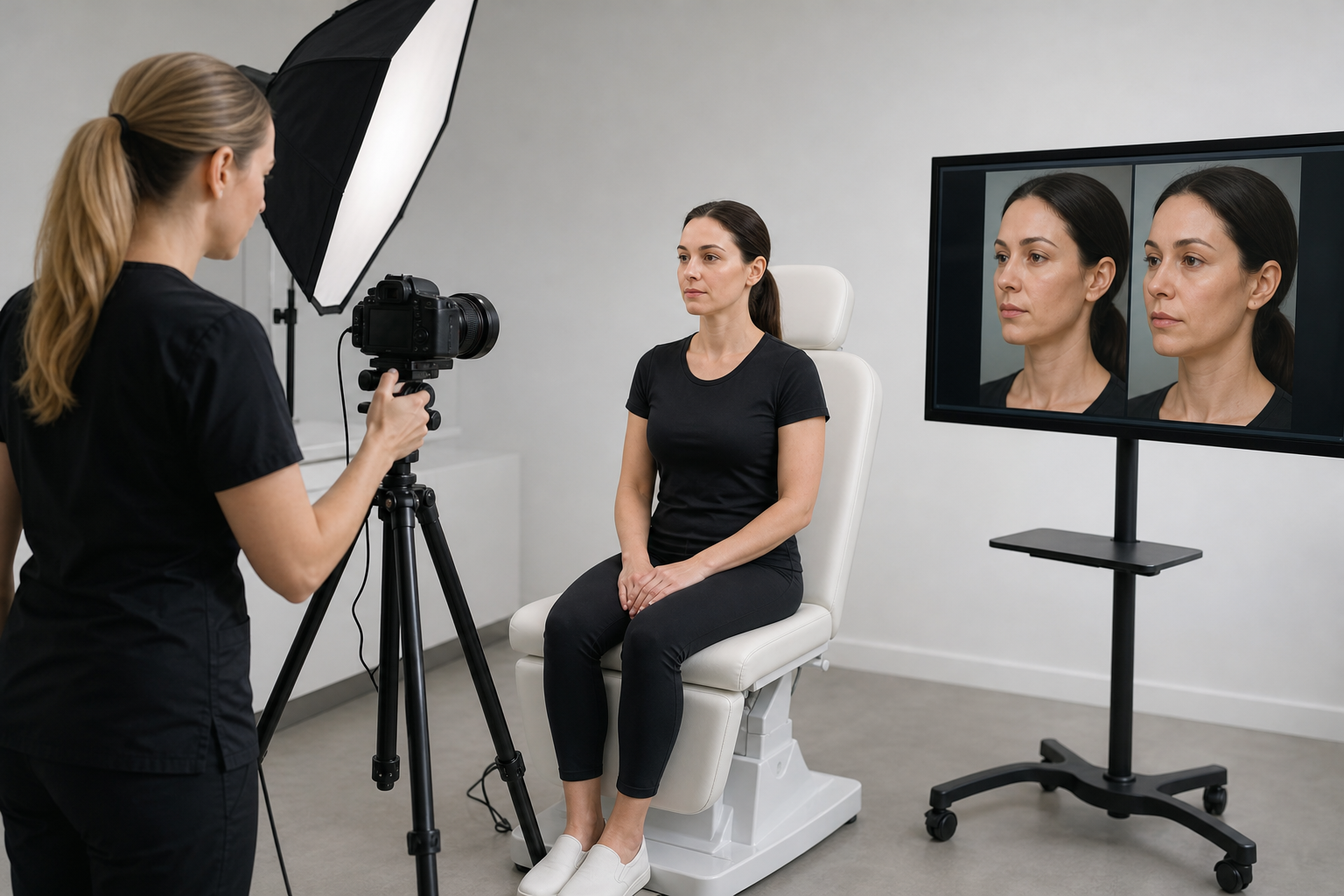
Photographing results under comparable conditions is an essential practice in medical aesthetics, particularly when evaluating treatments like Botox that have a gradual onset and subtle effects over time. Accurate photographic documentation not only provides a visual record of treatment efficacy but also serves as a crucial communication tool between patient and practitioner. This editorial is crafted for healthcare professionals, aesthetic specialists, and patients involved in Botox treatments, aiming to highlight the importance of standardized photography and provide guidance on executing it effectively.
Understanding how to photograph results under consistent conditions safeguards the integrity of treatment assessments, ensures transparent expectations, and supports precise clinical decisions. Unlike more immediate or dramatically visible procedures, Botox’s gradual mechanism requires a nuanced approach to capturing changes — one that honors both the physiologic timeline and the technical demands of photography. These nuances demand a keen awareness of lighting, positioning, equipment, timing, and realistic interpretation of images.
In the following sections, we explore fundamental principles and practical techniques that enable practitioners and patients alike to accurately monitor and evaluate Botox outcomes. By mastering these aspects, stakeholders reinforce trust, optimize treatment pathways, and preserve an objective, evidence-based perspective on aesthetic progress.
Standardizing Lighting Conditions for Consistent and Reliable Photographs
Lighting is arguably the most critical factor in producing photographs that genuinely reflect changes brought by Botox treatment. Skin texture, wrinkle prominence, and color tones are all highly sensitive to variations in illumination. Even subtle differences in light intensity or color temperature can misleadingly accentuate or diminish visible effects, creating inconsistent visual narratives.
To address this, photography should be performed in a controlled environment with stable, repeatable lighting parameters. Employing constant artificial lighting sources, such as LED panels or studio lights equipped with diffusers or softboxes, helps create evenly distributed light free from harsh shadows and glare. This uniformity is essential for revealing natural skin contours and fine details while eliminating artifact shadows that distort wrinkle depth assessments.
Moreover, maintaining a consistent color temperature—typically around 5000 to 5500 Kelvin to simulate daylight—ensures skin tones appear natural and comparable across multiple sessions. Avoiding variable ambient light, such as sunlight that changes intensity throughout the day, further stabilizes image quality. Setting up a dedicated photography space with fixed lighting installations is a best practice that minimizes variability and enhances diagnostic clarity.
Precise Patient Positioning: The Foundation of Meaningful Image Comparison
In addition to lighting, patient positioning heavily influences the validity of photographic comparisons. Slight shifts in head angle, facial expression, or camera distance can produce visual illusions—either exaggerating or masking Botox effects. Therefore, consistent postural replication is crucial for capturing equivalent perspectives before and after treatment.
Standard protocols typically include photographing the patient both frontally and in profile, with the head held in a neutral, relaxed position to avoid muscle contractions unrelated to treatment. Use of adjustable chairs and headrests can aid in maintaining identical alignment across sessions. Professionals often employ markers on the floor or backdrop and use measuring tapes or grids affixed near the camera to standardize camera-to-subject distance and height.
A neutral background—usually a plain, single-color wall or screen—further assists in focusing attention on the facial features without distracting contours or color variations. Ensuring the patient’s hair is neatly pulled back can prevent shadows or obstructions from affecting visibility of targeted treatment areas. Meticulous attention to these positional details ensures that resulting images are truly comparable and diagnostically valuable.
High-Quality Photography Equipment and Settings for Accurate Skin Depiction
While smartphones have advanced remarkably, professional-grade photographic equipment remains the gold standard for documenting subtle dermatological changes post-Botox. Digital single-lens reflex (DSLR) cameras or mirrorless cameras with manual controls offer unparalleled flexibility in setting exposure, focus, aperture, and white balance to achieve sharp, true-to-life images.
Manual control eliminates the unpredictability of automatic camera modes, which can alter exposure and color balance between shots, undermining comparability. A fixed focal length lens around 85mm to 100mm is preferred for facial photography, offering optimal perspective without distortion. Setting the aperture to a moderate f-stop (for example, f/8) balances sharpness and depth of field, ensuring the entire face area is in focus.
Tripods are invaluable tools for stabilizing the camera to prevent blurring caused by hand movement and maintain a constant angle and framing between sessions. Using remote shutter release or timer functions further minimizes vibrations. When professional equipment is unavailable, smartphone photography can still produce quality results if the practitioner disables automatic enhancement features, uses consistent ambient lighting, and employs a stable mounting setup.
Timing Photographic Sessions in Relation to the Onset and Peak Effects of Botox
Botox’s mechanism involves temporarily inhibiting neurotransmitter signals to targeted muscles, which translates cosmetically into relaxed lines and smoother skin appearance. However, these effects manifest progressively. The initial onset of visible improvement usually occurs within 24 to 48 hours post-injection, with the full aesthetic effect typically developing between 7 and 14 days.
Consequently, understanding the temporal dynamics of Botox is critical when scheduling photographs. A comprehensive photographic regimen often begins with a baseline shoot immediately prior to treatment, capturing untreated skin conditions for reference. Follow-up images are best acquired in strategically chosen windows: early after treatment to observe initial changes and again around the two-week mark when maximal effect consolidates.
Capturing images too soon post-application risks premature evaluation, potentially leading to misconceptions about treatment efficacy or dissatisfaction. Conversely, delayed documentation past the peak effect may obscure the true maximal results, influencing clinical decisions about touch-ups or dosage adjustments. Therefore, adherence to a structured and patient-specific photographic timeline is essential for accurate progress tracking.
Recognizing the Limitations of Photographic Comparisons and Setting Realistic Expectations
While photographic documentation is invaluable, practitioners and patients must recognize its inherent limitations. Images inherently compress three-dimensional facial topography onto two-dimensional planes, losing depth cues that can affect perceptions of wrinkle severity or skin laxity. Furthermore, facial expressions—intentional or subconscious—during photography can alter wrinkle appearance independently of Botox effect.
Skin physiology itself is dynamic; hydration levels, temperature, and even time of day can subtly influence skin surface reflections and texture captured in photographs. Thus, while visual comparisons aid in objective evaluation, they should complement rather than supplant clinical examination and patient-reported outcomes.
Maintaining realistic expectations about the degree and timing of Botox results is fundamental. Patients should be educated that Botox provides a modulated relaxation of muscles rather than complete paralysis, and that results evolve over days. Photo documentation serves as a supporting record, not an absolute verdict on treatment success. Effective communication grounded in comprehensive evidence upholds patient satisfaction and procedural transparency.
Collaborative Professional Guidance in Photographic Documentation and Result Interpretation
Integrating expert consultation into the photographic assessment process enhances both safety and accuracy. Dermatologists and licensed aesthetic practitioners possess nuanced understanding of Botox’s pharmacology, injection techniques, and expected outcomes, enabling them to interpret images within the framework of individualized treatment responses.
Professional oversight helps determine optimal photographic timing, troubleshoot inconsistencies in image capture, and contextualize visual changes in light of clinical findings. It also empowers patients through guided explanations, addressing concerns about perceived results and clarifying the natural timeline of effects. This professional partnership fosters a transparent and patient-centric approach.
Moreover, systematic photographic records allow clinicians to document adverse events promptly, support medicolegal standards, and provide objective data when planning maintenance or enhancement procedures. Thus, photography transcends mere documentation, becoming an integrated component of safe and effective Botox care.


