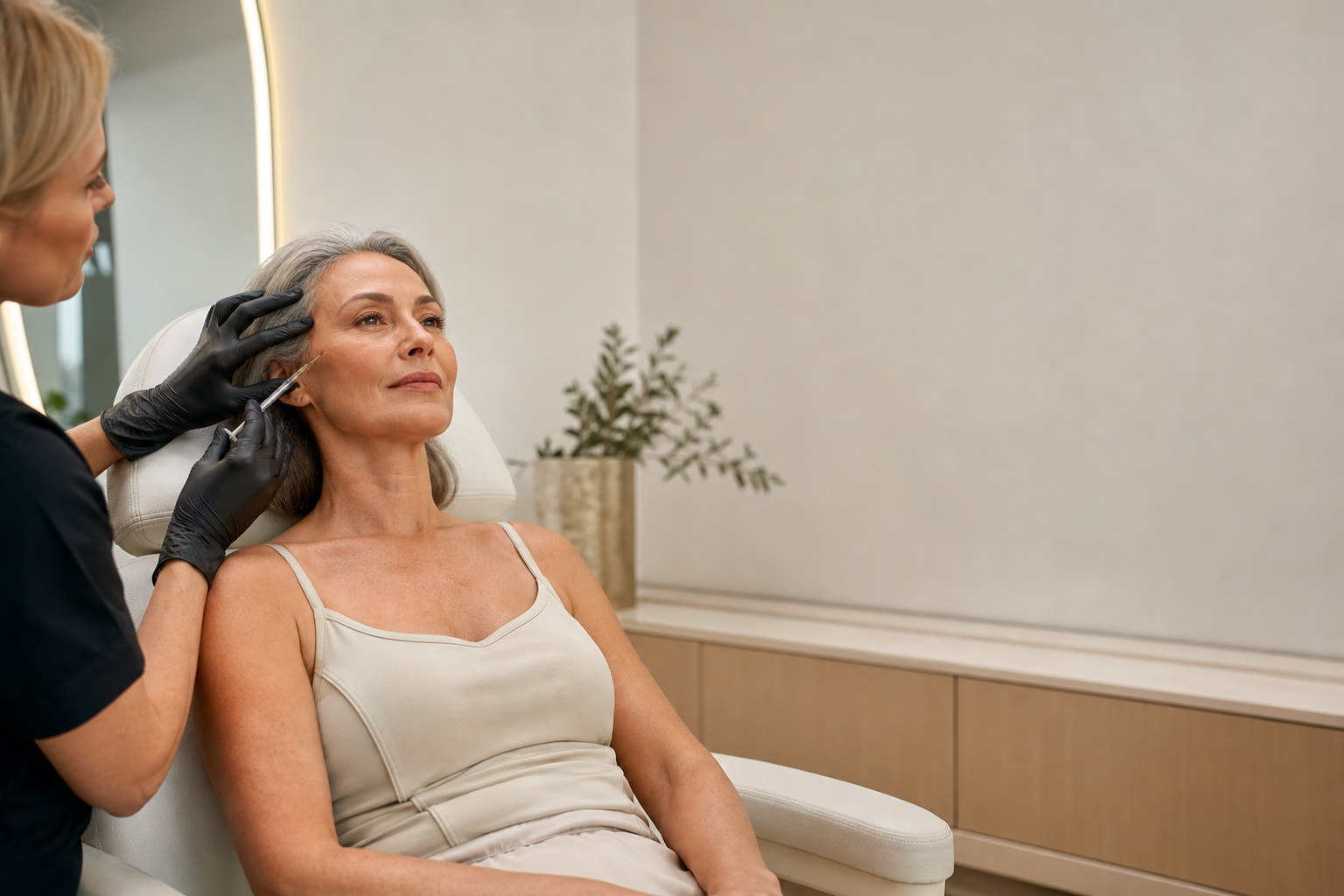
Botox in your fifties represents a nuanced chapter in aesthetic medicine, tailored for individuals seeking to maintain a youthful facial appearance despite the inevitable manifestations of aging. This decade reveals the skin as an increasingly complex and dynamic organ, reflecting not only chronological age but also lifestyle habits, genetics, and prior treatments. In the fifties, Botox treatments transcend the mere elimination of wrinkles; they demand a meticulous balance that considers facial volume and skin quality to achieve a natural, refreshed, and rested visage.
This comprehensive analysis is directed at those navigating the decision to pursue Botox in their fifties, illuminating the treatment’s mechanisms, limitations, safety considerations, and what realistic outcomes can be anticipated. Additionally, it serves aesthetics professionals aiming to enhance their understanding of how skin changes and volume alterations impact Botox results. Appreciating how Botox interacts with the evolving landscape of facial skin and subcutaneous tissues in the fifties is essential to establish patient expectations and to optimize treatment strategies.
The Mechanism of Botox and Its Unique Role in the Fifties
Botox, a purified form of botulinum toxin type A, operates by temporarily blocking nerve signals to targeted facial muscles, reducing their contraction capability. This diminishes dynamic wrinkles—those formed by repeated facial expressions, such as frown lines between the eyebrows, forehead creases, and crow’s feet around the eyes. By interrupting these microscopic muscular movements, Botox softens expression lines and provides a smoother skin surface.
However, as individuals enter their fifties, their skin architecture becomes more complex. Wrinkles encountered are often a combination of dynamic and static types—the former rooted in muscle activity, the latter a consequence of collagen loss, skin thinning, and gravitational changes. The dermis undergoes structural transformations with reduced collagen and elastin production, leading to diminished elasticity and firmness.
While Botox remains highly effective in mitigating dynamic wrinkles, its ability to address deeper, static lines is limited. In this age group, Botox’s role extends beyond wrinkle relaxation; it forms a part of a broader strategy that includes managing skin quality and volume loss to reinstate youthful contours and texture.
Influence of Skin Quality on Botox Outcomes in the Fifties
Skin quality in the fifties is markedly heterogeneous and depends on environmental exposures, intrinsic aging, genetic predisposition, lifestyle, and previous skincare or aesthetic interventions. Typically, the skin becomes thinner, drier, and less elastic, contributing to a more pronounced appearance of wrinkles and sagging. These changes present a significant challenge for anti-wrinkle treatments like Botox when used alone.
Botox’s mode of action—muscle relaxation—does not promote collagen synthesis nor directly restore dermal volume or moisture. Therefore, when skin shows advanced signs of aging characterized by significant dermal atrophy, loss of tensile support, or pigmentary irregularities, Botox alone may produce modest outcomes. Optimal results frequently require combining Botox with skin quality-enhancing procedures.
Dermatological and aesthetic adjuncts such as chemical peels, microneedling, laser resurfacing, and mesotherapy can stimulate collagen remodeling, improve hydration, and enhance skin texture. These treatments can amplify Botox’s effect by providing a supple, resilient foundation upon which muscle relaxation visibly smooths wrinkles. A careful assessment and customized regimen orchestrated by a skilled practitioner are critical to integrating Botox effectively with skin quality restoration.
Facial Volume Changes: A Pivotal Consideration for Botox Efficacy
Age-related volume loss is a hallmark of the fifties, characterized by diminished subcutaneous fat, bone resorption, and ligament laxity. The midface region undergoes deflation, causing flattened cheeks, deeper nasolabial folds, and jowling. This reduction in structural fullness can accentuate wrinkles and sagging, which are often mistakenly attributed solely to muscle overactivity.
As Botox works primarily by attenuating muscle contractions, it cannot replenish lost volume or restore youthful facial architecture. Therefore, exclusive reliance on Botox in cases with significant volume deficit may result in inadequate correction or an unnatural appearance due to imbalance between muscle tone and skin support.
Dermal fillers, frequently based on hyaluronic acid, serve as critical tools to restore volume. When combined with Botox, fillers reshape contours, lift tissues, and soften static lines by physically occupying lost space. This dual approach addresses the multifactorial nature of facial aging in the fifties. Synergistic treatment enhances overall harmony, creating smoother, lifted, and more vibrant skin without compromising facial expressiveness.
Preventive Botox Strategies Tailored for the Fifth Decade
While Botox is often perceived as a corrective treatment, its preventive potential becomes invaluable in the fifties. Initiating regular Botox treatments can retard the deepening of existing wrinkles and inhibit the formation of new expression lines by modulating muscle activity with minimal interference to facial movements.
Preventive Botox requires a judicious, personalized approach to dosing and injection sites, preserving natural facial dynamics vital for communication and emotional expression. In the fifth decade, the balance shifts toward maintaining subtlety and vitality rather than overt paralysis. This approach can prolong the longevity of aesthetic improvements and reduce the need for more invasive procedures later.
Successfully implementing preventive Botox also involves lifestyle modifications, including diligent sun protection, smoking cessation, and a skincare routine emphasizing hydration and antioxidant support. Combining these preventive measures furnishes a holistic defense against accelerated aging.
Ensuring Safety and Optimal Outcomes Through Expert Consultation
Safety in Botox application remains paramount, especially in the fifties when patients may have preexisting health conditions or be on medications influencing neuromuscular responses. Comprehensive medical history, allergy screenings, and physical examinations precede any treatment, allowing the practitioner to tailor protocols respecting individual risk factors.
Adverse effects associated with Botox are typically mild and transient, including localized bruising, swelling, or minor muscle weakness. However, these risks diminish significantly under the care of certified, experienced providers with in-depth anatomical knowledge and refined injection techniques.
Early consultation fosters realistic expectation management, addresses patient concerns, and facilitates an informed shared decision-making process. Continuous follow-up enables monitoring results, adjusting dosages, and integrating complementary therapies, maximizing the longevity and quality of outcomes.
Gender-Specific Considerations and Personalized Approaches for Men in Their Fifties
Male skin and facial structure differ markedly from females, influencing Botox treatment planning. Men’s skin tends to be thicker, denser, and more sebaceous, with stronger musculature leading to pronounced facial expressions. These factors may necessitate increased Botox dosages and strategic injection patterns to achieve desired effects while preserving masculinity and natural expression.
Aesthetic goals often differ; men usually seek discrete, subtle enhancement without feminization of features. Experienced practitioners respect these preferences by customizing treatments that enhance vitality and confidence while maintaining authentic character.
Integrating Botox with volumizing fillers and skin rejuvenation tailored to men’s unique physiological properties results in harmonious rejuvenation. This individualized care underscores the importance of a thorough consultation and a flexible approach to each patient’s anatomy and aspirations.
Integrative Regeneration and Skincare to Complement Botox in the Fifties
Botox in the fifties is most effective when embraced as part of an integrative anti-aging strategy, rather than an isolated intervention. Skin biology at this stage demands comprehensive care, including antioxidants, peptides, growth factors, and hydration to support dermal health and resilience.
Advanced technologies like fractional lasers, radiofrequency, and microneedling induce collagenesis and tissue tightening. Employing these modalities alongside Botox addresses various skin layers and structures, elevating the quality and durability of aesthetic results.
A well-rounded plan may incorporate nutritional guidance, stress management, and lifestyle optimization, enhancing intrinsic repair mechanisms and mitigating ongoing environmental insults. This holistic philosophy fosters a sustainable youthful appearance and empowers patients in their self-care journey through the fifties and beyond.


