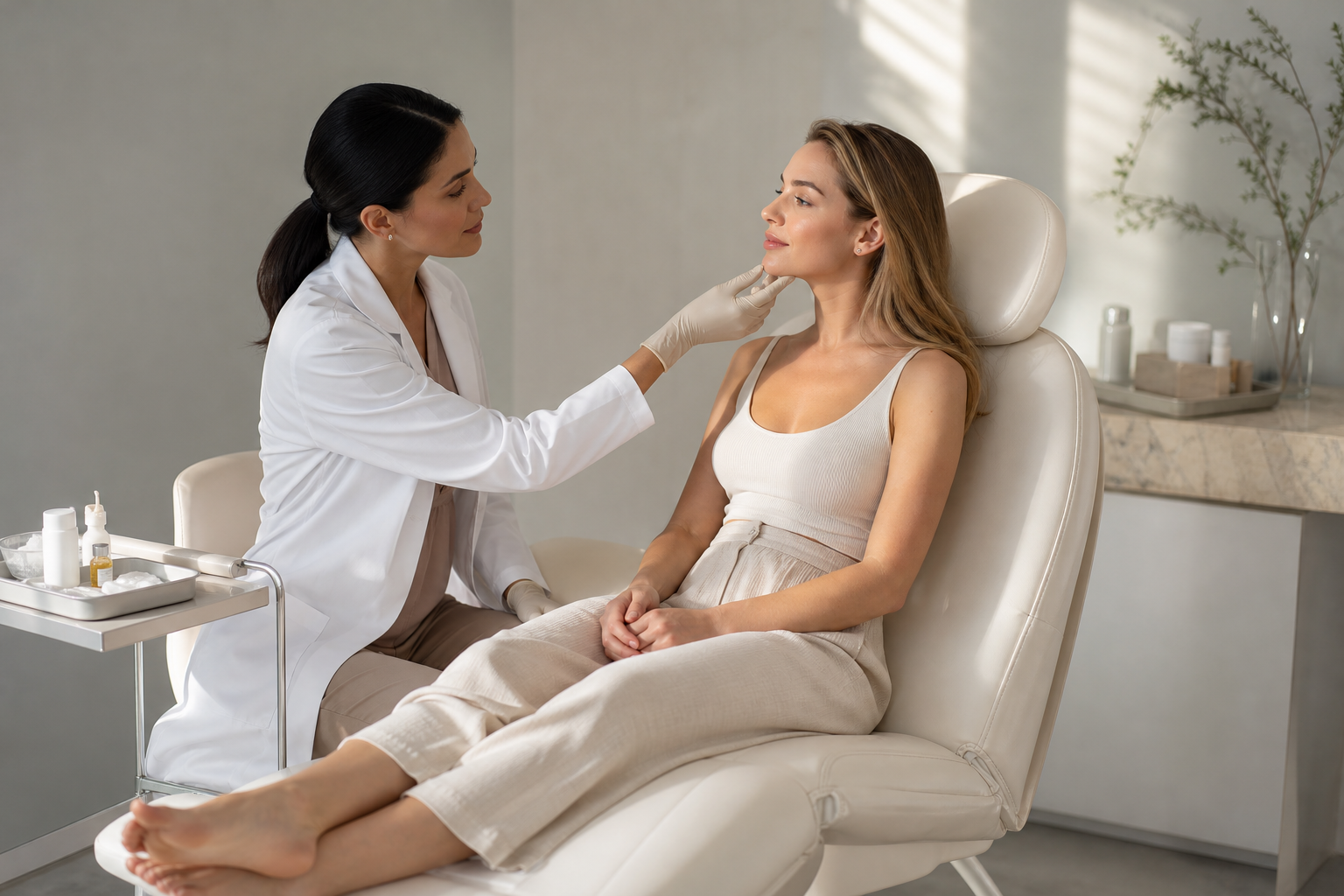
In the ever-evolving landscape of aesthetic medicine, terminology often shapes not only public perception but also the expectations and approaches to treatment. One such term that has gained significant momentum in recent years is "Baby Botox." At first glance, the phrase might evoke a sense of gentleness or a milder variant of the traditional Botox treatment, but it also stirs skepticism—is it truly a distinct approach or merely a clever marketing tactic? This question bears significance for those contemplating preventative or early intervention in the aging process, particularly individuals who are younger and seeking subtle, natural enhancements rather than dramatic transformations.
Baby Botox primarily targets younger adults, typically those in their late twenties to early forties, who wish to maintain their youthful appearance by preventing the formation of deep wrinkles rather than treating established lines. Addressing this audience requires a nuanced understanding of Botox's biochemical mechanism, dosage variations, and the importance of tailored application. This article aims to dissect the concept of Baby Botox with clinical precision, clarifying what differentiates it from conventional protocols, outlining realistic expectations and safety parameters, and highlighting the critical role of expert consultation.
Understanding the subtleties behind Baby Botox is invaluable for anyone exploring non-surgical facial rejuvenation. It serves as a bridge between cosmetic skincare and more invasive procedures, offering a strategy that blends scientific rigor with a natural aesthetic. As trends toward earlier preventative care gain traction, making informed decisions becomes essential not only for achieving desired outcomes but also for ensuring lasting skin health and expression preservation.
Botox Mechanism and Its Role in Facial Rejuvenation Across Age Groups
To grasp the essence of Baby Botox, one must first comprehend the fundamental action of Botox itself. Botox is a purified form of botulinum toxin type A, a neurotoxin that works by inhibiting the release of acetylcholine at the neuromuscular junction. This blockage temporarily relaxes targeted muscles, preventing contractions that contribute to transient facial lines known as dynamic wrinkles. By reducing these repetitive movements, Botox smooths existing folds and can delay the formation of deeper, static wrinkles.
Historically, Botox treatments have been predominantly associated with mature adults seeking to reverse or diminish more pronounced age-related lines. The focus was reactive—addressing visible signs of aging once fully manifested. However, as the science of aesthetics advances and cultural attitudes toward aging evolve, the paradigm has shifted toward a proactive approach. Individuals in their late twenties and early thirties are increasingly interested in using Botox preventatively to maintain skin texture and minimize the onset of wrinkles.
This preventive approach leverages the muscle-relaxing property of Botox to curb hyperactive facial movements before they imprint lasting creases into the skin. Importantly, the underlying skin quality, elasticity, and overall health play crucial roles alongside neuromuscular activity in wrinkle development. Hence, Botox is often integrated with holistic skincare regimens emphasizing sun protection, hydration, and nutrition to optimize long-term results.
The Defining Characteristics of Baby Botox Versus Traditional Botox Treatments
While classic Botox treatments typically employ moderate to high doses targeting a broader facial area to correct moderate to deep wrinkles, Baby Botox introduces a refined technique distinguished by significantly lower dosages and highly precise placement. This method selectively targets specific muscles to subtly diminish excessive movement that leads to early wrinkle formation, without immobilizing the facial expression.
Baby Botox prioritizes preservation of natural facial dynamics, a vital consideration particularly for younger patients concerned about the “frozen” or artificial appearance sometimes seen with aggressive dosing. By using micro doses, practitioners aim to maintain the balance between muscle relaxation and lively, authentic expressions. The result is a refreshed look that still allows for emotive communication, setting Baby Botox apart from the more extensive corrections typically applied in later life stages.
The demographic for Baby Botox spans those experiencing initial lines—such as faint forehead furrows, mild crow’s feet around the eyes, or slight glabellar creasing—as well as younger adults eager to prolong their skin’s smoothness and firmness. This subtle approach can be viewed as a strategic investment in aging gracefully, enhancing confidence while reducing the likelihood of needing substantial corrective treatments in the future.
The Scientific Basis and Practical Effects of Baby Botox on Skin and Muscle Activity
Delving deeper into the science, Baby Botox injections modulate neuromuscular signaling at a micro level. By employing less toxin, only a portion of the targeted muscle fibers are relaxed, mitigating excessive contraction without total paralysis. This nuanced effect leads to softened expressions, a reduction in the frequency and intensity of muscle-induced wrinkles, and an indirectly positive influence on skin texture.
Such precise modulation can foster gradual improvements, especially as younger skin still maintains significant collagen and elastin reserves. The combination allows the treated areas to heal and regenerate with diminished mechanical stress. Patients often report smoother skin, visible freshness, and an enhanced yet uncontrived appearance that aligns with their natural facial features.
Practitioners emphasize that Baby Botox is not intended to eliminate every fine line immediately but rather to gently retrain facial muscles to adopt less pronounced movement patterns. Over time, consistent treatments every three to six months can diminish the progression of wrinkles by preventing habitual deep creasing, thus preserving youthful skin attributes organically.
Realistic Outcomes and Limitations When Opting for Baby Botox
Despite its promising appeal, Baby Botox is neither a panacea for all aesthetic concerns nor universally appropriate. It excels in prevention and mild correction but falls short when addressing severe static wrinkles or extensive volume loss. Patients with deeply etched lines often require adjunctive procedures like dermal fillers or laser therapies to achieve comprehensive rejuvenation.
Moreover, expectations must be tempered to recognize that Botox-induced effects are temporary, with duration typically spanning three to four months. Commitment to maintenance treatments is essential for sustained benefits. Additionally, individual variation in muscle strength, skin type, and metabolism affects responsiveness and longevity of results.
It is also crucial to understand that Baby Botox does not halt intrinsic skin aging caused by factors like genetic predisposition, sun damage, or lifestyle habits. Its efficacy must therefore be supplemented by diligent skincare routines and healthy living to maximize its preventive role.
The Imperative of Professional Guidance and Safety in Baby Botox Procedures
Safety considerations underpin the entire Baby Botox paradigm. Administering botulinum toxin, even in minimal quantities, demands thorough anatomical knowledge and clinical expertise. Qualified medical practitioners—typically board-certified dermatologists or plastic surgeons—are equipped to evaluate candidacy, tailor dosage and injection sites, and monitor for potential adverse effects.
Initial consultations usually involve assessing facial musculature, skin condition, and aesthetic goals while also discussing realistic outcomes. Such evaluations guide personalized treatment plans that optimize effectiveness and minimize risks such as asymmetry, bruising, or unintended muscle weakness.
The choice of product quality, sterile technique, and proper post-procedure care further contribute to the safe execution of Baby Botox treatments. Moreover, treating in accredited facilities ensures that emergency measures are readily available should rare complications arise.
Integrating Baby Botox Into a Comprehensive Skin Wellness Strategy
Baby Botox should be viewed as a component within a broader, integrative approach to skin health and aging gracefully. Its preventive benefits are maximized when combined with consistent skincare practices, including daily sun protection with broad-spectrum filters, hydration, antioxidant application, and lifestyle choices supporting skin vitality.
Such a holistic regimen not only enhances and prolongs the effects of neurotoxin treatments but also addresses other dimensions of skin aging like texture, pigmentation, and resilience. This synergy empowers patients to maintain a youthful, vibrant appearance with less dependence on aggressive interventions later in life.
It is also noteworthy that Baby Botox has gained traction among men, an expanding demographic in aesthetic medicine. Understanding gender-specific facial anatomy and movement patterns allows providers to customize Baby Botox techniques accordingly, fostering acceptance and effective outcomes for male patients seeking subtle anti-aging measures.


