In the ever-evolving world of skincare, the quest for youthful and radiant skin remains a significant focus, particularly as individuals seek solutions to mitigate the visible signs of aging. Anti-aging treatments for the face have gained prominence due to their ability to diminish fine lines, improve skin elasticity, and restore a fresh complexion. However, the landscape of anti-aging procedures is complex and diverse, encompassing a variety of methods that target different skin concerns. Properly combining these treatments requires a nuanced understanding to maximize benefits while minimizing risks.
This editorial aims to serve both individuals considering the initiation or enhancement of their anti-aging regimen and skincare professionals who aspire to deepen their expertise in this specialized area. We will explore the essential aspects of facial anti-aging treatments, including indications for use, realistic expectations, treatment limitations, safety concerns, and the critical importance of consulting qualified professionals. By unpacking these components, readers will gain a comprehensive guide to effectively and safely integrate multiple anti-aging modalities for optimal skin rejuvenation.
Understanding how to properly combine anti-aging treatments is crucial because each person's skin is unique. What works well for one individual may not yield the same results for another, and improper combinations can lead to suboptimal outcomes or adverse effects. Hence, a tailored and informed approach is indispensable. This discussion highlights methods rooted in clinical experience and scientific principles to help navigate the intricacies of multimodal anti-aging care.
What Are Facial Anti-Aging Treatments and Who Should Consider Them?
Facial anti-aging treatments comprise a broad spectrum of cosmetic and dermatological procedures designed specifically to address signs of aging that appear on the skin, such as fine lines, wrinkles, loss of volume, and uneven skin tone. These treatments promote skin hydration, stimulate collagen production, restore firmness, and enhance overall skin vitality and radiance. The modalities can range from non-invasive to minimally invasive techniques, enabling patients to choose approaches that align with their comfort levels and lifestyle.
Typically, individuals notice the first subtle signs of facial aging in their early 30s, although preventative care may commence earlier. Treatments are appropriate not only for those aiming to reverse visible aging but also for younger individuals focused on maintaining skin health and delaying the onset of aging signs. Additionally, people with specific dermatological needs—such as pigmentation irregularities or skin texture concerns—often benefit from targeted anti-aging protocols.
Ultimately, those seeking non-surgical solutions to enhance skin quality without enduring significant downtime or invasive procedures are ideal candidates for these treatments. Moreover, anyone wishing to reinvigorate their complexion with a natural-looking, refreshed appearance should consider incorporating anti-aging treatments into their skincare regimen.
Key Indications that Guide the Selection and Combination of Treatments
Choosing the appropriate anti-aging treatments depends fundamentally on a precise assessment of individual skin conditions and aesthetic goals. Aging manifestations vary widely: some may present with superficial fine lines, others with deeper wrinkles or sagging, and some might struggle primarily with dryness or dullness. Comprehending these variations enables the customization of treatment plans.
For instance, delicate periocular areas commonly require gentle intervention, while regions with pronounced volume loss might benefit more from volumizing approaches such as dermal fillers. Similarly, hydration-focused therapies suit skin compromised by moisture loss, whereas texture and tone irregularities might necessitate resurfacing treatments.
The most prevalent anti-aging treatments currently utilized include chemical peels to refresh skin layers, microneedling to boost collagen synthesis, radiofrequency (RF) therapies for tightening, High-Intensity Focused Ultrasound (HIFU) lifting for deep tissue stimulation, botulinum toxin (Botox) for muscle relaxation, dermal fillers to replace volume, Intense Pulsed Light (IPL) for pigmentation and vascular concerns, and skin boosters that enrich skin hydration and resilience. Each modality carries specific indications, contraindications, and efficacy profiles that influence their integration within a comprehensive regimen.
Strategically combining these treatments—such as pairing collagen-stimulating procedures with volume restoration or hydration enhancement—can lead to more sustained and harmonious rejuvenation outcomes compared to isolated interventions.
How to Properly Sequence and Combine Common Anti-Aging Treatments
Effectively combining anti-aging treatments goes beyond selecting the right therapies; it requires attentiveness to the sequence of application and appropriate intervals between procedures. These factors influence treatment synergy and the skin’s capacity to tolerate and respond to successive interventions.
Microneedling and Chemical Peels: Microneedling initiates controlled micro-injuries that promote collagen production and create microchannels allowing enhanced penetration of topical agents. Chemical peels remove superficial skin layers, promoting cellular turnover. When combined, the advisable protocol is to perform microneedling first to augment the peeling effect, followed by a waiting period of 10 to 14 days. This break allows the skin to regenerate, reducing the risk of irritation or compromised barrier function.
Radiofrequency (RF) Lifting and Botox: RF treatments heat deep dermal layers, stimulating collagen remodeling and skin tightening. Botox injections, conversely, relax muscles to soften dynamic wrinkles. Administering RF lifting prior to botulinum toxin allows for a more accurate assessment of wrinkle depth and muscle activity post-tightening, enhancing Botox precision. Typically, the interval between these procedures is approximately one to two weeks to ensure optimal recovery and effect manifestation.
HIFU and Dermal Fillers: HIFU employs focused ultrasound waves to induce collagen regeneration and firm underlying tissue. Fillers restore lost volume and contour the face. The correct approach is to perform HIFU first due to its tightening effect, which may alter skin tension and topography. After a recovery phase of three to four weeks, fillers can be injected to fine-tune facial volume and smooth lines, achieving a refined and balanced outcome.
Laser Therapy and Injectable Treatments: Laser resurfacing revitalizes skin by targeting pigmentation and texture issues. Injectable procedures modify muscular or dermal structures to diminish wrinkles. A waiting period of at least two weeks between laser sessions and injections is recommended to prevent inflammation, swelling, or adverse reactions resulting from treatment overlap.
IPL and Chemical Peels: IPL treatments address superficial discoloration and superficial veins, while chemical peels promote skin renewal. To avoid excessive irritation, IPL is ideally administered first, with chemical peels following after a minimum interval of two to three weeks. This strategy minimizes cumulative skin stress and permits barrier restoration.
Skin Boosters and Microneedling: Skin boosters—injectable hyaluronic acid formulations—enhance hydration and skin texture at a cellular level. When combined with microneedling, which facilitates deeper penetration of substances, the treatment effect is amplified. Administering microneedling immediately before or in conjunction with skin booster injections can maximize efficacy while ensuring patient comfort and safety.
Recognizing Limitations and Safety Measures in Treatment Combinations
Despite their many benefits, combining anti-aging treatments entails inherent risks that necessitate careful management. Overlapping aggressive procedures within shortened intervals can damage the skin’s natural protective barrier, provoke inflammation, or intensify sensitivity, potentially worsening skin appearance instead of improving it.
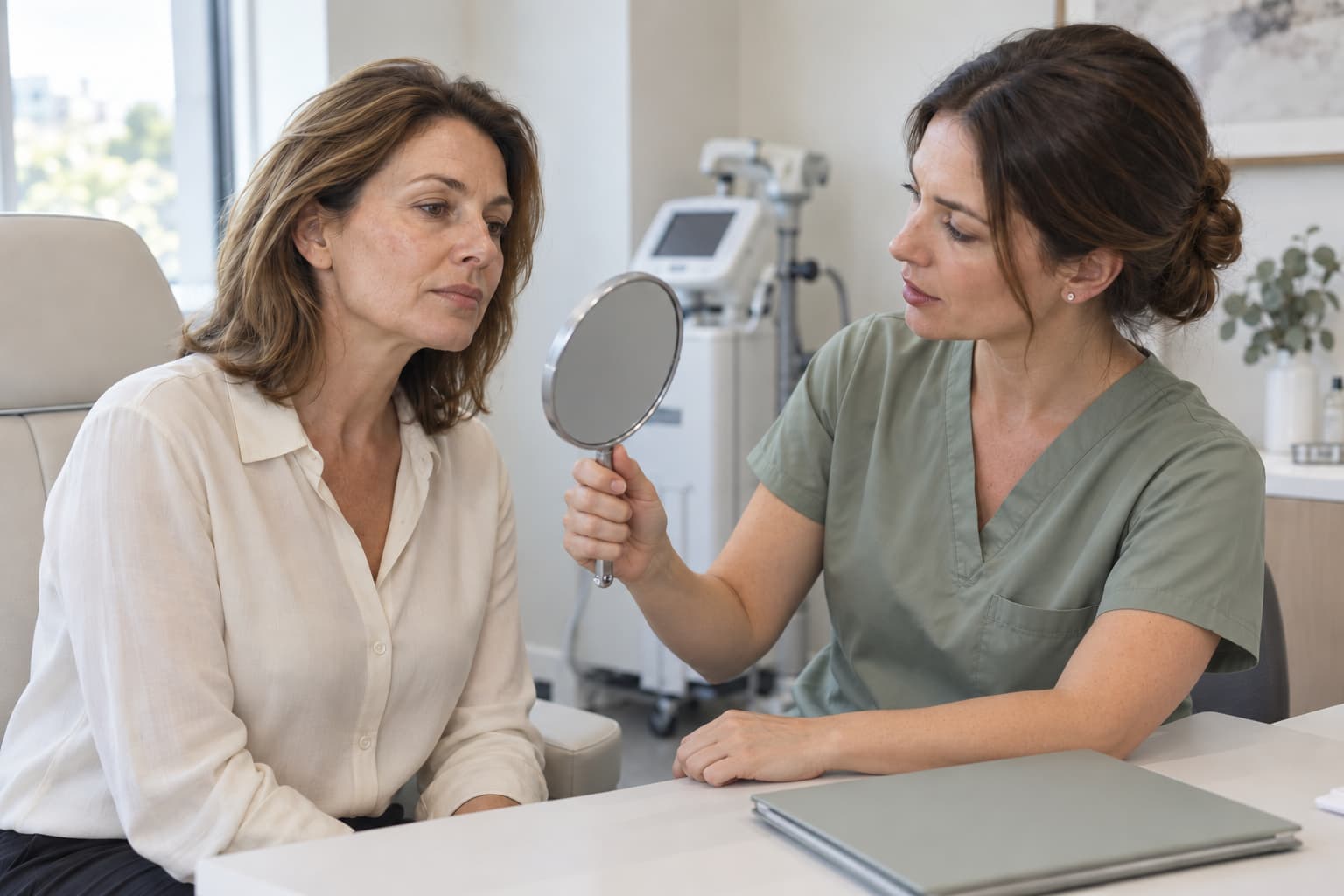
Consequently, medical oversight from experienced dermatologists or certified cosmetic practitioners is essential before commencing combination therapies. Comprehensive evaluation must include a review of the skin’s current condition, history of sensitivities or allergies, previous treatments, and any contraindications—such as active infections, inflammatory skin disorders, or predisposition to scarring—that could elevate risk.
Testing for skin tolerance and planning treatments in phased sessions with follow-up assessments enhances safety and optimizes results. Furthermore, incorporating appropriate skincare products emphasizing barrier repair, sun protection, and nourishment between procedures is vital to support skin resilience and mitigate side effects.
When Should You Seek Professional Advice Before Combining Treatments?
Professional consultation is indispensable when there is any uncertainty about the suitability of specific anti-aging treatments, especially when combining multiple procedures for the first time. Individuals with sensitive, reactive, or complex skin conditions should prioritize expert assessment to avoid unintended complications.
Similarly, advice from qualified practitioners helps formulate personalized, effective plans that consider the unique interplay of treatments suited for particular skin types and aging patterns. Early engagement with professionals also facilitates the anticipation and management of potential adverse effects, such as prolonged redness, swelling, or inflammation.
Promptly consulting a specialist is critical if any unexpected or severe skin reactions occur post-treatment, enabling timely intervention and preserving skin integrity.
Expected Outcomes and Duration of Efficacy with Proper Treatment Combinations
When administered correctly, combined anti-aging treatments produce visible improvements often within weeks, with progressive enhancement continuing over subsequent months. Patients usually observe smoother texture, reduced wrinkle visibility, improved firmness, and revitalized complexion.
The longevity of treatment effects varies according to factors such as treatment types, individual biology, lifestyle, and skin care adherence, typically lasting from six months to over a year. Maintenance sessions—customized for seasonality and skin response—are instrumental in sustaining the youthful appearance and prolonging benefits over time.
Engaging in a well-structured, professionally supervised anti-aging regimen empowers individuals to manage the natural aging process proactively, combining aesthetic goals with skin health preservation.