In the realm of contemporary dermatology, laser technology stands as one of the most effective tools for addressing vascular skin concerns, particularly visible capillaries and persistent redness. These vascular conditions not only affect the aesthetic appearance but can also reflect underlying skin health issues. The success of laser treatments for these conditions greatly depends on the precise customization of laser parameters for each patient—a concept that extends beyond mere preference to become an essential clinical practice.
This article delves into the reasons behind the necessity of tailoring laser settings to individual patient characteristics, focusing primarily on vascular lasers used for capillaries and redness reduction. It is crafted for those considering laser therapy for such concerns, as well as healthcare professionals who seek an in-depth understanding of how laser parameters influence treatment efficacy and safety. Furthermore, this discussion clarifies common misconceptions, such as equating Intense Pulsed Light (IPL) devices with lasers, thus providing clarity on selecting the most appropriate treatment modality.
Given the wide range of skin types, vascular lesion characteristics, and individual patient conditions, a one-size-fits-all approach to laser therapy is neither feasible nor safe. Customizing parameters such as wavelength, pulse duration, and energy levels ensures targeted treatment that maximizes therapeutic benefits while minimizing adverse effects. A clear understanding of these adjustments is crucial for safe and successful clinical outcomes in vascular laser treatments.
What Are Laser Parameters and How Do They Influence Vascular Treatments?
Laser parameters refer to the specific technical settings adjusted during a laser therapy session. Key parameters include the laser’s wavelength, pulse energy, pulse duration, and pulse repetition frequency. Each of these influences how the laser interacts with the skin and underlying vasculature.
The wavelength determines the depth of penetration and the target chromophore within the skin. For vascular lesions, hemoglobin within blood vessels is the primary target. Different vascular lasers emit specific wavelengths optimized for hemoglobin absorption, thus allowing selective photothermolysis—destroying abnormal vessels while sparing surrounding tissue.
Pulse energy (measured in joules) must be sufficient to coagulate the targeted vessels without causing overt tissue damage. Pulse duration—the length of each laser pulse—is equally significant; shorter pulses confine heat to the vessels, minimizing spread to surrounding skin. The repetition rate affects how quickly pulses are delivered, impacting overall treatment duration and tissue heating.
The interplay of these parameters determines treatment safety and effectiveness. For instance, longer wavelengths, like those emitted by Nd:YAG lasers, can penetrate deeper vessels, while shorter wavelengths are better suited for superficial capillaries. Understanding each parameter’s role enables dermatologists to customize treatments to individual patient vascular profiles.
Who Benefits Most from Customized Laser Parameter Settings?
Customization is especially relevant for patients presenting with a variety of vascular concerns, including facial telangiectasias, rosacea-related redness, and spider veins. These conditions often differ in vessel size, depth, and location, necessitating a tailored approach.
Patients with lighter or sensitive skin types may require gentler energy settings to reduce risks such as hyperpigmentation or scarring, while those with darker skin tones might benefit from lasers calibrated to minimize melanin absorption. Individuals with deeper or larger vessels may need longer wavelengths and higher energies to achieve effective treatment.
Moreover, the approach differs based on patient age, skin health, and medical history. Customized parameter planning helps address these variables, catering to the unique biological landscape of each patient’s skin, thus enhancing outcomes and minimizing complications.
Why Is IPL Not Considered a Laser, and How Does This Distinction Affect Treatment Choice?
Although often grouped together, IPL devices differ fundamentally from lasers. Lasers emit coherent light at a single wavelength, providing precise targeting of specific chromophores such as hemoglobin. IPL emits a broad spectrum of non-coherent light filtered to target certain skin components but lacking the precision of lasers.
This difference has clinical implications. The selective photothermolysis principle that governs laser vascular treatments relies on monochromatic light to confine thermal damage. IPL’s broader spectrum may affect a wider range of tissues less specifically, which can be advantageous for multifaceted skin concerns but is less effective for precise vascular lesion treatment.
Thus, the choice between IPL and laser depends on the nature and depth of the vascular lesion, skin type, and desired precision. For targeted capillary and redness management, lasers allow for nuanced parameter customization that IPL cannot match, supporting better results and safety profiles.
What Factors Determine How Laser Parameters Are Customized for Each Patient?
Customization begins with a comprehensive assessment of patient-specific factors influencing laser-tissue interaction. The Fitzpatrick skin phototype is pivotal, ranging from type I (very fair) to type VI (very dark), which influences how much laser energy the skin can safely absorb without adverse pigmentary effects.
The characteristics of the vascular lesion—such as size, depth, location, and color—also guide parameter selection. Smaller, superficial vessels typically respond to lower energy settings and shorter wavelengths, while larger or deeper vessels necessitate higher energy and longer wavelengths like those from the Nd:YAG laser.
Additionally, treatment area sensitivity dictates adjustment of pulse duration and energy to prevent discomfort and tissue damage. Patient medical history, including previous laser treatments and skin conditions, further informs parameter choices to avoid complications.
What Advantages Does Precision in Laser Parameter Selection Offer?
Tailored laser settings maximize therapeutic efficacy by selectively targeting problematic vessels while preserving surrounding skin integrity. This selectivity reduces risks such as burns, scarring, and pigment changes, which are particularly important when treating delicate facial areas.
Precise parameters can also shorten recovery time and decrease the number of treatment sessions needed to attain satisfactory results. Consequently, patients experience greater comfort during procedures and faster return to routine activities, enhancing overall satisfaction.
From a clinical perspective, customized laser protocols improve predictability of outcomes, enabling dermatologists to set realistic expectations and deliver consistently high standards of care.
How Is Parameter Customization Carried Out in Clinical Practice?
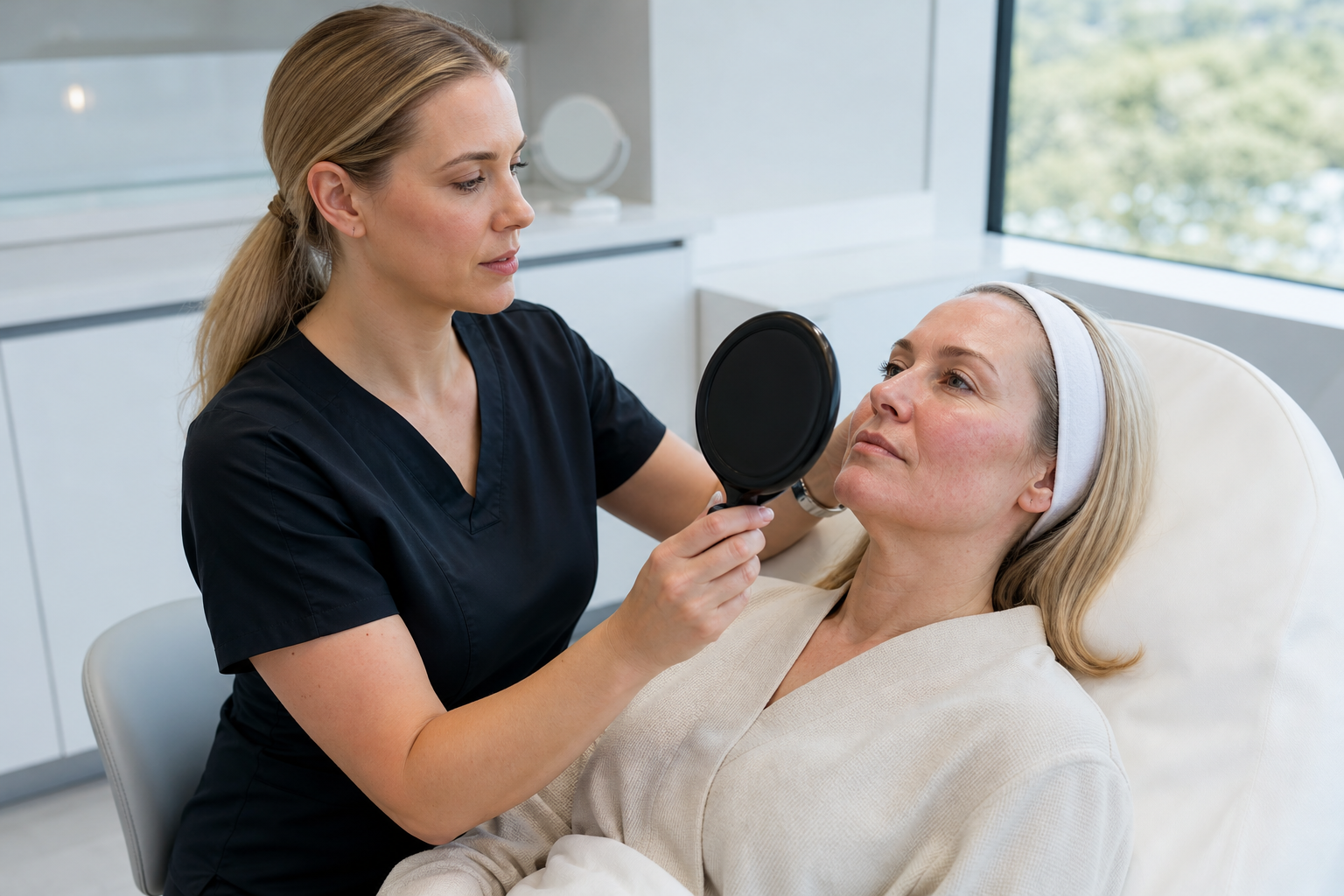
The process begins with a detailed clinical examination and history-taking, where the clinician evaluates skin type, vascular lesion type, location, and patient goals. Diagnostic tools such as dermoscopy may aid in assessing vessel depth and morphology.
Based on this assessment, the clinician selects an appropriate laser device—for example, Pulsed Dye Laser for superficial vessels or Nd:YAG laser for deeper veins. Initial test spots with varying parameters may be applied to small skin areas to observe patient response and fine-tune settings.
The finalized parameters—covering wavelength, pulse energy, pulse duration, and spot size—are then employed throughout the session. Careful monitoring during treatment allows real-time adjustments if necessary, ensuring safety and effectiveness.
Why Is Avoiding Generalized or Self-Administered Laser Parameters Crucial?
Laser treatments demand expert knowledge of both laser physics and skin biology. Utilizing generic or ‘‘one-size-fits-all’’ settings risks poor outcomes and potential harm, including burns, pigmentation irregularities, or worsening of the vascular condition.
Self-administered or unsupervised treatments frequently lack the precision in parameter adjustment and safety monitoring, increasing the possibility of long-lasting skin damage. The complexity of vascular laser treatments underscores the necessity of medical supervision by trained professionals.
Therefore, personalized laser parameter selection conducted by certified dermatologists or experienced laser technicians is a foundational practice that prioritizes patient safety and treatment success.
What Should Patients Expect During and After Laser Treatment with Customized Parameters?
Patients can anticipate a targeted procedure tailored to their skin and vascular lesion characteristics. Treatments typically involve brief pulses of light sensation, sometimes accompanied by mild discomfort comparable to the snap of a rubber band.
Post-treatment, mild redness, swelling, or bruising may occur in the treated areas but generally resolve within days. Customized parameters help in minimizing these effects and accelerating healing. Patients are advised to follow care instructions, such as sun protection and avoiding irritants, to sustain optimal results.
Follow-up assessments allow clinicians to track progress and adjust future sessions if needed. With precise parameter customization, many patients achieve notable reduction or elimination of visible vessels and redness, leading to enhanced skin appearance and confidence.
How Does Custom Laser Parameter Adjustment Affect Long-Term Skin Health and Aesthetic Outcomes?
Beyond immediate cosmetic improvement, tailored vascular laser treatments contribute to skin health by reducing ongoing inflammation associated with visible blood vessels and redness. This interruption of the disease process helps prevent further vascular changes and skin sensitivity.
The approach enhances the skin’s natural healing capacity, promoting a more uniform tone and texture. Patients benefit from both the visual enhancement and the alleviation of discomfort linked to chronic redness or vascular fragility.
In summary, personalized laser parameter settings elevate the standard of care in dermatological vascular treatments, combining efficacy with preservation of skin integrity to achieve lasting health and beauty benefits.


