Sunbeds have long been popular as a means of achieving a tanned complexion throughout the year, bypassing the need for natural sun exposure. However, the relationship between sunbed use and skin health is complex—especially for individuals with a high number of moles. Understanding this connection is vital for those who wish to balance aesthetic goals with long-term skin safety.
People with numerous moles face unique challenges when considering UV exposure. Moles, or melanocytic nevi, are pigmented skin lesions formed by clusters of melanocytes. While most are benign, their presence can signal an increased risk of melanoma, the most serious form of skin cancer. This raises crucial questions: Does sunbed use compound melanoma risk for individuals with many moles? Is any UV exposure ever safe for this group? What precautions or alternatives exist?
This article aims to provide a clear, evidence-based analysis of the risks sunbeds pose to people with many moles. We will refer to relevant scientific standards, including classifications from the International Agency for Research on Cancer (IARC), and emphasize the absence of a recognized safe threshold for artificial UV exposure. Without prescribing specific medical advice, we highlight the importance of consulting healthcare professionals for symptom evaluation or treatment recommendations. Moreover, we anchor this discussion within the broader context of skin health and UV exposure management.
Why Does Sunbed Use Require Special Consideration for Individuals with Many Moles?
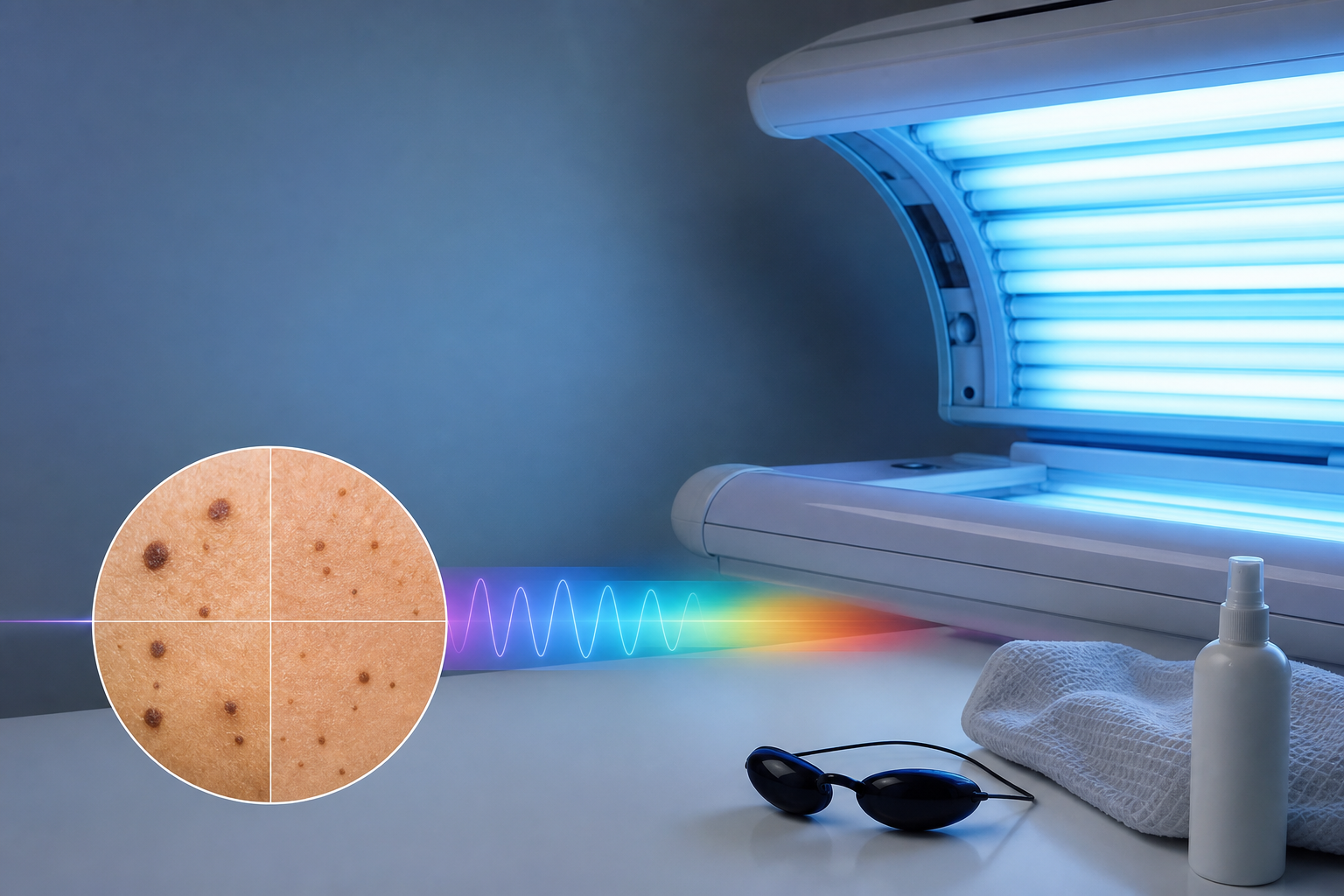
Sunbeds emit ultraviolet (UV) radiation with the intent of stimulating melanin production in the skin to create a tanned appearance. The UV spectrum comprises UVA and UVB rays, both of which affect skin cells but in different ways. UVA penetrates more deeply and is closely associated with skin aging, though it also contributes to DNA damage. UVB primarily affects the skin's surface, responsible for sunburn and directly damaging DNA strands.
For a person with a high number of moles, this artificial UV exposure raises concern because each mole represents an area densely populated with melanocytes. These pigment-producing cells, when subjected to mutagenic UV stress, may undergo genetic changes that increase melanoma risk. While not all moles will develop into cancer, their quantity and characteristics can serve as indicators for susceptibility.
Moreover, individuals with multiple moles often have a predisposed genetic makeup or skin type associated with elevated melanoma risk. This predisposition can amplify the carcinogenic effects of UV radiation from sunbeds, making judicious use—or avoidance—critical. Sunbeds, unlike natural sunlight, offer an intense, concentrated UV dose, sometimes with minimal or no protective mechanisms equivalent to natural sun conditions. Due to this, the question of sunbed safety in mole-rich skin is particularly important for both medical professionals and consumers who wish to avoid unintended harm.
What Does Current Scientific Evidence Say About UV Radiation and Melanoma Risk?
Ultraviolet radiation, irrespective of its source, is a proven risk factor in the development of melanoma and other skin cancers. The International Agency for Research on Cancer (IARC), part of the World Health Organization, has classified UV-emitting tanning devices as Group 1 carcinogens, the highest level of evidence regarding their cancer-causing potential.
This classification signifies an unequivocal association between sunbed usage and cancer risk, supported by numerous epidemiological studies. For instance, research indicates that first-time sunbed use before 35 years of age can increase melanoma risk by nearly 60% in some populations. This risk is cumulative and interacts adversely with other factors like skin type and mole count.
The genetic damage induced by UV radiation includes mutations in DNA repair genes and oncogenes within melanocytes. These mutations can lead to uncontrolled cell proliferation and eventually malignant tumor formation. Given that melanocytes are the primary cell type within moles, UV exposure directly threatens the stability of these benign lesions.
Is There a Safe Level of UV Exposure for People with Numerous Moles?
One of the critical questions is whether any level of UV exposure from sunbeds can be deemed safe, especially for those with many moles. Scientific consensus and expert guidelines uniformly indicate that no dose of artificial UV radiation can be considered completely risk-free. The risk of skin cancer, including melanoma, increases even with minimal exposure, and cumulative effects over time magnify this danger.
This absence of a safe threshold is particularly critical in individuals with multiple moles, due to their elevated baseline risk and the potential for individual lesions to undergo malignant transformation. While certain commercial tanning establishments may promote purported "safe" exposure times or sessions, these claims lack robust scientific validation and do not account for individual susceptibility factors such as mole count.
Consequently, leading dermatological and oncological authorities often recommend complete avoidance of sunbeds for people with numerous moles. This guidance is based on the principle of minimizing additional carcinogenic insults beyond natural environmental exposure.
What Symptoms or Changes in Moles Warrant Medical Evaluation?
Vigilance over mole characteristics is essential for early melanoma detection, supplementing avoidance of UV exposure. Any changes in the following features should prompt consultation with a dermatologist or other healthcare professional:
• Size: A mole growing rapidly or exceeding typical dimensions warrants attention.
• Shape: Irregular, asymmetrical, or blurred borders might indicate malignancy.
• Color: Uneven pigmentation, multiple colors, or darkening can be a red flag.
• Surface: Changes such as scaling, ulceration, bleeding, or crusting require prompt evaluation.
• Symptoms: New itching, tenderness, or pain in a mole, especially following sunbed exposure, should be assessed by a professional.
Moreover, any novel moles appearing in adulthood or lesions that look substantially different from an individual's other moles—often termed the "ugly duckling" sign—should be examined for malignancy. Techniques like dermatoscopy and biopsy facilitate accurate diagnosis.
Which Individual Risk Factors Intensify the Harmful Effects of Sunbeds?
The danger posed by sunbeds is not uniform; certain personal characteristics can magnify adverse outcomes. Notable risk factors include:
• Very Fair Skin Phototypes: Individuals with skin types I and II, characterized by minimal melanin and propensity to burn, experience greater UV damage and higher melanoma risk when using sunbeds.
• Family History of Melanoma: Genetic predisposition significantly raises susceptibility to UV-induced carcinogenesis.
• Photosensitive Skin Disorders: Conditions such as lupus erythematosus or xeroderma pigmentosum predispose to abnormal skin response and damage upon UV exposure.
• Medications Increasing Light Sensitivity: Certain drugs can heighten photo-sensitivity, exacerbating UV effects on skin cells.
Those with these factors should exercise extreme caution or avoid sunbed use entirely, complementing recommendations related to mole quantity. Medical consultation is imperative before any UV exposure decision.
What Alternatives Enable a Tanned Look Without UV Exposure?
For individuals seeking a bronzed complexion while mitigating skin cancer risk, various UV-free approaches exist:
• Topical Bronzers: Products containing dihydroxyacetone (DHA) chemically interact with the skin’s outer layer to produce a temporary tan without UV rays.
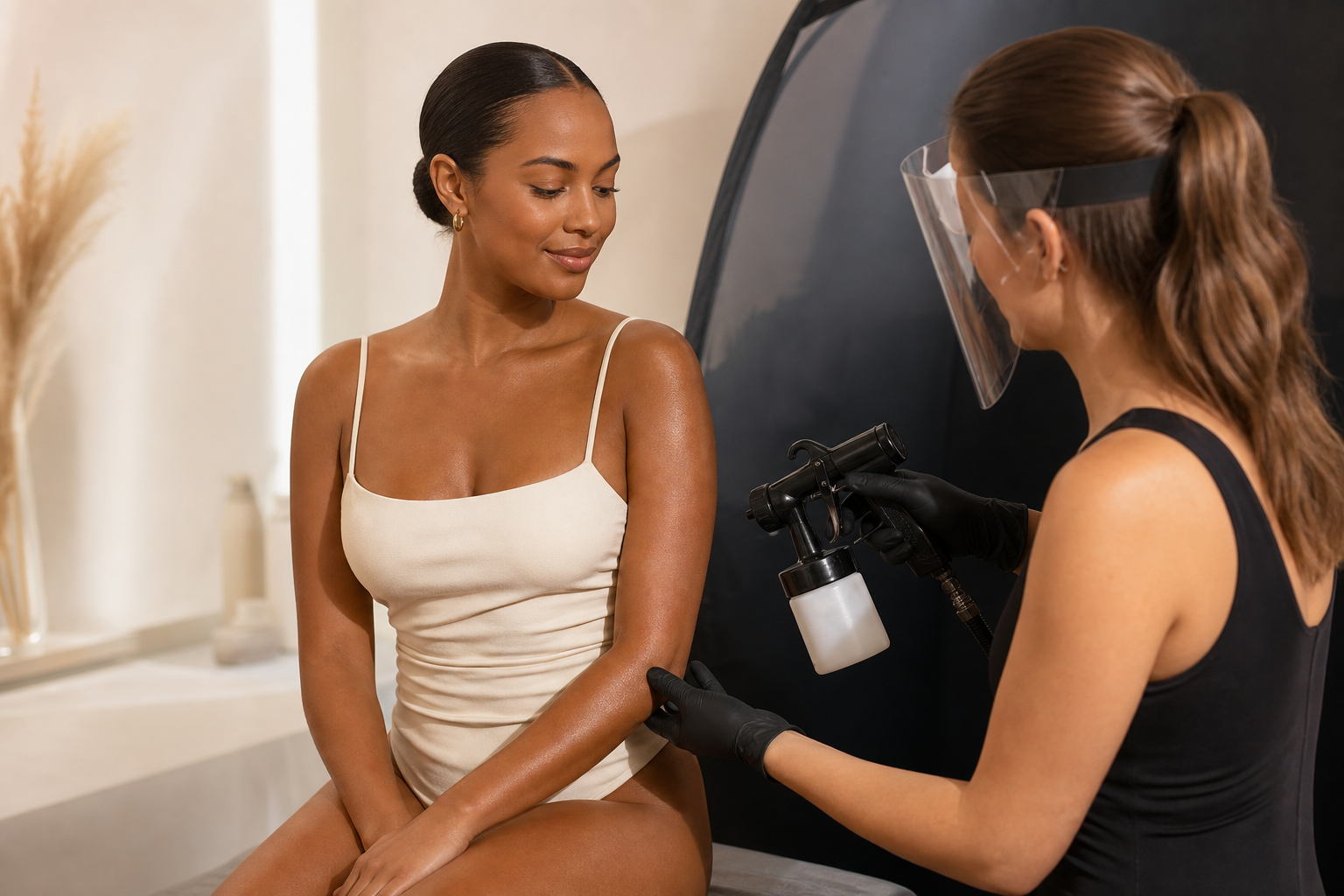
• Spray Tanning: Professional application of DHA-based solutions creates even, customizable color with minimal health concerns.
• Cosmetic Makeup: Bronzers and tinted moisturizers can provide color enhancement without any exposure to UV radiation.
Adopting these methods avoids the DNA damage associated with sunbeds and maintains skin integrity. Additionally, regular skin examinations remain a cornerstone of mole monitoring and melanoma prevention.