When planning a seaside vacation, many people consider developing a "base tan" beforehand as a protective measure against sunburn. This concept suggests that a preliminary, light tan acquired prior to exposure to intense sunlight can help guard the skin against sunburn during prolonged outdoor activities, such as those commonly experienced during holidays at the beach. However, the validity of this belief is often questioned. Does obtaining a base tan truly provide sufficient protection against sunburn, or is it a misleading myth that might encourage risky sun exposure?
This article addresses the question: Does a base tan prevent sunburn on holiday? It is tailored for individuals seeking a safer, more informed approach to sun exposure, particularly those preparing for holidays where the sun’s ultraviolet (UV) intensity is elevated. Understanding the real protective capacity of a base tan is crucial to making healthy choices that minimize the risk of painful sunburns and long-term skin damage.
Exploring the science behind how a tan develops and interacts with UV exposure will help clarify whether it can be relied upon as a protective barrier or if comprehensive sun protection strategies remain indispensable.
What Is a Base Tan and How Does It Develop?
A base tan refers to a mild, light brown coloration of the skin achieved after repeated, gradual exposure to UV radiation, either from natural sunlight or artificial sources such as tanning beds. This pigmentation results from the skin's production of melanin, the pigment responsible for skin color, which increases as a natural defense mechanism against UV-induced damage.
The process of acquiring a base tan is essentially the skin's response to controlled damage: UV rays stimulate melanocytes in the skin to produce more melanin, which then absorbs and dissipates UV radiation to protect underlying cells. However, this response indicates that some degree of skin injury has occurred, as melanogenesis is triggered to repair and defend compromised tissue.
The intensity and uniformity of a base tan depend on a variety of factors. These include an individual's skin phototype (or skin type), the strength and wavelength of UV radiation encountered, the duration and frequency of exposure, and genetic predisposition. Importantly, a base tan as commonly achieved provides a relatively shallow level of protection compared to the full potential of skin adaptation over longer periods or multiple seasons.
Does a Base Tan Significantly Reduce the Risk of Sunburn?
It is a widespread belief that a base tan can reduce the likelihood or severity of sunburn during subsequent intense exposure, such as on vacation by the sea. While intuitively appealing, scientific evidence indicates that this protective effect is minimal at best.
Research consistently shows that the protection imparted by a base tan is roughly equivalent to a sun protection factor (SPF) of about 2 to 4. To contextualize, dermatologists generally recommend using sunscreens with an SPF of 30 or higher to significantly reduce sunburn risk during moderate to high UV exposure. Therefore, a base tan provides only a fraction of the necessary defense against potentially harmful UV radiation.
Moreover, relying solely on a base tan as protection can foster a false sense of security, leading to longer and riskier periods in the sun without adequate sunscreen or physical barriers such as clothing or shade. Especially in environments with intensified UV exposure—like beaches where sunlight reflects off water surfaces—this can increase the incidence of sunburns and longer-term photodamage.
How Do Skin Types Affect the Protective Value of a Base Tan?
Skin phototype plays a critical role in how a base tan forms and its degree of protection. People with lighter skin types, often classified as phototypes I and II, typically have less melanin and sunburn easily. For these individuals, the base tan typically develops more slowly and less intensely, offering negligible protection against UV damage. This leaves light-skinned individuals particularly vulnerable to sunburn even if they have attempted to cultivate a base tan.
For individuals with darker skin phototypes (IV, V, VI), the baseline melanin content is higher, and the skin generally tolerates UV exposure better. However, even in these cases, the existence of a base tan does not eliminate the risk of sunburn or other UV-induced skin damage. Darker skin phototypes may experience delayed and less noticeable burn and sun damage, but UV exposure can still promote premature aging and increase skin cancer risk.
Can UV Exposure Through Tanning Beds Serve as a Safe Means to Build a Base Tan?
Some people turn to tanning beds as a method for achieving a base tan before holidays, believing that controlled artificial UV exposure is a safer way to prepare the skin. Tanning beds primarily emit UVA and some UVB radiation, similar to natural sunlight, and stimulate melanin production similarly.
However, the use of tanning beds carries comparable or even elevated risks of skin damage and cancer, especially with repeated use. Importantly, a base tan acquired from tanning beds offers the same minimal protection as one acquired from the sun and does not justify increased UV exposure without significant protective measures.
Concerns regarding the safety of tanning beds include questions such as whether they are less harmful than sunbathing, if skin that does not turn red indicates safety, or if shorter sessions reduce risk. Current dermatological consensus is that no tanning method relying on UV exposure is without risk, and reliance on tanning beds to build a base tan is inadvisable for healthy skin.
What Are the Recommended Strategies to Protect Skin on Holiday?
Given the limited protective value of a base tan, comprehensive sun safety practices are essential when spending time outdoors, especially in high UV environments such as coastal holidays. Key recommendations include:
Applying broad-spectrum sunscreen: Using sunscreens with at least SPF 30 that protect against UVA and UVB rays helps significantly reduce skin damage and sunburn risk. Reapplication every two hours and after swimming or sweating is important.
Wearing protective clothing: Long-sleeved shirts, wide-brimmed hats, and UV-blocking sunglasses provide physical barriers against UV radiation.
Avoiding peak sun hours: Planning outdoor activities in the early morning or late afternoon, avoiding the hours from roughly 10 a.m. to 4 p.m. when UV radiation is strongest.
Seeking shade: Using umbrellas, canopies, or natural shade reduces direct UV exposure.
What Are Safe Alternatives for Achieving a Tanned Appearance Without UV Damage?
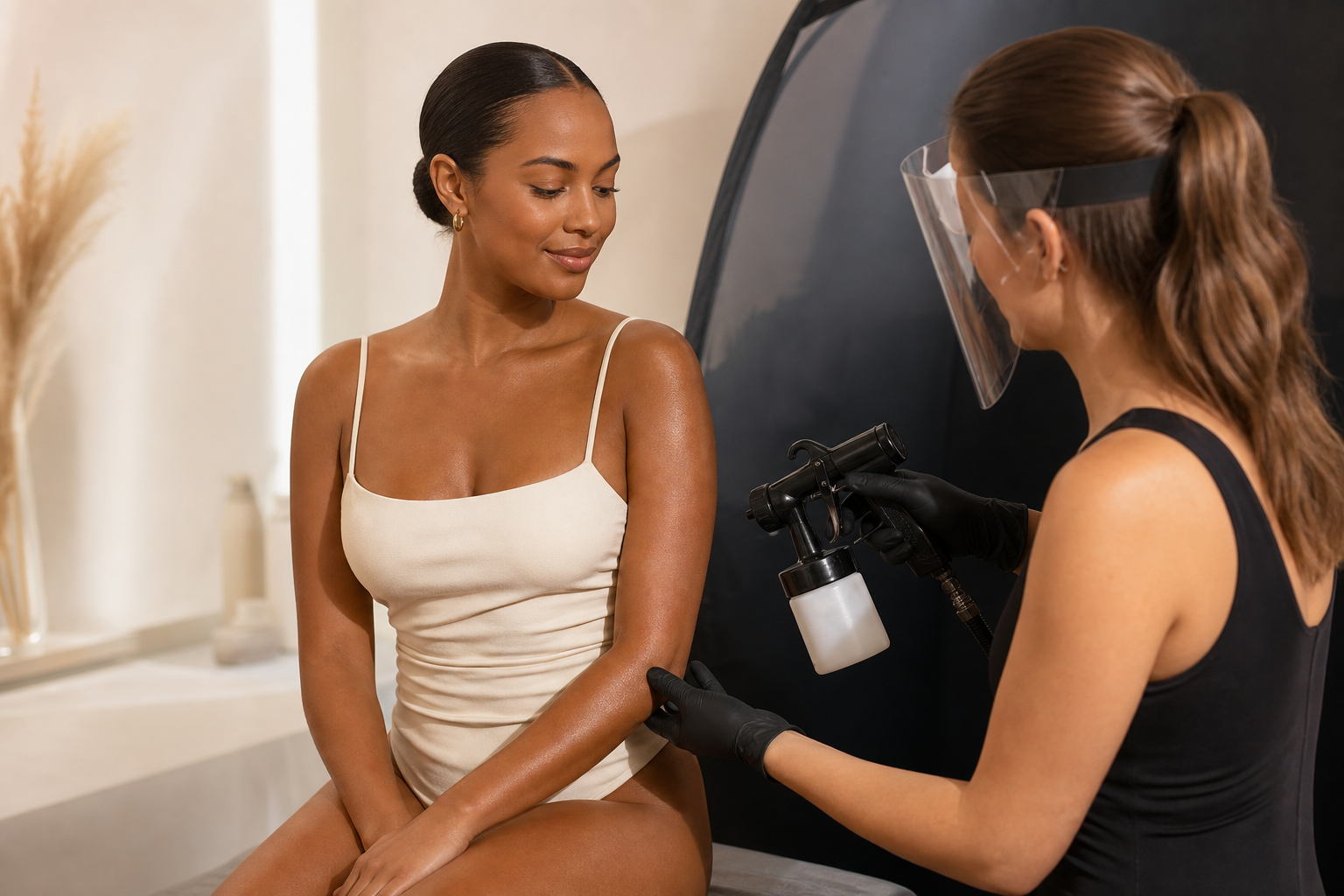
For those who desire the cosmetic effect of a tan without exposure to harmful UV rays, various UV-free tanning options exist. Among these, spray tans and self-tanning lotions provide pigmentation to the skin without stimulating melanin production or causing skin damage.
It is important to note that while cosmetic tanning products can enhance skin color temporarily, they offer no protection against UV radiation. Users must continue to apply sunscreen and adhere to sun protection measures when exposed to sunlight.
Information on these UV-free alternatives can be found in resources covering the Spray Tan cluster (master ID 881), which discusses safe cosmetic options to achieve a glowing complexion.
Vitamin D Considerations and the Role of Medical Advice
Exposure to sunlight is a recognized source for vitamin D synthesis in the skin; however, recommendations concerning sun exposure for vitamin D needs must be individualized. Factors such as medications, underlying health conditions, or specific treatments (e.g., laser therapies) influence safe sun habits and timing.
Individuals concerned about vitamin D levels or specific health issues related to sun exposure should seek advice from healthcare providers, such as doctors, dermatologists, or pharmacists. These professionals can provide tailored guidance that balances vitamin D requirements and skin protection, as there is no universal protocol or waiting period for sun exposure related to these factors.
Why Understanding the Real Role of a Base Tan Matters for Skin Health
A clear and evidence-based understanding of the base tan's protective capacity is crucial for preventing sunburn and reducing risks associated with UV exposure. Misconceptions about the base tan can lead to underestimating the need for additional sun protection, increasing the likelihood of painful burns and long-term skin issues, including premature aging and increased skin cancer risk.
By acknowledging that a base tan provides only limited defense against UV rays, individuals are more likely to adopt comprehensive and effective sun safety practices during holidays and outdoor activities. This approach fosters healthier skin outcomes and more enjoyable sun exposure experiences without compromising safety.