In recent years, the pursuit of a radiant, sun-kissed complexion without exposure to harmful ultraviolet rays has elevated the popularity of spray tanning. This cosmetic technique offers a temporary bronzed glow by applying specialized tanning solutions to the skin. However, within this growing landscape, a notable distinction exists between professional spray tan solutions administered in salons and at-home self-tanning products. Understanding the differences between these options is crucial for anyone considering spray tanning — whether a beauty professional, a seasoned tan enthusiast, or a first-time user seeking a safer alternative to sunbathing or tanning beds.
This article delves into the nuances that separate professional spray tan formulations from consumer-level at-home products. It explores the variations in ingredient concentrations, application methods, expected outcomes, safety considerations, and realistic expectations. Grounded in editorial transparency and practical expertise, the discussion refrains from overstated claims and focuses on informed decision-making within the self-tanning domain. Readers will gain clear insights on how to choose the best spray tanning method tailored to their needs, skin types, and lifestyle.
Whether you are a professional aesthetician weighing product quality and application protocols or an individual curious about the convenience and effectiveness of home-use tanning products, understanding these distinctions matters. The goal is to achieve a natural-looking, even tan safely while avoiding common pitfalls such as uneven coloration, skin irritation, or misconceptions about product capabilities.
What Is Spray Tanning and Why Differentiate Between Professional and At-Home Products?
Spray tanning is a technique that involves applying a fine mist of a specially formulated self-tanning solution to the body’s surface. The primary active ingredient, dihydroxyacetone (DHA), reacts with amino acids in the skin’s outer layer (stratum corneum), producing a temporary darkening effect that mimics a natural tan. This non-UV method is favored for quickly achieving an even, sun-kissed look without the risks associated with sun exposure.
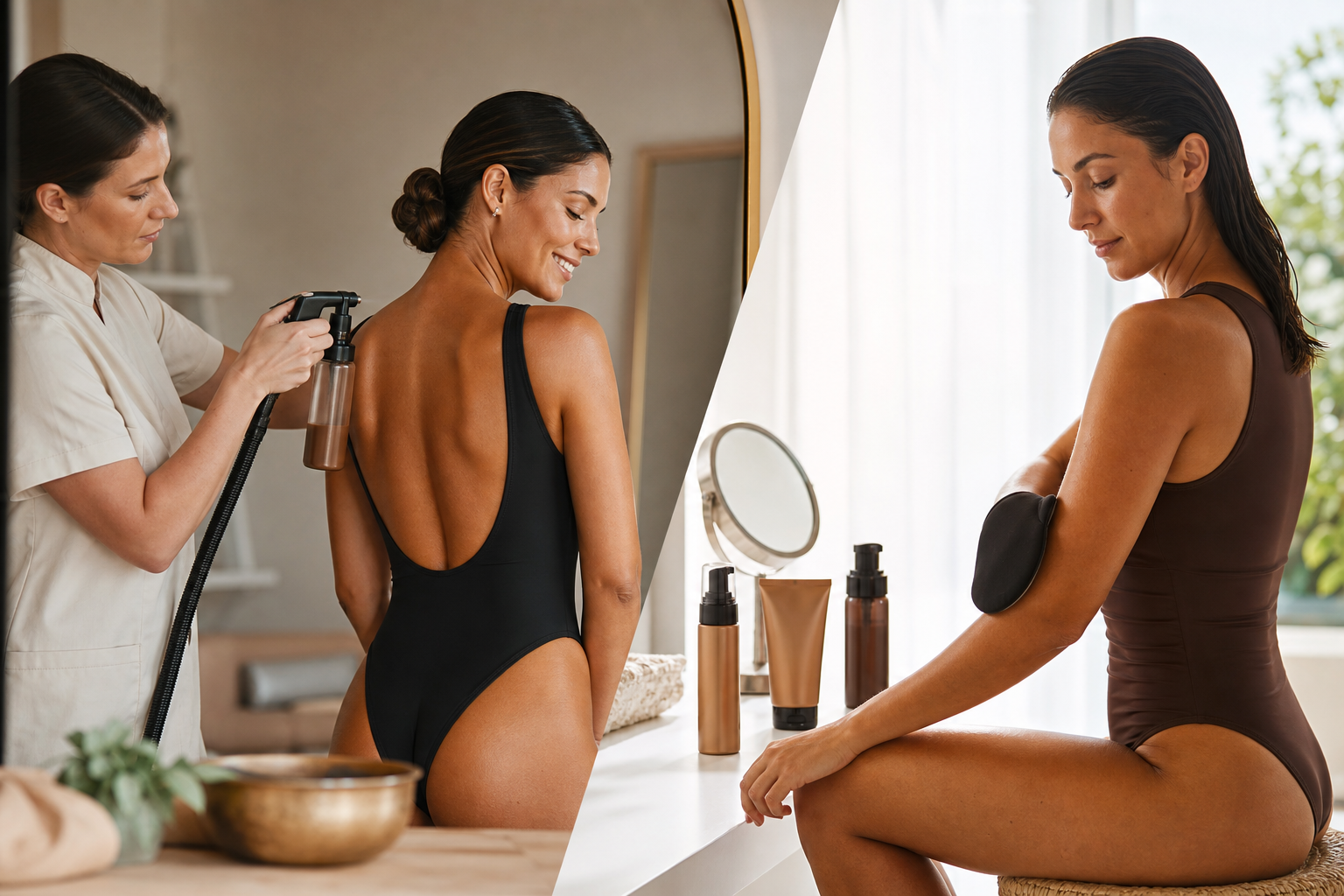
However, not all spray tan products are created equal, and the distinction between professional and at-home products is significant. Professional spray tan solutions are typically used in controlled salon environments by trained technicians who understand the skin preparation, precise application techniques, and post-tan care required for optimal results. These products usually contain higher concentrations of DHA and may include broader or more nuanced ingredient profiles designed to enhance color depth, longevity, and skin compatibility.
Conversely, at-home self-tanning products are formulated for ease of use by consumers who lack professional training. They often have a milder concentration of active agents and focus on simplicity and safety, reducing the chance of application errors or skin adverse reactions. While offering convenience and affordability, at-home products may not deliver the same intensity, uniformity, or durability as professional options.
How Do the Key Ingredients Differ Between Professional Spray Tan Solutions and At-Home Self-Tanners?
The backbone of any self-tanning product is DHA, a sugar-based compound that temporarily stains the skin's outermost cells. Professional spray tan solutions generally contain DHA concentrations ranging from 8% to 12%, facilitating a richer, longer-lasting tan. Additionally, many professional formulations incorporate adjuncts such as erythrulose, which slows the fading process and imparts a more natural color gradient.
In contrast, at-home tanning products frequently feature lower DHA concentrations, typically between 3% and 5%. This balance aims to minimize the risks of skin irritation or uneven color development when applied without expert technique. These consumer products often include moisturizing agents to counterbalance the potential drying effect of tanning agents, catering to a broader range of skin sensitivities.
Beyond DHA and erythrulose, professional solutions may contain a blend of skin conditioners, anti-inflammatory ingredients, and fragrances formulated to enhance the user experience and safeguard the integrity of the skin during the tanning process. Meanwhile, at-home products emphasize safety and simplicity, with fewer specialty additives and a streamlined ingredient list designed for straightforward application.
What Makes Professional Spray Tan Application Distinct, and Why Is Specialized Training Important?
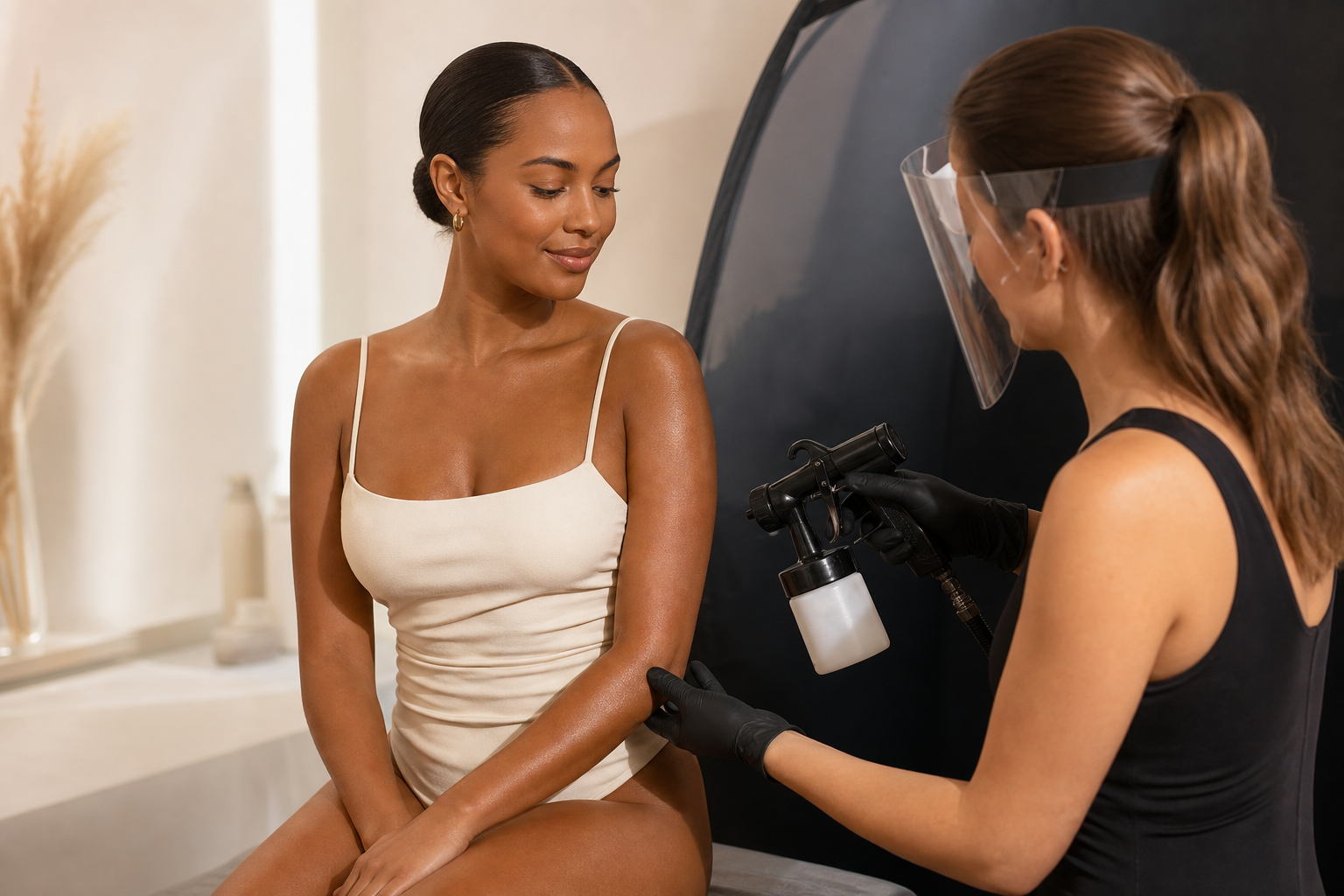
Professional spray tan application involves more than simply misting the skin with tanning solution. Highly trained technicians utilize specialized equipment such as airbrush devices or spray booths that regulate pressure and spray patterns, enabling an ultra-even, thin coating that minimizes streaks or blotches. They perform rigorous skin preparation, including gentle exfoliation to remove dead cells and precise hydration protocols to ensure the skin optimally accepts the tan.
The technician also orchestrates the timing and layering of applications and advises on post-tan care to prolong the color’s lifespan, all of which contribute to a flawless finish. Such a level of expertise is challenging to replicate without formal training and experience, underscoring why professional spray tanning stands apart in delivering consistent, aesthetically pleasing results.
Improper application can lead to patchiness, unrealistic color tones, or skin irritation. Hence, professional operators follow strict hygiene and safety standards, such as protective coverings and ventilation, further enhancing the quality and safety of the service.
What Are the Benefits and Limitations of At-Home Spray Tan and Self-Tanning Products?
At-home self-tanning offers undeniable convenience, discretion, and flexibility. These products—available as sprays, lotions, foams, or drops—afford users the ability to manage tanning schedules and gradually build color intensity. Their milder active ingredient concentration tends to reduce the incidence of adverse reactions for those unfamiliar with more potent tanning formulas.
However, at-home applications face inherent challenges. Without professional equipment or technique, achieving an even coverage can be difficult, frequently resulting in streaks or uneven fading. The absence of tailored skin preparation might also reduce adhesion, causing premature peeling or patchiness. The tan's intensity may be less pronounced, and longevity invariably shorter than professional results.
Additionally, consumer products require vigilant adherence to usage instructions, including patch testing for allergies and careful layering to avoid unnatural hues. Despite these limitations, at-home products serve well for individuals comfortable with gradual color development and who prioritize ease and affordability.
Why Is Safety Paramount When Using Spray Tan Solutions, and What Are Reasonable Expectations?
Spray tanning products, whether professional or consumer-grade, are generally safe when used as directed. However, it is imperative to acknowledge that these products are cosmetic and do not treat skin conditions or offer permanent skin camouflage. They produce a temporary aesthetic modification that fades as the skin naturally exfoliates.
Importantly, spray tans do not provide sun protection. Users must continue incorporating broad-spectrum sunscreens with SPF 30 or higher in their daily skincare regimen to guard against ultraviolet radiation. Misconceptions conflating self-tanning products with sunblock sources can dangerously elevate sun exposure risks.
Testing any new self-tanning formulation on a small skin patch is advisable to identify potential allergic or irritant reactions, particularly for sensitive skin. Those with open wounds, rashes, or dermatological conditions should avoid self-tanning applications or consult a healthcare professional prior to use.
When Should One Choose Professional Spray Tan Services Over At-Home Products, and Vice Versa?
The decision between professional spray tanning and at-home self-tanning pivots on individual goals, budgetary considerations, and comfort with application skills. Professional spray tans are optimal for those seeking a deep, evenly blended tan with medium to long-lasting wear, especially when individualized color matching and skin conditioning are priorities. These services are also advantageous for special occasions or when flawless coverage is desired.
Conversely, at-home products appeal to casual tanners, beginners, or those preferring incremental color development. They serve well for maintaining an existing tan or experimenting with color depths without professional time or expense. Individuals with specific schedules or privacy preferences may find home application more suitable.
Ultimately, users should weigh personal expectations against practical factors like skin sensitivity, ability to apply evenly, and willingness to follow comprehensive preparation and maintenance routines.
What Can Users Expect From Different Formulations, and How to Select Based on Skin Type?
Spray tan products vary not just in DHA concentration but also in the inclusion of guide colorants, formulation textures, and development speed. Guide color formulas contain pigments that provide immediate color feedback during application, aiding in precision and user confidence. Clear formulas lack these pigments, with color emerging gradually over several hours.
Express formulas accelerate color development and are favored by clients needing rapid results, whereas classic formulations build color more naturally over time. Selection depends on user timeline and preference for first-day appearance versus gradual tanning.
Choosing a formula suited to one’s skin type is crucial. Hydrating, emollient-rich products benefit those with dry or sensitive skin, enhancing comfort and minimizing flaky patches. Lighter, oil-free textures suit oily or acne-prone complexions, reducing pore occlusion risk. Specific facial self-tanning drops often offer targeted care with gentler formulations tailored to the delicate facial epidermis.
Common Questions About Professional and At-Home Spray Tan Products
Does a professional spray tan last longer than one achieved at home? Generally, yes. The higher DHA concentration, expert skin preparation, and meticulous application in professional settings contribute to prolonged color and more even fading compared to home applications.
Can spray tanning harm the skin? When used responsibly and with proper preparation, spray tanning is safe. Overuse, application on irritated or broken skin, or allergic responses to particular ingredients pose potential risks.
Why isn’t spray tanning a substitute for sun protection? Spray tan solutions lack UV filters and do not prevent skin damage from sun exposure. Continued use of broad-spectrum SPF is essential alongside any tanning practice.
How to pick the right spray tanning product for my skin tone? Consider your natural skin undertones, sensitivity, and desired intensity of color. Consulting product guides and choosing formulations designed for your skin type improve results and minimize adverse effects.