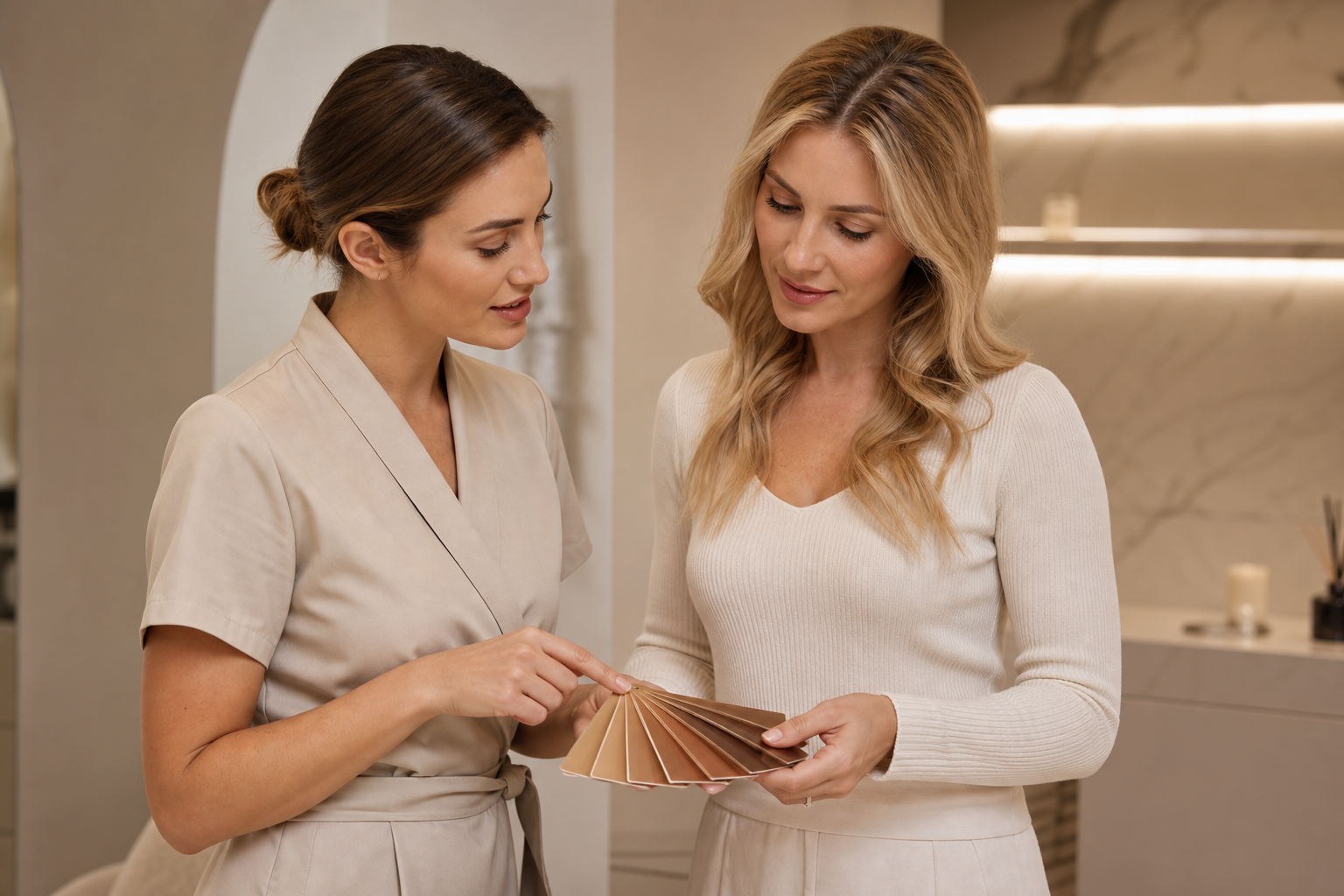
Choosing the right spray tan shade is a pivotal aspect of achieving a flawless, natural-looking glow that enhances one’s appearance without the risks associated with UV exposure. For professionals in the beauty and skincare industry, understanding how to select an appropriate color for each client is essential—not just for aesthetics but also for client satisfaction and skin health. This process demands a blend of knowledge about skin types, color theory, product chemistry, and client expectations, alongside an unwavering commitment to safety and authenticity.
This editorial article serves as a comprehensive guide aimed at professionals who offer spray tan services, as well as clients who wish to grasp the nuances behind choosing the perfect spray tan shade. By exploring the principles behind shade selection, client consultation techniques, and realistic outcome management, readers will gain clarity on how expert choices lead to optimal results. It will also underline critical safety practices to keep in mind during and after the application.
The importance of selecting the right shade cannot be overstated: it directly influences how natural and flattering the tan appears, how long it lasts, and how well it meets a client’s desires. Every spray tan application is unique because it must harmonize with individual skin tones and undertones, factoring in external conditions and lifestyle elements. Additionally, because spray tan does not provide sun protection, integrating skin safety advice post-application is crucial. In this exploration, we address the key steps professionals take to ensure that the shade they choose contributes to both beauty and well-being.
What Factors Influence the Selection of Spray Tan Shades?
Shade selection is not arbitrary; it begins with a methodical evaluation of the client's natural skin tone and undertone. This assessment provides a foundation for choosing a spray tan hue that will complement the person’s complexion rather than create an unnatural contrast. For professionals, understanding the distinctions between cool, warm, and neutral undertones is vital. For instance, a client with warm undertones and a light complexion may benefit from golden or bronze shades to enrich their natural radiance without appearing orange or streaky.
Beyond skin color analysis, professionals need to consider the client’s personal preferences and previous tanning experiences. During the consultation phase—an indispensable step—weighing realistic expectations against product capabilities helps set a clear path forward. Some clients may desire a bold, deep tan, while others prefer a subtle, sun-kissed effect. Guiding clients on what spray tan technology can achieve prevents dissatisfaction and unrealistic goals.
Additionally, extrinsic factors such as existing skin conditions, sun damage, or even the client’s lifestyle (including exposure to water or frequent workouts) influence shade choice. These elements affect both the final hue’s appearance and its longevity after application. Therefore, product selection—including the DHA concentration and formula type—must be tailored accordingly to ensure safety and consistent results.
How Does Skin Tone and Undertone Guide Shade Choice?
Grasping the complex interplay between skin tone (light, medium, dark) and undertone (cool, warm, neutral) forms the cornerstone of professional shade selection. A light skin tone paired with a cool undertone may look best with a tan that leans toward a subtle rose or soft mahogany rather than golden hues which could clash or highlight undesirable redness.
Medium skin tones often offer more flexibility but still require careful color differentiation. Warm undertones in this category suit bronze shades rich in caramel depth, while cool undertones might harmonize better with subtle chestnut shades. Clients with neutral undertones enjoy broader options but should still avoid extremes to maintain a natural finish.
For darker skin tones, richer, deeper spray tan shades often accentuate the natural glow without appearing ashy or dull. Professionals commonly rely on color charts developed specifically for spray tanning purposes to find the best matches in this spectrum. The objective is to amplify the natural beauty rather than overpower it with artificial hues.
What Role Do Client Expectations Play in Choosing the Right Shade?
Managing client expectations is a central aspect of the spray tan consultation. Professionals must clearly communicate the scope and limits of spray tanning—illustrating that results vary individually and are influenced by aftercare. Some clients may expect an immediate dramatic change, but often the color develops gradually over several hours.
For those seeking a more intense tan, professionals might recommend multiple sessions with incremental color build-up rather than a single application with a very dark shade, which can risk unnatural appearances or uneven fading. Such an approach improves safety and satisfaction while allowing the client’s skin to adjust gradually.
Ensuring clients understand that spray tan is a cosmetic procedure without sun protection helps prevent misconceptions and encourages responsible skin care habits post-treatment. Clarifying that broad-spectrum SPF 30+ is necessary to protect the skin after spray tanning aligns expectations with health priorities.
How Do Professionals Ensure Safety When Selecting and Applying Spray Tan Shades?
The safety of the client’s skin is paramount throughout the spray tanning process. Professionals must use dermatologically tested products with ingredients suitable for a range of skin types. Selecting shades that minimize the potential for allergic reactions or irritation is a vital precaution—especially for sensitive skin.
Using barrier creams on delicate or thin areas of the body—such as elbows, knees, or hands—helps prevent over-absorption of the tanning solution and subsequent patchiness. Proper application techniques, including the use of spray tan booths or controlled spraying devices, regulate product distribution for an even finish.
Training in optimal body positioning during the spray helps avoid streaks and missed spots, contributing to both aesthetic and hygienic quality of the tan. Adhering to standardized protocols enhances repeatability and client trust.
What Should Clients Expect During and After Shade Selection and Application?
Following shade selection, clients typically undergo the application process where the professional applies the chosen formula evenly across the body. The color generally takes several hours to fully develop, and clients are advised to avoid bathing, sweating, or applying lotions in that interim period to preserve the tan.
Post-application care includes moisturizing regularly with gentle products and avoiding chlorinated water or strenuous physical activity that could accelerate fading or cause discoloration. The lifespan of a spray tan varies but following professional aftercare advice significantly improves durability and appearance.
Professionals often provide guidance on how to maintain the tan and when to schedule follow-up visits, ensuring the shade remains true to expectation and skin health is preserved.
Why Is Using Broad-Spectrum Sunscreen Essential After a Spray Tan?
Spray tans create the illusion of sun-kissed skin without exposure to UV rays but do not offer any protection against ultraviolet damage. Consequently, the application of a broad-spectrum sunscreen rated SPF 30 or higher is indispensable after any tanning service to protect the skin from sunburn, photoaging, and other harmful effects of solar radiation.
Clients must be made aware that while the spray tan enhances appearance, it is not a substitute for sun protection. Educating clients on proper sunscreen use, including regular reapplication and selecting suitable formulas for their skin type, supports sustained skin health and the longevity of their tan.
How Does Shade Selection Integrate Into the Overall Spray Tan Experience?
The choice of spray tan shade is one part of a holistic client experience that comprises initial consultation, professional application, expert aftercare guidance, and follow-up. Each phase informs and strengthens the other, building a relationship of confidence and satisfaction.
Transparent communication throughout enables professionals to set clear expectations, customize the service, and adapt to each client's unique needs. In this way, shade selection harmonizes with technique and product choice to create a seamless, enjoyable, and effective spray tan journey.


