Laser hair removal has emerged as a preferred solution for individuals seeking a significant and lasting reduction in unwanted hair. Unlike traditional hair removal methods such as shaving, waxing, or depilatory creams, laser hair removal promises a more enduring outcome by targeting hair follicles directly. However, it is crucial to approach this treatment with a clear understanding of what results are realistically achievable, who benefits most from the procedure, and the factors influencing its effectiveness. This article serves as a comprehensive guide for potential and current laser hair removal clients, aiming to demystify the treatment process and set appropriate expectations for outcomes.
Understanding laser hair removal results is essential because it directly influences client satisfaction and treatment success. The process is more intricate than commonly perceived, involving biological hair cycles, laser technology nuances, and individual physiological variations. Recognizing the dynamics of hair growth, treatment schedules, and the interplay of skin and hair characteristics helps clients appreciate why multiple sessions are necessary, why results differ across body areas, and why the notion of permanent hair removal should be viewed cautiously. This knowledge empowers individuals to make informed decisions and manage their expectations effectively, ultimately enhancing their overall experience with laser hair removal.
How Do Hair Growth Cycles Influence Laser Hair Removal Outcomes?
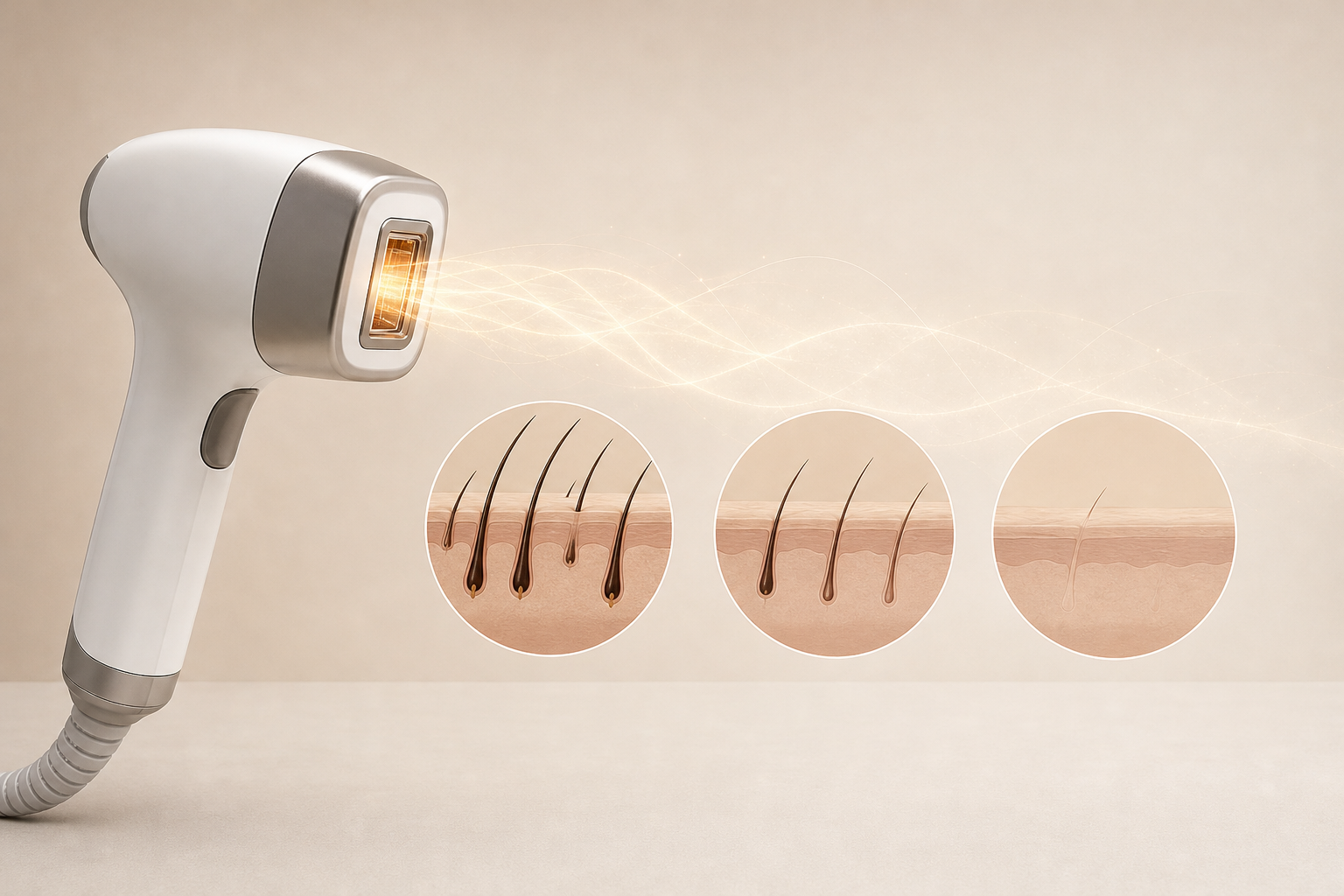
At the core of laser hair removal efficacy lies the biology of hair growth, which proceeds through distinct cyclical phases. Hair follicles transition continuously through the anagen (growth), catagen (transitional), and telogen (resting) phases. The laser selectively targets follicles during the anagen phase, when the hair bulb is actively growing and richly pigmented, allowing the emitted light to be absorbed and converted into heat that damages the follicle to impede future growth.
Since not all hair follicles are synchronized and not all are in the anagen phase at the time of treatment, a single session cannot eradicate every hair. Those follicles in catagen or telogen are temporarily dormant and thus evade laser energy, resurfacing during subsequent cycles. This biological reality dictates that multiple treatment sessions spaced several weeks apart are mandatory to capture and treat all follicles effectively as they enter the anagen phase.
Clients can generally observe signs of hair shedding and slowed regrowth a few weeks following a session. However, initial improvements may appear subtle, gaining prominence after subsequent treatments. Understanding this progression is critical; early shedding might paradoxically be followed by new hair emergence before overall density decreases appreciably.
Why Do Laser Hair Removal Results Vary by Body Area?
The characteristics of hair—such as thickness, color, density, and growth rate—differ significantly across various regions of the body, impacting how effectively laser treatments perform. Areas like the underarms, bikini zone, and facial hair typically contain coarser, denser, and darker hair strands. These traits make the follicles more responsive to laser energy due to greater melanin concentration, facilitating more effective targeting and damage.
Conversely, hair on the arms, legs, and back may be finer, lighter in color, and more sparsely distributed, requiring adjustments in laser settings, potentially more sessions, or alternative approaches to achieve satisfactory results. Further, skin thickness and sensitivity also vary by body area, influencing treatment parameters to balance efficacy and safety.
Professionals customize treatment protocols according to these regional differences, optimizing the laser wavelength, pulse duration, and fluence to the specific anatomical site. Patients should be counseled that the time to noticeable improvement and the extent of hair reduction will naturally fluctuate between different parts of the body.
How Do Skin Phototype, Hair Color, and Hair Caliber Affect Treatment Success?
One of the most pivotal determinants of laser hair removal success is the contrast between skin tone and hair color, framed within the Fitzpatrick skin phototype classification. The laser targets melanin pigment within the hair follicle; thus, patients with lighter skin and dark hair typically experience the best outcomes. The disparity allows the laser energy to be preferentially absorbed by the hair, sparing the surrounding skin.
Patients with darker skin tones require cautious parameter settings and sometimes different technologies, such as Nd:YAG lasers, to mitigate risks of thermal injury and pigmentary changes while maintaining efficacy. Similarly, individuals with light-colored hair—blonde, red, gray, or white—have reduced melanin in their hair follicles, making laser hair removal less effective or requiring alternative methods.
Hair thickness also plays a critical role. Thicker, coarser hairs conduct laser energy more efficiently and are more readily treated. In contrast, fine or vellus hair presents a challenge, often necessitating specialized strategies or expectations for partial reduction rather than elimination.
What Role Do Hormones and Internal Factors Play in Hair Regrowth After Treatment?
Hormonal influences can significantly impact laser hair removal results, particularly in areas prone to hormonally driven hair growth, such as the face, chest, or abdomen. Conditions like polycystic ovary syndrome (PCOS), androgenic hyperplasia, or hormonal imbalances can perpetuate hair growth by stimulating dormant follicles or inducing new ones to emerge, counteracting treatment effects.
For male patients, variations in androgen levels similarly affect hair growth patterns and response to laser therapy. It's advisable for practitioners to obtain a thorough medical history and, when warranted, coordinate care with endocrinologists to optimize treatment timing and expectations.
Moreover, transient hormonal changes—such as those occurring during pregnancy or menopause—may prompt unexpected hair regrowth even after successful laser treatments. Patients should be informed about these possibilities and the potential need for maintenance sessions in such scenarios.
How Do Different Laser Devices and Treatment Parameters Influence Effectiveness?
Laser technology is diverse, encompassing several device types tailored to varying skin and hair conditions. Popular options include diode lasers, alexandrite lasers, and Nd:YAG lasers, each with distinct wavelengths optimized for specific applications and phototypes.
The treatment's success is intimately linked to the correct calibration of device parameters, such as fluence (energy density), pulse duration, and spot size. Skilled practitioners adjust these settings dynamically during sessions to maximize follicular damage while minimizing risks like burns or hyperpigmentation.
Technological advancements have improved safety and comfort, with devices incorporating cooling systems and real-time skin monitoring. However, the operator’s expertise remains indispensable in selecting and modulating treatment protocols to individual needs, underscoring the importance of receiving laser hair removal from qualified professionals.
What Is the Difference Between Long-Term Hair Reduction and Permanent Hair Removal?
The terminology surrounding laser hair removal can be misleading. Regulatory and clinical perspectives emphasize that laser treatment results in long-term hair reduction rather than absolute permanent removal. This distinction acknowledges that while a substantial portion of hair follicles can be irreversibly damaged, some may survive or regenerate over time.
Long-term hair reduction entails a sustained decrease in hair density, thickness, and growth rate, often lasting for several years. However, complete and permanent cessation of hair growth across all treatment areas is not guaranteed, particularly in individuals with complex hormonal profiles or aggressive hair growth patterns.
Therefore, clients should maintain realistic expectations and consider laser hair removal as a method to achieve significantly diminished hair presence rather than total eradication, which aligns with clinical evidence and professional consensus.
What Happens Between Sessions: Hair Growth and Maintenance Considerations?
Between laser hair removal sessions, patients may observe new hair emergence or regrowth. This phenomenon reflects the asynchronous nature of hair cycles rather than treatment failure. Such growth is typically finer, lighter, or less dense than pre-treatment hair and tends to diminish progressively with successive sessions.
Maintenance phases following the initial treatment course are often recommended. These sessions, conducted once or twice a year, help to manage any residual follicular activity and sustain the hair reduction achieved. Without maintenance, some hair regrowth may occur, necessitating periodic touch-ups to preserve smooth skin.
Effective maintenance protocols should be individualized based on patient response, hormonal changes, and lifestyle factors. Open communication with the treatment provider ensures monitoring and timely intervention to uphold optimal results.
How Many Laser Hair Removal Sessions Are Necessary, and When Do Results Become Noticeable?
The number of sessions required varies widely depending on the factors discussed: hair and skin type, the body area treated, laser technology, and individual biological variation. Typically, a treatment course comprises 6 to 10 sessions, spaced approximately 4 to 8 weeks apart, to address hair follicles through successive anagen phases.
Early results can often be detected after 2 to 3 sessions as hair density and thickness begin to decline. More significant improvements usually manifest after the mid-point of the treatment course. Patience and adherence to appointment schedules are critical since premature judgments may underestimate the ultimate outcome.
Clients should avoid expecting rapid, complete hair removal after initial sessions. Instead, adopting a long-term perspective enables a more accurate evaluation of treatment benefit and fosters a collaborative therapeutic relationship with the provider.