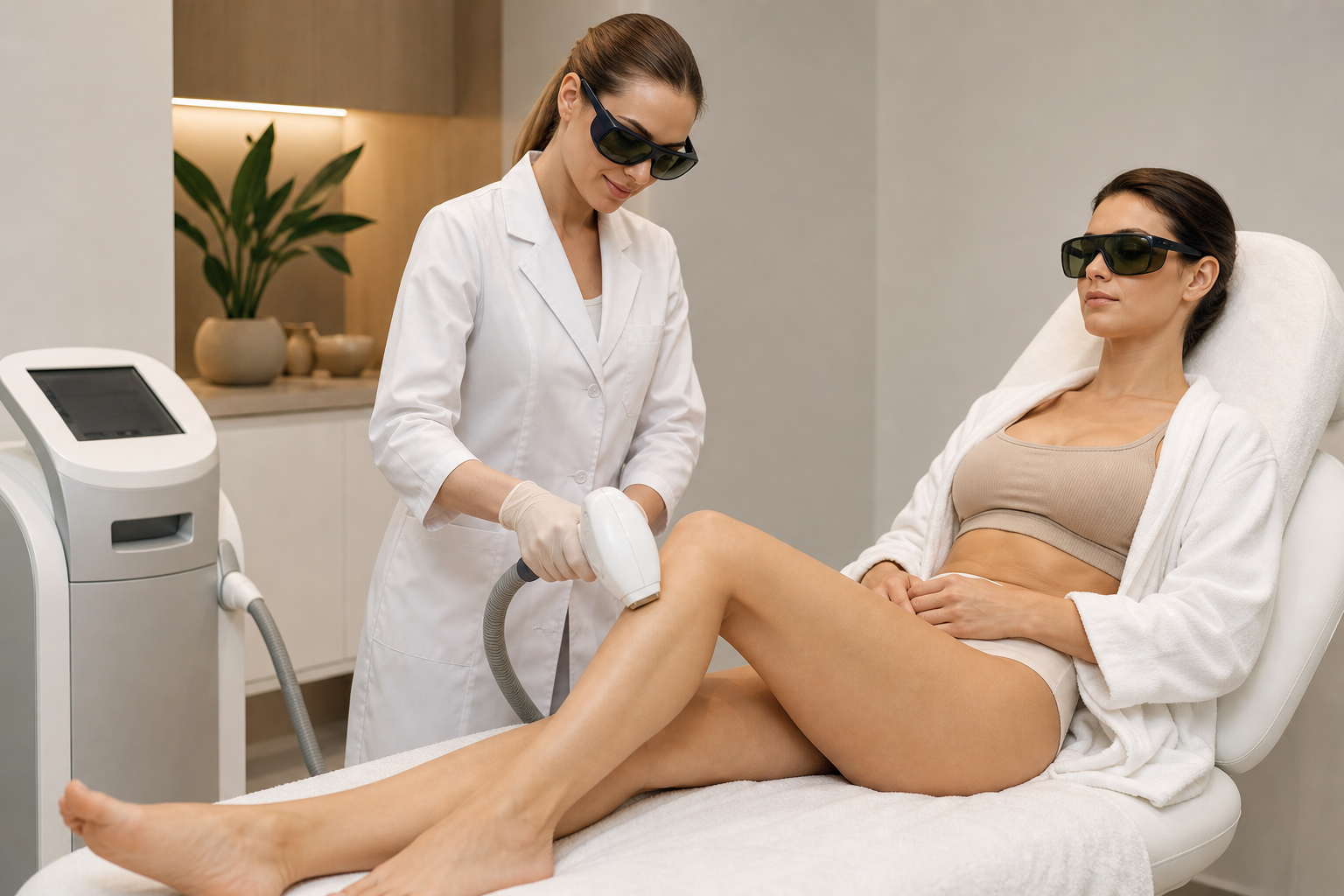
Laser hair removal has become one of the most sought-after aesthetic procedures worldwide, offering a long-lasting solution for individuals aiming to reduce unwanted hair. Despite its popularity, many wonder: how does a laser identify hair? This question cuts to the core of the technology and science behind selective laser hair removal. Understanding the mechanisms that enable lasers to precisely target hair follicles without damaging the surrounding skin tissue helps patients and practitioners appreciate the sophistication and efficacy of this treatment.
This article is intended for anyone curious about the science behind laser hair removal—from prospective clients evaluating their options to skincare professionals seeking clearer insights into laser-tissue interaction. By exploring the principles that allow lasers to selectively identify and deactivate hair follicles, we will demystify the process, reveal why it delivers such effective long-term results, and highlight factors influencing its success.
The ability of a laser to distinguish hair from skin centers on differences in optical properties and pigmentation. This fundamental science underpins every laser hair removal treatment and setting. The technology’s capacity to safely and efficiently disrupt hair growth while preserving healthy skin is why it remains a premier choice among laser procedures under the broad category of aesthetic treatments.
What Is Selective Photothermolysis and How Does It Target Hair?
The cornerstone concept behind laser hair identification and removal is selective photothermolysis. This process describes how a specific wavelength of light is absorbed preferentially by a target chromophore—in this case, melanin in the hair follicle—resulting in localized thermal damage that destroys the follicle’s ability to regenerate hair without harming the surrounding skin.
Laser devices emit a concentrated beam of light tuned to a wavelength that is absorbed selectively by the pigment melanin. Because melanin is responsible for hair color, the laser’s energy is drawn preferentially into the hair shaft and follicle, heating it to a temperature that damages the follicle cells permanently. The surrounding tissue, which contains less melanin and absorbs less laser energy, remains largely unaffected. This selective targeting is facilitated by the interplay of several factors: the laser’s wavelength, pulse duration, and energy fluence, all optimized to maximize follicle damage and minimize skin injury.
Understanding selective photothermolysis is essential because it explains why single-session laser hair removal rarely eradicates all hair. Hair grows in cycles—anagen (growth), catagen (transitional), and telogen (resting)—and the laser is effective mostly during the anagen phase, when melanin concentration in the follicle is highest. Multiple treatments spaced over several weeks are therefore necessary to catch hairs in this phase for maximal effectiveness.
Who Can Benefit from Laser Hair Removal and How Does Skin Type Affect Laser Selectivity?
Laser hair removal is suitable for a broad spectrum of individuals seeking long-term reduction of unwanted hair on various body areas. It appeals particularly to those who desire smoother skin without the inconvenience of shaving, waxing, or depilatory creams. However, results and safety depend largely on the user’s skin type and hair color, factors which influence the laser’s ability to selectively identify and target hair follicles.
Skin types are commonly classified by the Fitzpatrick scale, which ranges from very fair (Type I) to very dark (Type VI). The melanin content in skin determines laser absorption; darker skin contains more melanin, increasing the risk that laser energy might be absorbed by the skin rather than hair, which can cause burns or pigmentation changes. Advances in laser technology have introduced devices with longer wavelengths, such as Nd:YAG lasers, that penetrate deeper and are less absorbed by epidermal melanin. This advancement allows safer hair removal for darker skin tones, expanding the procedure’s inclusivity without sacrificing precision.
Conversely, lighter hair tones—such as blonde, red, or gray—contain less melanin and are less effectively targeted by traditional lasers. Research and clinical experience demonstrate that the selectivity of laser hair identification relies heavily on sufficient melanin contrast between hair and skin. For people with low contrast, alternative or adjunctive treatments may be needed for satisfactory hair reduction.
How Do Different Laser Technologies Improve Hair Identification and Removal?
Several laser platforms have been developed to refine how lasers detect and eliminate hair follicles. The primary types include diode lasers, Alexandrite lasers, Nd:YAG lasers, and Intense Pulsed Light (IPL) devices. Each employs a distinct wavelength and pulse duration that affect how deeply and precisely the light penetrates the skin and targets the hair pigment.
Alexandrite lasers operate at approximately 755 nm wavelength, offering high melanin absorption and thus effective targeting for light to olive skin types with dark hair. Diode lasers function around 800–810 nm and provide a balance of penetration depth and melanin absorption, making them versatile across a wider skin range. Nd:YAG lasers emit at 1064 nm, which is less absorbed by melanin but penetrates deeply, making them safer for darker skin tones though sometimes requiring more sessions for complete hair clearance.
Emerging technologies also incorporate cooling devices to protect the epidermis and improve comfort while preserving selectivity. These innovations maintain the principle that laser light must be absorbed more by hair follicle melanin than by surrounding skin to achieve effective, selective hair identification.
What Role Does Hair Follicle Anatomy Play in Laser Detection?
The structure and pigmentation of the hair follicle are critical to how lasers identify hair. Hair follicles contain melanin primarily in the bulb and matrix region where actively dividing cells produce hair. During the anagen phase, these cells are rich in melanin, presenting a distinct target for laser energy. The melanin granules absorb the laser photons, converting light energy into heat, which selectively damages the follicle cells essential for hair growth.
Additionally, the depth and diameter of hair follicles influence laser settings. Thicker, deeper follicles require longer wavelengths and higher fluence for adequate energy delivery. Conversely, finer or more superficial follicles may be targeted effectively with shorter wavelengths. This anatomical knowledge guides practitioner assessment and individualized laser treatment protocols that optimize hair identification and damage while preserving healthy skin.
How Does Laser Selectivity Minimize Skin Damage and Side Effects?
Precision in laser hair identification is not solely about effectiveness but also about safety. The ability to distinguish hair from surrounding skin melanin limits collateral damage, preventing burns, hyperpigmentation, or scarring. Laser parameters such as spot size, pulse duration, and fluence are calibrated to deliver sufficient energy to the melanin-rich follicle while sparing epidermal melanin.
Modern laser systems often include integrated cooling mechanisms—contact cooling, cryogen spray, or cold air—that protect the skin surface, further enhancing selectivity. These adjuncts help maintain patient comfort and reduce the risk of adverse effects by protecting non-target tissues.
Patient-specific variables, including skin tone, hair color, and anatomical site, dictate parameter adjustment, underscoring the importance of a professional consultation and customized treatment planning. Adherence to these principles ensures that laser hair identification remains exquisitely selective and minimally invasive, providing a safe hair removal experience.
What Should Patients Expect During and After Laser Hair Removal Sessions?
Understanding how a laser identifies hair clarifies what patients experience during treatment. When the laser is applied, brief pulses of light are absorbed by pigmented hair follicles, producing a warming sensation resembling a mild snapping or prickling on the skin. Treated areas may appear red or slightly swollen immediately afterward, signs of targeted follicle disruption and mild skin inflammation.
Hair shedding commonly occurs days to weeks following treatment as treated follicles release damaged hair shafts. Importantly, subsequent hair growth diminishes progressively over multiple sessions as successive anagen-phase follicles are targeted. Patients should anticipate multiple sessions, usually spaced 4–6 weeks apart, to achieve optimal reduction.
Post-treatment epidermal care emphasizes sun protection and skin hydration to facilitate healing and preserve even pigmentation. Following the guidance of a skilled practitioner ensures maximum benefit from the selective nature of laser hair removal.
Why Is Laser Hair Removal Considered Superior to Other Hair Reduction Methods?
The science behind laser hair identification translates directly into clinical advantages over traditional hair removal approaches. Unlike shaving or waxing, which merely remove hair shaft temporarily or irritate the skin, laser treatment targets the root of hair production. This fundamental difference offers prolonged inhibition of hair regrowth, leaving the skin smoother for extended durations.
Moreover, laser technology’s precision minimizes skin trauma and discomfort compared to waxing or electrolysis. Its speed allows treatment of large areas such as legs, back, or chest with efficiency. Modern lasers are also customizable for different skin types and hair colors, providing a versatile solution not matched by older methods.
For many patients seeking a durable, safe, and convenient method for unwanted hair reduction, the ability of lasers to identify hair follicles with scientific exactness is the defining benefit that sets this treatment apart.
How Is Laser Hair Removal Integrated Into Comprehensive Aesthetic Practice?
Within the wider category of laser procedures, laser hair removal occupies an important role among aesthetic treatments aimed at skin rejuvenation and correction. Clinics offering laser therapy often incorporate hair removal alongside pigmentation treatments, vascular lesion correction, and skin resurfacing to provide holistic skin care solutions.
Laser hair removal’s science-driven precision complements these other procedures by enhancing the aesthetic appearance and texture of the skin. Its synergy with skin rejuvenation techniques often improves patient satisfaction by delivering smoother, brighter skin free from unwanted hair and pigment irregularities.
Advanced laser centers leverage their understanding of selective photothermolysis and chromophore targeting to tailor individualized treatment plans that balance hair removal with broader skin health goals. This integration reflects the ongoing evolution of laser technology within modern aesthetic medicine.
Addressing Common Questions About How Lasers Identify Hair
Many patients have practical queries about laser hair removal’s selectivity and effectiveness. Common questions include: "Why can laser remove dark hair but not light hair?" This is because laser energy targets melanin-rich follicles, and lighter hair has less melanin absorption capability, making it harder for the laser to identify the hair.
Another frequent concern is "Does laser damage surrounding skin?" The targeted laser wavelengths and pulse durations are designed for selective absorption by hair follicle melanin, minimizing surrounding skin interaction. Excessive energy or incorrect laser type for a skin tone can increase risk, which is why professional assessment is critical.
Patients also ask about "Why multiple treatments are necessary?" As hair follicles cycle through various growth phases, only anagen phase follicles contain enough melanin to effectively absorb laser energy. Multiple sessions increase the chance of targeting all active follicles over time.


