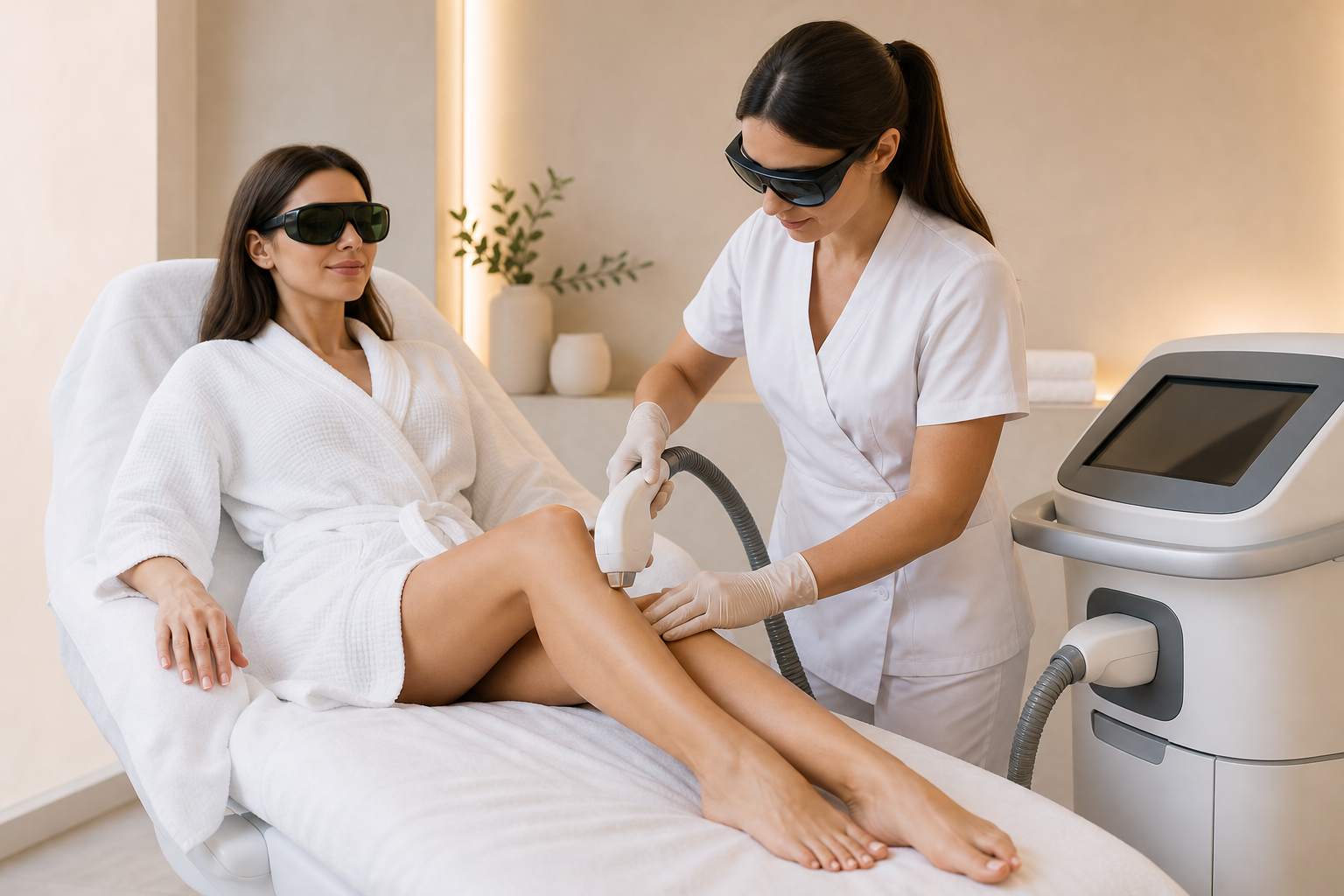
Laser hair removal represents a significant advancement in aesthetic treatments, promising a long-term solution to unwanted body hair. At the core of this procedure lies a question often posed by potential candidates and enthusiasts alike: does laser hair removal actually destroy the hair root? This inquiry is fundamental because understanding the mechanism behind laser hair removal informs expectations, treatment planning, and the perceived permanence of results. People considering this treatment—ranging from those burdened by excessive hair growth to individuals seeking smoother skin—benefit greatly from clarity about how laser energy interacts with hair follicles and their roots.
Exploring this topic not only demystifies the technology but also empowers patients and beauty professionals to make informed decisions. It matters because laser hair removal is an investment of time, money, and trust, and patients deserve to comprehend how it affects the biology of hair growth. This article delves comprehensively into the science behind the procedure, the biological target that laser treatments focus on, and what happens to the hair follicle’s root during and after sessions. We will also elaborate on how different hair types respond, potential outcomes, and considerations for achieving the best possible long-term hair reduction.
What Exactly is the Hair Root, and Why is it Important in Hair Growth?
To understand whether laser hair removal destroys the hair root, we must first define what the hair root entails. The hair root is the portion of the hair located beneath the skin’s surface, embedded in the hair follicle. This root includes the actively dividing cells within the follicle bulb, which generate hair strands. Crucially, the hair follicle also houses the dermal papilla at its base, a key structure supplying nutrients and signals essential for hair growth cycles.
The hair root and follicle are biological powerhouses that govern the phases of hair growth: anagen (active growth), catagen (transitional), and telogen (resting). The anagen phase is when the root cells rapidly divide, producing the hair shaft that extends outward beyond the skin. Because the root drives this growth process, targeting it effectively can influence hair presence and density.
Laser hair removal aims to impair the function of these hair root cells to curb the ability to generate hair shafts. The precise effectiveness of this action relies on influencing the follicle's lower regions, especially the bulb and dermal papilla. Thus, understanding the anatomy and physiology of the hair root is critical for grasping how laser procedures achieve hair reduction.
How Does Laser Hair Removal Work in Targeting the Hair Root?
Laser hair removal technology utilizes specific wavelengths of light energy designed to penetrate the skin and selectively target the pigment melanin present in the hair shaft and root. When the laser light is absorbed by melanin, it converts to heat, which is transferred to surrounding structures, primarily the hair follicle and its root components.
This thermal energy aims to disrupt the follicle’s capacity to produce new hair by damaging the cells responsible for reproduction and growth, particularly within the hair bulb where active cell division occurs. The heat essentially causes controlled injury, inducing follicular destruction or dysfunction without harming the surrounding skin when administered properly.
By focusing energy on melanin, laser hair removal is most effective on dark, coarse hair, as it contains more pigment that absorbs laser light. Lighter hair types, such as blond or gray, tend to respond less favorably due to reduced pigment, which makes targeting their roots more challenging and less effective.
Does Laser Hair Removal Truly Destroy the Hair Root or Merely Temporarily Disable It?
The distinction between permanently destroying the hair root and temporarily disabling its function is subtle yet vital. Scientific evidence and clinical experience suggest that laser hair removal does cause significant damage to the hair follicle’s lower part, which includes the root structures. This damage can lead to the follicle’s inability to properly regenerate hair for an extended period, which manifests as long-lasting hair reduction.
However, complete destruction leading to permanent hair removal is not guaranteed for every follicle during a single session or even several treatment cycles. Hair follicles vary in their susceptibility due to location, depth, stage of hair cycle, individual biology, and laser parameters. Some follicles may be only partially affected, entering a dormant or weakened state rather than being irreversibly destroyed.
This explains why multiple sessions are typically required to achieve optimal results. Each treatment targets follicles in the active growth phase, progressively reducing their activity. Over repeated treatments, many follicles become permanently inactive, which for practical purposes, equates to destruction of the hair root’s regenerative ability.
Why Are Multiple Sessions Necessary to Affect the Hair Root Permanently?
The hair growth cycle presents a challenge for laser hair removal’s impact on the hair root. Since only follicles in the anagen phase absorb sufficient laser energy to be effectively damaged, timing treatment sessions strategically is crucial. Unfortunately, not all follicles are active simultaneously; some may be in catagen or telogen phases during a given session and thus evade effective targeting.
Because of this, multiple sessions spaced several weeks apart allow lasers to reach follicles that enter the anagen phase later. With each session, a greater proportion of follicle roots incur irreversible damage. Eventually, a substantial number of roots lose their ability to produce hair, resulting in the long-term thinning or near-complete absence of hair in the treated area.
Moreover, individual variations in hair density, hormonal influences, and the skin’s response to laser treatments affect outcomes. Thus, practitioners tailor treatment regimens to maximize root destruction while maintaining skin safety and comfort.
What Factors Influence the Efficacy of Root Destruction via Laser Treatments?
Several factors determine how effectively laser hair removal can damage hair roots. Skin color and hair pigmentation are primary considerations; lasers target melanin, so darker hair on lighter skin yields better contrast and absorption. Conversely, darker skin tones require carefully selected laser types to minimize skin damage while reaching the root.
The type of laser technology employed—such as Alexandrite, diode, or Nd:YAG lasers—also impacts root destruction potential. Some devices penetrate deeper and are better suited for specific skin and hair types, improving follicle targeting. The skill and settings chosen by the practitioner ensure sufficient heat is delivered to the root without causing burns or other skin injuries.
Patients’ hormonal status and genetics influence hair regrowth patterns, potentially necessitating maintenance treatments. Additionally, thicker, coarser hairs are typically more responsive because of their greater melanin content and larger follicle size, which facilitates heat absorption at the root.
Are There Any Risks to the Hair Follicle That Impact Skin Health?
Laser hair removal is generally considered safe when performed by trained professionals, precisely because it selectively targets the hair root while sparing surrounding tissue. However, intentional damage to the follicle root can occasionally result in transient side effects such as redness, swelling, or mild discomfort due to localized heat exposure.
In rare cases, improper technique or unsuitable laser settings may cause burns, pigment changes, or folliculitis (inflammation of the hair follicle). Nonetheless, these risks are mitigated by proper patient evaluation, pre-treatment care, and post-treatment follow-up. Importantly, since the procedure disables hair follicle function, it does not inherently harm the skin’s overall health when done correctly.
Can Laser Hair Removal Eliminate Hair Roots Permanently, or Is Maintenance Required?
While many individuals experience significant permanent reduction of unwanted hair thanks to the destruction of many hair roots, it is important to understand that laser hair removal may not eradicate every follicle indefinitely. Some follicles can survive the treatment and regenerate hair over time, especially those initially in dormant phases during sessions.
Consequently, most patients benefit from periodic maintenance treatments to address emergent follicles or fine hairs that develop later. The requirement for maintenance varies widely depending on individual biology, hormonal changes, and the quality of initial treatments. In contrast to temporary hair removal methods, laser technology offers superior long-term control with occasional upkeep rather than perpetual management.
What Should Patients Expect in Terms of Hair Root Response During the Treatment Course?
Patients undergoing laser hair removal can expect an observable reduction in hair density and thickness after just a few sessions. Initially, treated hairs often shed within days or weeks following a session, reflecting follicle root damage signaling the hair to fall out prematurely. Subsequent regrowth tends to be finer and lighter due to partial follicle impairment.
As treatments progress, fewer hairs emerge because more roots are damaged beyond repair, contributing to progressively smoother skin. Patients should be prepared for a gradual process because roots enter different growth phases on varied timelines. Patience is essential to allow the laser effect on roots to accumulate.
How Does Laser Hair Removal Compare to Other Methods in Affecting the Hair Root?
Compared to traditional hair removal techniques like shaving, waxing, or depilatory creams, laser hair removal uniquely targets the hair root. Shaving only removes hair at the skin surface, waxing pulls hairs from the follicle but does not necessarily destroy the root, and creams dissolve hair shafts above the skin. Electrolysis, another method claiming permanent removal, destroys individual follicles via electrical energy but is more time-consuming for large areas.
Laser hair removal balances efficiency and effectiveness by simultaneously treating many follicles with high-precision technology that damages the root biologically. This characteristic distinguishes laser procedures as the leading option for long-term hair reduction and explains their popularity in aesthetic medicine.


