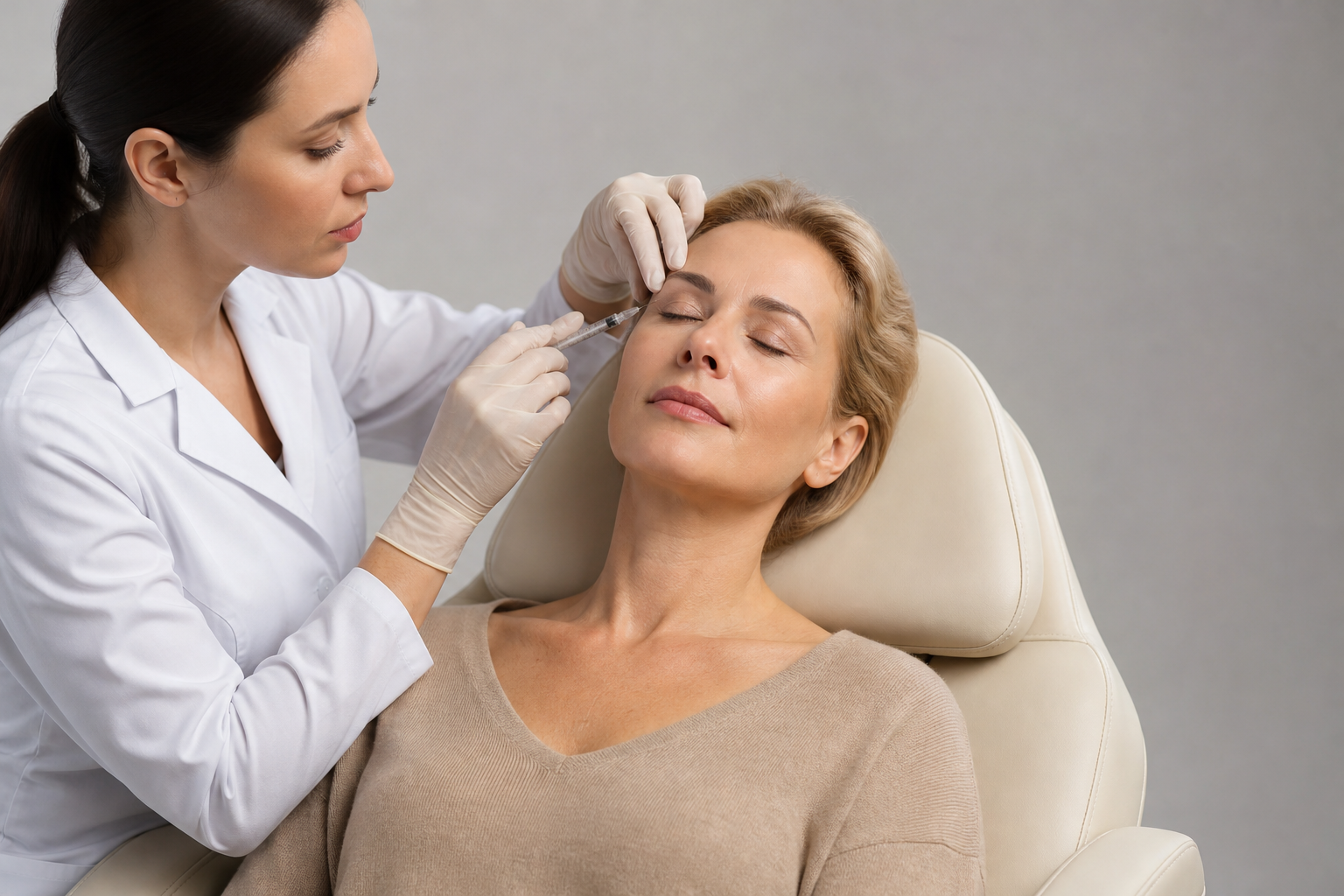
Botox has revolutionized the field of aesthetic medicine as one of the most sought-after treatments for reducing wrinkles and rejuvenating facial appearance. However, anyone considering or undergoing Botox treatment quickly notices that the effects are not uniform across all regions of the face or even consistent from person to person. This variation in effect timing, intensity, and duration can be a source of confusion or concern for patients and practitioners alike.
Understanding why the effects of Botox differ across various facial regions is crucial to setting realistic expectations, planning an effective treatment strategy, and ensuring both safety and satisfaction. This article explores the complex interplay of anatomical, biological, and procedural factors that influence Botox's onset of action and effectiveness in distinct facial areas. It is intended for individuals interested in deeper knowledge of Botox’s mechanisms, clinicians seeking refined application understanding, and anyone aiming to comprehend what truly governs the results of this popular neurotoxin.
By examining the underlying physiological principles, regional anatomical features, patient-specific factors, and clinical protocols, we define why Botox’s impact varies across the face and what this means in practical terms. Moreover, we address limitations inherent to the treatment, the importance of qualified specialist guidance, and how measured assessment of results can lead to optimal aesthetic outcomes.
Distinct Anatomical and Functional Characteristics Influence Botox's Regional Effects
At its core, Botox (botulinum toxin type A) works by temporarily interrupting nerve signal transmission to specific muscles, thereby reducing muscle contraction and smoothing the overlying skin. However, the muscles involved in facial expression are neither uniform in structure nor function. This anatomical diversity is a primary determinant of the variability observed in Botox’s effectiveness by region.
For instance, the muscles of the forehead, such as the frontalis, are relatively thin and superficial with vertical fibers. They control raising the eyebrows and forming horizontal forehead lines. By contrast, the orbicularis oculi around the eyes comprise a complex circular muscle responsible for blinking and smiling, possessing more robust thickness and different fiber orientation. The musculature in the lower face, which governs movement essential for speech, chewing, and exaggerated expressions, is yet more intricate and powerful.
Because Botox’s mechanism relies on targeting motor nerve endings, the density and arrangement of these nerves vary in each facial region, influencing how and when the toxin achieves muscular paralysis. Additionally, anatomical barriers such as fascia thickness and muscle depth affect drug diffusion, with some areas facilitating faster toxin uptake compared to others. Thus, it is natural for Botox to exhibit varied onset timing and intensity in different facial zones, reflecting their unique biological and structural properties.
Biological Variability and Neuromuscular Dynamics Shape Onset and Duration
Beyond anatomy, the biological behavior of muscles and individual patient physiology significantly modulate Botox’s functional timeline. Typically, Botox begins to visibly reduce muscle contraction within 24 to 72 hours post-injection, but full effect may develop over two weeks. This variation depends largely on muscle size, activity level, and regeneration capacity unique to each region.
Muscles engaged in constant or strong repetitive movements, such as those around the mouth, may require longer for toxin-induced relaxation due to their habitual contraction strength and adaptive neural connections. Conversely, frontalis muscles, which are thinner and less deeply seated, often show quicker response to treatment. Additionally, factors such as local blood supply, skin thickness, and subcutaneous tissue influence the rate of toxin absorption and clearance.
Individual metabolic differences also play a role. Some patients metabolize botulinum toxin faster, thereby shortening its clinical effect, while others may experience prolonged action. Genetic predispositions, lifestyle habits including smoking and sun exposure, and overall health status impact muscle tone, collagen production, and skin elasticity, further complicating the uniformity of Botox effects.
Establishing Realistic Expectations and Evaluating Treatment Results Professionally
A critical aspect of successful Botox therapy lies in aligning patient and practitioner expectations regarding timing and regional effectiveness. Recognizing that the toxin does not exert an instantaneous, homogenous impact prevents misinterpretation of results and unwarranted dissatisfaction.
Clinicians emphasize that the definitive evaluation of Botox’s outcomes should occur after approximately two weeks, allowing sufficient time for maximal neuromuscular blockade to manifest across all treated regions. Earlier assessment risks overlooking delayed response in deeper or more resilient muscle groups.
Moreover, varying responsiveness between facial zones means some areas may require supplementary dosing or follow-up sessions for optimal balance. Through attentive observation and open patient communication during follow-up visits, adjustments can ensure harmonized facial expression without unnatural stiffness or asymmetry.
Limitations of Botox and Identifying When Expert Consultation Is Crucial
While Botox offers remarkable benefits, it is important to understand its inherent limitations. Botox targets dynamic wrinkles caused by muscle activity but does not address static wrinkles linked to skin aging or volume loss. It cannot substitute for treatments that restore facial fullness or tighten lax skin.
Additionally, Botox is not suitable for individuals with certain neuromuscular disorders, allergies to ingredients, or those who are pregnant or breastfeeding. Safety concerns also arise from incorrect injection techniques, dosage errors, or unqualified practitioners administering the treatment, which can lead to complications such as ptosis, asymmetry, or unwanted muscle weakness.
Any unexpected or prolonged uneven effect—such as asymmetrical paralysis, delayed onset beyond two weeks, or adverse symptoms—should prompt consultation with an experienced medical professional to assess for potential complications or need for corrective interventions.
Clinical Strategies for Achieving Consistent and Natural-Looking Botox Effects
Experienced injectors employ comprehensive knowledge of facial anatomy, muscle function, and patient-specific factors to tailor Botox applications for uniformity. Precise dosing calibrated per region, accurate injection depths, and meticulous selection of injection points are essential to harmonize muscle relaxation.
Structured treatment plans often incorporate staged sessions allowing incremental adjustments, minimizing overtreatment and enhancing symmetry. Monitoring patients’ responses over time guides refinement of protocols to individual physiology and aesthetic goals.
Equally important is clear communication with patients to set expectations about gradual onset, natural appearance, and the potential need for maintenance treatments. This collaborative approach fosters improved satisfaction and reinforces treatment safety.
Individual Patient Factors Contributing to Differential Botox Responses
Personal variables profoundly affect the qualitative and temporal characteristics of Botox’s action. Age influences skin elasticity, muscle tone, and regenerative capacity—all key to visible result quality and durability. Younger patients often experience more rapid, pronounced effects due to more supple tissue and less ingrained facial lines.
The intensity and frequency of facial expressions, influenced by personality and habits, can heighten muscle hyperactivity requiring higher or more frequent dosing. Lifestyle factors such as smoking, alcohol consumption, stress, and exposure to ultraviolet light accelerate skin degradation and may reduce treatment longevity.
Underlying health conditions and concurrent medications can also impact neuromuscular function and toxin metabolism. A thorough medical history and tailored treatment plan accounting for these elements optimize both efficacy and safety.
Ensuring Safety and Managing Risk in Region-Specific Botox Applications
Due to the delicate and distinct structural characteristics of each facial region, precision in Botox administration is essential to prevent adverse outcomes. Incorrect placement or dosage in critical areas such as the glabella, crow’s feet, or perioral region can cause functional impairments like eyelid drooping, asymmetrical smiles, or speech difficulties.
Specialist injectors undergo rigorous anatomical training and utilize advanced techniques, including electromyographic guidance if needed, to pinpoint injection sites and volumes with high accuracy. Patient safety also depends on recognizing contraindications, monitoring for allergic reactions, and providing appropriate post-procedural care instructions.
Comprehensive pre-treatment consultations and follow-ups supplement technique to maintain high standards, mitigate risks, and enhance patient trust and satisfaction.
The Importance of Ongoing Assessment and Tailoring in Botox Treatment Regimens
Botox therapy is not a single-event cure but an evolving process requiring periodic re-evaluation and dose adjustments to maintain optimal appearance and muscle function. As the toxin’s effect diminishes over months, muscle activity partially returns, necessitating repeat treatments with consideration for any changes in anatomy or responsiveness.
Systematic follow-ups allow clinicians to monitor for asymmetries, insufficient effect in certain regions, or emerging static wrinkles needing alternative interventions. This adaptive management ensures that Botox continues to provide balanced, natural-looking rejuvenation over the long term.
Patients benefit from understanding that patience and cooperation with their practitioner's recommendations are key to a satisfactory and safe experience.


