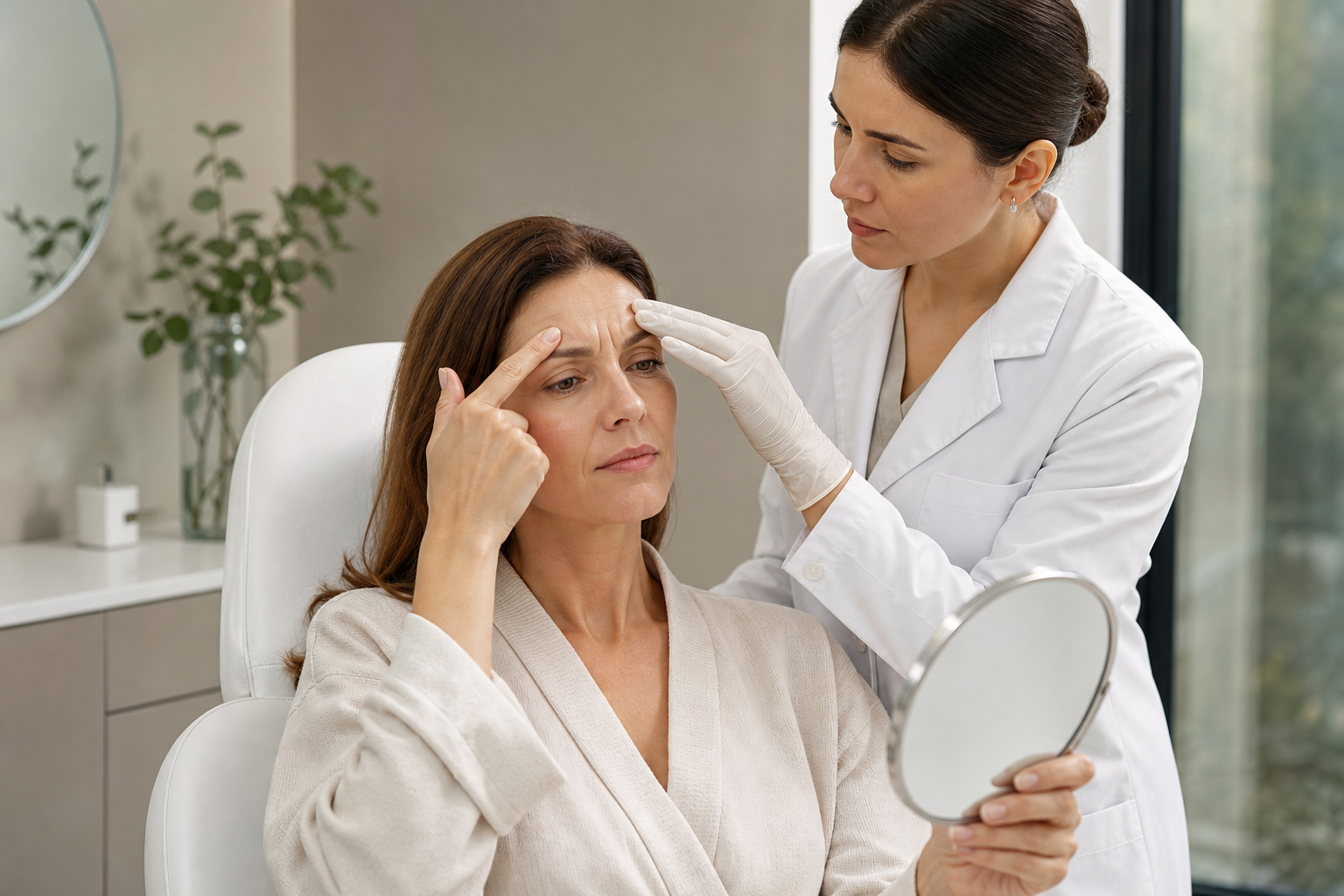
Vertical frown lines between the brows, often referred to as glabellar lines or the "11s," stand out as some of the most distinctive and persistent facial wrinkles. For many individuals concerned about aging and expression lines, these furrows present a visible sign of stress, fatigue, or sternness that can detract from a youthful, refreshed appearance. These lines develop from repeated muscle contractions caused by emotions such as concentration, worry, or irritation and gradually deepen with age. As a consequence, people often seek effective treatments to soften or eliminate these markings, hoping to maintain a naturally vibrant facial aesthetic.
This editorial delves deeply into the nature of vertical frown lines between the brows, highlighting the biological and mechanical factors behind their formation and persistence. The focus is on understanding when these lines become a permanent fixture and exploring the role of modern therapeutic interventions, particularly botulinum toxin (Botox), in managing their appearance. Readers interested in facial aesthetics, dermatology, and non-surgical rejuvenation approaches will find this analysis valuable for setting realistic expectations and recognizing the importance of expert clinical guidance.
Given the popularity of Botox treatments for the forehead and glabellar region, knowing why and how vertical frown lines develop and sometimes resist treatment is crucial. This knowledge not only impacts treatment choices but also helps patients grasp the extent and limitations of what can be achieved, ensuring satisfaction with cosmetic outcomes and awareness of when further consultation is warranted.
The Anatomy and Physiology Behind Vertical Frown Lines
Vertical lines between the eyebrows arise primarily due to repeated contractions of the corrugator supercilii muscle, commonly known as the "frowning muscle." This small but powerful muscle draws the skin inward and downward between the brows, creating dynamic creases whenever it contracts. In conjunction with the procerus muscle, which pulls the skin between the eyebrows downward, and portions of the orbicularis oculi muscle surrounding the eyes, a complex interplay emerges that etches these lines into the facial surface.
Repeated expressions of concern, frustration, or intense focus engage these muscles frequently throughout daily life. Over time, the skin’s elastic and collagen fibers—responsible for smoothness and resilience—degrade due to both intrinsic aging and environmental factors such as UV exposure. Reduced skin elasticity means that after muscle contraction ceases, the skin does not rebound fully to its baseline state, progressively leaving indented lines visible even during relaxation. Such persistent furrows are categorized as static wrinkles, distinguishing them from transient dynamic wrinkles active only during facial movements.
This transition from dynamic to static lines signifies a key moment in facial aging and guides treatment approaches. Besides physiological changes, lifestyle and genetics also influence the rate and severity of frown line development, with some people experiencing pronounced brow furrows earlier than others.
Botox Treatment for the Glabellar Region: Mechanisms and Effects
Botulinum toxin type A (Botox) is a neurotoxic protein widely embraced in aesthetic dermatology for its ability to reduce wrinkles by diminishing muscle activity. In the context of vertical frown lines, Botox works by temporarily inhibiting the release of acetylcholine at the neuromuscular junction, thereby preventing the contraction of the corrugator and procerus muscles. This blockade results in reduced skin creasing, allowing lines that formed due to muscle-induced folding to soften significantly.
The effects of Botox in the forehead and glabellar region encompass two major benefits. Firstly, it reduces the visibility of existing dynamic lines by limiting movement of the muscles responsible for their formation. Secondly, the treatment acts preemptively, minimizing further deepening of lines by decreasing repeated muscle contraction over time. Regular treatment can therefore slow the progression of frown lines and preserve youthful skin contours.
However, Botox's effects are temporary, generally lasting between four to six months, after which muscle activity gradually returns. Therefore, maintenance treatments are essential to sustain results. The treatment also requires precise administration; an incorrect injection technique or dosage can lead to undesirable aesthetic outcomes such as eyebrow asymmetry, drooping eyelids (ptosis), or a mask-like facial expression that inhibits natural emotion display.
Integrating Forehead and Glabellar Treatment for Natural Results
The forehead and glabellar regions operate as an integrated unit of muscle function and skin appearance. Since horizontal forehead lines commonly co-occur with vertical frown lines, treating them simultaneously is often recommended to ensure facial harmony. Relaxing only the frown muscles without addressing adjacent forehead muscles can create imbalances, leading to unnatural expressions or compensatory muscle overactivity elsewhere on the face.
Comprehensive assessment by skilled practitioners includes evaluating skin quality, muscle strength, and movement patterns in both the vertical and horizontal dimensions. This holistic view enables tailored dosing and injection placement, preserving natural mimicry while smoothing wrinkles. With such an approach, patients avoid an overly frozen look, instead achieving a refreshed but expressive visage.
Understanding the interaction between these regions also shapes patient counseling and realistic expectation setting. Many individuals desire complete erasure of all lines, yet natural aging and facial dynamics impose limits on what injectable treatments can accomplish without compromising authenticity.
Setting Realistic Expectations and Recognizing Limitations of Botox
While Botox is a highly effective and well-tolerated treatment for mitigating vertical frown lines, it is not a universal solution for every wrinkle type or patient condition. Its primary efficacy lies in diminishing dynamic lines caused by active muscle contractions. Deep static wrinkles—those lines remaining etched into the skin even at rest—often require multimodal intervention.
For persistent static furrows, dermal fillers like hyaluronic acid, laser resurfacing, microneedling, or chemical peels may be necessary to restore volume and stimulate skin remodeling. Botox alone cannot replenish lost collagen nor correct structural skin damage. Therefore, treatment plans are often customized to combine Botox with these complementary procedures to achieve more complete rejuvenation.
Additionally, patient-specific factors—including skin thickness, age, and muscle strength—influence botulinum toxin’s effectiveness. Some individuals metabolize the toxin faster or have stronger muscles, which can lead to shorter durations of effect or partial responses. Open dialogue between patient and clinician prior to therapy ensures appropriate dose adjustments, proper treatment timing, and optimized outcomes.
Ensuring Safety and the Importance of Qualified Specialists
Despite Botox's widespread use and favorable safety profile, its administration demands medical expertise and careful technique. Only health professionals trained in facial anatomy and experienced in cosmetic injectables should perform these procedures. Precise knowledge of the muscles involved, injection depths, and proper dosing is vital to avoiding side effects such as bruising, swelling, asymmetry, or unintended muscle paralysis.
Pre-treatment consultations are crucial to evaluate contraindications like neuromuscular diseases, allergies, or pregnancy and to clarify patient objectives. During the appointment, practitioners must also educate patients about the treatment process, potential adverse effects, and post-care guidelines. This comprehensive approach minimizes complications and enhances patient confidence.
When botulinum toxin is correctly applied in accredited medical settings, it can safely and effectively reduce vertical frown lines, contributing significantly to facial rejuvenation without surgery.


