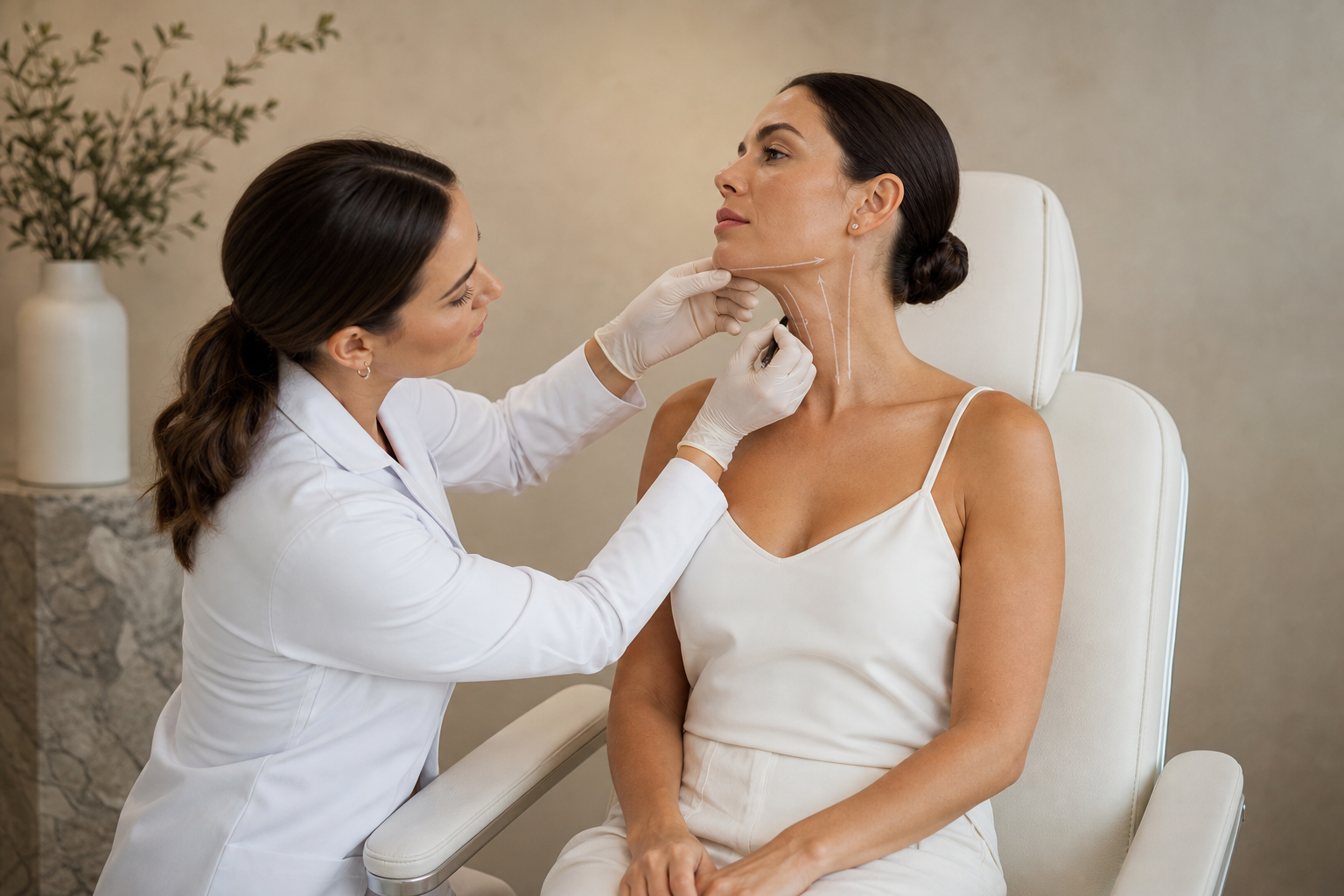
In the ever-evolving landscape of aesthetic medicine, non-surgical treatments continue to captivate those seeking rejuvenation without the downtime and risks associated with surgery. Among these innovative procedures, the Nefertiti lift stands out as a refined and sophisticated approach to enhancing the lower face and neck. Named after the storied Egyptian queen renowned for her graceful, taut neckline, this treatment concept leverages targeted Botox applications to redefine and subtly elevate the contours of the jawline and neckline. It addresses common signs of aging in these delicate zones with precision and finesse, delivering a natural, youthful profile.
The Nefertiti lift appeals primarily to individuals who are beginning to observe gentle signs of aging in the lower face or neck—those who may notice soft jowling, horizontal neck lines, or a loosening of the jaw and neck muscles but are not ready or suitable for invasive surgical procedures. It matters because the lower face and neck are among the first regions to betray age and fatigue, yet traditional surgical facelifts, while effective, come with extended recovery periods, potential complications, and significant costs. This treatment offers a compelling alternative, combining efficacy with minimal trauma, thus aligning with the growing demand for subtle, yet impactful, cosmetic interventions.
Understanding the Nefertiti lift deeply involves appreciating how Botox acts beyond wrinkle reduction, serving as a tool for strategic muscular remodeling. By relaxing specific muscles responsible for undesirable sagging and tension, it creates the illusion of lifted contours and smoother skin without freezing expressions or diminishing facial expressiveness. This article delves into the mechanisms, practical considerations, and safety of the Nefertiti lift, and situates it within the broader context of Botox use for the lower face and neck, aiming to provide readers with an expert and practical framework for informed aesthetic decisions.
The Mechanism Behind the Nefertiti Lift and Botox’s Role
The hallmark of the Nefertiti lift is its targeted use of Botox within the muscles of the lower face and neck, particularly focusing on the platysma muscle bands and the masseter muscles. Botox, clinically known as botulinum toxin, has long been celebrated for its ability to diminish dynamic wrinkles by temporarily interrupting the communication between nerves and muscles, resulting in muscle relaxation.
In the context of the Nefertiti lift, injecting Botox into the platysma—a superficial muscle that spans the front and sides of the neck—reduces its vertical bands that tend to contract involuntarily, contributing to the sagging or crepey appearance of the neck. Relaxing this muscle allows the overlying skin to appear smoother and tighter, effectively elevating the jawline and softening what is sometimes called the 'necklace lines'.
Simultaneously, careful application into the masseter muscles—the large chewing muscles at the angle of the jaw—diminishes their bulk and hyperactivity. This has a dual effect: not only softening the often prominent jawline for a more oval, delicate facial shape but also reducing associated tension and jaw clenching that may contribute to a worn or muscular lower face appearance.
Crucially, the precision of these injections respects facial mimicry and movement. Unlike broad paralysis, the aim is to reduce overactivity without loss of natural expression. This meticulous dosing and placement preserve the dynamism and authenticity of the face, a vital consideration in modern cosmetic treatments seeking a balance between enhancement and naturalness.
What to Expect During and After the Treatment Session
The Nefertiti lift is designed for efficiency and patient convenience. A typical session spans approximately 15 to 30 minutes and is completed in an outpatient setting without the need for anesthesia. Preparation involves a consultation to assess muscle strength, facial anatomy, and skin condition, followed by marking injection sites tailored to the individual's unique facial features.
The injections themselves are minimally uncomfortable, often described as brief pinches, with the use of fine needles and sometimes topical numbing creams to enhance comfort. Post-procedure recovery is rapid; patients can usually resume daily activities immediately, with no significant swelling, bruising, or redness if post-treatment guidelines are observed.
Initial visible improvements may become noticeable within three to five days as muscle relaxation begins, with the full lifting effect achieving maturity around two weeks post-injection. The duration of the effect typically lasts between four and six months. Patients are often advised to schedule maintenance treatments within this timeframe to sustain and even progressively enhance results.
Additionally, adherence to aftercare recommendations—such as avoiding massaging the treated areas, refraining from intense exercise, and minimizing heat exposure for 24 to 48 hours—supports optimal outcome and reduces potential side effects.
Limitations and Safety Profile of the Nefertiti Lift
While the Nefertiti lift offers a compelling non-surgical option for facial and neck rejuvenation, it is not a panacea for all aging concerns. Candidates with significant excess skin, deep-set wrinkles, or extensive laxity may find the treatment insufficient, warranting consideration of surgical intervention for more definitive lifting and tissue repositioning.
Contraindications include patients with neuromuscular disorders, allergies to any components of the Botox formulation, or those who are pregnant or breastfeeding. A thorough medical history and assessment by a qualified specialist are essential to ascertain suitability and to tailor the treatment plan accordingly.
The safety of Botox, when administered by trained professionals, is well established. Most side effects are mild and transient, including slight redness, bruising or swelling at injection sites, and rarely, temporary asymmetry or mild muscle weakness affecting nearby structures. Serious adverse events are exceedingly uncommon when anatomical landmarks are respected and injection protocols meticulously followed.
Close collaboration between patient and practitioner is vital, especially in managing expectations. Understanding what the Nefertiti lift can realistically deliver—improved neck tightness, a refined jawline, and softer lower facial contours—prevents dissatisfaction and promotes trust in the treatment process.
Integrating the Nefertiti Lift Within Modern Botox Applications for the Lower Face and Neck
The approach embodied by the Nefertiti lift represents an advanced application of Botox beyond its established role in dynamic wrinkle reduction. Within aesthetic medicine, it complements other targeted Botox uses such as relaxing platysma bands for smoother neck lines, masseter injections for jaw contouring, and modulation of contrastive muscles to soften dimpling or lip corner drooping.
Combining the Nefertiti lift with adjunctive procedures, such as dermal fillers to restore volume loss in the chin or jawline, or hyaluronic acid treatments to hydrate and plump the skin, creates a synergistic effect. This multi-modality approach enhances overall facial harmony and youthfulness, addressing structural and surface-level aging manifestations simultaneously.
The integration of these treatments requires expertise and nuanced understanding of facial anatomy and aging patterns. Customized protocols ensure balanced results where the boost in muscle relaxation does not overly flatten expressions but rather subtly sculpts the region for refreshed vitality.
Personalizing the Nefertiti Lift for Optimal Aesthetic Outcomes
Each patient presents a unique combination of genetics, lifestyle factors, and age-related changes. Such variability underscores the importance of a personalized aesthetic strategy rather than a one-size-fits-all procedure. In the case of the Nefertiti lift, this means precise evaluation of the strength and activity of platysma and masseter muscles, skin quality, and facial symmetry before determining the dosing and injection points for Botox.
Some patients may benefit from lighter touch-ups focused solely on platysmal bands, while others gain more from combined masseter modulation to address wide or square jaw definition. The chronological versus photoaging components of the skin—such as sun damage and collagen loss—may also prompt concurrent interventions like skin resurfacing or biostimulatory injections to complement muscular relaxation.
Ongoing communication, including follow-up visits, allows practitioners to adjust treatments dynamically, enhancing safety and efficacy. The goal is to attain a natural, rejuvenated look that aligns with patients' aesthetic ideals whilst preserving facial expressiveness.


