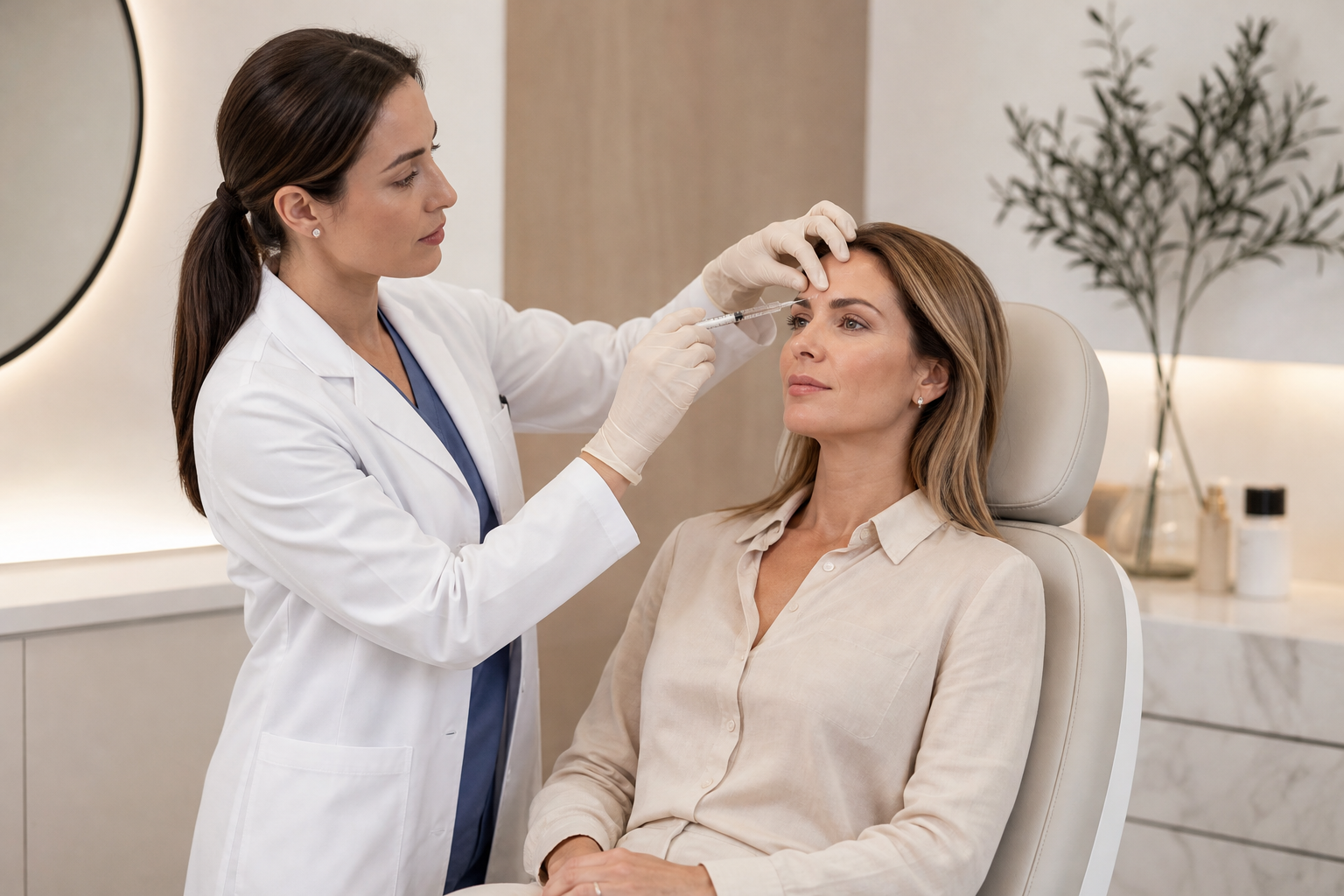
In the realm of aesthetic medicine, Botox has emerged as one of the most sought-after treatments for combatting the visible signs of aging, particularly in the upper facial region. The forehead and the area between the eyebrows, often marred by horizontal lines and vertical "frown" wrinkles, present unique challenges when it comes to preserving the natural expressiveness of the face. For anyone considering Botox treatment in this sensitive area, understanding how to maintain a natural forehead expression after Botox is paramount to achieving satisfying and authentic results.
This editorial aims to offer a comprehensive, expert insight into the intricate balance between wrinkle reduction and natural facial animation preservation. It is intended for individuals seeking to rejuvenate the forehead with Botox while maintaining their ability to communicate emotions effectively through their facial expressions. Whether you are a first-time patient or someone interested in refining your treatment plan, this discussion underscores the importance of a carefully personalized approach that respects individual anatomy and aesthetic goals.
Why does this matter? The forehead is one of the primary canvases of human emotion and nonverbal communication. Excessive muscle relaxation or poorly planned injections can lead to an unnatural, often frozen appearance that fails to reflect the personality of the individual. Hence, the pursuit of a treatment strategy that preserves the dynamics of the forehead is not only an aesthetic preference but also a critical component of psychological well-being and interpersonal engagement.
Understanding Forehead Dynamics and Botox Mechanism
The forehead's muscular architecture principally involves the frontalis muscles, responsible for raising the eyebrows and creating horizontal forehead lines. Between the eyebrows lie the procerus and corrugator muscles, which contract to produce vertical glabellar lines often associated with frowning. These muscles are continuously engaged in everyday expressions such as surprise, concern, and contemplation.
Botox (botulinum toxin type A) works by temporarily inhibiting the release of acetylcholine at the neuromuscular junction, effectively reducing muscle contraction. When administered strategically into the forehead muscles, this relaxation diminishes the formation of dynamic wrinkles. However, it is vital to understand that Botox's action is dose-dependent and site-specific. Excessive blockade in this area might lead to an immobilized forehead and hinder essential expressions.
The temporal aspect of Botox’s effect spans approximately three to six months, influenced by factors including age, metabolic rate, muscle strength, and lifestyle habits. Regular follow-ups and maintenance treatments are necessary to sustain results, emphasizing the need for a long-term, adaptable treatment strategy rather than a one-size-fits-all solution.
The Imperative of a Personalized Treatment Plan
There is no universal Botox protocol for forehead treatments due to anatomical variability and individual aesthetic desires. Creating a tailored treatment plan begins with an in-depth analysis of the patient’s facial structure, muscle functionality, skin condition, habitual expressions, and personal expectations.
A nuanced understanding of a person's forehead muscle activity is critical. Some individuals possess stronger frontalis muscle tone and deeper lines, while others show more pronounced glabellar muscle contractions or lower eyebrow positions. These distinctions influence the dose and injection pattern required to reduce wrinkles effectively without compromising the expressiveness of the forehead.
For example, a person with naturally low-set eyebrows might benefit from a conservative approach that allows residual frontalis muscle activity to support the eyebrow position, preventing drooping and preserving a youthful glance. Conversely, a patient with hyperactive corrugator muscles may require targeted injections to soften deep frown lines, sparing adjacent muscles to sustain natural movement.
Personalization extends beyond clinical assessment. It incorporates patient communication and education about realistic outcomes, possible limitations, and the importance of gradual, measured treatments. Such collaborative planning promotes patient satisfaction and minimizes the risk of adverse effects, ensuring that post-Botox forehead expression remains fluid and lifelike.
Preserving Natural Facial Expression in Botox Treatments
Maintaining natural forehead dynamics involves more than avoiding overtreatment. It requires a strategic balance that mitigates wrinkles while enabling the full range of emotional expression. Experienced practitioners utilize their deep knowledge of facial anatomy and movement to inject Botox precisely and in doses that soften the skin without flattening or freezing it.
Techniques such as micro-Botox or diluted formulations can be employed to subtly relax superficial muscle fibers without impairing their essential functions. This method can enhance skin texture and minimize fine lines while keeping deeper muscle contractions—and hence expressions—intact.
Additionally, spacing injections appropriately and targeting specific muscle clusters allow for refinement rather than obliteration of movement. The goal is a refreshed appearance that remains authentic, where patients express surprise, joy, or concern naturally, with the diminished distraction of coarse wrinkles.
Failing to adhere to these principles can result in the often-cited "frozen face," characterized by a lack of forehead movement and a disconnect between the individual's emotional state and their visible expression. This outcome can cause psychological discomfort and social challenges, highlighting the ethical responsibility of practitioners to prioritize naturalness in cosmetic interventions.
Potential Limitations and Managing Patient Expectations
Despite Botox’s popularity and efficacy, it is crucial to recognize its limitations. Botox primarily addresses dynamic wrinkles; it is less effective on static wrinkles formed by prolonged skin creasing or loss of elasticity. Patients with deep, etched forehead lines or significant dermal sagging may require adjunctive therapies such as dermal fillers or skin resurfacing to complement Botox effects.
Moreover, Botox cannot fundamentally alter eyebrow anatomy or compensate for severe ptosis caused by aging or muscle weakness. In these instances, surgical options or combined approaches might be necessary to achieve comprehensive rejuvenation.
Setting realistic goals from the outset prevents dissatisfaction. Patients should be informed that Botox smooths but does not permanently erase wrinkles and that results evolve and require periodic maintenance. Open dialogue about the achievable range of improvements fosters trust and alignment between the patient and the clinician.
Furthermore, individual responses to Botox vary. Differences in metabolism, muscle mass, and activity levels influence the duration and degree of muscle relaxation. Hence, treatment plans and intervals should be adjusted accordingly rather than rigidly standardized.
Ensuring Safety and When to Consult a Specialist
Botox treatments are generally safe when performed by trained, qualified medical professionals within accredited clinical settings. Careful patient screening for contraindications—such as pregnancy, breastfeeding, neuromuscular disorders, or allergies—is imperative to avoid complications.
Minor side effects like injection site bruising, swelling, or headaches may occur but typically resolve spontaneously. More serious adverse events, such as unintended muscle paralysis or ptosis, are rare and usually linked to improper injection technique or dosing errors.
Patients should seek consultation with experienced practitioners who provide comprehensive pre-treatment evaluations and clear instructions. Transparent discussion of possible risks and post-procedure care maximizes safety and enhances outcomes.
Furthermore, complex cases involving profound muscle asymmetry, unusual anatomy, or combined aesthetic concerns require specialist expertise. Collaborations between dermatologists, plastic surgeons, and aesthetic medicine experts often yield superior, harmonized results.


