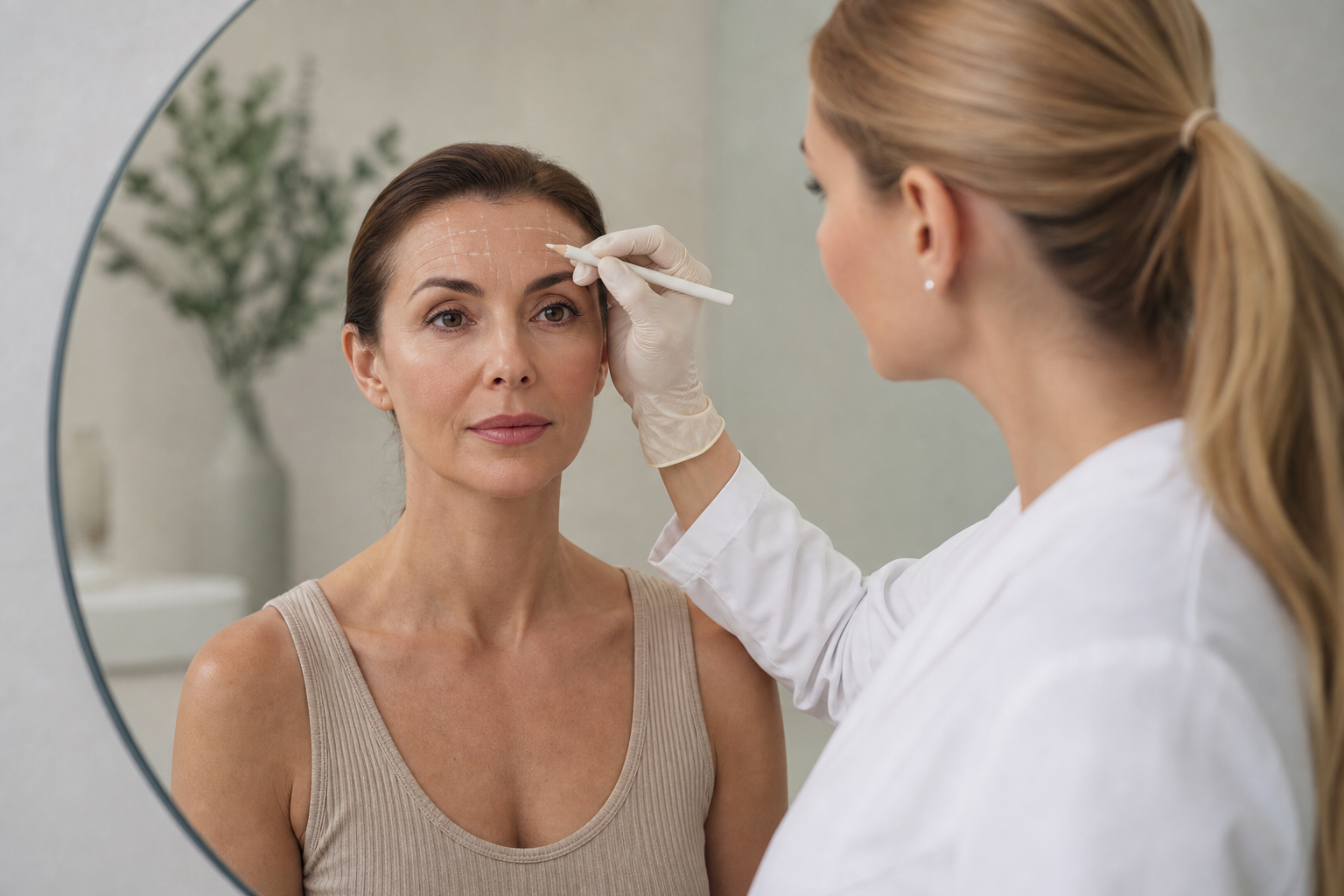
Forehead muscle activity significantly influences both the formation of wrinkles and the effectiveness of cosmetic treatments like Botox. This intricate interplay not only shapes how we age but also dictates our expectations and satisfaction with aesthetic interventions. For individuals seeking to soften forehead lines and rejuvenate their appearance, understanding muscle dynamics becomes essential. This article delves deeply into the role of forehead muscles in wrinkle development, how Botox interacts with these muscles, and what realistic outcomes patients can anticipate.
The focus here is on the forehead and glabellar region—the uppermost visible part of the face, crucial for expressing emotions through its dynamic muscular movements. These areas are often the first to show signs of aging, with horizontal forehead lines and vertical glabellar creases sometimes giving an impression of fatigue, worry, or age beyond the actual years. Knowing how these wrinkles form and how Botox targets specific muscles helps patients and practitioners approach treatments with clarity and precision.
More than a superficial cosmetic concern, forehead muscle activity reflects habitual facial expressions and emotional states, making it a unique area where aesthetics meet natural human expression. Those considering Botox must appreciate the balance between reducing wrinkle depth and preserving authentic facial movement. This understanding is critical to achieving a refreshed yet natural look, avoiding the dreaded “frozen face” effect frequently feared by prospective patients. Ultimately, this knowledge assists individuals in making informed decisions aligned with their aesthetic goals and lifestyle.
The Anatomy and Functionality of Forehead Muscles in Wrinkle Formation
To comprehend how Botox affects forehead wrinkles, it is imperative first to understand the musculature responsible for these lines. The primary muscle in this region is the frontalis muscle, which spans the forehead, anchoring at the scalp and extending down near the eyebrows. Its principal function is to elevate the eyebrows, creating expressions linked to surprise, curiosity, and attentiveness.
Repeated contraction of the frontalis muscle contributes to the formation of horizontal forehead lines, often described as 'expression lines' or 'dynamic wrinkles.' Over time, these repeated movements etch permanent creases into the skin's surface, especially as skin elasticity diminishes with age. The depth and visibility of these lines depend on genetic factors, lifestyle, and the frequency of muscle use.
Complementing the frontalis are the corrugator supercilii muscles, situated near the inner eyebrows. These muscles contract to draw the brows together, producing vertical glabellar lines commonly referred to as "frown lines" or "11 lines." Such lines often carry connotations of displeasure or concern, impacting the individual's overall facial demeanor.
In addition, procerus and orbicularis oculi muscles contribute to the complexity of movements in the upper face, influencing the appearance of wrinkles around the glabellar region and temples. Each muscle group's activity synergistically shapes facial expression and consequently affects wrinkle formation. Thus, a detailed knowledge of this anatomy enables clinicians to target Botox treatments precisely, mitigating undesirable lines while preserving natural expressions.
Botox Mechanism of Action on Forehead Muscles
Botox, a purified form of botulinum toxin type A, exerts its cosmetic effects by temporarily inhibiting nerve signals to muscles, leading to muscle relaxation. Specifically, it blocks the release of acetylcholine at neuromuscular junctions, which prevents muscle fibers from contracting. When applied to the frontalis and corrugator supercilii muscles, Botox diminishes their activity, reducing the skin's repetitive folding that forms wrinkles.
This targeted muscle relaxation smooths existing lines and significantly slows the progression of new ones, especially those that emerge from habitual facial expressions. Crucially, Botox does not affect other facial regions that are not injected, allowing for the retention of overall facial animation and emotional communication.
Application of Botox in the forehead and glabellar region requires expert technique to ensure balanced muscle weakening. Over-treating can lead to undesirable effects such as eyebrow drooping or a mask-like appearance, while under-treatment might not adequately soften wrinkles. Precise dosage and injection site selection are vital to achieve natural results that enhance the face's expressiveness without creating stiffness or artificiality.
Setting Realistic Expectations for Botox Results on the Forehead
Patients should understand that Botox is a preventive and corrective therapy rather than a complete wrinkle eradicator. Results typically appear within 3 to 7 days post-treatment and reach their peak by two weeks. The effects endure for about four to six months, after which muscle activity gradually resumes, necessitating repeat treatments to maintain outcomes.
Botox primarily smooths dynamic wrinkles caused by muscle movement and does not fill static wrinkles or deep furrows present even at rest. For prominent, static forehead lines, combination treatments incorporating dermal fillers or resurfacing procedures might be more appropriate.
Individual response to Botox varies based on muscle strength, skin quality, age, and lifestyle factors such as sun exposure and smoking. Patients with very active musculature might require higher doses or more frequent treatments to achieve the desired softening effect. Engaging with a skilled specialist ensures a treatment plan tailored to personal physiology and aesthetic goals.
Limitations of Botox in Forehead Treatment and Importance of Professional Evaluation
While Botox is exceptionally effective for many, it does have inherent limitations. It cannot re-drape loose skin or reconstruct age-related volume loss, and its utility diminishes with very deep wrinkles that have become inscribed into the dermis. In such cases, additional interventions, such as hyaluronic acid fillers or laser treatments, may be needed to restore a youthful appearance.
Moreover, variability in muscle anatomy and facial structure necessitates thorough assessment before treatment. Some patients may have asymmetrical forehead muscle engagement or underlying medical conditions that contraindicate Botox use. An expert examination allows practitioners to devise a strategy that considers these factors, optimizing both safety and aesthetic results.
Without such professional expertise, improper administration can produce asymmetry, eyebrow ptosis, or unnatural facial expressions. Therefore, consultations should include a detailed discussion of health history, treatment objectives, and alternative or adjunctive therapies suited to the patient's unique facial dynamics.
Ensuring Safety and Minimizing Risks in Forehead Botox Applications
Botox is widely recognized for its safety profile when administered by qualified professionals. Typical side effects are mild and temporary, including localized redness, swelling, or minor bruising at injection sites. These generally resolve within a few days without intervention.
Strict adherence to sterilization protocols and accurate injection techniques minimizes the risk of complications. Patients must disclose any neurological disorders, allergies, or medication regimens to their clinicians to avoid adverse reactions. Pregnant or breastfeeding women are usually advised to postpone treatment until after lactation due to limited safety data.
The experience and skill of the practitioner play a pivotal role in reducing risks and enhancing patient satisfaction. A commitment to ongoing education, anatomical expertise, and individualized care distinguishes high-quality Botox providers, contributing to consistently positive outcomes.
Preserving Facial Expression Through Targeted Forehead Botox Treatment
A major concern for patients considering Botox in the forehead area is the potential loss of natural facial expression, often described as a “frozen” or “masked” look. Modern approaches to Botox injection emphasize a balanced modulation of muscle activity rather than total paralysis.
By selectively weakening only certain muscle fibers and carefully calibrating doses, practitioners can soften wrinkles while retaining the ability to convey emotion. This subtle modulation maintains a dynamic facial aesthetic: smooth and youthful at rest, yet expressive during movement.
Today’s protocols recognize the importance of naturalism, aiming to refresh the face without compromising individuality or authenticity. This nuanced application demands a profound understanding of muscle anatomy, facial harmony, and patient preferences. Open dialogue between practitioner and patient ensures treatment plans align with these priorities, resulting in improvements that feel as genuine as they look.


