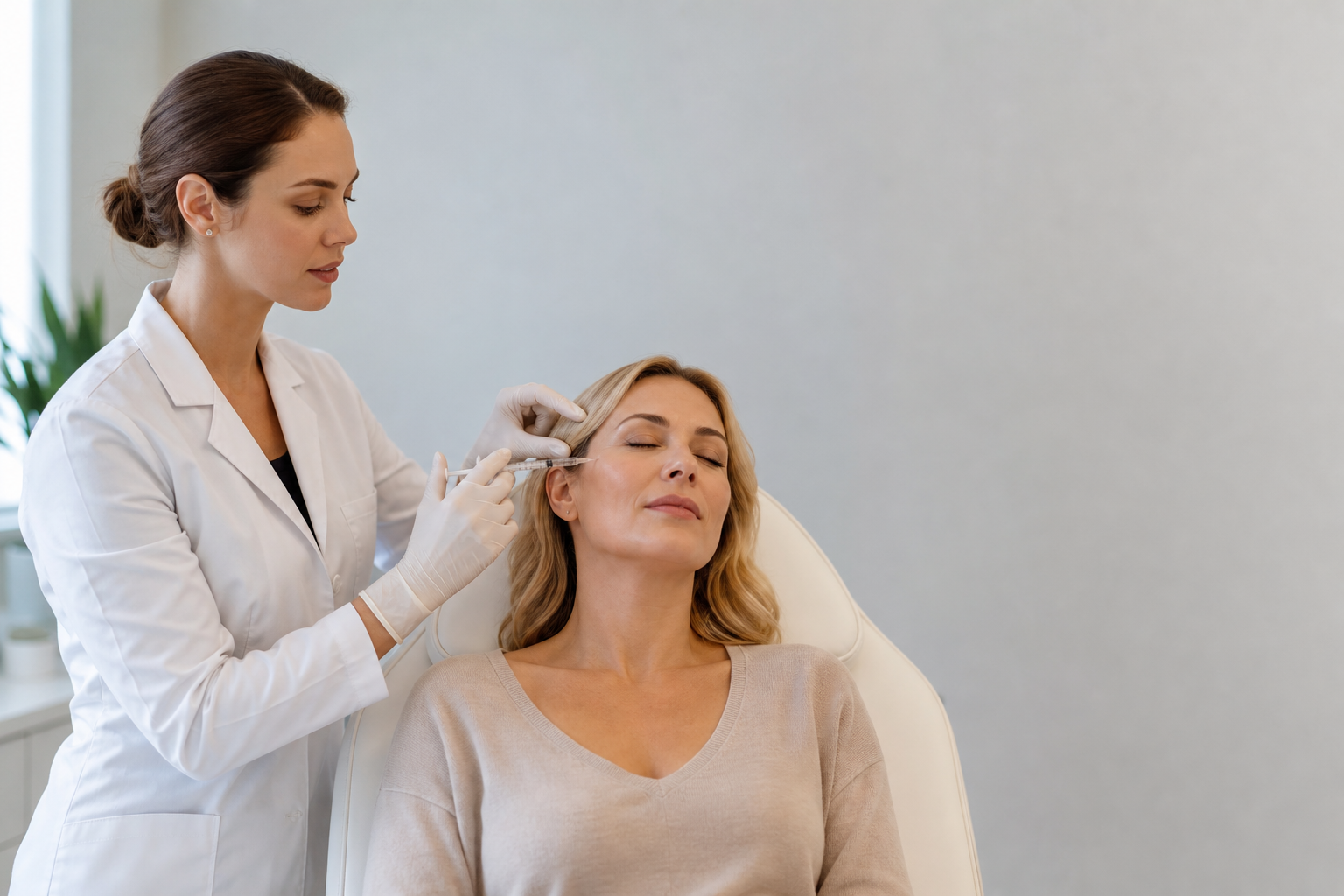
Botox has become one of the most widely sought-after treatments in the realm of aesthetic medicine, prized for its capacity to diminish the appearance of wrinkles and delay the visible signs of aging without invasive procedures. Despite its popularity, a common and pressing question among both patients and practitioners revolves around the longevity of Botox's effects and the factors governing this duration. Not all Botox treatments last the same amount of time, and one of the most influential variables is the specific area of the face or body where the injections are administered.
Understanding how the treatment area affects the duration of Botox effects is essential for anyone contemplating this procedure, whether from the perspective of a prospective patient seeking realistic expectations or an aesthetic professional aiming to tailor treatments effectively. This knowledge informs not only the timing of repeat injections but also the customization of dosage and technique to maximize both results and safety.
In this detailed editorial, we explore the intricate relationship between treatment region and Botox outcome duration, shedding light on the anatomical and physiological factors at play. We then discuss practical considerations for maintaining and prolonging Botox’s benefits, guiding readers through a nuanced understanding of how different facial zones respond uniquely to this popular treatment.
The Mechanism of Botox and the Importance of Treatment Region
At its core, Botox is a preparation derived from botulinum toxin type A, a neurotoxin that transiently inhibits the communication between nerves and muscles. By blocking the release of acetylcholine at the neuromuscular junction, Botox effectively paralyzes the target muscle temporarily, preventing it from contracting. This muscle relaxation smoothens dynamic wrinkles formed by repetitive movements, such as frowning or squinting, leading to a more youthful and rested appearance.
Crucially, Botox acts not on the skin's surface but on the muscles beneath it. Therefore, the longevity of its effect hinges on how quickly the affected muscles can recover their nerve supply and resume contraction after the neurotoxin’s influence wanes. This recovery period varies widely depending on multiple factors, but prominently on the nature and activity level of the specific muscles targeted.
Facial muscles differ considerably in their size, use patterns, and intensity of contraction. For example, muscles responsible for expressive motions around the forehead and glabella (the area between the eyebrows) tend to be highly active, engaging frequently throughout the day as we express emotions. These muscles challenge the Botox effect and usually demonstrate a quicker return to their pre-treatment activity levels. Conversely, muscles in areas with less frequent or less intense movement may take longer to regain function, resulting in a more prolonged Botox benefit.
Variation in Botox Duration According to Different Facial Regions
The face is not a uniform canvas when it comes to Botox application; each region presents distinct anatomical and functional characteristics that influence treatment outcomes. Below, we explore some of the most common treatment areas and how the duration of Botox’s effects can differ.
Forehead and Glabella: The forehead, especially the region between the eyebrows (glabella), is often the primary target for Botox injections aimed at reducing frown lines and forehead wrinkles. Here, muscles such as the corrugator supercilii, procerus, and frontalis are highly dynamic, contracting with nearly every facial expression. Due to this continuous activity, Botox effects in these areas commonly last around 3 to 4 months. After this time, nerve endings begin to regenerate, and muscle activity gradually returns, leading to the reappearance of wrinkles.
Periocular Area (Crow's Feet): The orbicularis oculi muscles around the eyes are responsible for expressions such as smiling and squinting, meaning these muscles are in regular motion throughout the day. Botox administered for crow’s feet generally exhibits a similar duration of approximately 3 months, though in some cases, the effect may diminish earlier due to the persistent usage of these muscles.
Lower Face and Neck: Areas like the jawline, chin, and neck tend to have less continuous muscle movement compared to the upper face. Consequently, Botox effects applied here have been observed to last longer—between 5 and 6 months. The slower metabolism and reduced muscle activity in these regions contribute to this extended duration, making these zones candidates for less frequent treatments.
Cheeks and Lip Area: Botox treatments targeting the cheeks and areas around the mouth require precision due to the complex muscular architecture controlling speech, eating, and subtle expressions. The muscles here are engaged in fine motor activity rather than powerful contractions. Effect duration can be slightly shorter than in the lower face but remains highly dependent on individual anatomy and activity. Some patients report sustained improvements for 3 to 4 months, although the delicate balance makes dosage and technique pivotal to prolonging effects and avoiding adverse impacts on function.
Muscle Activity as a Determinant of Botox Longevity
The activity level of muscles within the treated area plays a central role in how long Botox’s effects last. Muscles engaged in frequent, powerful contractions metabolize the blockade more rapidly as nerve endings regenerate faster in response to continued use. This natural biological process shortens the duration of muscle paralysis achieved by the toxin.
Conversely, muscles that move less often or with less intensity allow Botox to remain effective for a longer period. This is why areas like the neck and jawline often benefit from longer-lasting results—the musculature is less prone to constant movement compared to the expressive muscles of the upper face.
Adding to this dynamic, individual lifestyle factors influence muscle activity. People who habitually use certain facial expressions more intensively, such as raising eyebrows or furrowing their brow, may notice a faster return of wrinkles in these regions due to sustained muscle exertion. Likewise, occupations or activities that require pronounced facial muscle use can reduce the effective period of Botox.
Interestingly, patients who receive Botox regularly over time may experience some prolongation of effect. This phenomenon occurs because repeated treatments can gradually retrain muscles to contract less forcefully, thereby extending the interval before wrinkles reappear.
Setting Realistic Expectations and Understanding Limitations
Grasping the variability in Botox’s duration according to treatment area is critical for establishing reasonable patient expectations. While Botox offers significant cosmetic improvement, it is not a permanent solution, nor does it erase wrinkles indefinitely with a single session.
Areas with intense muscle activity require more frequent maintenance injections, often every three to four months, to sustain results. Patients should view Botox therapy as an ongoing regimen to smooth dynamic wrinkles rather than a one-time fix. Expecting prolonged effects beyond biological realities can lead to dissatisfaction.
Moreover, the effectiveness and safety of Botox depend heavily on appropriate dosing and precise injection technique tailored to the specific anatomy of each treatment region. Overdosage or incorrect placement, especially in areas with complex muscle interactions, can result in undesirable side effects such as asymmetry, drooping, or weakened function.
Therefore, a thorough consultation with a qualified aesthetic specialist cannot be overstated. Such professionals evaluate the individual’s facial structure, muscle activity, and aesthetic goals to devise a personalized treatment plan balancing longevity and safety.
Techniques and Practices to Extend the Duration of Botox Effects
While the biological factors dictating Botox duration are inherent, certain strategies can help optimize the longevity of results across various treatment areas. Implementing best practices before, during, and after treatment plays a vital role.
Immediately following injection, patients are generally advised to avoid excessive rubbing or pressure on the treated zones for at least 24 hours. This precaution helps prevent unintentional diffusion of the toxin away from target muscles, ensuring maximal localized effect.
Engaging the treated muscles afterward, under professional guidance, can actually facilitate the uptake of Botox by neuromuscular junctions, potentially enhancing efficacy. Adhering to scheduled maintenance treatments based on professional recommendations helps maintain steady muscle relaxation and incrementally prolongs duration by reducing baseline muscle activity over time.
Additionally, customized dosing reflecting the distinctive characteristics of each treatment region is essential. For example, slightly higher doses may be administered in highly mobile areas to sustain effect, whereas conservative dosing is preferred in delicate areas to avoid functional impairment.
Combining Botox with complementary aesthetic procedures, such as hyaluronic acid fillers, may also enhance overall outcomes and patient satisfaction. Particularly in regions where volume loss or skin laxity contributes to aging appearance, synergistic treatments can provide longer-lasting and more natural-looking rejuvenation.
Monitoring Treatment Intervals and Professional Guidance for Repetition
Because Botox effects wane variably between patients and regions, vigilant monitoring of changes in appearance and muscle activity after treatment is crucial. Typically, gradual return of muscle contraction and corresponding wrinkle reformation signals the appropriate timing for repeat injection.
However, decision-making about retreatment should always be guided by a specialist familiar with the patient’s unique anatomy and treatment history. This approach avoids unnecessary or overly frequent application, which might risk adverse effects or diminished responsiveness over time.
Regular follow-up consultations allow for adjustments in dosage, technique, and treatment intervals tailored to ongoing changes in facial dynamics, aging progression, or health status. If any new medications, health conditions, or physical changes arise, these must be factored into the treatment plan to preserve safety and effectiveness.


