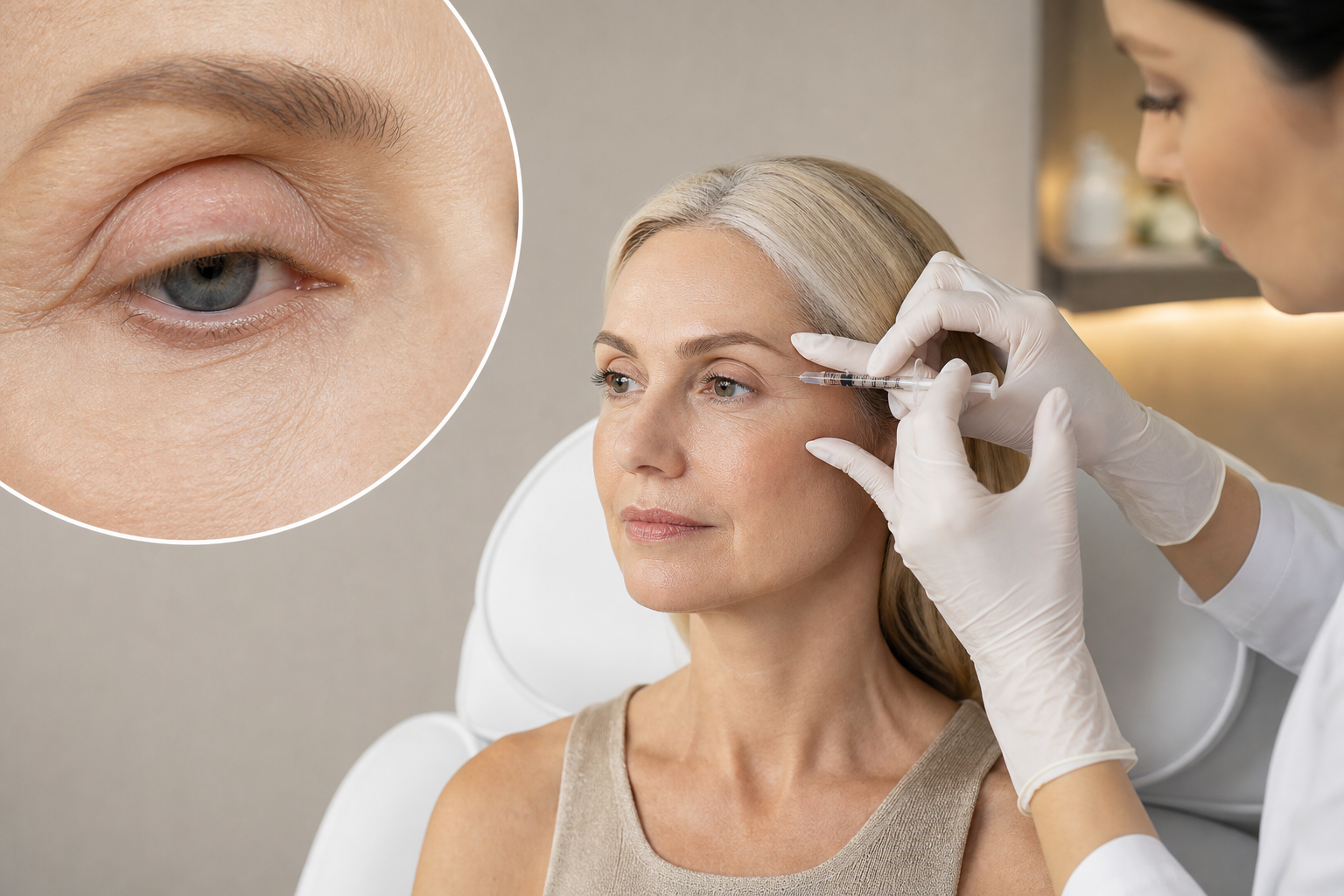
Botox has revolutionized the field of aesthetic medicine, serving as a popular and minimally invasive method to diminish the visible signs of aging and refresh the skin’s appearance. Among its many applications, Botox is especially celebrated for its ability to smooth dynamic wrinkles, particularly around the forehead and eyes. Despite its widespread use and strong safety record, Botox treatment does carry potential risks, one of the more distressing being eyelid drooping, medically known as ptosis. This complication, though relatively rare, can significantly impact both the cosmetic outcome and the functional comfort of those undergoing treatment.
This article aims to provide an in-depth, expert perspective on eyelid drooping after Botox injections, addressing the underlying causes, risk factors, prevention strategies, and management options. It is designed for anyone considering Botox for aesthetic enhancement as well as patients who may be confronting this particular side effect post-treatment. Understanding why eyelid drooping occurs, what to expect from treatment, and how to respond should it happen is crucial for making informed decisions and maintaining confidence in one’s cosmetic journey.
Within the broader context of Botox’s role in wrinkle reduction and facial rejuvenation, recognizing the nuances of its effects on periocular muscles is essential. The eyelid’s delicate musculature and its proximity to injection sites demand precision and expertise from clinicians to avoid unintended weakening effects that lead to ptosis. Equally important is the awareness that not all adverse reactions signify negligence but often result from anatomical variations and the inherent pharmacodynamics of botulinum toxin.
The Biological Mechanism Behind Eyelid Drooping Post-Botox
Botox, or botulinum toxin type A, functions by interrupting the release of acetylcholine at the neuromuscular junction. This inhibition causes a temporary paralysis of targeted muscles, reducing their ability to contract. The therapeutic goal is typically to relax the overactive facial muscles responsible for wrinkles, such as the corrugator supercilii and orbicularis oculi.
However, when Botox disperses beyond the intended treatment zones, it can affect adjacent muscles that control eyelid position. The levator palpebrae superioris muscle is principally responsible for elevating the upper eyelid. Should this muscle’s activity be diminished due to diffusion of the toxin into its fibers, the eyelid droops—a condition termed ptosis.
This inadvertent muscle weakening causes the eyelid to lower, partially obstructing the visual field and potentially causing discomfort or strain. The action is not immediate but develops within days after treatment, as the neurotoxin takes time to bind and prevent neurotransmitter release effectively.
Risk Factors Contributing to Eyelid Ptosis After Botox
The occurrence of eyelid drooping is influenced by multiple factors that converge around both the technique used during injection and individual patient anatomy. A primary contributor is the precision of Botox delivery. Injections administered too close to the orbit’s superior margin or with excessive volume can increase the chance of the toxin migrating to the levator muscle or its nerve supply.
Anatomical variability among patients also plays a pivotal role. Some individuals may possess a naturally weaker levator function, thinner orbital septa, or altered eyelid positioning, predisposing them to ptosis even with correctly performed injections. Previous eyelid surgery or underlying neurological disorders might further elevate vulnerability.
Additionally, dosing quantity is critical. Higher dosages around the forehead and upper eyelid crease zones heighten the likelihood of creating diffusion beyond targeted muscles. Post-procedural behaviors, such as rubbing or massaging the face, may unintentionally promote spread of the toxin to undesired muscle groups.
It is also worth noting that pre-existing mild ptosis or asymmetry may become more pronounced after Botox treatment, sometimes leading patients to attribute these changes directly to the procedure even when subtle baseline issues existed.
Recognizing Early Signs of Eyelid Drooping and Importance of Timely Action
Typically, eyelid drooping manifests within three to seven days following Botox injections. The hallmark symptom is noticeable asymmetry, where one eyelid rests lower than the other, occasionally obscuring part of the pupil or vision. Patients often report feeling an unusual heaviness or discomfort when trying to keep the eye open.
In some cases, compensatory mechanisms may kick in, such as raising the eyebrows excessively or tilting the head backward to enhance the visual field, potentially resulting in secondary tension headaches or forehead fatigue. Other symptoms can include difficulty blinking fully or dry eyes from incomplete eyelid closure.
Early identification allows for prompt engagement with the treating physician, who can evaluate the extent of ptosis and guide management strategies. Waiting too long to address these symptoms may prolong discomfort and potentially complicate recovery.
Preventive Measures for Reducing the Risk of Developing Ptosis Post-Procedure
Preventing eyelid drooping begins with selecting a skilled and experienced medical professional who possesses comprehensive knowledge of facial anatomy. A detailed consultation should precede any treatment to assess personal risk factors, previous eyelid conditions, and cosmetic goals.
Customization of the Botox dosing and injection sites tailored to the patient’s unique anatomy is imperative. Specialists often employ conservative approaches around the eyebrow and forehead areas to minimize diffusion risks. Utilizing smaller aliquots and appropriate injection depth enhances control over the toxin’s effect.
Patients themselves play a role in prevention by adhering to post-treatment guidelines: avoiding vigorous facial manipulation, refraining from lying down immediately after injections, and limiting activities that increase blood flow to the face for at least a few hours. Such precautions help contain the toxin within targeted muscles.
Therapeutic Options and Management Strategies for Botox-Induced Eyelid Ptosis
When ptosis occurs, its management depends on the severity and patient discomfort. Most cases improve spontaneously with time as the effects of Botox wear off, typically within three to four months. However, supportive treatments can help alleviate symptoms during recovery.
Ophthalmic lubricating drops may be prescribed to prevent dryness caused by incomplete eyelid closure. In cases of significant ptosis impairing vision, temporary measures such as eyelid crutches—specialized devices attached to eyeglasses to physically lift the eyelid—offer functional relief.
Pharmacologic interventions include the use of sympathomimetic agents like apraclonidine eye drops, which stimulate Müller’s muscle, a secondary elevator of the eyelid, providing partial elevation. These are typically applied under ophthalmologist supervision.
Rarely, if drooping persists beyond the expected timeframe or causes substantial impairment, surgical correction might be considered as a definitive solution.
Setting Realistic Expectations Regarding Botox and Potential Side Effects
Despite Botox’s excellent safety profile and high patient satisfaction rates, it is important to acknowledge that no cosmetic procedure is entirely devoid of risk. Establishing realistic expectations beforehand empowers patients to approach treatment with a balanced perspective.
Eyelid drooping, while unwanted, is typically temporary and can be effectively managed in most cases. This complication emphasizes the necessity for treatment by highly qualified practitioners and highlights that variability in individual response exists.
Open communication about the possibility of side effects enables patients to make fully informed decisions. Appreciating that Botox is a tool to enhance, not dramatically overhaul, facial aesthetics helps maintain satisfaction even when minor complications arise.
The Crucial Role of Specialist Care in Botox-Related Eyelid Complications
Safety in aesthetic treatments hinges on expert evaluation and intervention. Once a patient recognizes abnormal eyelid changes, prompt consultation with the administering clinician or an ophthalmology specialist is essential. This ensures accurate diagnosis, rule-out of other underlying pathologies, and initiation of timely treatment.
Continuous monitoring during the recovery phase assists in tracking improvement and determining if further medical or surgical options are necessary. Moreover, specialist guidance reassures patients and informs future treatment considerations to avoid recurrence in subsequent procedures.
Ultimately, entrusting one’s appearance and ocular health to skilled providers is the most effective strategy in minimizing adverse reactions like eyelid drooping. Education, preparation, and professional partnership form the foundation of safe and gratifying outcomes in Botox therapy.