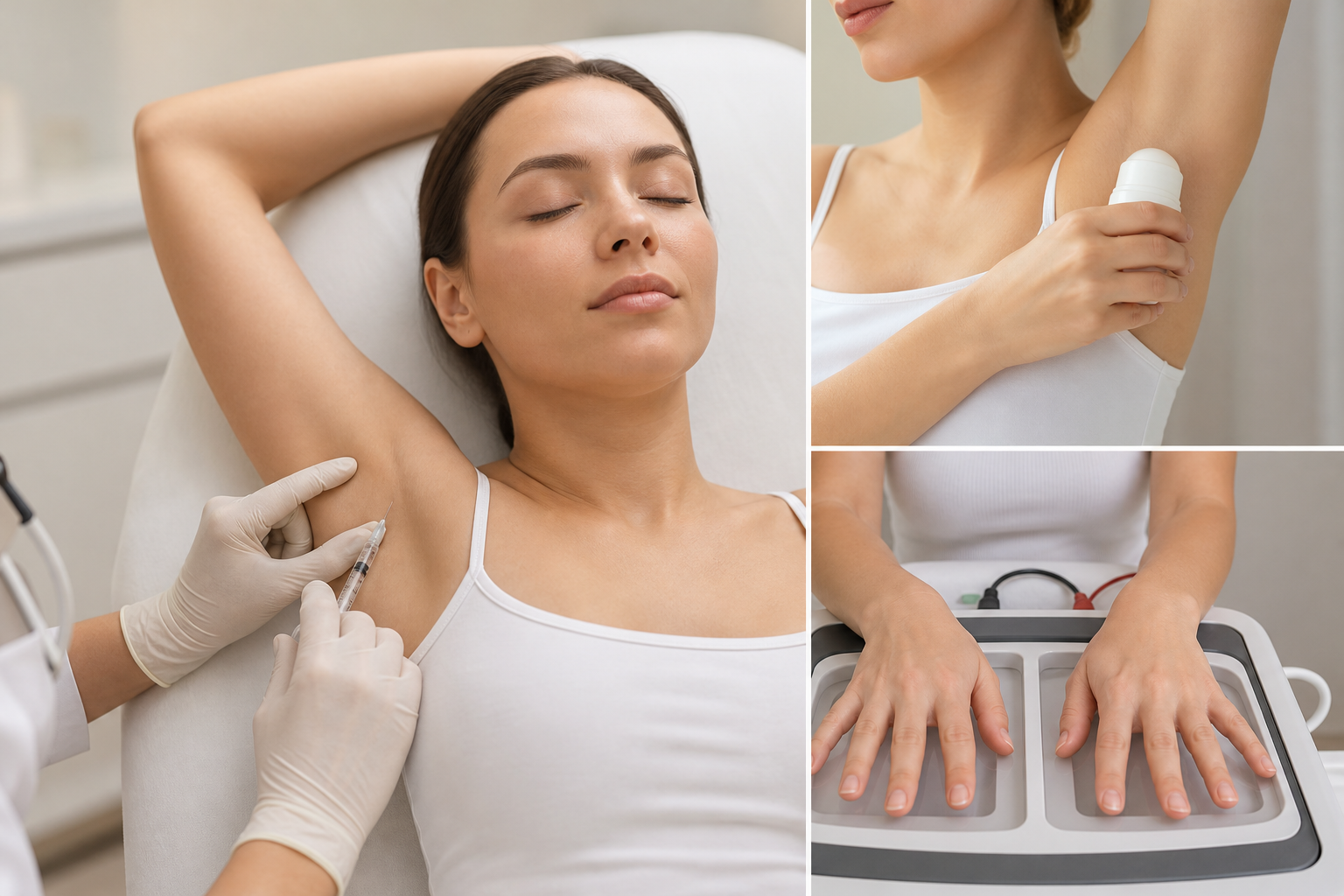
Excessive sweating, medically termed hyperhidrosis, represents a widespread and often debilitating condition impacting individuals across diverse age groups and lifestyles. While sweating is an essential physiological process aiding in temperature regulation, hyperhidrosis disrupts this balance, manifesting as uncontrollable and excessive perspiration that can severely diminish quality of life. This condition affects various parts of the body but commonly targets the underarms, palms, and feet, where it presents both physical discomfort and psychosocial challenges.
Managing excessive sweating effectively hinges on selecting the most appropriate therapeutic approach tailored to the individual’s severity and specific needs. Among the myriad options available, three modalities stand out due to their proven efficacy and widespread use: botulinum toxin injections, topical antiperspirants, and iontophoresis. Each of these methods offers distinct mechanisms of action, benefits, limitations, and safety profiles, making informed choice critical.
This article meticulously explores these three treatment strategies, situating them within the broader context of current medical and cosmetic interventions. Emphasis will be placed on botulinum toxin as an advanced solution for hyperhidrosis, detailing its application, outcomes, and safety considerations. The insights offered here are intended not only for individuals grappling with excessive sweating but also for clinicians and aesthetic practitioners aiming to optimize intervention outcomes for their patients.
Understanding Hyperhidrosis and Its Impact on Daily Life
Before delving into treatment options, it is essential to appreciate the nature of hyperhidrosis. Unlike normal perspiration that occurs as a response to heat or physical exertion, hyperhidrosis is characterized by spontaneous and disproportionate sweating unrelated to body temperature or activity level. This disproportionate secretion stems from overactive eccrine sweat glands, which are distributed over much of the body but are most abundantly located on the palms, soles, and axillary regions.
The consequences of this condition extend beyond physical discomfort. Excessive sweating can lead to social embarrassment, reduced participation in routine activities, and even occupational difficulties, particularly in roles requiring hand dexterity or prolonged close contact with others. Furthermore, it can result in secondary skin complications such as infections due to moisture accumulation. Hence, managing hyperhidrosis is not merely a question of cosmetic concern but of comprehensive well-being.
Advances in dermatology and aesthetic medicine have expanded the repertoire of treatments. Knowing how each method works and where it is best applied is paramount in providing patients with realistic expectations and optimal relief.
Botulinum Toxin as a Revolutionary Intervention for Hyperhidrosis
Botulinum toxin, commonly known by the brand name Botox, has transcended its original role as a wrinkle-reducing agent to emerge as a highly effective treatment for excessive sweating. Its adoption for hyperhidrosis is grounded in its unique ability to selectively target the neurological pathways that trigger sweat production.
Specifically, botulinum toxin functions by blocking the release of acetylcholine, a neurotransmitter essential for activating eccrine sweat glands. By injecting carefully calibrated doses into sweating-prone areas such as the underarms, palms, or soles, the treatment effectively suppresses the nerve signals responsible for triggering sweat secretion. This targeted blockage results in a significant decrease in perspiration, typically lasting from six to eight months, enabling patients to regain control over their sweating and improve comfort.
The precision of this treatment lends itself particularly well to challenging cases of palmar and plantar hyperhidrosis, where other therapies may fail to provide sufficient relief. Patients who have struggled with the social and functional hindrances of intense sweating often report dramatic improvements following botulinum toxin therapy.
It is critical, however, for botulinum toxin treatments to be administered exclusively by qualified medical professionals experienced in hyperhidrosis management to ensure safety and effectiveness. The procedure involves a series of small injections, which are typically well-tolerated but may cause mild transient discomfort or localized reactions such as redness or swelling. Contraindications, including pregnancy and certain neuromuscular disorders, necessitate thorough pre-treatment evaluation.
Topical Antiperspirants: The Frontline, Accessible Solution
Antiperspirants occupy a foundational role in the management of excessive sweating, prominently due to their ease of use, availability, and affordability. Their primary active agents are aluminum-based compounds, which form temporary plugs within the sweat ducts, thereby reducing the volume of sweat that reaches the skin surface.
These products come in various forms—roll-ons, sprays, gels, and creams—and are most effective in mild to moderate axillary hyperhidrosis. Their simplicity makes them the initial intervention recommended for many patients. When applied correctly, antiperspirants can significantly mitigate sweat production and the associated discomfort. Moreover, many formulations incorporate deodorizing agents, addressing both moisture and odor.
Nonetheless, antiperspirants have limitations. They are less effective for regions such as the palms or soles and offer only transient relief, necessitating regular reapplication, often daily. Some users experience skin irritation or allergic reactions, especially due to the aluminum salts, which may restrict their suitability. Additionally, since antiperspirants address the symptom without modulating the underlying hyperactive neural stimulation of sweat glands, their efficacy plateaus in severe cases. Hence, while they provide reasonable control for many, they are often insufficient as standalone solutions for intense hyperhidrosis.
Iontophoresis: A Non-Invasive Electrical Approach
Iontophoresis presents a non-pharmacological treatment alternative employing mild electrical currents to inhibit sweat gland activity. The procedure typically involves immersing the hands or feet in a water bath through which a controlled electric current is passed, altering the function of sweat glands and temporarily reducing sweating.
This modality is particularly indicated for palmar and plantar hyperhidrosis, which frequently prove resistant to topical therapies. One of the key advantages of iontophoresis is its non-invasive nature and absence of pharmacological agents, which appeals to patients seeking to avoid drug-related side effects or invasive procedures.
Effective therapy generally requires multiple initial sessions, followed by maintenance treatments on a scheduled basis. Its benefits include safety and the ability to manage symptoms over the long term when adherence is maintained. However, the requirement for frequent sessions can be inconvenient. Additionally, iontophoresis is contraindicated in certain populations, including individuals with pacemakers, pregnant women, or those with skin lesions on treatment sites, limiting its universal applicability.
Despite these considerations, iontophoresis remains a valuable option within the hyperhidrosis treatment spectrum, especially for those with palmar or plantar involvement seeking alternatives to injectables and topical treatments.
Integrating Treatment Choices With Patient-Centered Considerations
Choosing the most suitable hyperhidrosis treatment demands a nuanced appraisal of the individual's clinical presentation, severity of sweating, affected areas, lifestyle demands, and personal preferences. Antiperspirants might suffice for those with mild sweating focused on the underarms, while patients experiencing severe palmar hyperhidrosis commonly require more intensive interventions like iontophoresis or botulinum toxin.
Botulinum toxin, with its targeted mechanism and relatively long-lasting results, stands out as the treatment of choice for patients with moderate to severe hyperhidrosis or those unresponsive to other measures. Its precision and predictability make it particularly beneficial for hyperhidrosis in challenging locations such as the palms and feet, where topical and physical methods often fall short.
Combinatory approaches may also be employed effectively, with patients using antiperspirants alongside botulinum toxin or supplementing toxin therapy with periodic iontophoresis. Such personalized regimens improve symptom control and accommodate patient preferences, boosting adherence and treatment satisfaction.
Decisions regarding treatment should engage the patient in an informed dialogue, considering the benefits, logistics, potential side effects, and anticipated outcomes. This collaborative approach ensures that therapy selection aligns with the patient’s needs and expectations.
The Essential Role of Specialist Consultation and Safety in Treatment Planning
Given the diversity of therapeutic options and the complexities inherent to hyperhidrosis, consulting a specialist—typically a dermatologist or an expert in aesthetic medicine—is indispensable. A thorough clinical evaluation not only confirms the diagnosis but also excludes secondary causes of excessive sweating, such as endocrine or systemic disorders, which may require different management.
Specialists assess the anatomical sites involved, sweating severity, impact on function and quality of life, and any contraindications to treatment modalities. For botulinum toxin therapy in particular, expertise in administration is critical to maximize efficacy and minimize risks such as muscle weakness or local discomfort.
Even though antiperspirants and iontophoresis are generally safe and accessible, medical guidance can assist in avoiding adverse skin reactions or optimizing treatment schedules. Ultimately, safety and efficacy depend on professional oversight, patient education, and careful monitoring.


