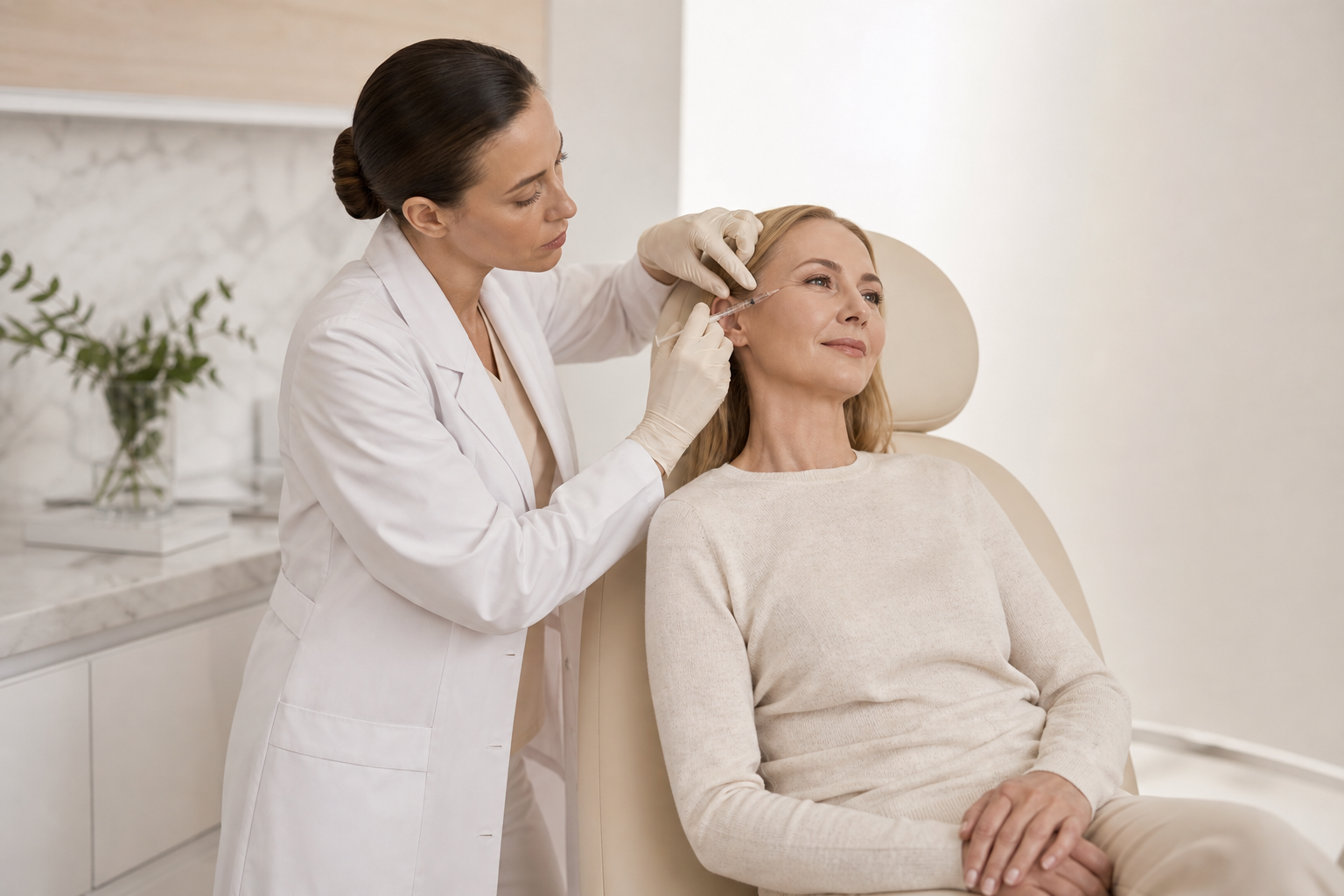
In the realm of aesthetic medicine, the choice between Botox and eyelid surgery often presents a nuanced challenge for individuals seeking to enhance their youthful appearance and refresh their facial aesthetics. Both treatments focus on rejuvenating the eye area but operate with fundamentally different goals, mechanisms, outcomes, and considerations that are crucial for prospective patients to understand. This editorial will elucidate the distinctions between Botox and eyelid surgery, also known as blepharoplasty, providing an informed perspective for those evaluating their best options within the broader landscape of non-surgical and surgical aesthetic interventions.
Understanding the unique characteristics of Botox versus eyelid surgery is essential not only for achieving realistic expectations but also for selecting the most appropriate and effective treatment tailored to one’s needs. While Botox offers a minimalistic, non-invasive approach aimed primarily at preventing and smoothing dynamic wrinkles caused by facial muscle activity, eyelid surgery represents a more definitive, surgical correction of anatomical changes that impact the eyelids’ appearance and sometimes their function.
This article addresses the mechanisms of action behind each procedure, explores their intended outcomes and limitations, discusses safety aspects, and highlights the importance of thorough consultation with qualified specialists. In doing so, we provide a comprehensive guide embedded within the broader context of Botox and other aesthetic treatments—a help for anyone contemplating how to best refresh their eye area without confusion or misconceptions.
The Science Behind Botox: Targeting Dynamic Wrinkles with Precision
Botox, a purified formulation of botulinum toxin type A, is widely acclaimed for its ability to reduce the appearance of wrinkles by temporarily relaxing specific facial muscles. When injected in expertly calculated microdoses, Botox interrupts the transmission of nerve impulses to the muscles responsible for facial expressions, primarily those around the forehead, between the eyebrows, and the periorbital region where "crow’s feet" commonly form.
The mechanism is both elegant and precise: by inhibiting muscular contractions that cause skin folding, Botox diminishes dynamic wrinkles that develop from repetitive facial movements. This treatment works best for relatively superficial lines that are still flexible and not deeply etched into the skin. Notably, Botox is preventive as much as corrective; its regular use can delay the progression of wrinkle formation by reducing muscle tension over time.
The effects typically manifest within days after treatment, reach peak results around two weeks, and last between four to six months, necessitating periodic maintenance sessions for sustained benefits. However, Botox does not address static wrinkles that remain visible at rest nor can it resolve excess skin or fat deposits around the eyelids.
For candidates with youthful skin exhibiting early signs of aging or those who prefer a non-invasive method, Botox offers an effective means to soften facial lines, particularly when combined in multimodal treatment plans involving dermal fillers, collagen biostimulators, or laser skin resurfacing.
Eyelid Surgery (Blepharoplasty): Anatomical Refinement and Functional Restoration
In contrast to Botox’s temporary muscle modulation, eyelid surgery is a surgical intervention aimed at physically removing excess skin, fat, and sometimes tightening muscles to rejuvenate and reshape the eyelids. Blepharoplasty can be performed on the upper or lower lids and addresses both aesthetic and functional concerns.
Aging often brings a natural descent of the eyelid tissues, leading to sagging skin that can obscure the eye contour and create a tired or aged appearance. More significantly, in certain cases, redundant skin may impair the field of vision. Blepharoplasty corrects these changes by excising the surplus tissue and restoring a more youthful, refreshed eyelid contour. Results are long-lasting and often dramatic, restoring the eye area’s prominence and vibrance.
Due to the surgical nature of the procedure, blepharoplasty involves typical operative considerations: anesthesia, an incision line (concealed within natural eyelid creases), a healing period with potential swelling and bruising, and a recovery timeline that can vary by individual. The risks, while generally low when done by experienced surgeons, include infection, scarring, dry eyes, and temporary eyelid function disturbances.
For those with significant eyelid aging changes, drooping skin, or vision impairment, blepharoplasty is often the most effective and appropriate option. The procedure can dramatically enhance facial harmony and self-confidence, underscoring its role as a definitive aesthetic and functional solution.
Contrasting Goals and Outcomes: Botox as a Preventive Treatment Versus Blepharoplasty’s Structural Renewal
The divergent goals of Botox and eyelid surgery reflect their distinct mechanisms. Botox is a neuromodulator that focuses on muscle relaxation to smooth dynamic wrinkles, offering a subtle, reversible improvement ideal for mild to moderate facial aging. It’s a preventive and maintenance-oriented treatment that encourages a gentle softening of expression lines and helps maintain youthful skin quality.
Blepharoplasty, by contrast, restructures the eyelid anatomy itself. When excess skin and fat accumulate, no amount of muscle paralysis can restore the tautness or remove the bulk. Surgery directly removes excess tissue, offering permanent relief from sagging, puffiness, and sometimes functional vision problems. While the recovery is more involved, the substantial and enduring improvement often outweighs the invasiveness for suitable candidates.
Understanding these distinctions allows patients and clinicians to select treatments that best correspond both to the physical realities of aging and the individual’s aesthetic goals. Often, these options complement rather than replace each other: Botox can be a valuable adjunct following eyelid surgery to smooth fine lines, or a preferred initial approach delaying the need for surgery.
Safety Profiles and Potential Risks: Weighing Non-Invasive Precision Against Surgical Intervention
Safety considerations are paramount in any aesthetic treatment decision. Botox, when administered by skilled professionals, has an excellent safety profile with transient, mild side effects such as temporary bruising, localized discomfort, or minor asymmetry that typically resolve without intervention. Serious complications are rare and mostly associated with improper technique or dosing.
In contrast, blepharoplasty carries the inherent risks of surgery: infection, bleeding, scarring, altered eyelid function, and longer recovery times including swelling and bruising. Strict adherence to preoperative assessment and postoperative care is vital to minimizing complications. The expertise of the surgeon significantly influences outcomes, and thorough patient counseling ensures realistic expectations and preparedness for the surgery.
Both procedures require a comprehensive medical evaluation and a clear understanding of contraindications. Patients with certain neuromuscular disorders, allergies, or skin conditions may require tailored approaches or alternative treatments.
Integrating Botox and Eyelid Surgery Within Contemporary Aesthetic Protocols
Modern aesthetic medicine increasingly favors integrated treatment plans combining the strengths of both non-surgical and surgical modalities. Botox and blepharoplasty are frequently used complementarily to maximize facial rejuvenation results.
For example, a patient undergoing eyelid surgery might benefit from Botox to address forehead lines or avoid the deepening of expression wrinkles postoperatively. Conversely, individuals initially treated with Botox for mild aging signs may find blepharoplasty appropriate as aging progresses and structural changes become more significant.
Moreover, adjunctive treatments such as dermal fillers, collagen biostimulators, skin boosters, and laser therapies enhance skin texture, volume, and tone, creating a comprehensive rejuvenation strategy. These layered approaches provide flexibility and customization, ensuring treatments align with evolving patient needs and aesthetic desires.
Assessing Benefits and Limitations: Choosing a Treatment Fit for Individual Needs
Botox’s minimal invasiveness, rapid application, and lack of recovery time make it an attractive option for individuals seeking subtle, temporary improvements without surgery. It fits well with persons desiring maintenance of a fresh appearance or prevention of further wrinkle progression. However, its effects are temporary, and it cannot remove excess tissue or deep-set lines.
Blepharoplasty offers a more transformative and lasting solution for eyelid aging issues that Botox cannot address. It is particularly advantageous for individuals with significant sagging skin, puffiness, or functional impairments. Yet, surgery requires a greater commitment to healing and carries inherent procedural risks.
Choosing between these treatments depends on multiple factors: the severity of aging signs, skin quality, age, general health, lifestyle preferences, and aesthetic goals. A well-informed patient collaborates with their specialist to weigh these considerations and decide on an individualized treatment plan.
Expert Guidance as the Cornerstone of Safe and Effective Aesthetic Decisions
Regardless of whether one opts for Botox, eyelid surgery, or a combination thereof, professional consultation remains the essential first step. Qualified specialists in aesthetic medicine and surgery provide comprehensive evaluations considering anatomical factors, medical history, and patient desires.
Through detailed dialogues, examinations, and sometimes imaging, the clinician devises a tailored plan that balances patient expectations with clinical feasibility and safety. This process also includes education on treatment mechanisms, potential outcomes, and recovery trajectories to promote informed consent and realistic outlooks.
Continual advances in techniques and technology necessitate that providers stay abreast of innovations, ensuring their patients receive state-of-the-art care integrating Botox, blepharoplasty, and complementary modalities harmoniously.


