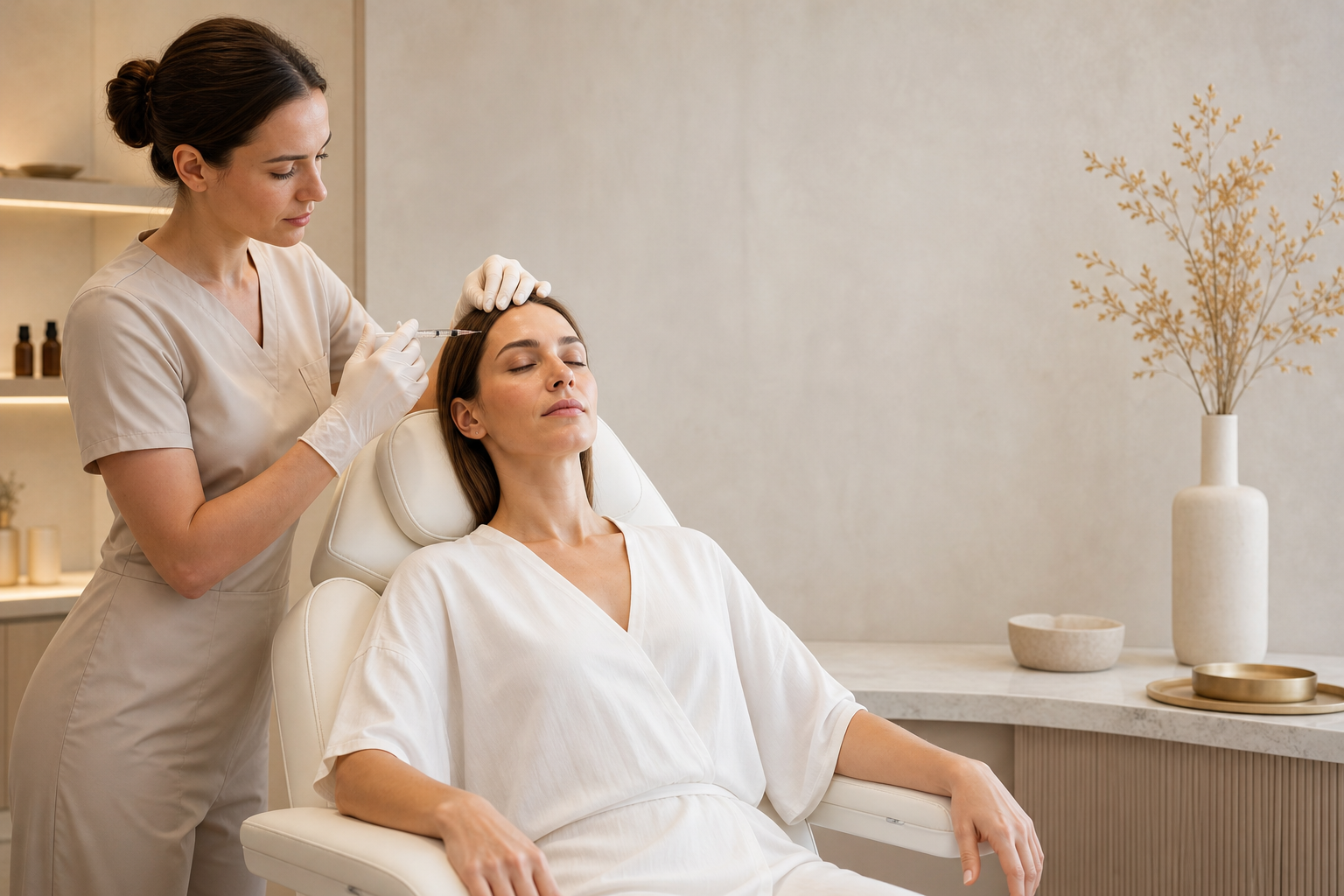
In the evolving landscape of aesthetic medicine, the pursuit of youthful, radiant skin leads many to consider injectable treatments that can reverse or prevent signs of aging. Among the most prominent and often debated choices are Botox and skin boosters, each offering distinct mechanisms and benefits for skin rejuvenation. Understanding their differences, appropriate applications, and potential outcomes is crucial for anyone considering these treatments.
Botox, a well-established neurotoxin, has revolutionized the approach to dynamic wrinkles, primarily addressing lines caused by muscle movements. On the other hand, skin boosters represent a newer category of dermal treatments aimed at enhancing skin hydration and overall quality from within. Both treatments often come under consideration for their anti-aging effects, yet their utility varies significantly depending on individual needs, skin condition, and aesthetic goals.
This editorial aims to provide a comprehensive and nuanced examination of Botox and skin boosters within aesthetic practice. It will unravel their distinct biological actions, clarify realistic expectations, discuss safety aspects, and guide readers on when and why professional consultation is indispensable. This approach ensures informed decisions that align with personal skin health and rejuvenation objectives.
Botox: Targeting Muscular Activity for Wrinkle Reduction and Prevention
Botox, derived from the bacterium Clostridium botulinum, functions as a neurotoxin that temporarily inhibits nerve impulses responsible for muscle contraction. By strategically injecting Botox into specific facial muscles, aesthetic practitioners can decrease the intensity and frequency of movements that generate dynamic wrinkles. These expressive lines typically manifest on the forehead, around the eyes (crow’s feet), and between the eyebrows (glabellar lines).
The primary advantage of Botox lies in its ability to interrupt the cycle of muscle activity that deepens wrinkles over time. Applied especially in younger adults, Botox serves not only to reduce existing lines but also to delay the emergence of new ones, acting as a preventative strategy against facial aging.
Changes become apparent within days—often three to five—following treatment, with effects persisting approximately four to six months. This timeframe varies according to individual metabolism, targeted muscles, and dosage precision. Importantly, Botox modulates facial expressions gently, allowing for a natural appearance without compromising emotive communication.
Safety is paramount in Botox administration. When performed by trained, licensed professionals, adverse reactions are infrequent and generally mild, such as transient eyelid drooping or minor bruising. Nonetheless, a thorough medical history and examination, including assessments for neuromuscular disorders and pregnancy status, are essential to minimize risks and tailor the intervention appropriately.
Skin Boosters: Enhancing Skin Hydration and Structure for Vitality
Skin boosters diverge fundamentally from Botox in both purpose and mode of action. These injectable treatments consist mainly of stabilized hyaluronic acid formulations, sometimes combined with amino acids, vitamins, and antioxidants, designed to improve the skin's dermal environment. Unlike Botox, skin boosters do not inhibit muscle function but instead replenish moisture and stimulate the skin’s intrinsic regenerative processes.
The core benefit of skin boosters lies in their capacity to enhance skin texture, elasticity, and radiance by deeply hydrating the dermis. This treatment targets fine lines, dryness, and overall dullness often associated with aging or environmental stress rather than dynamic wrinkles caused by muscle movement.
Patients with dehydrated or tired skin types, especially in their middle years or beyond, frequently find skin boosters valuable as part of an ongoing skin health regimen. The effects develop progressively and sustain over an extended period, often up to a year, supporting natural skin resilience and glow without altering facial expressions.
As with all injectable treatments, safety considerations include possible temporary redness, swelling, or slight bruising at injection sites. Such reactions typically resolve swiftly without intervention. Selecting qualified professionals ensures proper candidate evaluation and the correct formulation choice, optimizing both safety and efficacy.
Contrasting Mechanisms and Suitability: Navigating Treatment Choices
At the heart of the Botox versus skin boosters discussion lies their fundamentally different biological targets and clinical indications. Botox specifically addresses muscle-induced wrinkles by inducing localized paralysis to smooth dynamic lines. Conversely, skin boosters improve the dermal matrix quality and hydration to mitigate static lines and enhance skin vitality.
This divergence influences patient selection. Candidates exhibiting pronounced expression lines—lines that deepen with facial movements—generally benefit more from Botox treatment. These are often younger to middle-aged individuals with well-defined dynamic wrinkles.
In contrast, patients aiming to fine-tune skin quality and combat signs of skin aging such as dryness, laxity, and minor static lines might find skin boosters more suitable. The treatment is particularly advantageous for those seeking a subtle, natural enhancement rather than an alteration in facial dynamics.
Besides their divergent actions, another consideration is treatment longevity and maintenance. Botox typically requires repeat injections every few months to sustain its effects, whereas skin boosters form part of a longer-term skin care strategy with less frequent reinforcement.
Synergistic Applications: Combining Botox and Skin Boosters in Modern Aesthetic Practice
Contemporary aesthetic medicine increasingly favors integrative treatment plans that combine modalities to address various aspects of facial aging comprehensively. Botox and skin boosters exemplify such complementary tools, often used in tandem to maximize rejuvenation benefits.
For instance, Botox can effectively attenuate dynamic wrinkles, while skin boosters simultaneously enhance hydration and improve skin texture. This combination can produce more harmonious and natural-looking results than either treatment alone.
Beyond these two, skin boosters and Botox are frequently integrated with hyaluronic acid fillers, collagen biostimulators, or laser therapies. These multifaceted protocols enable personalized care suited to each patient's unique facial anatomy, aging pattern, and aesthetic desires.
Successful combination therapy hinges on the expertise of skilled providers capable of orchestrating complex clinical decisions, dosing, and sequencing to ensure safety and efficacy. Detailed consultation and precise assessment are critical components of such an approach.
Safety Considerations and the Imperative of Professional Consultation
Both Botox and skin boosters involve injections that, although minimally invasive, carry potential risks that must be scrupulously managed. The foundation of safe treatment lies in a comprehensive patient evaluation that includes medical history, current medications, allergies, and aesthetic goals.
Botox carries a distinct risk profile due to its neurotoxin nature, including the rare but notable possibility of muscle weakness beyond the targeted area. Skin boosters generally possess a favorable safety profile but share injection-related risks such as hematoma, infection, or allergic reaction.
Qualified aesthetic physicians are equipped to minimize these risks through precise injection techniques, sterile protocols, and appropriate patient selection. Moreover, they provide detailed pre-treatment guidance, including medication adjustments and post-procedure care instructions, to optimize outcomes and reduce complications.
Open dialogue fosters realistic expectations and empowers patients to participate in decision-making regarding their treatments, contributing to overall satisfaction and well-being.
Patient Profiles and Treatment Alignment: Choosing Botox or Skin Boosters
The decision to pursue Botox, skin boosters, or a combination depends on multiple factors including age, skin condition, wrinkle type, lifestyle, and personal preferences.
Individuals in their late twenties to early forties who experience dynamic wrinkles predominantly benefit from Botox's muscle-relaxing properties. This age group often seeks to prevent deeper wrinkle formation while maintaining facial expressiveness.
Conversely, patients in their mid-forties and older, or those with dehydrated, sagging, or dull skin, frequently turn to skin boosters to restore vitality and skin health comprehensively. Those who prefer minimal impact on facial animation while improving skin appearance may find skin boosters especially appealing.
For many patients, combining both treatments offers a balanced approach that treats muscle-induced wrinkles and enhances overall skin quality simultaneously. Customized treatment planning by an experienced specialist is essential to tailor strategies according to individual presentation and wishes.
Preparation, Procedure, and Aftercare: Optimizing Treatment Outcomes
Preparation for Botox or skin booster injections involves avoiding medications and supplements that increase bleeding risk, such as aspirin, NSAIDs, and high doses of vitamin E, for at least several days prior. Patients are advised to refrain from aggressive facial treatments or intense exercise shortly before and after procedures.
During treatment, practitioners employ fine needles and meticulous technique to ensure patient comfort and precise product placement. Procedural duration varies but is typically brief, permitting outpatient visits with minimal downtime.
Post-treatment care emphasizes avoidance of massaging treated areas, limiting sun exposure, and steering clear of heat sources such as saunas for 24–48 hours. Patients should monitor for any adverse symptoms and maintain scheduled follow-ups for evaluation and possible touch-ups.
Adherence to these protocols enhances efficacy and reduces the likelihood of side effects, contributing to an overall positive experience.


