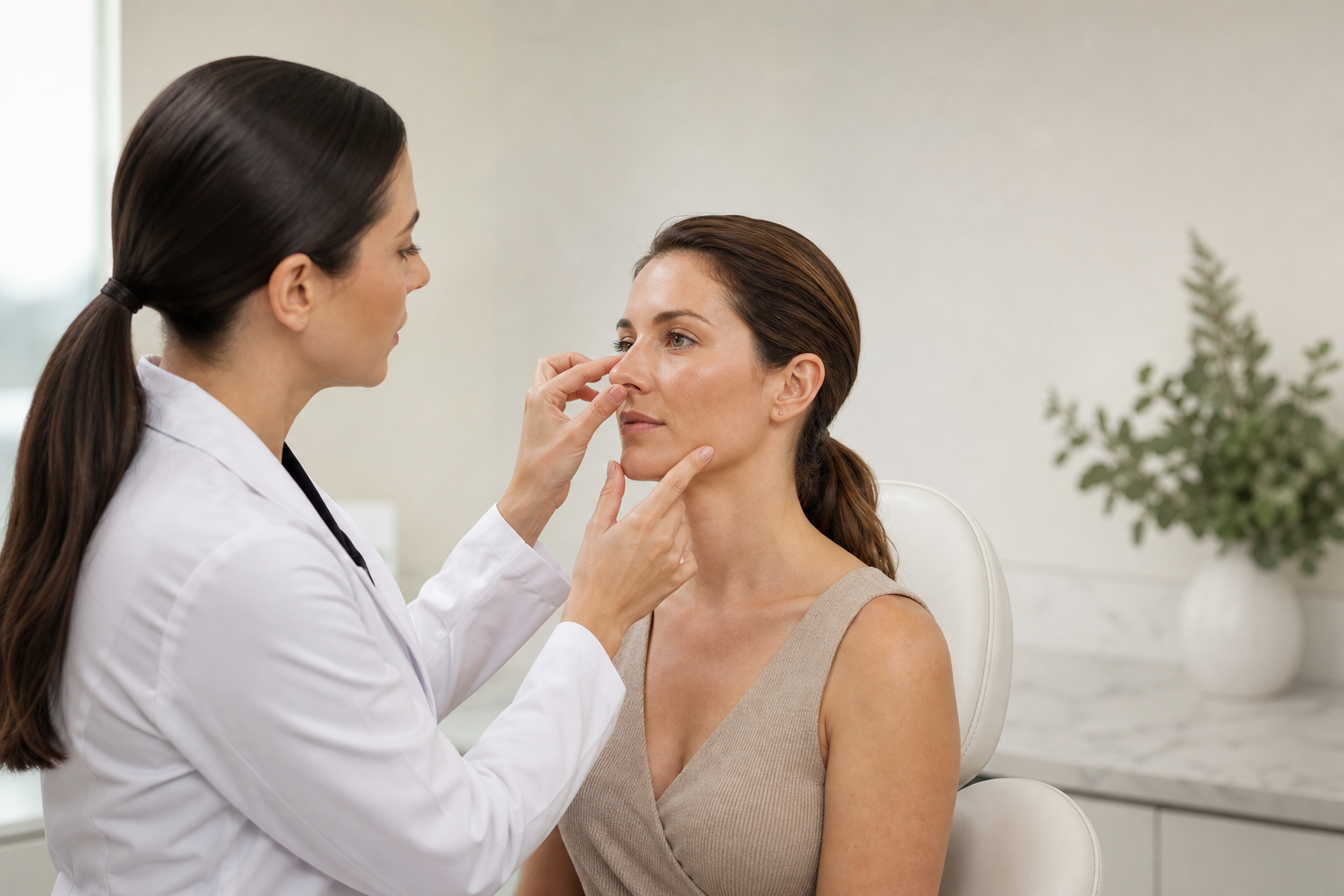
In the realm of aesthetic enhancements, subtle changes can profoundly impact one’s self-perception and social confidence. One common concern among individuals seeking facial rejuvenation or refinement is the drooping of the nose tip when smiling, a dynamic expression-related issue that can alter the harmony and youthful vibrancy of the face. The use of botulinum toxin, commonly known as Botox, has emerged as a minimally invasive approach to addressing this particular concern. Understanding how Botox works specifically in the context of nose tip drooping, its realistic outcomes, potential risks, and the importance of professional intervention is essential for anyone considering this treatment.
Botox to correct nose tip drooping when smiling appeals primarily to those who observe a downward pull of the nasal tip during expressions, which can sometimes lead to a less balanced or aged appearance. For some, this issue is purely aesthetic, while for others, it may affect their confidence during social interactions. Unlike surgical options, Botox offers a non-permanent, subtle means to mitigate the downward movement without altering the fundamental structure of the nose.
This editorial explores the mechanism behind Botox’s action on the focal muscles around the nose, outlines the limitations of what can be achieved with injectable treatments, and emphasizes the safety protocols necessary for optimal results. Moreover, we map out complementary techniques and underline the critical role of qualified specialists in delivering safe, natural outcomes.
Understanding the Muscular Anatomy Behind Nose Tip Drooping
To appreciate the efficacy of Botox in correcting nose tip drooping, it is vital to grasp the anatomy and function of the muscles controlling nasal movement during facial expressions. The levator labii superioris alaeque nasi muscle is chiefly responsible for elevating the upper lip and flaring the nostrils. However, its engagement can also exert a pulling effect on the nasal tip, particularly when smiling. In certain individuals, an exaggerated contraction leads to a noticeable downward displacement or droop of the nose tip accompanied by the smile.
Other ancillary muscles, such as parts of the depressor septi nasi and nasalis, also contribute to the dynamic positioning of the nasal tip and influence the nasal base and nostril shape. This complex interplay results in variable presentations of nose tip behavior during expressive movements.
Botox functions by temporarily inhibiting acetylcholine release at the neuromuscular junction, causing targeted muscle relaxation. When carefully injected into specific muscles that contribute to nose tip drooping, Botox reduces their contraction strength. This modulation results in a milder or minimized downward movement, allowing the nose tip to maintain a more elevated and balanced posture during smiles.
Realistic Expectations for Botox in Nose Tip Lift During Smiling
While Botox offers an innovative, non-surgical solution, it is important for patients to maintain realistic expectations. The treatment modulates muscle dynamics but does not restructure cartilage or bone, nor does it permanently alter the nasal framework.
Typically, Botox’s effects last approximately three to six months, after which re-treatment is necessary to maintain the desired outcome. Optimal candidates are individuals whose nose tip drooping is primarily driven by muscular overactivity rather than structural nasal changes. In such cases, Botox can provide appreciable improvement, offering a subtle lift that enhances facial harmony.
However, for people with significant anatomical nasal tip ptosis—such as a naturally long or heavy nasal tip—Botox alone may not yield significant changes. In these scenarios, the treatment acts as an adjunct rather than a standalone correction, and surgical rhinoplasty or other interventions may be recommended to achieve substantial, long-term improvement.
In practice, patients should expect a natural-looking enhancement rather than an overt, dramatic change, preserving the expressiveness and authenticity of their smile while reducing any distracting downward pull on the nose.
Safety and Potential Side Effects of Botox for the Nose
Safety is paramount when administering Botox treatments, especially in delicate facial areas such as around the nose and upper lip. When performed by a qualified specialist, Botox injections here are generally safe, with minimal risk of complications.
Common, mild side effects may include localized redness, mild swelling, bruising, or tenderness at the injection sites. These typically resolve within a few days. More rarely, improper injection technique or dosing can lead to asymmetry, unintended muscle weakness, drooping of the upper lip, or altered facial expressions—conditions that are usually temporary but may cause patient distress.
Moreover, contraindications such as pregnancy, breastfeeding, certain neuromuscular diseases, or infections at the injection site must be strictly observed to avoid adverse events. The use of certified, high-quality Botox products and adherence to sterile technique further enhance treatment safety.
Open communication between patient and practitioner before, during, and after treatment plays a crucial role in minimizing risks and ensuring prompt management should any unexpected reactions arise.
Complementary Aesthetic Approaches Alongside Botox for Nose and Smile Enhancement
While Botox addresses muscle activity, other treatments can complement or enhance the aesthetic balance of the nose and smile. For example, dermal fillers such as hyaluronic acid can add volume and support to the nasal tip or adjacent areas, improving shape and definition. Fillers also help counteract signs of aging by restoring subtle fullness in the perinasal region.
Additionally, Botox is widely used to refine other aspects of the smile and perioral appearance, such as softening nasal wrinkles ('bunny lines'), reducing excessive gingival display in a gummy smile, and relaxing vertical lip lines. Integrating these treatments allows for holistic facial harmony that respects individual anatomy and expression.
Nonetheless, each patient's anatomy, skin quality, and cosmetic goals necessitate a bespoke approach, combining modalities in calibrated doses to avoid overcorrection and preserve natural expressiveness.
The Critical Role of Expert Practitioners in Botox Treatments for Nose Tip Drooping
The efficacy and safety of Botox injections for nose tip drooping hinge significantly on the skill and knowledge of the administering professional. Unlike more standardized cosmetic injections, this treatment requires an intimate understanding of intricate facial musculature and nuanced expression mechanics.
A qualified dermatologist, plastic surgeon, or aesthetic medicine specialist with specific training in facial anatomy is best equipped to assess patient suitability, map injection points accurately, and customize dosing. Precise technique minimizes risks such as asymmetry, over-weakening of muscles, and functional impairment.
Moreover, expert practitioners recognize when Botox may be insufficient alone and can guide patients towards adjunctive therapies or alternative procedures where warranted. They also ensure comprehensive patient education about treatment expectations, maintenance, and post-procedure care.


