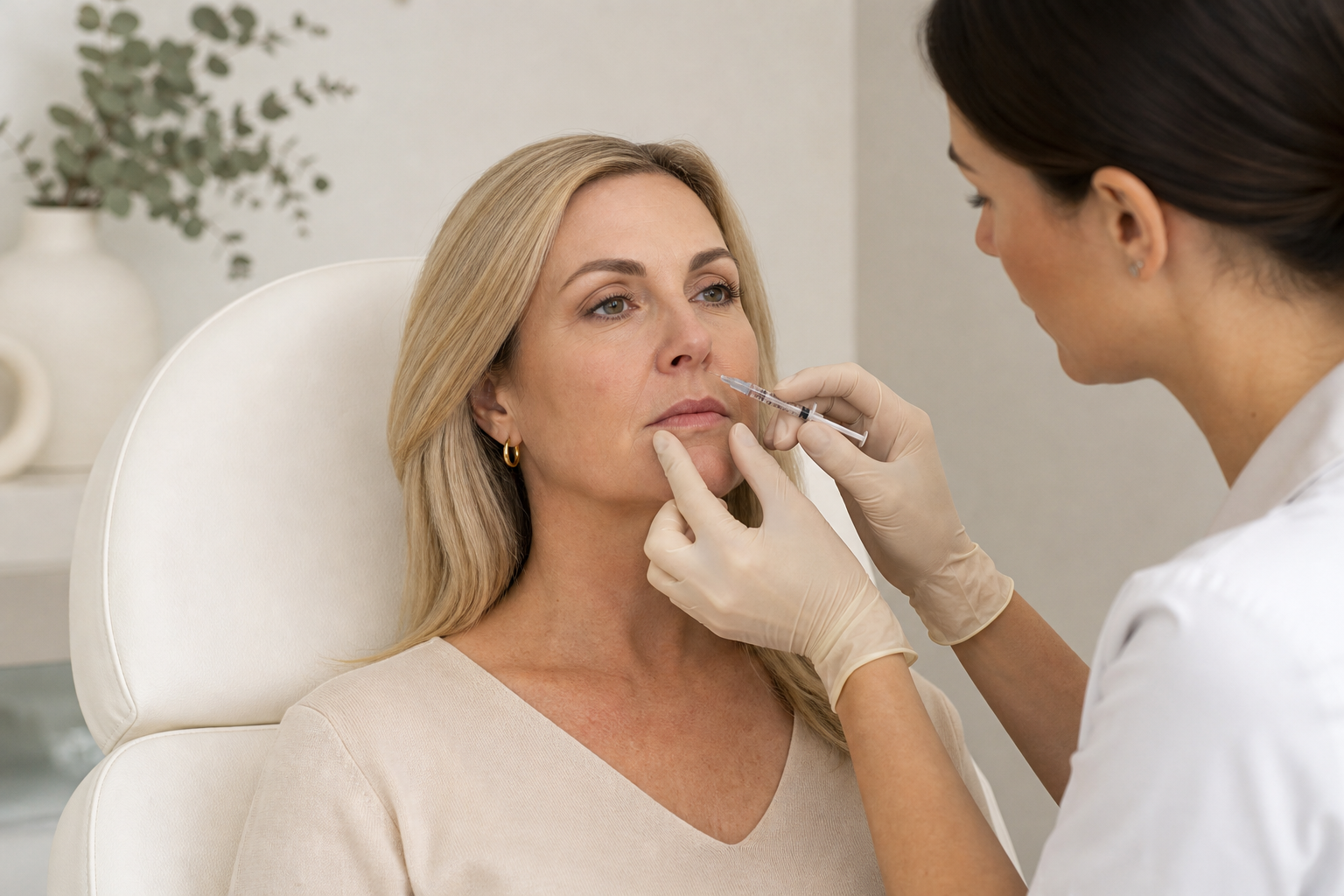
Lines above the upper lip, frequently known as smoker's lines or lip lines, are among the earliest visible signs of aging that concern many individuals who value a youthful and vibrant appearance. These delicate vertical creases often form as a result of repeated muscle movements during facial expressions such as speaking, smiling, or pursing the lips. Additionally, intrinsic skin changes related to aging—such as diminished collagen and elastin production and loss of dermal volume—contribute significantly to their development.
In recent years, Botox has become a popular, minimally invasive option for addressing wrinkles on various parts of the face, including the challenging area above the upper lip. However, those considering this treatment should recognize that Botox has intrinsic limits, especially when it comes to lines that involve complex muscle dynamics and deeper, more static wrinkles. Understanding these boundaries is crucial to setting realistic expectations and achieving the best aesthetic outcomes.
This editorial explores the nuanced role of Botox in treating lines above the upper lip by examining its mechanism of action, the intricate anatomy of the oral region, appropriate patient selection, safety considerations, and alternative or complementary treatments that may enhance results. The goal is to offer a comprehensive, expert perspective that empowers readers to make informed decisions about their aesthetic options.
The Mechanism of Botox in Treating Upper Lip Lines
Botox, derived from botulinum toxin, operates by temporarily blocking the transmission of nerve impulses to muscles, effectively causing localized muscle relaxation. This blockade prevents the repeated contractions that give rise to dynamic wrinkles—lines formed from muscle movement rather than skin damage alone. When injected above the upper lip, Botox targets specific muscles responsible for puckering and pursing, thereby softening the appearance of vertical lines that emerge during facial expressions.
Dynamic wrinkles respond favorably to Botox treatment because the underlying muscle activity diminishes, allowing the overlying skin to appear smoother. However, many of the lines above the upper lip have both dynamic and static components. Static wrinkles are ever-present and do not fade when the face is at rest; these result largely from collagen depletion, skin laxity, and loss of volume over time. Botox does not restore lost volume or skin elasticity—it does not fill or lift—and therefore has limited efficacy on static lines.
Consequently, for individuals whose upper lip lines are predominantly dynamic, Botox can provide meaningful improvement by relaxing the involved muscles. In contrast, for those whose lines are deep, etched, or combined with volume loss, Botox alone may not achieve satisfactory results, necessitating combination approaches.
Anatomical Complexities of the Upper Lip and Their Impact on Botox Treatment
The region above the upper lip is anatomically complex, involving a network of delicate muscles that contribute not only to facial expression but also to critical functions like speech, eating, and oral competence. The orbicularis oris muscle, a circular muscle surrounding the mouth, plays a pivotal role in lip movement. Intricate fibers from surrounding muscles also interlace in this area, making it a highly dynamic zone.
Precisely because of this complexity, administering Botox to lines above the upper lip requires expert knowledge and skill. Misplacement or overdose can impede muscle function, leading to unwanted side effects such as difficulty articulating words, impaired ability to close the mouth fully, drooling, or asymmetrical smiles. The goal is to soften lines without compromising essential muscular activity.
Experienced practitioners carefully select injection sites and doses tailored to each patient’s unique anatomy and facial dynamics. This individualized approach minimizes risks while maximizing the aesthetic benefit. The treatment demands a subtle balance between reducing muscle overactivity and preserving natural motion and expression.
Managing Expectations: What Botox Can and Cannot Achieve for Upper Lip Lines
One of the most important conversations during any cosmetic consultation relates to patient expectations. Botox is often perceived as a quick fix for all forms of wrinkles, yet its limitations must be clearly understood. For upper lip lines, Botox can significantly soften fine dynamic wrinkles and prevent progression by interrupting repeated muscle contractions. This can impart a fresher, more relaxed appearance.
However, deep, well-established wrinkles and creases are less amenable to Botox alone. These static lines arise from structural changes in the skin and underlying tissues, which Botox's mechanism does not address. Patients with such conditions typically require adjunctive treatments, such as dermal fillers, which restore lost volume and provide structural support beneath the skin surface. Volume restoration combined with reduced muscle activity often produces superior, more natural outcomes than either treatment alone.
Additionally, patients should recognize that Botox effects are temporary, generally lasting between three to six months. Maintenance treatments are necessary to sustain the smoothing benefit. Understanding this temporal limitation enables patients to plan ongoing care responsibly.
Safety Considerations and the Importance of Specialist Consultation
Botox is widely regarded as safe when administered by trained and qualified professionals. Nonetheless, the complexity of the upper lip region necessitates a cautious approach to minimize side effects. Potential complications include asymmetry, muscle weakness beyond intended sites, impaired oral function, and local bruising or swelling.
A thorough medical evaluation and detailed discussion about desired outcomes, medical history, and any contraindications help ensure patient safety and satisfaction. Certain individuals, such as those who are pregnant, have neuromuscular disorders, or possess specific allergies, might not be suitable candidates for Botox. Open and honest communication with a specialist facilitates tailor-made treatment planning.
Choosing an experienced injector who comprehends facial anatomy intricacies and employs best practices is paramount. Such expertise reduces risks of adverse events and optimizes aesthetic results. Patients should actively seek licensed dermatologists, plastic surgeons, or other qualified practitioners proficient in facial rejuvenation procedures.
Alternative and Complementary Strategies for Addressing Upper Lip Lines
When Botox alone is insufficient, a range of alternative or complementary therapies can enhance facial rejuvenation outcomes. Dermal fillers, such as hyaluronic acid-based products, replenish lost volume in the perioral region, filling in deep creases and improving skin texture. These fillers can be precisely injected to sculpt and lift the upper lip area, creating a fuller, smoother appearance.
Beyond injectables, resurfacing treatments like chemical peels, microdermabrasion, and fractional laser therapies stimulate collagen production and improve skin quality. Radiofrequency treatments and microneedling can also promote dermal remodeling, contributing to long-term improvements in lip line appearance.
In more advanced cases, surgical interventions such as lip lifts or face-lifts might be appropriate to address significant skin laxity and structural aging changes. Such approaches are generally reserved for individuals seeking more dramatic and longer-lasting results.
Integrating multiple modalities often provides the best combination of reduction in dynamic muscle activity, restoration of volume, and enhancement of skin quality. This comprehensive strategy aligns well with the natural anatomy and aging changes of the upper lip region.


