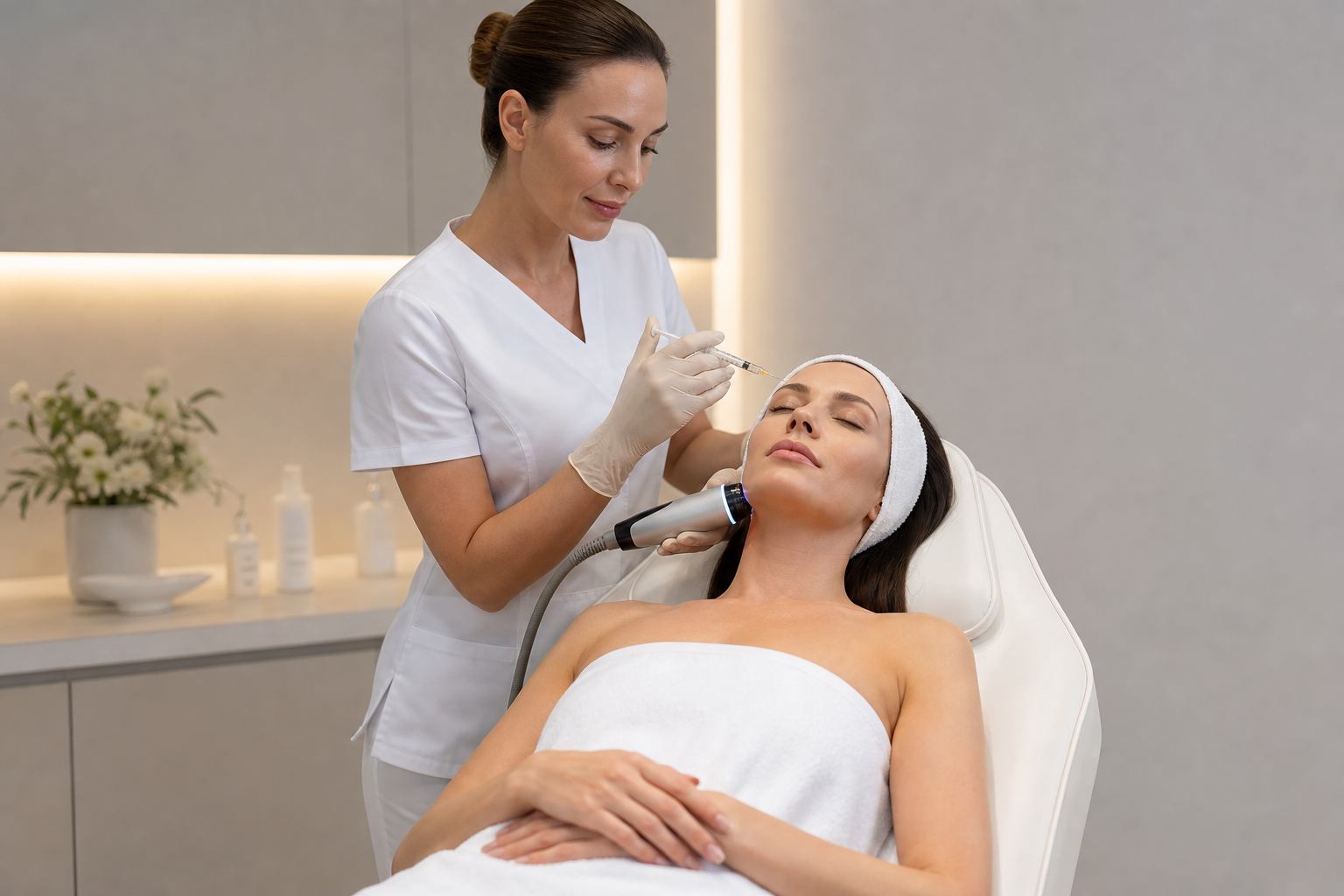
In the evolving world of aesthetic medicine, the pursuit of youthful, vibrant skin has led to remarkable innovations. Among these, Botox and radiofrequency treatments stand out as two of the most effective methodologies for facial rejuvenation. Individually, they each address different facets of the aging process — from the dynamic wrinkles caused by muscle movements to the subtle sagging and texture alterations of the skin itself. Yet, a growing trend among practitioners and patients alike is the combination of Botox with radiofrequency therapies to harness their synergistic potentials.
This editorial explores the art and science behind combining these treatments effectively. It is intended for those considering aesthetic enhancements as well as professionals seeking a deeper understanding of integrative techniques to optimize outcomes. Understanding how Botox and radiofrequency operate in concert can not only empower patients to make informed choices but also enable clinicians to tailor comprehensive treatment plans that align with individual needs.
Combining these two approaches matters because aging is multifactorial — no single treatment can fully address its complex manifestations. When properly synchronized, Botox’s neuromodulatory effects on muscle activity and radiofrequency’s collagen-stimulating impact on skin structure create a more harmonious, youthful appearance. However, achieving this balance requires precise knowledge of each treatment’s mechanism, optimal timing, safety considerations, and limitations. Let us delve into these dimensions to uncover how these therapies can be fused for enhanced facial rejuvenation.
Understanding the Distinct Mechanisms of Botox and Radiofrequency
Botox, a purified form of botulinum toxin type A, is a neuromodulator that selectively inhibits acetylcholine release at neuromuscular junctions. This action temporarily paralyzes targeted muscles, reducing their contractions. Since dynamic wrinkles such as forehead lines and crow's feet form primarily due to repetitive muscle movements, Botox effectively attenuates these creases by relaxing the underlying musculature. Clinically, the visible effects of Botox emerge within about one week post-injection and typically endure for three to six months before gradual muscle activity resumes.
Conversely, radiofrequency (RF) therapy utilises electromagnetic waves to generate controlled heat deep within the dermis and subcutaneous layers. This thermally induced stimulus triggers fibroblast activation, promoting neocollagenesis and elastin remodeling. The result is improved skin firmness, elasticity, and texture. RF treatments additionally enhance microcirculation and lymphatic drainage, supporting skin hydration and vitality. Unlike Botox’s neuromuscular target, radiofrequency works on the skin’s structural matrix, addressing issues such as skin laxity, fine lines, and roughness.
Therefore, Botox and radiofrequency each tackle separate yet complementary aging mechanisms: the former modulates muscle-induced wrinkle formation while the latter rejuvenates dermal integrity. This fundamental distinction is the cornerstone for combining these therapies to provide comprehensive facial revitalization.
The Advantages of Combining Botox and Radiofrequency Therapies
Integrating Botox injections with radiofrequency sessions offers a multifaceted approach to aging that surpasses what either treatment can achieve alone. Botox’s ability to diminish dynamic wrinkles curtails the repetitive muscle movements perpetuating these lines, effectively preventing their deepening over time. Meanwhile, radiofrequency’s stimulation of collagen and elastin synthesis strengthens the skin’s supportive framework, addressing static wrinkles and sagging that Botox cannot influence.
One significant benefit of this combination is the balanced improvement across both muscle and skin layers. Patients often report a softer, smoother complexion with fewer fine lines alongside a more lifted, contoured appearance. The radiofrequency-induced tightening complements Botox’s muscle relaxation, leading to a natural yet rejuvenated look rather than an overly frozen expression.
Furthermore, radiofrequency can enhance the longevity and quality of results from Botox by improving skin health. Enhanced circulation and lymphatic function foster faster healing and better absorption of nutrients, potentially reducing downtime and amplifying treatment effectiveness. The synergistic effect stimulates the skin’s regenerative capacity while mitigating wrinkle formation at its muscular source.
Studies and clinical observations have noted that coupling these modalities can also increase patient satisfaction by addressing a broader spectrum of aging concerns in fewer treatment sessions. This integrative strategy aligns well with personalized, minimally invasive aesthetic care ambitions.
Optimizing Treatment Protocols: Timing and Sequencing for Safety and Efficacy
A critical factor in successful combined Botox and radiofrequency treatments lies in meticulous scheduling. The order and intervals between therapies influence not only their efficacy but also the safety profile. Common consensus and clinical experience predominantly recommend initiating therapy with radiofrequency before administering Botox.
Performing radiofrequency treatments first allows the skin to undergo collagen remodeling and tightening, effectively preparing the surface. The firmer, more resilient dermis provides an enhanced canvas for subsequent Botox injections. Typically, a waiting period of one to two weeks after radiofrequency intervention is advised before injecting Botox to ensure any transient post-RF inflammation has subsided and the skin is in optimal condition.
Administering Botox immediately before or too soon after radiofrequency may risk compromising Botox’s precision and possibly diminish its neuromodulatory effect, as RF-induced heat could interfere with the toxin’s stability and diffusion. Additionally, the heat from radiofrequency shortly after Botox could theoretically accelerate toxin degradation, reducing its duration.
In some maintenance protocols, radiofrequency can be repeated several weeks following Botox injections to sustain collagen production and skin tightening. However, such approaches demand individual clinical judgment and strict adherence to safety precautions.
Practitioners must customize timing based on patient factors, treatment goals, and skin response, avoiding generic schedules. Proper communication with patients regarding expected course and spacing fosters adherence, safety, and satisfaction.
Assessing Safety and Managing Risks in Combined Treatments
When administered by trained professionals following evidence-based protocols, both Botox and radiofrequency are well-established as safe aesthetic interventions. Nevertheless, their combined use requires heightened vigilance due to potential additive effects.
Radiofrequency treatments produce controlled thermal injury to stimulate tissue renewal, which may cause transient erythema, swelling, or mild discomfort. If Botox is injected before the skin fully recovers, this could exacerbate irritation or increase the likelihood of bruising and asymmetry. Improper application of RF could also risk burns or unwanted pigmentation changes, especially in sensitive or darker skin types.
Botox injections themselves carry possible side effects such as localized pain, swelling, bruising, headache, or ptosis if incorrectly dosed or placed. Post-injection care should emphasize the avoidance of strong heat sources (including RF) immediately after treatment to minimize toxin breakdown and complications.
Another key safety aspect involves thorough patient evaluation prior to combined therapy. This includes screening for neuromuscular disorders, allergies, skin infections, or conditions that may contraindicate either modality. Additionally, patients with unrealistic expectations or psychological conditions should be counseled accordingly to mitigate dissatisfaction.
Meticulous documentation, informed consent, and transparent communication about potential risks reinforce ethical practice and optimize outcomes. Professional accreditation and continued training in both techniques are indispensable for safe combined treatment delivery.
Identifying Ideal Candidates for Combined Botox and Radiofrequency Therapy
Not every individual is automatically suited for a combined Botox and radiofrequency regimen. Selection should be individualized based on comprehensive clinical assessment and aesthetic goals.
Patients exhibiting moderate dynamic wrinkles alongside compromised skin texture, laxity, or uneven tone stand to benefit most. Often, these are individuals encountering the initial signs of aging who desire a more holistic rejuvenation without invasive surgery. Those who have experienced limited improvement with monotherapy treatments may also seek combination strategies.
The approach is particularly attractive for patients interested in preventive anti-aging protocols, as Botox can ease muscle-induced wrinkle formation while RF reinforces dermal support. It has shown promise for addressing challenging areas such as the lower face, neck, and décolletage, where superficial lines and skin laxity frequently coexist.
Conversely, individuals with deep static wrinkles, marked volume loss, or significant skin damage may require adjunctive procedures such as dermal fillers, laser treatments, or surgical interventions. Patients with specific contraindications including known hypersensitivity, active skin infections, or certain systemic diseases should not undergo combined treatment unless deemed safe by a specialist.
Ultimately, candidacy decisions involve balancing realistic expectations, treatment tolerability, and comprehensive consultation to tailor the regimen.
Integrating Botox and Radiofrequency with Other Aesthetic Modalities for a Comprehensive Rejuvenation
In contemporary aesthetic medicine, combination therapy seldom stops at two interventions. Botox and radiofrequency often become components within multifaceted treatment plans incorporating dermal fillers, skin boosters, collagen biostimulators, and laser therapies to tackle diverse aging signs.
For instance, while Botox relaxes muscles and RF firms skin, hyaluronic acid-based fillers restore facial volume and contour loss. Skin boosters enhance hydration and skin quality, further complementing the effects of RF-induced collagen stimulation. Collagen biostimulators amplify the natural regenerative pathways, synergizing nicely with RF energy delivery.
Laser treatments can be employed alongside or sequentially with Botox and RF to improve pigmentation, texture, and scar appearance, broadening rejuvenation possibilities. Timing and sequencing of multiple modalities require expert management to avoid overlapping side effects or interference.
This holistic approach allows clinicians to customize protocols to the patient’s unique aging patterns and aesthetic aspirations, increasing the likelihood of natural, harmonious, and durable results.
Professional Expertise as the Pillar of Successful Combined Treatments
The foundation of any safe and effective combined Botox and radiofrequency treatment resides in the hands of qualified, experienced practitioners. Expertise ensures proper patient selection, accurate assessment of indications and contraindications, and implementation of tailored treatment intervals and techniques.
A thorough initial consultation encompassing medical history, skin analysis, muscle activity evaluation, and expectation management is mandatory. This dialogue lays the groundwork for ethical care and patient trust.
Continuous education in both Botox administration and radiofrequency technologies is crucial due to evolving devices, protocols, and best practices. Skilled practitioners recognize subtle nuances to optimize dosing, device settings, and injection sites, mitigating risk and elevating results.
Moreover, monitoring patients’ responses post-treatment and adjusting future sessions accordingly reflect clinical maturity. Incorporating evidence-based guidelines and staying attuned to emerging research fosters innovation and safe progression in the field.
In essence, effective combination therapy is an art perfected through science, experience, and patient-centered care.


