The allure of a chrome manicure lies in its remarkable ability to transform ordinary nails into dazzling, mirror-like surfaces that reflect light with almost hypnotic brilliance. This modern nail art trend has captivated enthusiasts and professionals alike, offering a sleek, metallic finish that symbolizes both sophistication and contemporary style. Rooted in intricate techniques and specialized materials, the chrome manicure transcends basic polish, providing an expression of personal aesthetics informed by science and artistry. It is particularly appealing for those seeking a vibrant yet refined look, blending minimalism with striking visual effects that elevate the nails to focal points of elegance.
Understanding the intricacies of this technique goes far beyond simply applying a shiny powder on top of nail polish. It involves a nuanced knowledge of the powders used, their chemical and physical properties, the compatibility with various nail enhancement bases, and the precision of application methodologies. Whether a seasoned nail technician or an informed client exploring options for a durable, eye-catching manicure, comprehending the components and processes behind chrome nail finishes is essential to achieving high-quality, lasting results.
In the context of contemporary manicure trends, the chrome effect plays a pivotal role among innovations that manipulate light and color through refined technologies. This detailed editorial illuminates the types of chrome powders available, the spectrum of colors achievable, and the specific application techniques required. It also covers realistic expectations about durability and safety considerations, emphasizing when expert consultation is advisable. Through this thorough exploration, professionals can refine their craft, and consumers can make informed decisions about embracing this luminous style.
The Fundamental Varieties of Chrome Powders and Their Unique Characteristics
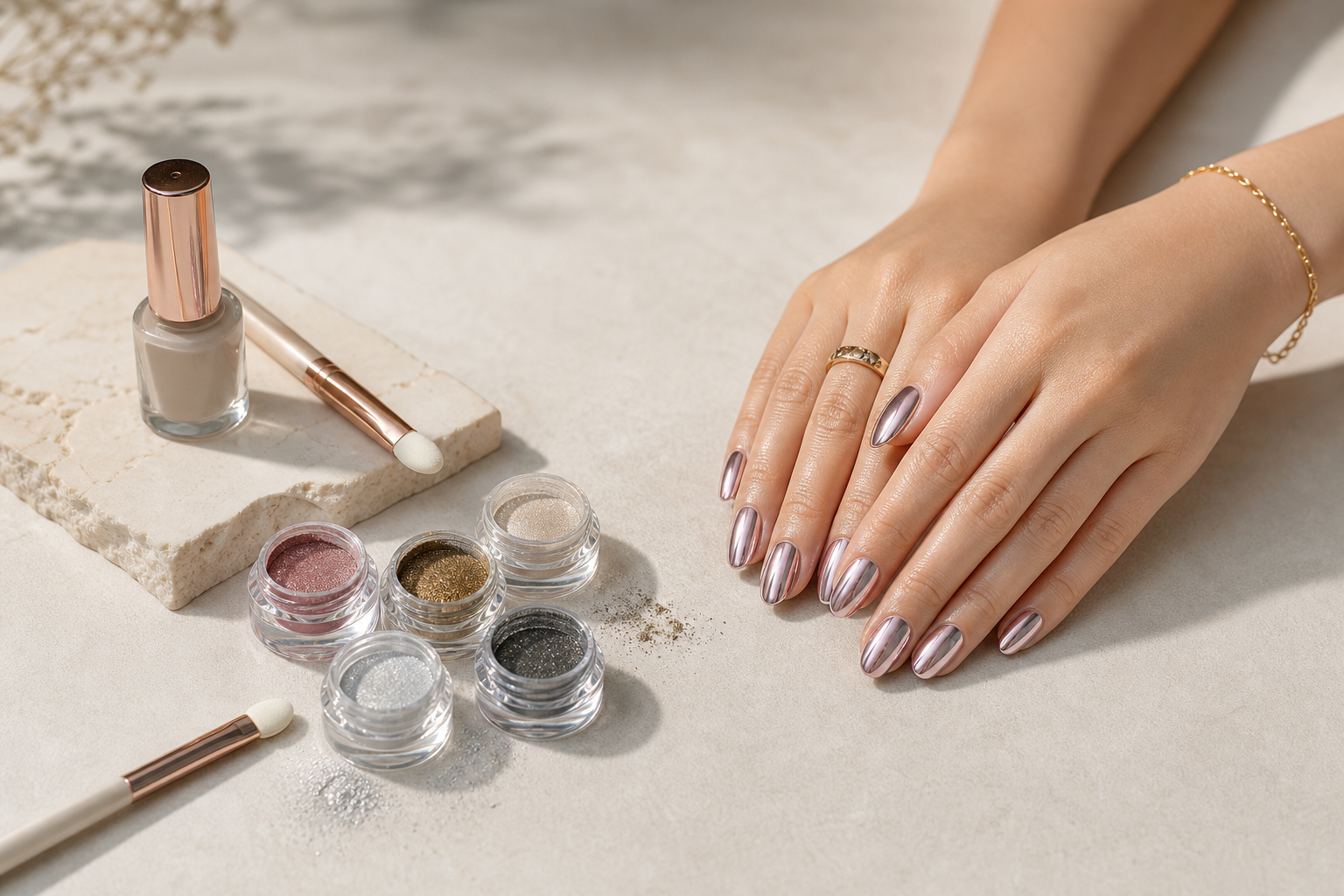
Chrome powders serve as the cornerstone of the chrome manicure's signature reflective surface. These powders typically consist of ultra-fine particles of metallic or mineral origin, meticulously ground to a consistency that allows for smooth application and intense light refraction. The most prevalent variants include aluminum-based powders, renowned for their ability to create sharp mirror effects, and those incorporating silicon components that enhance adhesion and gloss.
Beyond traditional metallic powders, an evolving array of formulations incorporates special additives to achieve holographic and iridescent finishes. These specialized powders feature nanostructured pigments that interact with light to produce color shifts, depth, and subtle dimensionality, expanding artistic possibilities. Magnetic chrome powders further diversify the palette, containing ferrous particles oriented under magnet fields to generate captivating patterns, though they require advanced techniques for optimal results.
Compatibility with various base coats and gel systems also differentiates chrome powders. Some powders are designed to be applied over cured gel polish layers, while others necessitate a specific type of gel, such as builder gel or acrylic bases, to achieve ideal adhesion and durability. Practitioners must evaluate the product specifications carefully, ensuring that the chosen powder harmonizes with the underlying preparation to prevent flaking and promote longevity.
The particle size and uniformity within a powder blend directly influence the smoothness of the reflective surface. Finer particles produce a more even and intense chrome effect, while coarser powders may yield a subtler shimmer at the cost of reduced mirror clarity. Manufacturers now often calibrate their powders to balance ease of application with striking optical properties, catering to varying skill levels and design objectives.
A Spectrum of Colors: Traditional Metals and Avant-Garde Hues in Chrome Finishes
The color palette of chrome powders transcends the historic metallic staples, inviting a revolution in nail aesthetics. Classic shades like silver, gold, rose gold, copper, and gunmetal black continue to dominate the scene due to their timeless appeal and versatility, effortlessly complementing formal and casual styles alike. These hues simulate the look of precious metals, enhancing the impression of luxury and meticulous craftsmanship.
Innovations in pigment technology have ushered in a broader array of colors that maintain the reflective integrity of chrome finishes while introducing vibrant or understated nuances. Pastel chromes, soft lavenders, mint greens, and baby blues offer a gentle radiance suitable for subtle elegance or springtime motifs. On the other end, bold neons and vivid jewel tones respond to demands for striking, contemporary statements, capturing light with explosive clarity.
Dynamic multi-chromatic or color-shifting powders add an extraordinary dimension to nail art. These formulations change appearance based on the angle of light and viewing perspective, producing effects akin to opalescent gemstones or shifting rainbows. When applied with mastery, these powders create living works of art that evolve throughout the day, captivating onlookers.
The underlying base color beneath the chrome powder substantially influences the final hue. Utilizing nude or pale pink bases can soften and warm the metallic overlay, while deep black or navy bases intensify the vibrancy and contrast of the powder's effect. This interplay between base and powder color requires deliberate selection during design planning, aligning with client preferences and overall aesthetic goals.
Mastering the Application Process: Step-by-Step Techniques for Pristine Chrome Manicures
A flawless chrome manicure is the product of meticulous preparation and precise layering. The process begins with comprehensive nail preparation: cleansing, smoothing, and ensuring the nail surface is free of oils or debris. This foundational stage is crucial, as imperfections in the nail surface can distort the powder's reflection and reduce adhesion.
Following preparation, an appropriate base coat or builder gel compatible with chrome powders is applied and cured under a UV or LED lamp. This cured layer serves as the receptive foundation for powder adhesion. In some cases, a specialized non-wipe top coat is used to enhance powder bonding without compromising cure times or surface texture.
The actual powder application involves gently rubbing the fine chrome powder onto the cured gel surface using a soft applicator, often a silicone or velour brush or sponge. This friction facilitates partial embedding of powder particles in the gel surface, ensuring a high-gloss mirror effect without disturbing the underlying polish. Careful technique is vital—excessive pressure or improper motion can cause uneven coverage or disrupt the finish.
Excess powder is then carefully removed with a soft brush to prevent dulling. The chrome effect is subsequently sealed with a final gel top coat, which must be evenly applied and cured according to manufacturer recommendations. This sealing ensures durability, scratch resistance, and preservation of the mirror shine over time.
Each step requires attention to curing times, product compatibility, and application environment conditions, as temperature and humidity may subtly impact performance. Experienced technicians also factor in client preferences and nail conditions, adjusting technique accordingly to optimize both aesthetics and nail health.
Safety Considerations and Limitations in the Use of Chrome Manicure Products
Despite the visual appeal of chrome manicures, caution must be exercised to mitigate potential risks associated with their application and removal. Clients with sensitive skin or known allergies should undergo patch testing to exclude adverse reactions to powder components, gel bases, or top coats. Common sensitizers may include specific chemical resins and metal oxide pigments.
Excessive exposure to UV or LED curing lamps, while standard in gel applications, presents a theoretical risk of skin damage. Employing protective measures such as fingerless mitts or sunscreen at surrounding skin areas can help minimize cumulative exposure, particularly in frequent clients.
The mechanical process of powder rubbing and subsequent removal requires gentle handling. Overzealous filing or peeling of cured gel layers may thin or damage the natural nail plate, leading to brittleness or infection risks. Professional removal using appropriate solvent gels or acetone, followed by restorative treatments, safeguards nail integrity.
Chrome manicures are generally unsuitable for nails that are severely weakened, thin, or compromised by fungal infections or trauma. In such cases, consultation with dermatologists or nail specialists is advisable before proceeding. A comprehensive assessment ensures that enhancing aesthetics does not come at the expense of long-term nail health.
The Role of Chrome Manicure within Current Nail Art Trends and Diverse Styling Approaches
Chrome manicures hold a distinctive position at the intersection of minimalist elegance and cutting-edge fashion within the realm of nail design. Their adaptability permits integration into a variety of artistic expressions, from understated monochromes to elaborate mixed-media creations. Combining chrome powders with other techniques like magnetic effects, holographic layering, or subtle gradient fades expands creative horizons.
In minimalist styling, chrome enhances simple shapes and muted palettes, delivering a polished, luxe finish that commands attention without overwhelming the design. In contrast, avant-garde applications leverage complex layering and color interplay to invoke futuristic or ethereal motifs, amplifying individuality and visual impact.
Seasonal trends often influence the choice of chrome colors and complementary designs, reflecting broader fashion currents. For instance, metallic organics favored in autumn hues or icy pastels resonating during winter illustrate the manicure’s capacity to evolve in harmony with lifestyle and cultural shifts.
Professional nail artists recognize the chrome manicure as a key technique that harmonizes with contemporary aesthetics emphasizing texture, light, and personal narrative. Its enduring popularity underscores the desire for nails that serve as both functional adornment and canvases for artistic innovation.
Customizing Chrome Manicures According to Nail Type, Condition, and Personal Preferences
Achieving optimal results with chrome manicures requires a tailored approach that considers the natural variability of nail types and client lifestyles. Thin or fragile nails benefit from protective base layers, such as builder gels or BIAB (builder in a bottle), that reinforce strength without sacrificing flexibility. This foundation supports not only the aesthetic overlay but the nail’s structural integrity over time.
Conversely, clients with robust nails or professionally extended enhancements can explore thicker powder applications and complex textures, maximizing the visual potential of the chrome finish. However, balances must be struck to avoid excessive bulk or weight, which may increase the risk of chipping or discomfort.
Skin tone and undertones influence the perception of chrome colors, guiding the selection of powders that harmonize with the wearer’s complexion. Warmer undertones generally gravitate toward gold and bronze shades, while cooler complexions suit silver and blue-tinted chromes. This color theory application enhances the manicure’s flattering effect and personal resonance.
Consultation remains critical to align client expectations with achievable outcomes, incorporating preferences for longevity, maintenance requirements, and design complexity. This interaction ensures satisfaction and fosters trust between technicians and clients, promoting repeat visits and elevating the profession’s standards.