In the evolving landscape of nail artistry, the double French manicure has emerged as a distinguished expression of modern elegance and creativity. This technique reinterprets the traditional French manicure by introducing layered lines and carefully curated color combinations, allowing wearers to balance classic refinement with contemporary flair. More than a mere style, the double French manicure presents an opportunity for individuals to personalize their nail aesthetics while embracing a sophisticated and versatile look.
Designed for women who appreciate the foundational elements of traditional manicures yet seek to innovate beyond basic designs, the double French manicure offers a fresh perspective on nail enhancement. It appeals to both seasoned nail art enthusiasts and those willing to experiment with subtle complexity. As nail culture gravitates towards more personalized and intricate designs, understanding the nuances and applications of the double French manicure becomes essential for both professionals and aficionados aiming to stay at the forefront of nail trends.
Recognizing its significance in today's manicure styles, this article delves into the technical processes, color strategies, benefits, challenges, and the integration of innovative details that define the double French manicure. Grounded in expert knowledge and practical guidance, it navigates through the artistic and functional aspects that make this technique a compelling choice in contemporary nail care and design.
Mastering the Technique: Execution and Precision in Double French Manicure
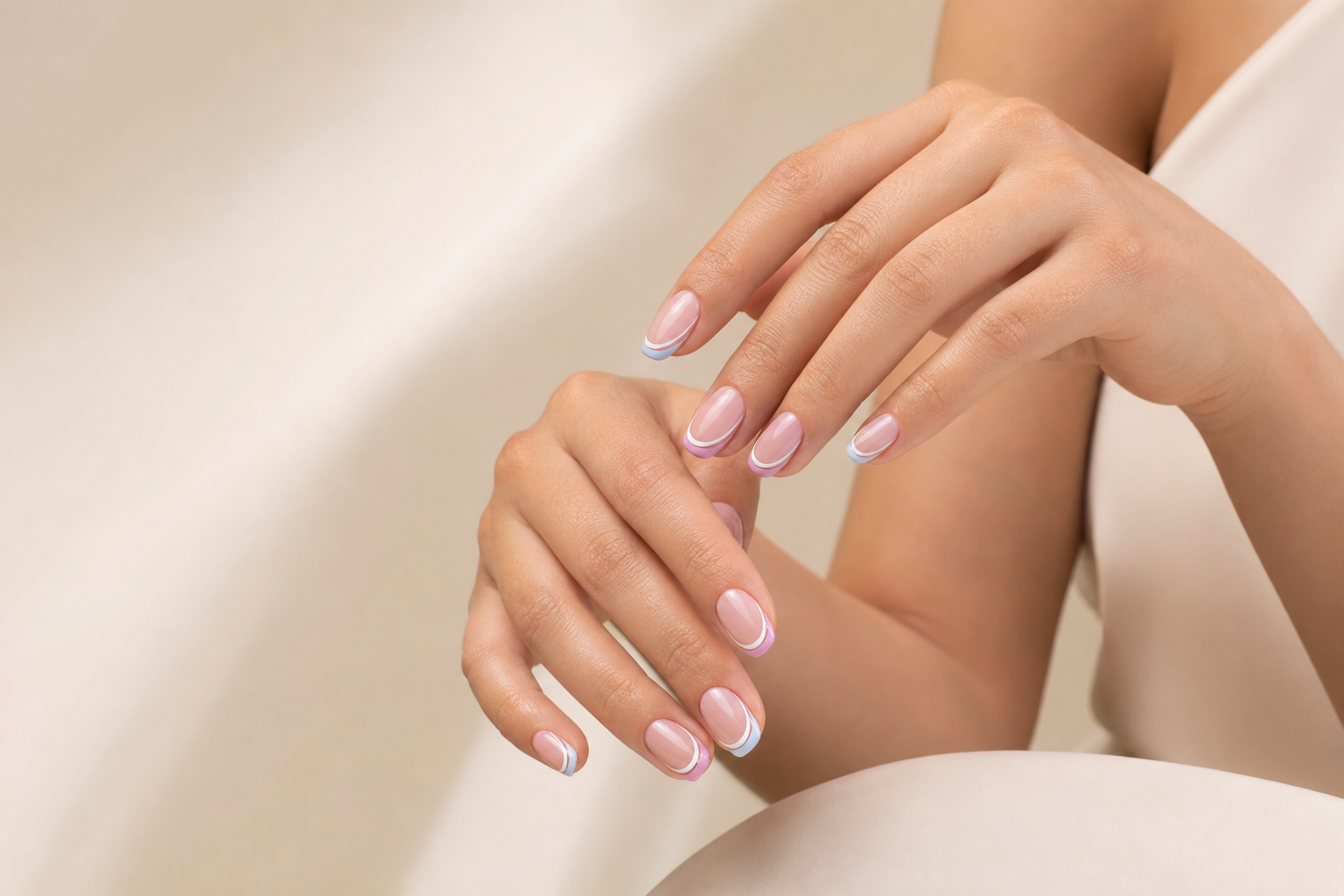
The double French manicure distinguishes itself through its detailed layering of two parallel lines on the nail tip, diverging from the single accent line of a classic French manicure. Achieving this refined effect calls for meticulous preparation and a steady hand, emphasizing both the artistry and the technical skill involved.
Preparation begins with the nail surface: nails must be impeccably clean, shaped to the desired form, and lightly buffed or matte-finished to enhance the adhesion of polish layers. This foundation ensures that the subsequent colored lines maintain their integrity and avoid premature chipping.
Applying the double lines requires specialized tools such as fine-tipped brushes or nail art pens designed for precision. The base coat, typically a neutral or softly tinted shade, is applied first and allowed to dry thoroughly to prevent bleeding between layers. The two slender, parallel lines are then painted with contrasting or complementary colors, spaced carefully to create depth and crisp definition.
Consistency across all nails is critical; asymmetry or uneven thickness can detract from the design's elegance. Professionals often employ guides or striping tape during application to maintain uniformity. Upon finalizing the design, a clear top coat seals the lines, providing a protective glossy or matte finish that extends longevity without smudging the delicate details.
Exploring Color Combinations and Symbolic Aesthetics in Double French Designs
The palette selection in double French manicures fundamentally influences the design's mood and suitability for different occasions. Classic white paired with nude or pastel bases remains popular for understated grace, whereas bolder contrasts such as black with gold or navy with silver evoke a more striking, fashion-forward statement.
Color psychology also plays a role; soft hues like lavender and peach suggest femininity and calm, while vibrant neons convey energy and playfulness. The layering of lines within the double French technique offers creative latitude to juxtapose shades in ways that either harmonize or dynamically contrast.
Strategic pairing of colors can also complement the wearer's skin tone and wardrobe. For instance, warm metallics coordinated with earth tones augment formal attire, while bright, lively combinations energize casual ensembles. This versatility supports the double French manicure's adaptability across social settings, from corporate environments to festive events.
Beyond aesthetics, color choice reflects personal expression and current fashion trends, making the double French manicure a canvas for artistic storytelling through subtle visual cues.
The Balance of Elegance and Complexity: Advantages and Challenges of Double-Lined Manicures
One compelling advantage of the double French manicure is its ability to unify refinement with novelty. By incorporating an additional accent line, the manicure achieves a dimensional quality that elevates the nails' visual interest without overwhelming simplicity.
The technique can elongate the fingers and enhance the manicure's definition, making hands appear polished and poised. Its adaptability to various nail shapes and lengths further broadens its appeal.
However, the increased complexity introduces practical challenges. Precise application demands patience, skill, and the right tools—qualities that may not be present in all DIY settings. Inadequate technique can result in irregular lines, color bleeding, or premature wear.
Time investment is another consideration; the multiple layers require longer drying periods and careful handling between steps. Additionally, color combinations must be thoughtfully vetted to avoid muddy or conflicting aesthetics, which can undermine the intended elegance.
For these reasons, professional consultation or training is advisable for those wishing to master this style or achieve consistent salon-grade results.
Maintaining Nail Health and Safety in Double French Manicure Practices
While the allure of intricate nail art is undeniable, prioritizing nail health is paramount, especially with advanced techniques like the double French manicure that involve layering and specialized products.
Quality of materials is critical; using hypoallergenic polishes, reputable gels, and sterilized tools minimizes the risk of allergic reactions and infections. For gel or acrylic finishes, adherence to proper curing times and application protocols prevents nail damage and prolongs wear.
Post-manicure care plays a vital role in preserving nail integrity. Regular application of nourishing cuticle oils and moisturizing creams supports the skin around the nail matrix, promoting healthy growth and flexibility.
Avoidance of harsh chemicals and protective measures such as gloves during household chores reduce wear and tear on the manicure and natural nails. Furthermore, any signs of irritation, discoloration, or nail brittleness warrant prompt evaluation by a dermatologist or nail care specialist.
Innovative Personalization: Enhancing Double French Manicures with Artistic Details
The foundational double French manicure can be artistically expanded through the incorporation of subtle embellishments, catering to an individual’s style preferences and the occasion.
Adding delicate patterns such as minimal dots, fine geometric shapes, or muted glitter between or alongside the parallel lines introduces texture and unique character. These details serve not to distract but to complement the dual-lined structure, enhancing its dimensionality.
Combining the double French style with other trending techniques—like ombre gradients or aura-inspired soft transitions—furthers its creative potential. A softly shaded nail background paired with sharply defined double lines achieves a harmonious blend of softness and precision.
Experimentation with texture finishes, including matte versus glossy or metallic accents, allows the manicure to reflect varying moods, from subtle sophistication to dynamic modernity. This versatility underscores the double French manicure’s capacity to function as both a fashion staple and an individualized statement.
Technological Progress in Tools and Products Driving Double French Manicure Excellence
Recent advancements in nail care technology have been instrumental in popularizing and refining the double French manicure technique. The development of ultra-fine brushes and precision applicators enables artists to create flawlessly thin and consistent lines crucial for the layered look.
Innovations in gel and polish formulations afford quicker drying times, improved durability, and enhanced pigmentation, addressing previous limitations related to smudging and color integrity. UV and LED curing devices have become standard equipment, facilitating efficient processing without compromising nail health.
Accessibility to professional-grade tools for home users has also expanded, providing nail enthusiasts with the means to experiment safely and achieve salon-quality designs. Nonetheless, mastering the use of advanced implements still requires education and experience to avoid common pitfalls such as uneven layering or product misuse.
Ongoing research and product development continue to push the boundaries of what is possible within nail art, promising further enhancements to the double French manicure's execution and longevity.
The Double French Manicure: A Contemporary Icon in Nail Art Evolution
Emerging as a nuanced reinterpretation of a timeless classic, the double French manicure embodies the dynamic intersection of tradition and innovation in modern manicure trends. Its sophisticated layering and color-play invite wearers to transcend the conventional confines of nail design, celebrating both personal expression and artistry.
As the beauty industry embraces greater diversity and creativity, favors towards manicure styles that offer customization alongside elegance have surged. The double French manicure's adaptability to varying preferences and occasions ensures its relevance and desirability among diverse audiences.
For those invested in nail culture as a form of self-expression and style, integrating the double French manicure provides not just a fashion statement but an exploration of form, color, and technique. Its ongoing popularity signals an enduring appeal that merges expert craftsmanship with contemporary aesthetics, affirming its role as a staple in the evolving narrative of nail care and design.