Gel polish bases form the indispensable foundation of long-lasting, resilient manicures that have revolutionized nail care in recent years. These bases serve not merely as a primer for color application but also as protective, strengthening agents that enhance flexibility, durability, and overall health of the natural nail beneath the polish. As the diversity in nail types and daily activities has increased, so too has the array of base formulations tailored to meet different needs, with rubber, fiber, and classic gel polish bases emerging as the primary options. Understanding the distinct properties and application protocols of each base type is essential for both professionals and enthusiasts seeking to achieve a lasting, flawless finish without compromising nail integrity.
This article targets a spectrum of readers: professional nail technicians aiming to refine their product knowledge and techniques, experienced enthusiasts managing their own manicures at home, and individuals curious about the best gel polish base option for their nail condition and lifestyle. By unpacking the unique chemical compositions, mechanical properties, and clinical considerations of rubber, fiber, and classic gel bases, this discussion offers a comprehensive view on how to optimize the health of natural nails while delivering an impeccable, enduring manicure. It also addresses common concerns such as suitability for different nail types, preparation procedures, maintenance, and when to consult a specialist.
With the market saturated by numerous brands and formulas, making an informed selection can seem daunting. This editorial provides clarity by detailing each base's mechanism, advantages, limitations, and care requirements, thus empowering readers to make choices that align with real-world expectations and personal or client needs.
Classic Gel Polish Base: Stability and Adhesion for Standard Nail Needs
The classic gel polish base is the stalwart choice of many manicure applications, serving as a fundamental layer that promotes adhesion between the natural nail and colored gel polish. Typically characterized by a transparent or slightly milky appearance, this base polymerizes through exposure to UV or LED light, creating a hard, smooth surface that securely binds the top color coats to the nail without excessive dryness or brittleness.
At the heart of classic bases lies a formula rich in photo-initiators and polymer resins that cure rapidly and produce a stable yet flexible film. This balance maintains the elasticity of the natural nail to a reasonable extent while providing resistance against chipping and peeling. Because they are formulated for general use, these bases are most suitable for nails in normal condition—neither extremely thin nor heavily damaged—and for clients who follow moderate daily activities without excessive manual wear.
Preparation is a cornerstone of classic base system success. The surface of the nail needs to be gently abraded with fine-grit files or buffers to remove surface shine, which facilitates mechanical and chemical adhesion. Over-filed nails can become sensitized or weakened, leading to premature lifting of the gel polish and potential damage upon removal. Hence, precise preparation balancing surface roughening and preservation of the nail's integrity is paramount.
When applied correctly, classic bases offer a base longevity of roughly two to three weeks, though this can diminish if nails are prone to splitting or if the client engages in labor-intensive or moisture-heavy activities frequently. Regular salon visits for nail health assessments and touch-ups are recommended to maintain an evenly distributed base layer and manage nail growth effectively.
Rubber Gel Polish Base: Enhanced Flexibility for Resilient Nails
Rubber-based gel polish foundations distinguish themselves by their exceptional elasticity and shock-absorbing qualities. This formulation, sometimes termed "gum base," is designed explicitly for clients whose nails require enhanced protection against cracking and splitting. Comprised of flexible polymers, rubber bases yield a softer yet durable film that moves with the natural flex and contours of the nail, reducing stress concentrations that often cause fractures.
This base type is optimal for individuals with thin, brittle, or peeling nails, as the added pliancy extends the lifespan of the manicure and preserves nail health during normal wear. Besides everyday protection, rubber bases are favored by persons whose hands are subject to frequent water exposure, manual work, or contact with detergents and potentially harsh chemicals, which tend to degrade classical bases prematurely.
Application techniques for rubber bases diverge slightly. Typically, preparation involves minimal filing to conserve the integrity of the natural nail surface since the base itself compensates for structural weaknesses with its pliable nature. Rubber bases are generally applied in a slightly thicker layer compared to classic formulations, and proper curing under UV or LED light ensures a resilient but flexible foundation that melds comfortably with the nail.
Its compatibility with a wide range of gel color systems makes rubber base a versatile option, although it is advisable to avoid pairing it with highly rigid overlay gels that may counteract its flexibility benefits. With regular maintenance and care, rubber bases can extend gel polish wear to about four weeks, significantly surpassing traditional base durability in demanding conditions.
Fiber Gel Polish Base: Structural Reinforcement Through Embedded Fibers
Fiber gel bases incorporate a technologically advanced matrix embedded with microscopic synthetic fibers, providing unparalleled tensile strength and resistance to mechanical stresses. These fibers create a network within the base coat that distributes forces across the nail's surface, mitigating common issues such as splitting, chipping, and delamination associated with mechanically compromised natural nails.
Developed for use in professional nail salons, fiber bases are especially advantageous for clients requiring substantial nail reinforcement—those with weak, fissured, or peeling nails—and for individuals seeking durable base layers supportive of extensions or sculpted nails. Unlike other bases, fiber bases resemble a lightweight fabric embedded within the gel, allowing for a combination of toughness and translucency without sacrificing aesthetic quality.
The application requires meticulous technique: after surface preparation, the fiber gel base is carefully spread to evenly distribute the embedded fibers. Care is taken to avoid excess thickness which can jeopardize the natural appearance and feel of the nail. Following a controlled photo-polymerization curing process, the nail is left with a protective yet naturally pliable layer, capable of enduring up to five or six weeks of continuous wear with appropriate upkeep.
Fiber bases elevate gel polish longevity by significantly reducing the need for frequent repairs or full manicures. However, complexity in application and higher costs mean that fiber bases are generally reserved for professional use rather than at-home treatments, highlighting the necessity of trained application for optimal results.
Choosing the Appropriate Gel Base According to Nail Type and Lifestyle Demands
Selecting the right gel polish base transcends mere preference; it is a nuanced decision informed by the natural condition of the nails and the wearer’s daily engagements. Thin, peeling, or fragile nails benefit most from bases that prioritize flexibility and protection—rubber and fiber options typically outperform classic bases under these conditions. Conversely, individuals with strong, healthy nails engaged in less physically demanding routines may find classic gel bases both sufficient and cost-effective.
Lifestyle habits heavily influence durability. Frequent immersion in water, exposure to cleaning agents, manual labor, and repetitive mechanical impact increase nail wear, requiring a base with enhanced impact resistance. Rubber bases excel in this context by cushioning the nail and adapting to flexion, while fiber bases provide superior structural reinforcement when nails are prone to breaking despite care.
Moreover, the decision should factor in the client’s willingness and feasibility of routine maintenance. Fiber bases offer extended longevity but demand professional application and monitoring, whereas rubber and classic bases allow more straightforward upkeep. When ambiguity exists, consultation with a dermatologist or seasoned nail technician ensures an evidence-based approach, preventing potential allergic reactions or exacerbation of nail disorders.
Safe Practices and Preparatory Steps for Optimal Gel Base Application
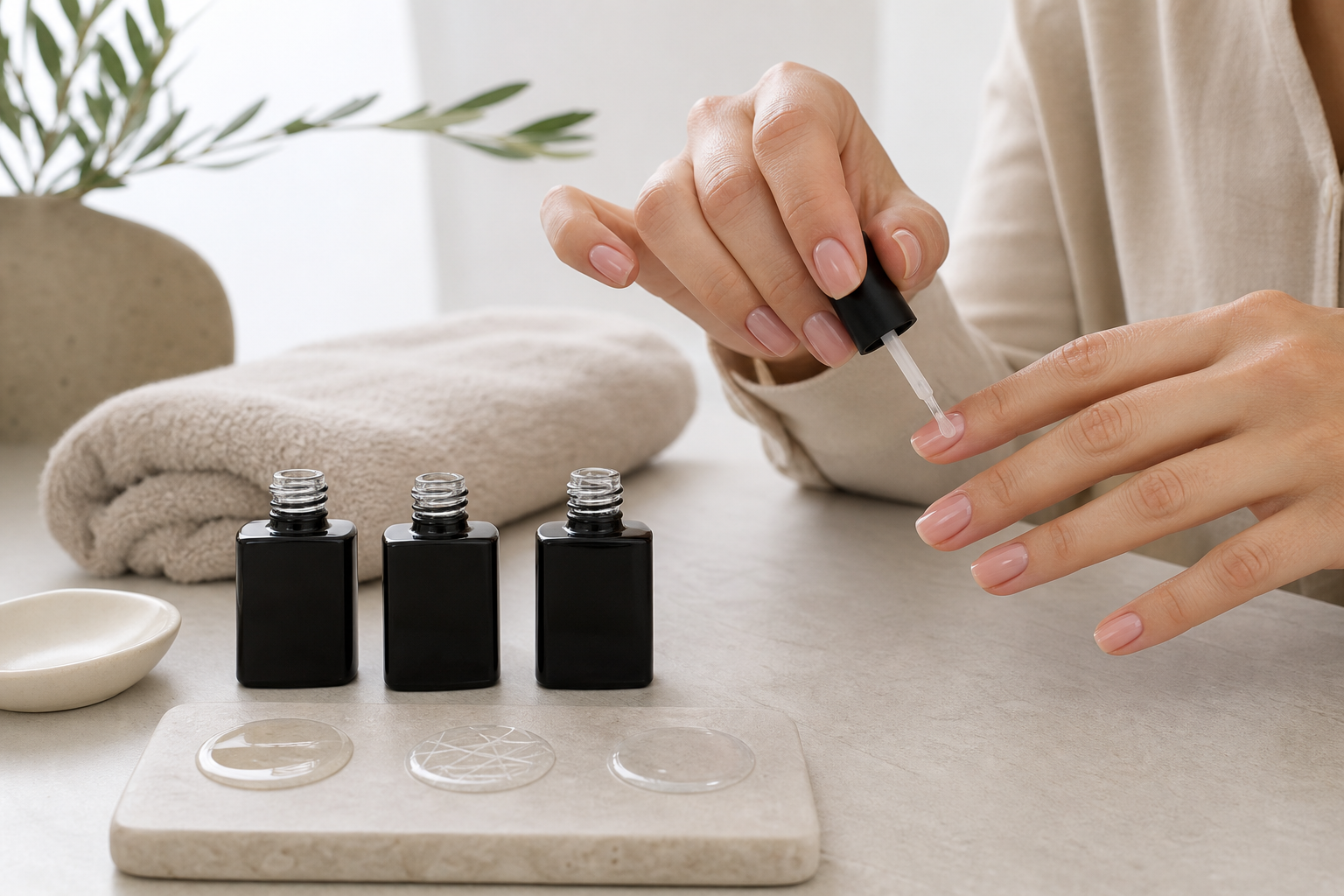
The integrity and success of gel polish manicures depend profoundly on initial preparation and safe handling throughout the process. Proper sanitation measures remove oils, dirt, and microbes that could undermine adhesion and hygiene. Gently buffing the nail surface to remove the natural shine creates micro-roughness, enhancing mechanical grip without compromising keratin layers.
Nails must be dry and free of lotions or residues before base application. UV and LED cure times must be precisely followed to prevent incomplete polymerization, which not only shortens manicure lifespan but also can result in skin irritation or allergenic responses. Excess bulk or uneven application of the base layer should be avoided to preserve natural nail contour and avoid unsightly thick nails.
Post-application, clients should be educated on protective habits, such as wearing gloves during household chores involving chemicals, avoiding excessive scratching, and moisturizing cuticles and surrounding skin to maintain nail bed health. Poor aftercare can accelerate peeling and cracking despite the use of advanced bases.
Maintenance and Longevity Expectations for Each Gel Base Type
Each gel base type offers distinct durability profiles contingent on nail characteristics and adherence to maintenance regimens. Classic bases generally maintain optimal adhesion and finish for up to three weeks under moderate use, after which signs of nail growth and edge wear necessitate infills or renewals. Rubber bases typically extend this window to four weeks or beyond for active lifestyles, effectively shielding against premature chipping.
Fiber bases lead the market in retention, sustaining manicures for five to six weeks when applied expertly and accompanied by proper care. The reinforcement from embedded fibers curtails common structural failure points, making fiber bases the elite choice for long-term results, particularly beneficial for clients aiming for minimum salon visits or seeking nail restorations.
Regular salon visits for assessment and touch-ups minimize risks of peeling layers and bacterial ingress, which can impact not only manicure quality but also nail and skin health. Hydration through cuticle oil application and gentler removal methods further preserve the underlying natural nails, prolonging the cycle of healthy and attractive nails.
Professional Versus Home Use: Recommendations for Selecting and Applying Gel Bases
Within professional settings, nail technicians benefit from a variety of available gel bases, enabling them to tailor treatments according to individualized nail assessments and customer expectations. Their expertise ensures that difficult-to-apply bases like fiber gels are used correctly, producing uniform results while safeguarding nail health.
At-home consumers are encouraged to prioritize simpler, proven base formulas and avoid complex fiber-based systems unless previously trained. Choosing certified, high-quality products from reputable brands reduces the risk of harmful ingredients that can aggravate skin or weaken nails. Reading ingredient labels to exclude chemicals such as toluene or formaldehyde derivatives is advisable, particularly for sensitive individuals.
Seeking professional advice prior to experimentation fosters safer practices and increases overall satisfaction. Training in proper application techniques and curing protocols empowers even home users to achieve better outcomes and reduces incidents of mishandled manicures that lead to discomfort or damage.
Maximizing Gel Polish Base Performance Through Specific Care Techniques
For optimal results, mastering the nuanced care requirements distinctive to each gel base type is indispensable. Classic bases claim steady upkeep with standard nail care routines focusing on even layering and regular curing. Ensuring that layers are neither too thin (leading to brittleness) nor too thick (leading to lifting) forms part of good practice.
Rubber bases demand consistent application of a thick, smooth layer to utilize their elastic properties fully. Avoiding thickened edges or bulges prevents premature cracking under repeated stress. Following up with barrier creams or protective gloves during exposure to water and chemicals enhances the durability afforded by this base.
Fiber bases necessitate meticulous fiber distribution during application to ensure an invisible but robust scaffold. This demands a high degree of skill to avoid clumping or unevenness that disrupts the nail’s natural curvature. Clients with fiber bases should adopt deliberate gentle handling protocols, supplemented with moisturizing regimens, to sustain the integrity of the fiber network and maximize wear time.
Regular inspections for signs of lifting or discoloration are critical to intercept potential problems early. When discomfort or nail sensitivity arises, prompt consultation with professionals helps prevent progression to serious conditions.