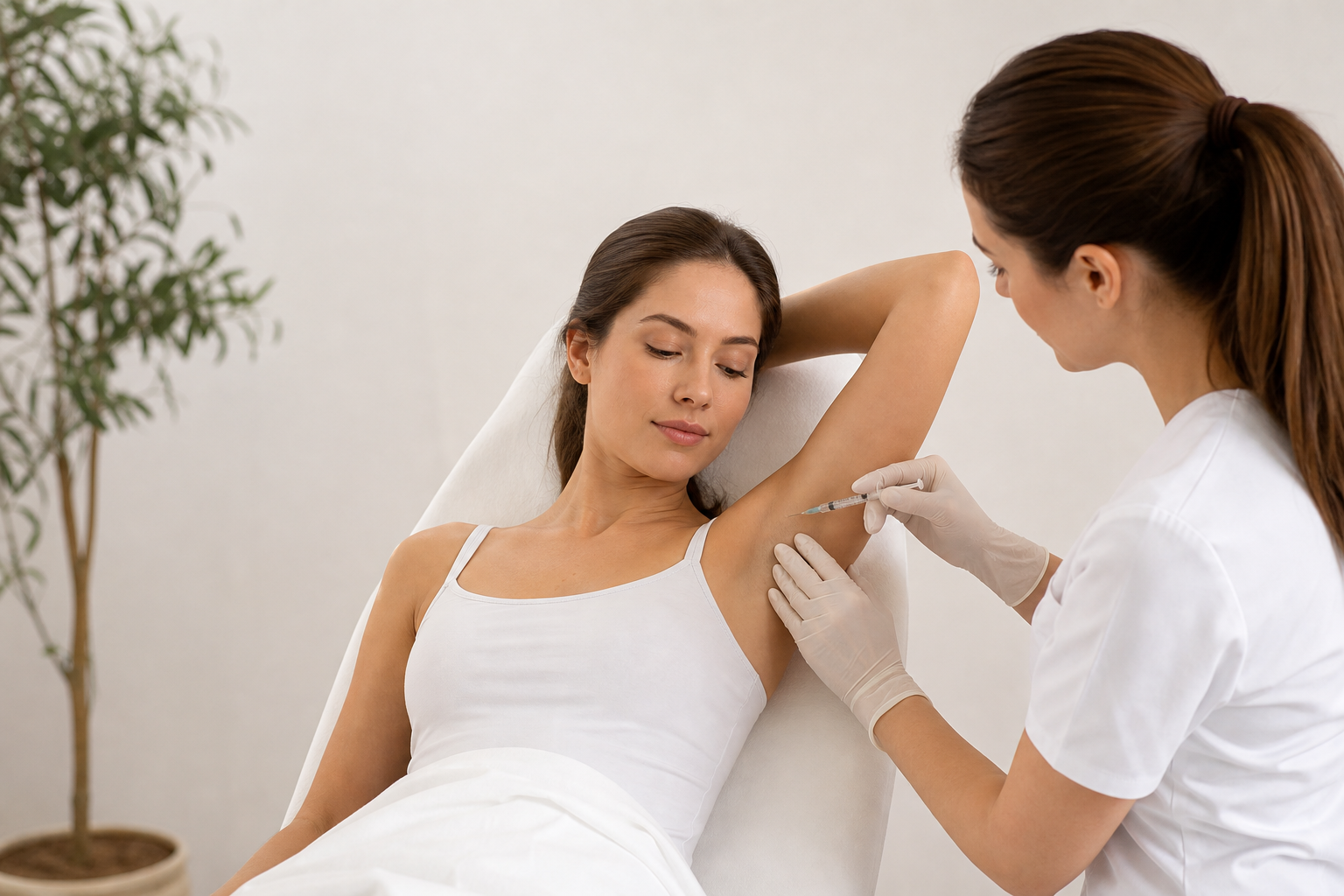
Underarm Botox has emerged as a revolutionary approach for individuals struggling with excessive underarm sweating, a condition medically known as primary axillary hyperhidrosis. Unlike traditional treatments such as antiperspirants, which often provide only temporary relief, Botox injections offer a targeted, longer-lasting solution that directly addresses the root cause of excessive sweating. This non-surgical procedure is designed for those whose daily lives, whether professional or social, are significantly impacted by unwelcome perspiration, affecting confidence and comfort.
Understanding the science behind how Botox works to control sweating, along with realistic expectations for its effects, potential safety concerns, and when professional consultation is essential, empowers patients to make informed decisions. This article aims to provide a precise, expert, and practical overview of underarm Botox, integrating current medical knowledge within the broader context of botulinum toxin use for excessive sweating.
The Science Behind Botulinum Toxin in Managing Excessive Sweating
Botulinum toxin type A, widely known under brand names like Botox, is primarily recognized for its cosmetic applications in smoothing wrinkles, but its functional properties extend well beyond aesthetic enhancement. The toxin operates by blocking the release of acetylcholine, a neurotransmitter responsible for stimulating sweat glands.
In the context of hyperhidrosis, nerve endings send continuous signals to sweat glands to produce sweat, especially in response to heat or stress. When Botox is injected into the underarm area, it interrupts these signals without affecting other nerve or muscle functions. This targeted blockade effectively reduces or halts sweat production in the treated region, providing significant relief for individuals experiencing uncontrollable sweating.
The effects of botulinum toxin on sweat glands typically last between six to twelve months, after which retreatment may be necessary to maintain dryness and comfort. This duration makes Botox an attractive option compared to the daily inconvenience of strong antiperspirants or oral medications, which may carry systemic side effects.
Detailed Overview of the Underarm Botox Procedure
The process begins with a comprehensive consultation with a qualified dermatologist or a specialist trained in administering botulinum toxin. The practitioner evaluates the severity of sweating and confirms that the hyperhidrosis is primary, meaning it is not caused by other medical conditions.
To precisely target the sweat glands, the practitioner often performs the starch-iodine test. This involves applying an iodine solution on the underarm skin, followed by starch powder. Areas with active sweating turn dark purple or black, revealing the spots requiring injections.
Once the target areas are identified, the treatment session, typically lasting about 30 minutes, commences. The underarm area is cleansed with an antiseptic, and Botox is administered via a series of small injections directly into the dermis—the layer of skin housing the sweat glands. The injections cause minimal discomfort, comparable to slight pinpricks. For patients with heightened sensitivity, a local anesthetic or topical numbing cream may be applied to ease any pain.
The number of injections varies depending on the extent and density of the sweating but is carefully calculated to reduce perspiration while minimizing possible side effects. After treatment, patients can resume most daily activities immediately, though it is advisable to avoid rigorous exercise or excessive heat exposure for 24 hours to optimize results.
Identifying Suitable Candidates for Underarm Botox
Proper patient selection is critical for achieving successful outcomes with Botox for underarm sweating. The ideal candidate is someone diagnosed with primary axillary hyperhidrosis—a condition characterized by excessive sweating unrelated to underlying diseases or medications. These individuals usually report significant social, occupational, or psychological distress due to uncontrolled sweating.
Candidates often have tried and found limited success with topical antiperspirants or lifestyle modifications. Botox offers an alternative when these options prove insufficient. Those experiencing secondary hyperhidrosis—a symptom of other medical issues such as thyroid disorders, infections, or menopause—should undergo thorough medical evaluation and treatment of the underlying cause before considering Botox.
Pregnant or breastfeeding women, patients with active infections in the treatment area, and those with known hypersensitivity to botulinum toxin components are generally advised against this therapy to ensure safety. An experienced clinician will review medical history meticulously to confirm candidacy.
Realistic Expectations and Duration of Results from Underarm Botox
Most patients notice a reduction in sweating within a few days after treatment, with peak efficacy reached around two to four weeks. The treated underarms often become noticeably drier, enabling individuals to engage comfortably in professional and social settings without anxiety over sweat stains or odor.
Botox does not eliminate sweating permanently—it temporarily halts the chemical signals that stimulate sweat glands. As the toxin’s effect wanes, typically over six to twelve months, sweat production gradually resumes, necessitating repeat treatments to sustain dryness.
It is important to understand that treatment effects can vary based on individual physiology, sweating severity, and dosage. While Botox substantially reduces sweating, it does not cure hyperhidrosis. Patients should weigh the benefits of prolonged sweat control against the need for maintenance sessions and associated costs.
Safety Considerations and Possible Side Effects of Underarm Botox Treatment
Underarm Botox injections are considered very safe when administered by trained healthcare professionals. The treatment involves superficial intradermal injections, which minimize systemic absorption and reduce the likelihood of widespread side effects.
Common side effects tend to be mild and transient, including localized discomfort, minimal swelling, redness, or bruising at injection sites. Occasionally, patients may experience a slight sensation of numbness or muscle weakness, but these symptoms typically resolve within days to weeks.
More serious complications, such as allergic reactions, are extraordinarily rare. To minimize risks, clinicians conduct thorough medical screenings and adhere to strict injection protocols. Patients receive detailed aftercare instructions, including avoiding intense physical activity and heavy antiperspirant use immediately following treatment to promote optimal healing.
Expanding the Use of Botulinum Toxin for Sweating Beyond the Underarms
While underarm Botox is among the most common and well-studied applications, botulinum toxin therapy also addresses excessive sweating in other areas, such as the palms of the hands and the soles of the feet. These regions can pose unique challenges due to dense nerve endings and different anatomical structures.
Treating palmar hyperhidrosis often requires more careful dosing because of potential discomfort and muscle weakening that could affect hand function transiently. Nevertheless, successful applications have vastly improved the quality of life for patients with debilitating hand sweating.
The role of Botox in managing generalized or craniofacial hyperhidrosis is more limited and usually part of a broader treatment plan including oral medications or lifestyle adjustments. As research evolves, clinical protocols continue to refine the indications and techniques to maximize efficacy and minimize adverse events across various sweat-prone regions.
The Importance of Professional Evaluation and Customized Treatment Planning
A personalized approach is foundational when considering Botox for underarm sweat control. Every patient's sweating pattern, medical background, and lifestyle differ, requiring a tailored plan developed during an in-depth consultation.
During evaluation, physicians discuss treatment goals, potential benefits, risks, and costs to establish realistic expectations. They may also perform diagnostic assessments to exclude secondary causes of hyperhidrosis or coexisting skin conditions.
Open communication ensures patient comfort with the procedure and fosters adherence to post-treatment care, which is vital for success. Scheduling follow-up visits allows practitioners to monitor response and make necessary adjustments in dosing or technique for subsequent treatments.


