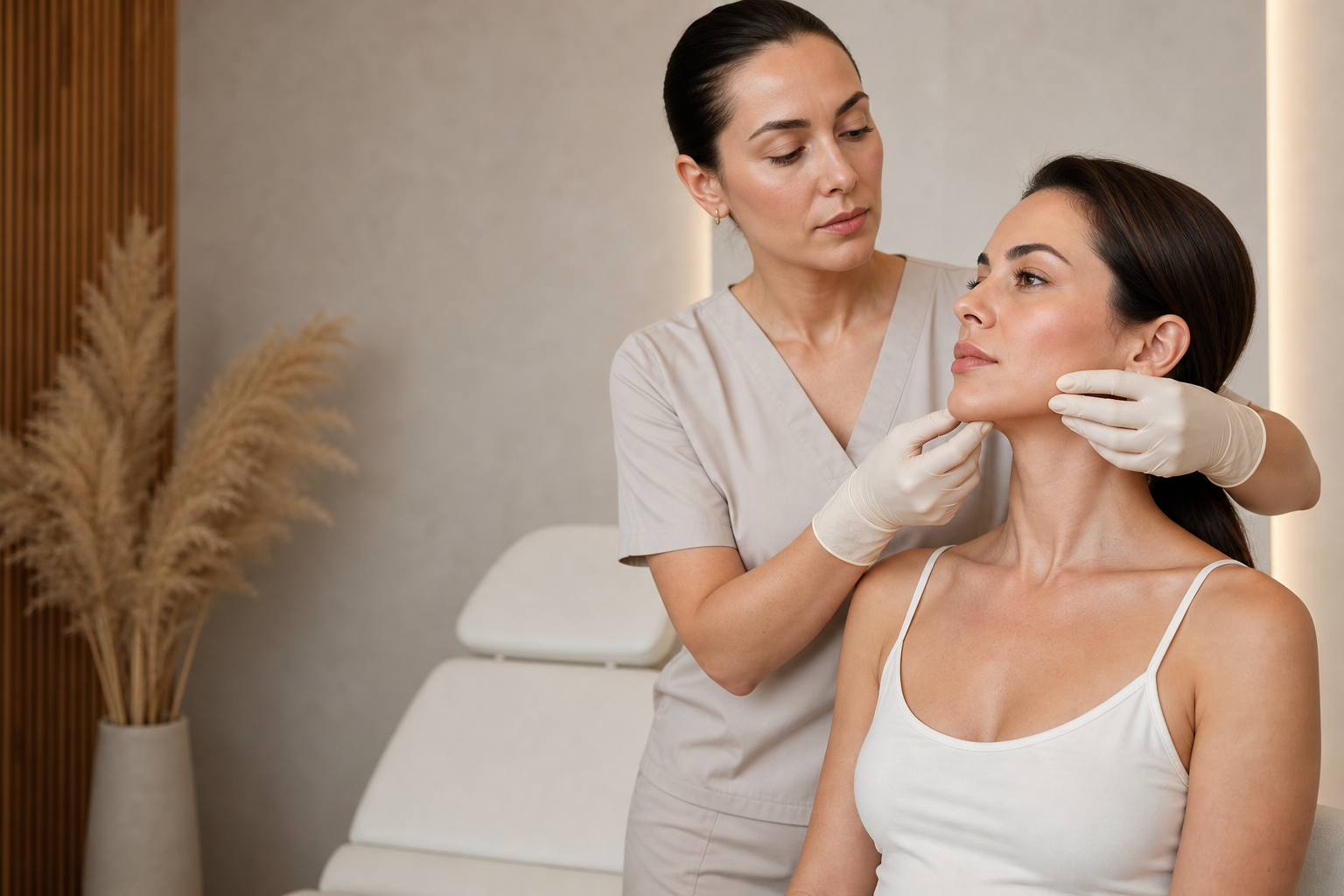
The masseter muscle plays a pivotal role in defining the contours of the lower face. In recent years, masseter Botox has emerged as a favored treatment in dermatology and aesthetic medicine, especially within the broader context of lower face and neck rejuvenation. This technique harnesses the neuromodulatory properties of botulinum toxin to soften the appearance of a prominent jawline caused by masseter hypertrophy, offering patients a less invasive alternative to surgical reshaping.
Understanding the intersection between masseter Botox and skin laxity is essential for achieving optimal aesthetic outcomes. While Botox effectively reduces muscle bulk, the condition of the overlying skin—whether taut or lax—significantly impacts the final appearance. Consequently, assessing skin laxity is a key step before treatment, guiding the choice of complementary procedures and setting realistic expectations for patients seeking lower face contouring.
This article provides a detailed exploration of masseter Botox within the framework of lower face and neck treatments, emphasizing the critical assessment factors concerning skin laxity. It aims to inform practitioners and patients alike about the mechanisms of action, treatment planning, safety parameters, and the practical nuances necessary for successful outcomes in this delicate anatomical region.
The Anatomical and Functional Importance of the Masseter Muscle
The masseter muscle is one of the primary muscles involved in mastication, situated at the lateral aspect of the mandible. Its anatomical position and significant strength directly influence the shape and definition of the jawline. In certain individuals, hypertrophy of the masseter results from repetitive jaw clenching or bruxism, manifesting as a broadened or squared lower face, which some patients find aesthetically displeasing.
As people age, changes in underlying soft tissue, including loss of subcutaneous fat and elasticity, affect the lower face’s appearance. Skin laxity may develop alongside or independently of muscle hypertrophy. Thus, the visible contours reflect a complex interplay between muscular volume and skin tightness, necessitating a comprehensive evaluation before any aesthetic intervention.
Mechanism of Action of Masseter Botox and Its Impact on Facial Contours
Botox, a purified form of botulinum toxin type A, works by inhibiting acetylcholine release at the neuromuscular junction, leading to a temporary reduction in muscle contraction. When injected into the masseter muscle, it decreases muscle activity, resulting in reduced muscle bulk over several weeks. This volume reduction translates into a slimmer mandibular angle and softer, more oval facial contours.
The onset of visible change typically occurs within two to four weeks, reaching peak effect around the six-week mark. Results are temporary, lasting approximately four to six months before muscle function gradually returns, requiring maintenance treatments to sustain the effect.
Importantly, masseter Botox does not directly impact skin quality or elasticity. Instead, it affects the underlying muscle mass that supports the overlying soft tissue. Consequently, if skin laxity is significant, muscle volume reduction alone may not yield the desired youthful or firm appearance, underscoring the need for multifaceted evaluation.
Evaluating Skin Laxity in Patients Considering Masseter Botox
Skin laxity arises from multiple intrinsic and extrinsic factors, including aging-related collagen and elastin degradation, loss of subcutaneous fat, gravity, sun exposure, and lifestyle habits such as smoking. In the context of lower face contouring, the degree of skin laxity must be carefully assessed through physical examination and patient history.
Clinical signs of lax skin include sagging along the jawline, jowling, crease formation, and reduced skin recoil when stretched. In cases where laxity is mild, masseter Botox alone may suffice to refine contours and improve facial harmony. However, pronounced laxity often necessitates adjunctive therapies such as dermal fillers, energy-based skin tightening, or even surgical intervention to restore volume and firmness.
This assessment forms the basis of setting realistic treatment goals and informing patients about expected outcomes and possible need for combination treatments targeting both muscle and skin.
Balancing Expectations: What Masseter Botox Can and Cannot Achieve
Masseter Botox offers a minimally invasive approach to reshape the lower face by softening a prominent jawline and addressing hypertrophic muscle-related issues. It is particularly effective for individuals with muscle overdevelopment, who desire a slimmer and more feminine contour without undergoing surgery.
Yet, patients must understand the limitations of this treatment. Botox does not tighten loose skin, nor does it eliminate severe jowling or deep wrinkles. The degree of improvement depends greatly on the initial skin condition and the extent of muscle hypertrophy. Additionally, the effects are temporary and reversible, with maintenance treatments required to preserve results.
Effective communication of these realities during consultation ensures patient satisfaction and aligns their expectations with achievable outcomes.
Safety Considerations and the Necessity of Specialist Consultation
Administering Botox in the masseter region requires detailed knowledge of the facial anatomy to avoid complications such as asymmetry, impaired chewing function, or unnatural facial expressions. The proximity of important neurovascular structures necessitates precision and expertise.
A qualified specialist with experience in lower face Botox is essential to safely evaluate candidacy, discern contraindications such as neuromuscular disorders, pregnancy, or allergies, and execute the procedure. Pre-treatment consultation should include assessment of muscle function, skin condition, and patient medical history.
Post-treatment, patients should be counseled on potential mild side effects like bruising or temporary muscle weakness and the importance of adhering to aftercare instructions to optimize results and minimize risks.
Integrating Masseter Botox Within a Comprehensive Lower Face and Neck Rejuvenation Strategy
Optimal aesthetic enhancement of the lower face often requires a combination of treatments addressing both muscle volume and skin quality. In addition to masseter Botox for muscle slimming, botulinum toxin applications can improve platysmal bands in the neck or soften drooping mouth corners, contributing to a harmonious rejuvenation.
Complementary procedures include volumizing with hyaluronic acid fillers to restore lost fat compartments and support sagging tissues, as well as energy-based skin tightening techniques like ultrasound or radiofrequency to stimulate collagen production and improve skin elasticity.
This multifaceted approach, tailored to the individual’s anatomical and aging characteristics, delivers more natural and longer-lasting results than isolated interventions. Collaboration across specialties enhances the effectiveness and safety of treatment plans, ensuring comprehensive patient care.
Key Factors for Proper Indication and Preparation for Masseter Botox Treatment
Successful masseter Botox treatment begins with identifying appropriate candidacy. Indications include pronounced masseter hypertrophy, wide jawline aesthetics seeking refinement, and management of bruxism-related symptoms. Conversely, patients with excessive skin laxity or significant platysmal changes may require adjunctive or alternative treatments.
Preparation involves detailed patient history and physical examination to evaluate muscle bulk, skin condition, dental health, and functionality. Imaging or photography assists in documentation and treatment planning.
Before treatment, patients should be informed about the injection process, expected timeline for results, necessity for repeated sessions, and potential risks. Avoiding anti-inflammatory medications or supplements that increase bleeding risk helps minimize post-injection bruising.
Following treatment, patients are advised to avoid vigorous chewing, rubbing the treated area, or lying down for several hours to prevent toxin migration.
Enhancing Outcomes Through Patient Education and Realistic Planning
Educated patients contribute to treatment success by understanding the realistic capabilities and limitations of masseter Botox. Open dialogue about aesthetic goals, functional concerns, and willingness to combine modalities fosters shared decision-making and satisfaction.
Realistic planning integrates assessment findings, patient desires, and scientific evidence to develop individualized protocols. Scheduling follow-up visits allows evaluation of outcomes and timely adjustments to treatment plans, enhancing safety and efficacy.
Patients should be encouraged to maintain healthy lifestyle habits, skin care routines, and protective measures against environmental factors to sustain aesthetic improvements and skin health.


