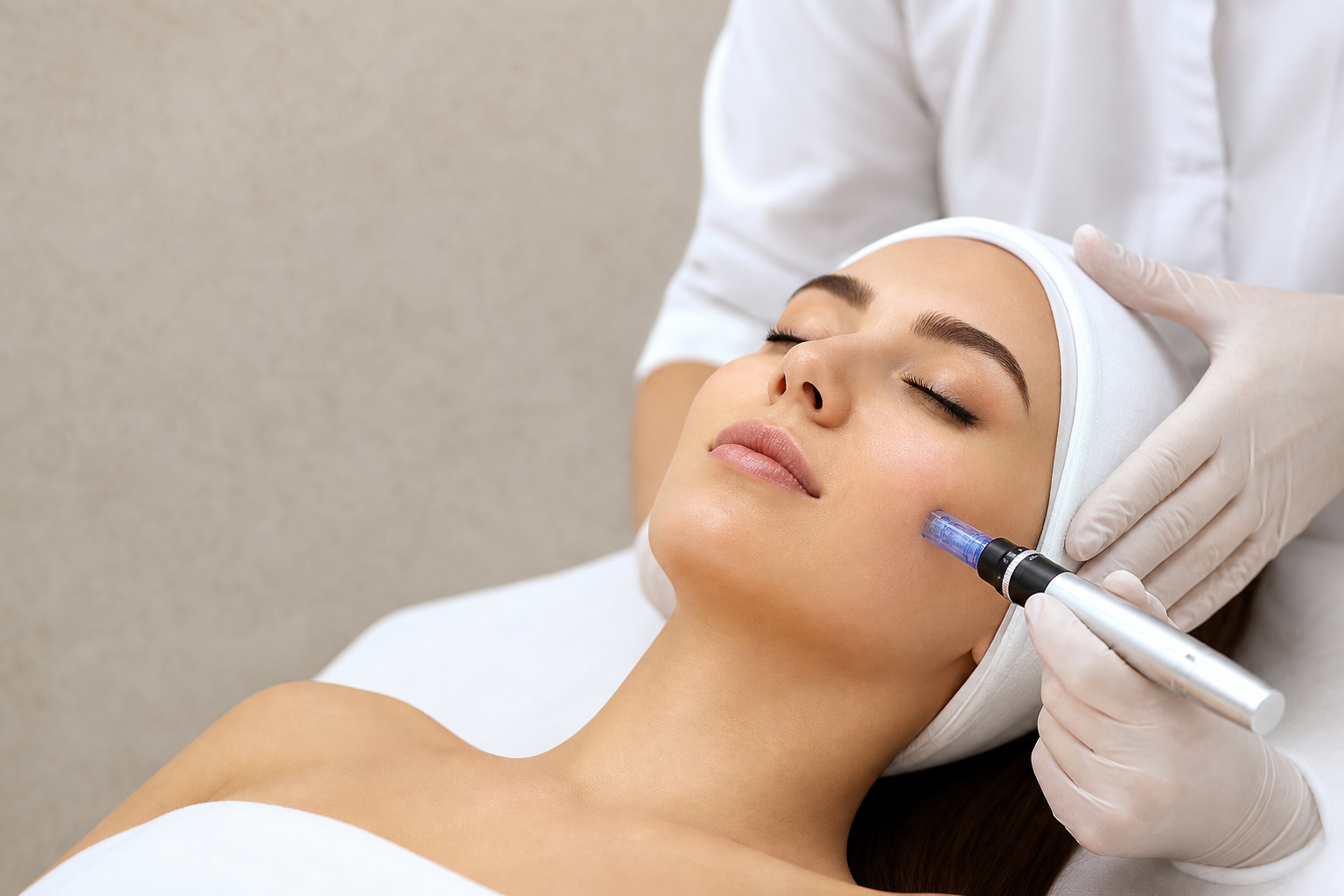
Microneedling for the face has emerged as a cornerstone in the evolving landscape of anti-aging facial treatments. This minimally invasive procedure employs a device embedded with fine needles to create controlled micro-injuries in the skin. Although seemingly simple, these tiny punctures stimulate the body's intrinsic wound healing processes, catalyzing neocollagenesis and elastin production. The outcome is visibly improved skin texture, diminished fine lines, reduced acne scarring, and a rejuvenated complexion that appeals to a broad demographic.
This comprehensive guide is crafted for individuals considering microneedling, skincare professionals, and enthusiasts aiming to deepen their understanding of this treatment's mechanics, suitability, and realistic expectations. It serves to elucidate the scientific rationale behind microneedling, delineate its indications, explore its safety profile, and clarify the importance of expert consultation prior to undergoing the procedure. Understanding these facets empowers readers to make informed decisions, circumvent potential risks, and appreciate how microneedling integrates within the wider spectrum of Anti-Aging Facial Treatments: A Complete Guide to Skin Rejuvenation.
The significance of microneedling lies not only in its efficiency but also in its adaptability and compatibility with various skin types and concerns. As a non-ablative technique, it offers substantial benefits without the downtime and skin barrier disruption associated with more aggressive methods. Consequently, it has garnered increasing attention in both clinical and at-home skincare regimens, making familiarity with its principles essential for anyone seeking subtle yet effective skin revitalization.
What Is Microneedling and How Does It Enhance Facial Skin?
Microneedling involves the use of a handheld device such as a dermapen or dermaroller equipped with numerous minuscule needles that penetrate the epidermis and dermis to specific depths. These controlled micro-injuries prompt the body to initiate a complex healing cascade, predominantly characterized by fibroblast activation and secretion of collagen and elastin. These extracellular matrix proteins are vital for maintaining skin's structural integrity, elasticity, and youthful appearance.
The penetration depth during microneedling can be precisely adjusted according to treatment goals—shallower penetration targets superficial fine lines and textural irregularities, while deeper punctures address scarring and more profound dermal deficiencies. Additionally, the microchannels created facilitate enhanced transdermal absorption of topical serums, which can augment regeneration with agents such as hyaluronic acid, peptides, or growth factors.
Unlike ablative therapies that remove layers of skin, microneedling preserves the epidermal layer while inciting regeneration from within. Patients typically report mild discomfort mitigated by topical anesthetics during in-office procedures. This balance between stimulating renewal and preserving skin barrier function underlines microneedling's appeal as a versatile skin rejuvenation modality.
Who Is an Ideal Candidate for Facial Microneedling?
Microneedling is appropriate for a wide audience seeking skin enhancement without resorting to invasive surgery or harsh chemical peels. It is particularly beneficial for individuals experiencing:
Visible signs of aging: Fine lines, wrinkles, and skin laxity resulting from diminished collagen over time.
Acne scarring: Indented or hypertrophic scars that have resisted other treatments.
Uneven pigmentation and large pores: Skin that exhibits discolorations or texture irregularities.
General skin dullness or roughness: A complexion needing a refreshed and radiant appearance.
However, microneedling is contraindicated for those with certain skin conditions or systemic health issues. Individuals with active infections (e.g., herpes simplex), open wounds, eczema, psoriasis, or keloid-prone tendencies should refrain. Similarly, patients on anticoagulants or with blood clotting disorders require medical clearance. Pregnant or breastfeeding women are advised to consult healthcare providers before treatment due to limited safety data. Ultimately, a qualified dermatologist or aesthetician should evaluate candidacy to ensure appropriateness and devise a personalized plan.
How Does Microneedling Compare to Other Anti-Aging Facial Treatments?
Among non-surgical facial rejuvenation techniques, microneedling holds distinctive advantages. Unlike laser resurfacing or chemical peels that ablate skin layers, microneedling induces collagen synthesis with minimal epidermal disruption. This typically results in shorter recovery times, decreases the risk of post-inflammatory hyperpigmentation, and broadens suitability across skin types, including darker phototypes often vulnerable to pigmentary alterations.
Its adjustability is also notable; practitioners can tailor needle length and treatment intensity to address various concerns—from superficial textural improvements to profound scar remodeling. Furthermore, microneedling enhances the penetration and efficacy of topical agents, multiplying their benefits synergistically.
While injectable fillers or neuromodulators target volume loss and muscle activity respectively, microneedling focuses on improving skin quality and architectural integrity. Therefore, it can be used complementarily within a comprehensive Anti-Age Facial Treatments strategy to optimize outcomes across multiple aging dimensions.
What Does the Microneedling Procedure Entail?
The microneedling session begins with thorough skin cleansing to remove impurities and prepare the surface. A topical anesthetic cream is frequently applied to mitigate discomfort during the treatment. Once numbness is achieved, the practitioner systematically glides the device over the entire face (or targeted areas) with controlled depth settings, creating thousands of microchannels within minutes.
Upon completion, serums rich in hydrating and bioactive compounds are applied to leverage the skin's transient permeability. The treatment area may be calmed using cold compresses or anti-inflammatory topical agents as needed. Patients receive detailed aftercare instructions focusing on sun protection, gentle cleansing, and moisturizing to support optimal healing.
Professional microneedling sessions typically last 30 to 60 minutes and may be scheduled in a series of three to six treatments spaced four to six weeks apart. This regimen allows cumulative collagen remodeling and maximizes rejuvenative effects.
Safety Considerations and Potential Side Effects of Microneedling
As with any cosmetic procedure, microneedling carries inherent risks that are generally minimal when performed by experienced professionals under sanitary conditions. Common transient side effects include redness resembling mild sunburn, slight swelling, and sensitivity lasting several hours to a couple of days. Mild flaking or peeling may occur as the skin renews.
Adhering to post-treatment guidelines minimizes complications. It is critical to avoid sun exposure, refrain from using irritative skincare products immediately after, and maintain strict hygiene to prevent infections. Serious adverse events such as scarring or hyperpigmentation are uncommon but possible, emphasizing the importance of qualified practitioners and individualized protocols.
Patients with a history of herpes simplex virus outbreaks might require prophylactic antiviral therapy to prevent activation. Prior consultation and disclosure of full medical history are indispensable.
When Should One Consult a Specialist Before Microneedling?
Consultation with a board-certified dermatologist or licensed aesthetic practitioner is essential, especially for those with underlying skin disorders, prior cosmetic procedures, or systemic illnesses that could interact with treatment protocols. For example, individuals with rosacea or eczema may need tailored approaches or alternative therapies to avoid exacerbations.
This consultation facilitates a comprehensive skin assessment, discussion of realistic outcomes, and screening for contraindications. A professional can also devise customized treatment plans and integrate microneedling with other modalities to address complex rejuvenation goals holistically.
How Many Microneedling Sessions Are Necessary to Achieve Noticeable Results?
The number of microneedling treatments required varies depending on individual skin condition, age, and aesthetic objectives. Typically, a course of three to six sessions spaced at monthly intervals is recommended to stimulate significant collagen remodeling and skin improvement.
Some patients observe subtle enhancements after just one or two treatments, such as smoother texture and slight brightness. However, more pronounced benefits related to wrinkle reduction, scar attenuation, and pore refinement generally become evident after completing the full series and up to several months thereafter due to the gradual nature of collagen synthesis.
Maintenance sessions at semiannual or annual intervals may be advised to prolong benefits, particularly in challenging cases or with ongoing photoaging exposure.
What Is the Recovery Process Like Following Microneedling?
Post-procedure recovery following microneedling is usually swift and comfortable relative to more invasive treatments. The skin may exhibit mild erythema and a sensation akin to a sunburn for a day or two. Gentle skincare, including non-irritating cleansers and intensive moisturization, supports barrier restoration.
Patients are advised to avoid strenuous activity, excessive heat, exfoliants, and makeup application during initial healing to prevent irritation or infection. These precautions usually last between 24-72 hours but vary individually.
The skin's natural exfoliation process may cause transient flaking for up to a week. Embracing this renewal phase is critical to achieving the desired texture and radiance enhancements.
Frequently Asked Questions About Facial Microneedling
Does microneedling hurt? Most individuals report only mild discomfort during the procedure, which can be effectively minimized with topical anesthetics. Sensitivity varies based on needle depth and personal pain thresholds.
Can microneedling be performed year-round? While not seasonally restricted, it is prudent to avoid treatments during peak sun exposure to reduce the risk of pigmentary changes and facilitate optimal recovery.
When can I resume wearing makeup? It is generally recommended to wait at least 24 hours post-treatment before applying cosmetics to allow skin barrier stabilization and reduce infection risk.
Is microneedling suitable for sensitive skin? Yes, when performed by skilled practitioners who adjust needle depth and post-care regimens accordingly, microneedling can benefit even delicate skin types.


