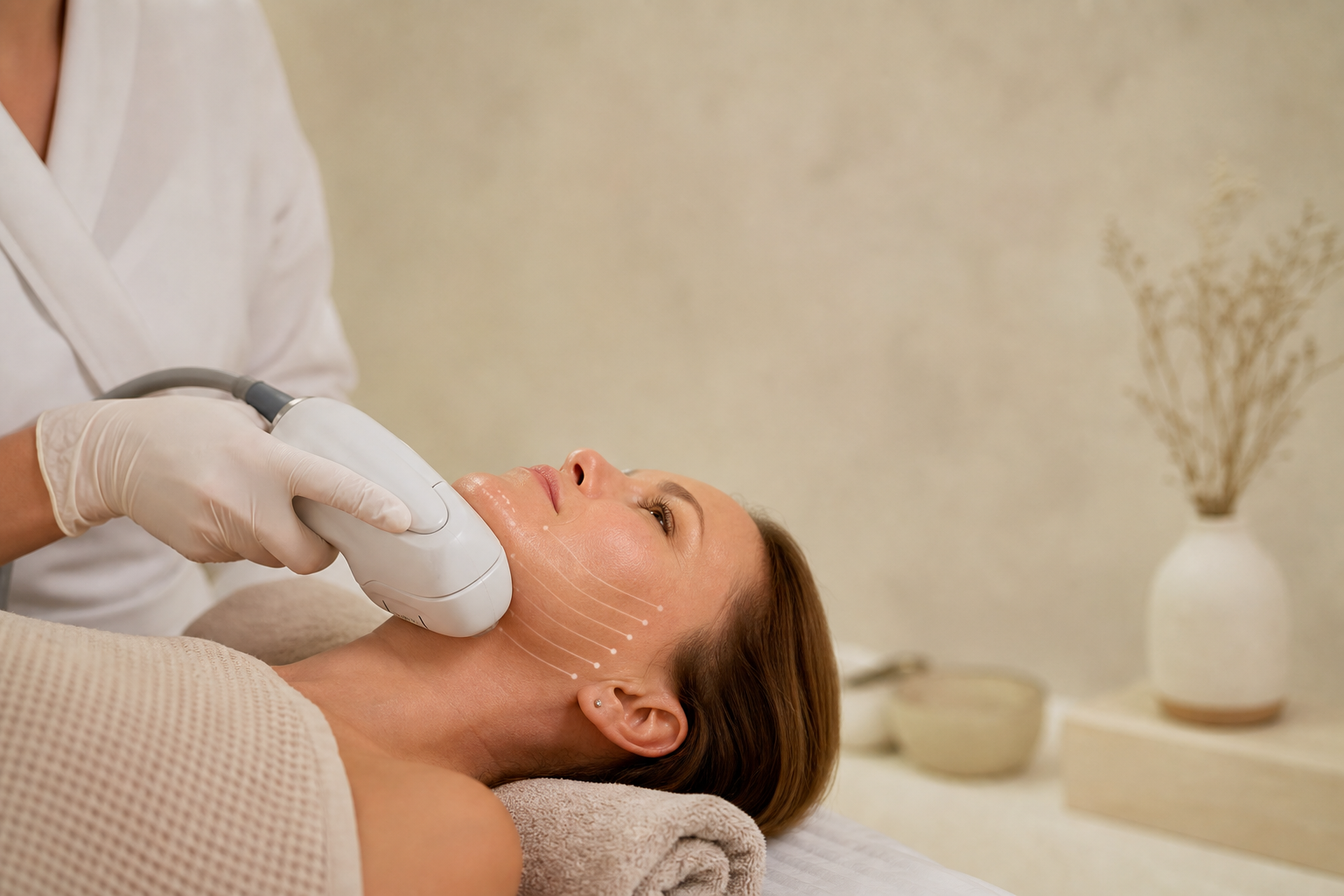
In the evolving landscape of non-invasive anti-aging treatments, focused ultrasound has emerged as a significant breakthrough for skin tightening. This treatment appeals to individuals desiring a subtle yet effective method to rejuvenate facial features without resorting to surgery or injectable agents. Often referred to as High-Intensity Focused Ultrasound (HIFU), the technology harnesses precise ultrasonic energy to stimulate collagen production, thereby enhancing skin firmness and elasticity over time.
Focused ultrasound skin tightening is especially relevant for adults in their 30s to 60s who begin noticing signs of skin laxity, such as fine lines, wrinkles, or mild sagging. Its non-invasive nature combined with minimal downtime makes it an attractive option for those seeking natural-looking improvements with a low risk profile. Understanding how this technique works, who benefits most from it, and the realistic outcomes one can expect is crucial for making an informed decision in the pursuit of facial rejuvenation.
In this comprehensive editorial, we explore the science behind focused ultrasound, detail the indications and safety considerations, and provide practical information on what patients should anticipate before, during, and after treatment. This insight not only elucidates the rationale for choosing focused ultrasound as an anti-aging strategy but also highlights the importance of professional consultation for optimal results.
What Is Focused Ultrasound and How Does It Tighten Skin?
Focused ultrasound technology utilizes highly targeted sound waves to deliver controlled heat energy into specific layers beneath the skin’s surface. Unlike diagnostic ultrasound used in imaging, High-Intensity Focused Ultrasound (HIFU) generates thermal effects at precise depths, targeting the superficial musculoaponeurotic system (SMAS) layer that plays a vital role in facial support.
This focused delivery raises the temperature of localized dermal and subdermal tissue to approximately 60-70 degrees Celsius, triggering a controlled injury response. The thermal stimulation activates fibroblasts—the cells responsible for collagen synthesis—resulting in the gradual production and remodeling of collagen fibers. Collagen is the key structural protein that imparts skin strength, elasticity, and youthful resilience.
Crucially, the external skin surface remains unaffected as the ultrasonic energy bypasses superficial layers, concentrating the effect where it matters most. The subsequent natural repair mechanisms lead to tissue contraction, skin tightening, and improved contouring without physical disruption, incisions, or injections.
Who Is the Ideal Candidate for Focused Ultrasound Skin Tightening?
Determining candidacy for focused ultrasound treatment depends on skin condition, age, and cosmetic goals. The treatment is best suited for individuals exhibiting mild to moderate skin laxity and early to moderate wrinkles, typically in the 30-60-year age range. Candidates often seek to refresh their appearance without dramatic changes or surgical intervention.
Those experiencing initial signs of skin loosening around the cheeks, jawline, and neck—areas responsive to SMAS-layer stimulation—stand to benefit the most. Additionally, focused ultrasound may appeal to people aiming for preventative care to maintain skin tone and elasticity before significant sagging occurs.
Conversely, individuals with severe skin laxity, deep wrinkles, or significant volume loss may require combined approaches or surgical options for more pronounced correction. A thorough assessment by a qualified dermatologist or aesthetic specialist is critical to tailor an appropriate treatment plan and manage expectations effectively.
What Are the Primary Indications and Realistic Expectations for This Treatment?
The main indications for focused ultrasound skin tightening include:
• Improvement in mild to moderate facial skin laxity and contour definition
• Reduction of fine lines and wrinkles, particularly in forehead, around the eyes, and mouth areas
• Lifting of cheeks and jawline to enhance facial proportions
• Tightening of the neck skin for a smoother appearance
Patients should understand that unlike surgical facelifts, HIFU results develop gradually. The collagen regeneration process unfolds over weeks to months, commonly reaching peak outcomes between two to three months post-treatment. Improvements include better facial firmness, more defined contours, and overall revitalized skin texture and tone.
While the treatment offers notable enhancement, it does not produce immediate or dramatic changes akin to invasive procedures. Therefore, setting measured and informed expectations is essential to satisfaction with the outcome.
How Is the Focused Ultrasound Treatment Performed and What Should Patients Expect?
A typical session lasts between 30 to 60 minutes, depending on the size of the treatment area and target depths. Prior to the procedure, the skin is cleansed to remove makeup and impurities. The medical professional may mark key zones on the face and neck to guide ultrasound application.
During treatment, the patient reclines comfortably while a handheld ultrasound applicator systematically delivers focused energy pulses to various depths—usually 1.5 mm, 3 mm, and 4.5 mm beneath the skin. Clients may experience mild sensations ranging from warmth to tingling or slight discomfort during energy delivery. However, the procedure is generally well tolerated without the need for anesthesia.
Immediately after, transient redness or mild swelling can occur but typically subsides within a few hours to a day. Since the skin surface remains intact, there is no prolonged downtime, allowing patients to resume regular activities immediately. Post-treatment care involves gentle skincare and sun protection to support optimal healing.
What Are the Safety Profile and Limitations of Focused Ultrasound for Skin Tightening?
When administered by trained and experienced clinicians, focused ultrasound is considered a safe modality. The precision in targeting specific tissue layers minimizes risks of damage to adjacent structures. Nonetheless, a comprehensive medical history and skin evaluation are paramount to exclude contraindications such as active dermatologic conditions, open wounds, or presence of metallic implants near the treatment zone.
Possible side effects—though uncommon and usually mild—include temporary swelling, redness, local tenderness, and occasional bruising. These adverse events are self-limiting and resolve without intervention. Following post-treatment instructions, especially avoiding sun exposure and aggressive skincare, further mitigates complications.
In terms of limitations, focused ultrasound is less effective in cases of extensive skin sagging or deep wrinkles where surgical lifting may be more appropriate. The depth of ultrasound penetration restricts the degree to which underlying tissues can be remodeled, emphasizing its role as an early to moderate stage rejuvenation tool rather than a corrective surgery alternative.
When Should One Consult a Specialist Before Undergoing Focused Ultrasound?
Professional consultation is indispensable prior to embarking on focused ultrasound treatment. A certified dermatologist or aesthetic medicine expert will perform a detailed assessment of skin condition, facial anatomy, and individual health status. They will discuss expectations, potential benefits, risks, and alternative options to find the most suitable approach.
Persons with preexisting health issues, such as autoimmune skin diseases, infections, recent facial procedures or surgeries, or hypersensitivity should disclose these details during consultation. Additionally, those currently on medications affecting healing or with a history of poor wound repair must be evaluated carefully.
This informed dialogue ensures personalized care that aligns with both medical safety and cosmetic aspirations, ultimately leading to higher satisfaction and minimized adverse effects.
How Can Results Be Maintained and What Post-Treatment Practices Are Recommended?
The longevity of focused ultrasound outcomes varies per individual but generally spans 12 to 18 months. To sustain skin tightness and collagen integrity, patients should maintain a consistent skincare regimen emphasizing hydration, antioxidant protection, and sun avoidance.
Lifestyle choices also influence durability; a balanced diet, regular exercise, adequate sleep, and smoking cessation contribute substantially to skin health. Periodic follow-up sessions or annual maintenance treatments may be advised to reinforce collagen support and continue skin rejuvenation.
Integrating focused ultrasound with complementary procedures—such as chemical peels, microneedling, or laser therapies—might enhance overall results, addressing multiple facets of skin aging effectively.
The Role of Focused Ultrasound in Contemporary Anti-Aging Facial Treatments
Focused ultrasound stands out among modern non-invasive anti-aging treatments for its unique capacity to stimulate deep tissue remodeling while preserving epidermal integrity. It exemplifies a shift toward natural, gradual rejuvenation aligning with contemporary aesthetic preferences that emphasize subtlety and low risk.
Its integration into facial rejuvenation protocols demonstrates its versatility, providing effective outcomes for patients reluctant or unable to undergo surgery. In an era where appearance significantly impacts personal and professional confidence, focused ultrasound empowers individuals to age gracefully with enhanced skin vitality and structure.
For practitioners, it represents a valuable tool bridging the gap between topical skincare and invasive procedures, expanding therapeutic options and tailoring interventions to patient needs and concerns.


