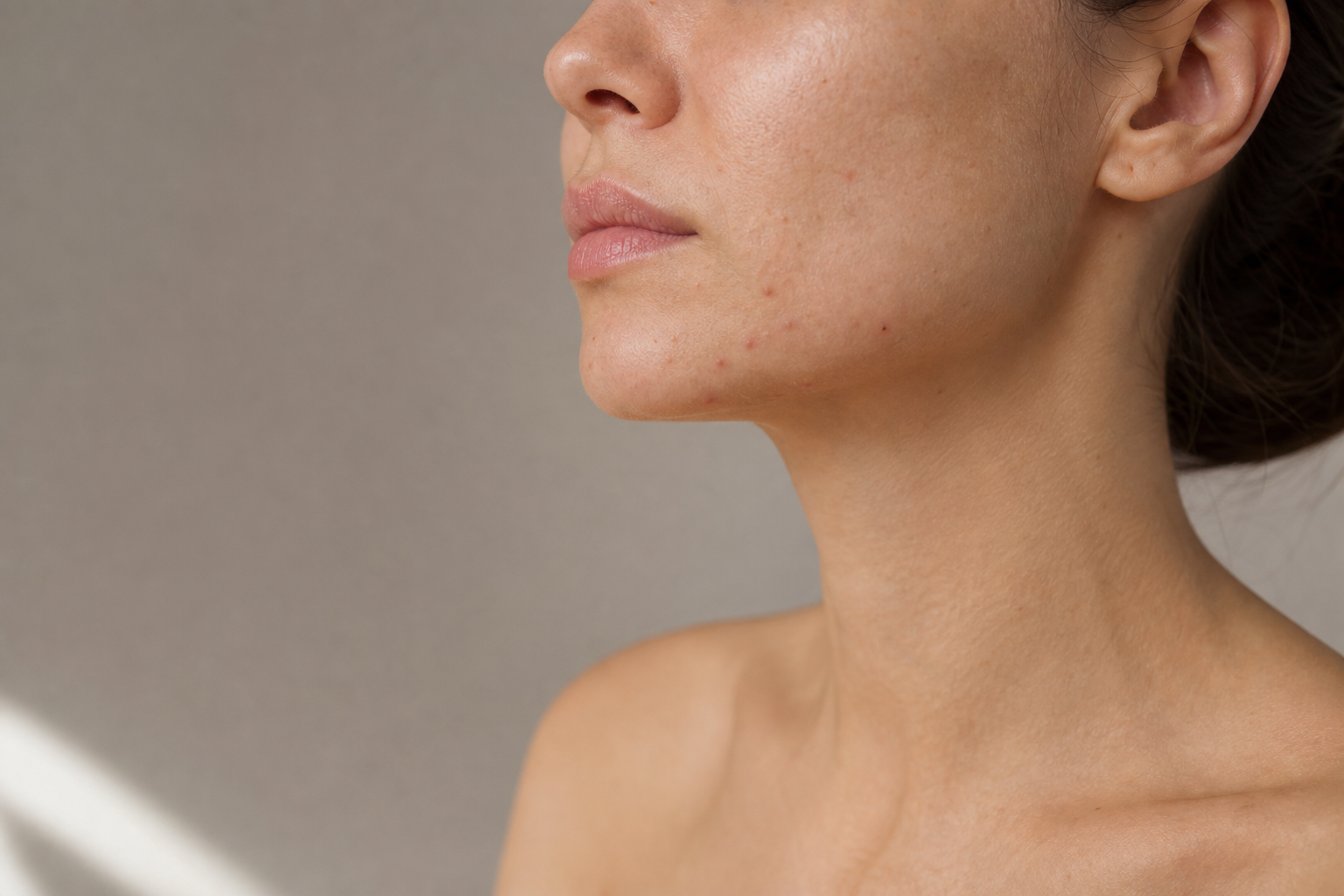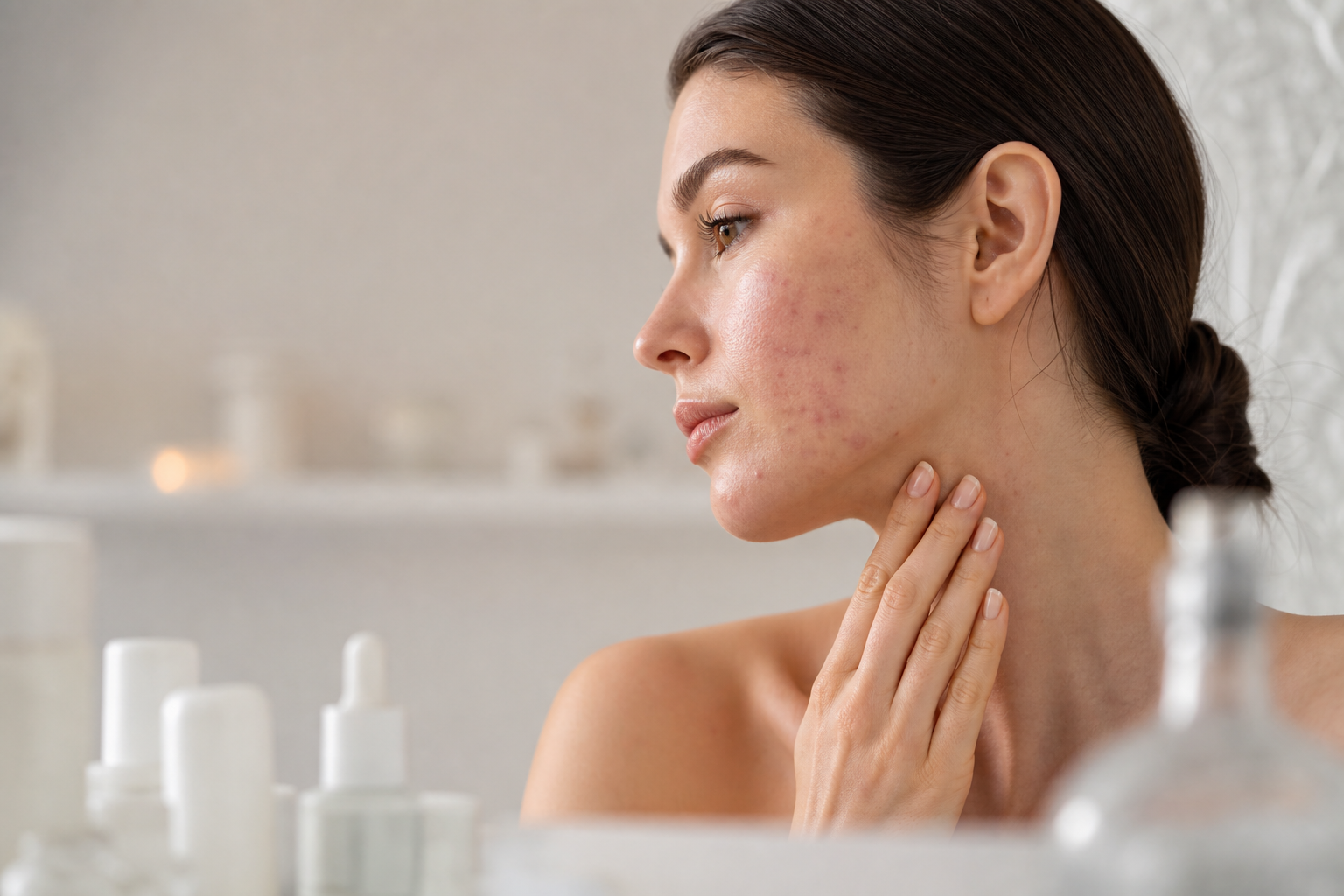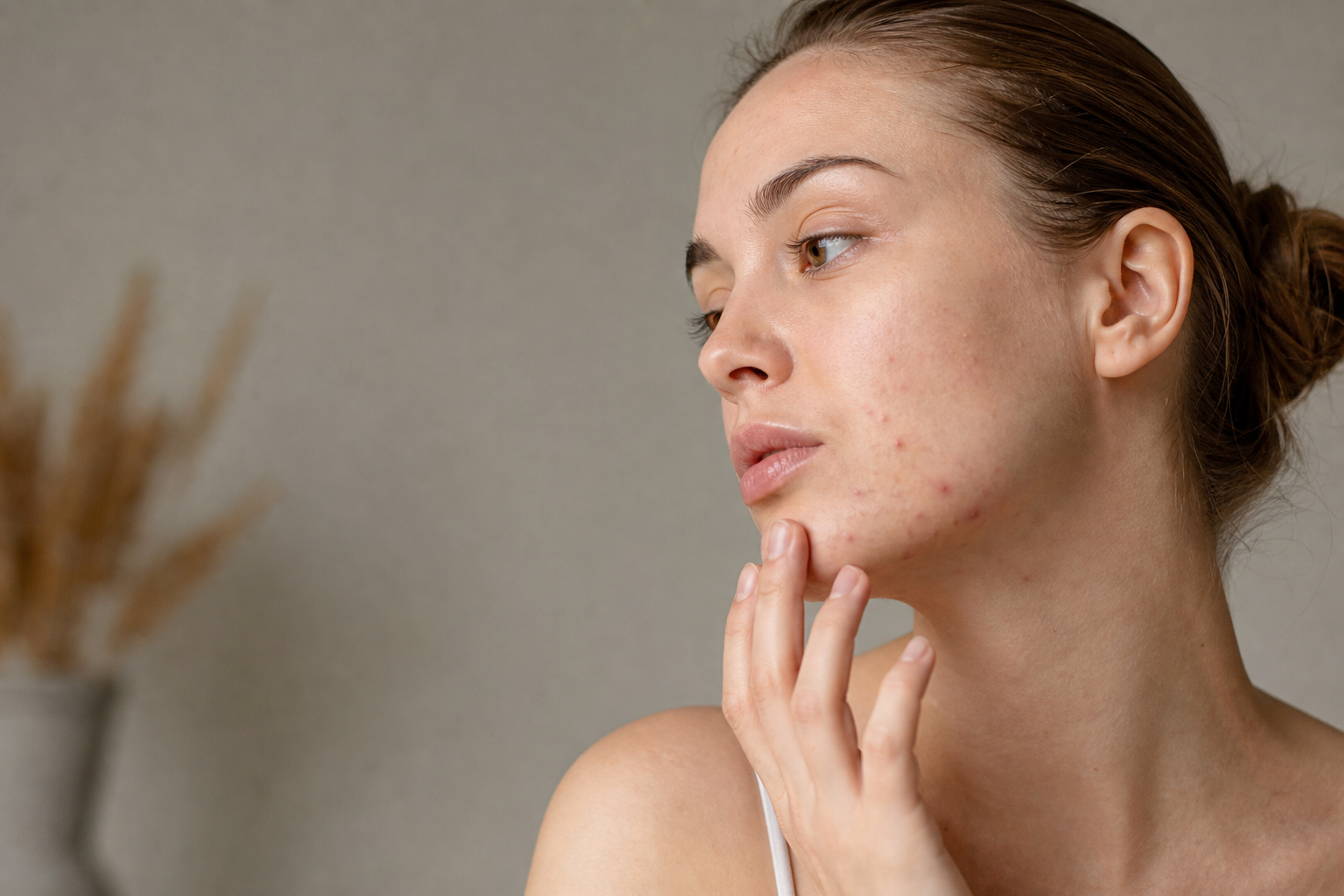
Hormonal acne is commonly associated with deep, painful breakouts around the chin, jawline, and lower cheeks. It often becomes worse before a period, although some people experience persistent breakouts throughout the month.
Hormones play a role in nearly every form of acne. Androgens can stimulate the sebaceous glands to produce more oil and contribute to clogged pores. However, a person does not need to have abnormally high hormone levels to develop hormonal acne. In many cases, the oil glands are simply more sensitive to hormonal activity.
How to Recognise Hormonal Acne
Signs of a hormonal pattern may include:
Breakouts that worsen before a period
Spots around the chin and jawline
Deep, painful lumps beneath the skin
Acne repeatedly appearing in the same areas
Acne beginning or returning in adulthood
Worsening after stopping hormonal contraception
Location alone is not enough to confirm hormonal acne. Jawline breakouts may also be related to cosmetics, hair products, friction, touching the face, or other factors.
Common Causes
In women, hormonal acne may become worse during the menstrual cycle, pregnancy, the postnatal period, and perimenopause. It may also appear after starting or stopping certain forms of hormonal contraception.
Polycystic ovary syndrome, or PCOS, is another possible cause. In addition to acne, signs may include irregular periods, excess facial or body hair, thinning scalp hair, ovulation problems, and insulin resistance.
Acne alone does not mean that someone has PCOS.
Testosterone therapy, anabolic steroids, certain corticosteroids, some prescription medicines, and workout supplements may also cause or worsen acne. Some people notice increased breakouts while using whey protein.
Are Hormone Tests Necessary?
Hormone testing is not required for everyone with acne. If menstrual cycles are regular and there are no other signs of a hormonal disorder, a dermatologist can often begin treatment without additional tests.
Further investigation may be recommended when acne is accompanied by:
Irregular or absent periods
Excess facial or body hair
Thinning scalp hair
A sudden and severe onset
Ovulation or fertility problems
Significant weight changes
Signs of insulin resistance
A doctor may recommend tests for androgens, thyroid hormones, prolactin, blood glucose, and other relevant markers. The choice of tests depends on the individual’s symptoms and medical history.
An ovarian ultrasound may form part of the assessment, but an ultrasound result alone is not sufficient to diagnose PCOS.
How Is Hormonal Acne Treated?
Topical treatment may include retinoids, benzoyl peroxide, azelaic acid, or salicylic acid. The appropriate choice depends on the type of acne, skin sensitivity, and whether pigmentation or scarring is also present.
Retinoids help prevent clogged pores and new breakouts. Benzoyl peroxide reduces inflammation and targets bacteria involved in acne. Azelaic acid can be particularly useful when acne is accompanied by redness and dark marks.
A basic skincare routine should include:
Gentle cleansing
An appropriate acne treatment
A non-comedogenic moisturiser
Daily sun protection
Harsh cleansing, frequent exfoliation, and combining too many active ingredients can damage the skin barrier and make irritation worse.
For persistent hormonal acne in women, a doctor may consider certain combined oral contraceptives or spironolactone. These medicines are not suitable for everyone and should only be used after an assessment of their benefits and potential risks.
Oral antibiotics may be prescribed temporarily for more extensive inflammatory acne. Severe, deep, or scarring acne may require isotretinoin under close dermatological supervision.
Retinoids, spironolactone, and isotretinoin must not be used during pregnancy. Anyone who is pregnant or planning a pregnancy should consult a healthcare professional before using acne medication.