The relationship between diet and acne is one of the most frequently oversimplified topics in skincare. Chocolate, dairy, greasy food, sugar, and gluten are often presented as direct causes of breakouts, while restrictive diets are promoted as solutions capable of “clearing” the skin within a few weeks.
The reality is far more complex. Acne is a chronic inflammatory skin condition influenced by hormones, genetics, sebum production, clogged pores, microorganisms, stress, skincare products, certain medications, and lifestyle habits. Diet may contribute to breakouts in some people, but it is rarely the only cause.
The goal should not be to identify one supposedly forbidden food. A more useful approach is to understand which overall eating patterns may influence inflammation, hormonal signalling, and sebum production—without introducing unnecessary restrictions that could affect nutritional intake, general health, or a person’s relationship with food.
How Can Diet Be Connected to Acne?
Acne develops when several processes occur within the hair follicle and sebaceous gland. These include increased sebum production, the accumulation of dead skin cells, blocked pores, the activity of Cutibacterium acnes, and an inflammatory response.
Food does not directly create a pimple immediately after it is eaten. However, dietary patterns may influence certain metabolic and hormonal signals associated with oil production and skin-cell renewal.
Insulin and insulin-like growth factor 1, or IGF-1, are of particular interest. When these pathways become more active, they may contribute to increased sebum production, faster cell growth within the follicle, and stronger inflammatory responses in susceptible individuals.
This does not mean that everyone who eats a sweet snack or drinks a glass of milk will develop acne. Individual responses depend on genetics, hormonal status, overall diet, lifestyle, and the existing condition of the skin.
Diet should therefore be viewed as one possible contributing factor—not as a universal explanation for every breakout.
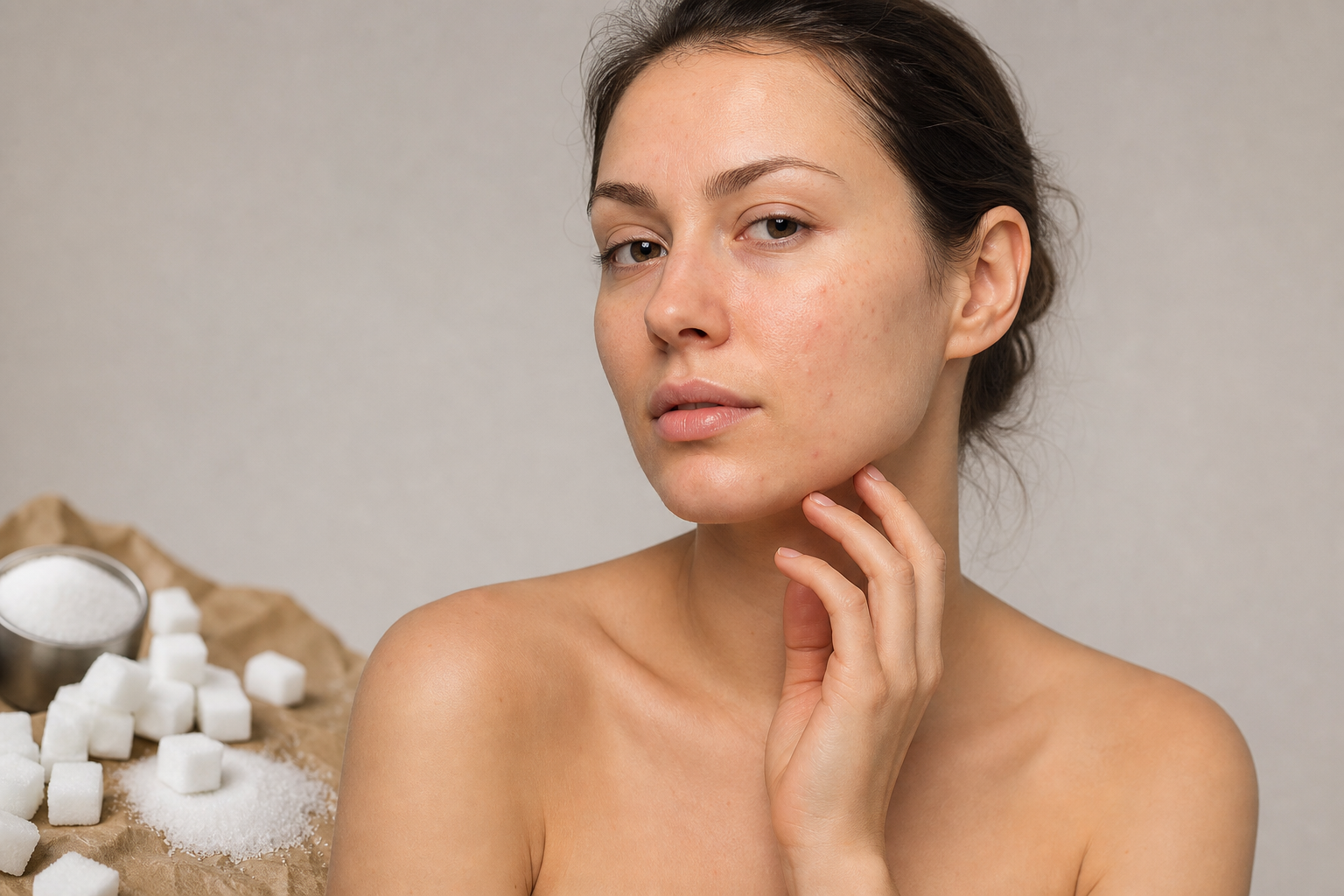
Sugar, Refined Carbohydrates, and High-Glycaemic Foods
One of the more consistent dietary associations with acne involves eating patterns with a high glycaemic load. These diets contain large amounts of foods that are rapidly digested and cause a sharper rise in blood glucose and insulin.
Common examples include:
Sugary soft drinks and energy drinks
Sweets and processed desserts
White bread and refined bakery products
Sweetened breakfast cereals
Snacks made with refined flour
Large portions of white rice
Highly processed convenience foods
Products containing large amounts of added sugar and very little fibre
In some people, regularly consuming these foods may increase metabolic signals connected with sebum production and clogged follicles.
This does not mean that carbohydrates must be eliminated. A more balanced approach is to choose higher-quality carbohydrate sources and combine them with fibre, protein, and healthy fats.
Better options may include whole grains, unsweetened oats, beans and lentils, vegetables, whole fruit, nuts, seeds, and balanced meals that support steadier energy levels and longer-lasting fullness.
The overall eating pattern matters more than one individual food. One dessert or meal containing white bread will not undo an otherwise balanced diet, just as one salad cannot resolve chronic acne. What is eaten consistently over weeks and months is likely to be more relevant.
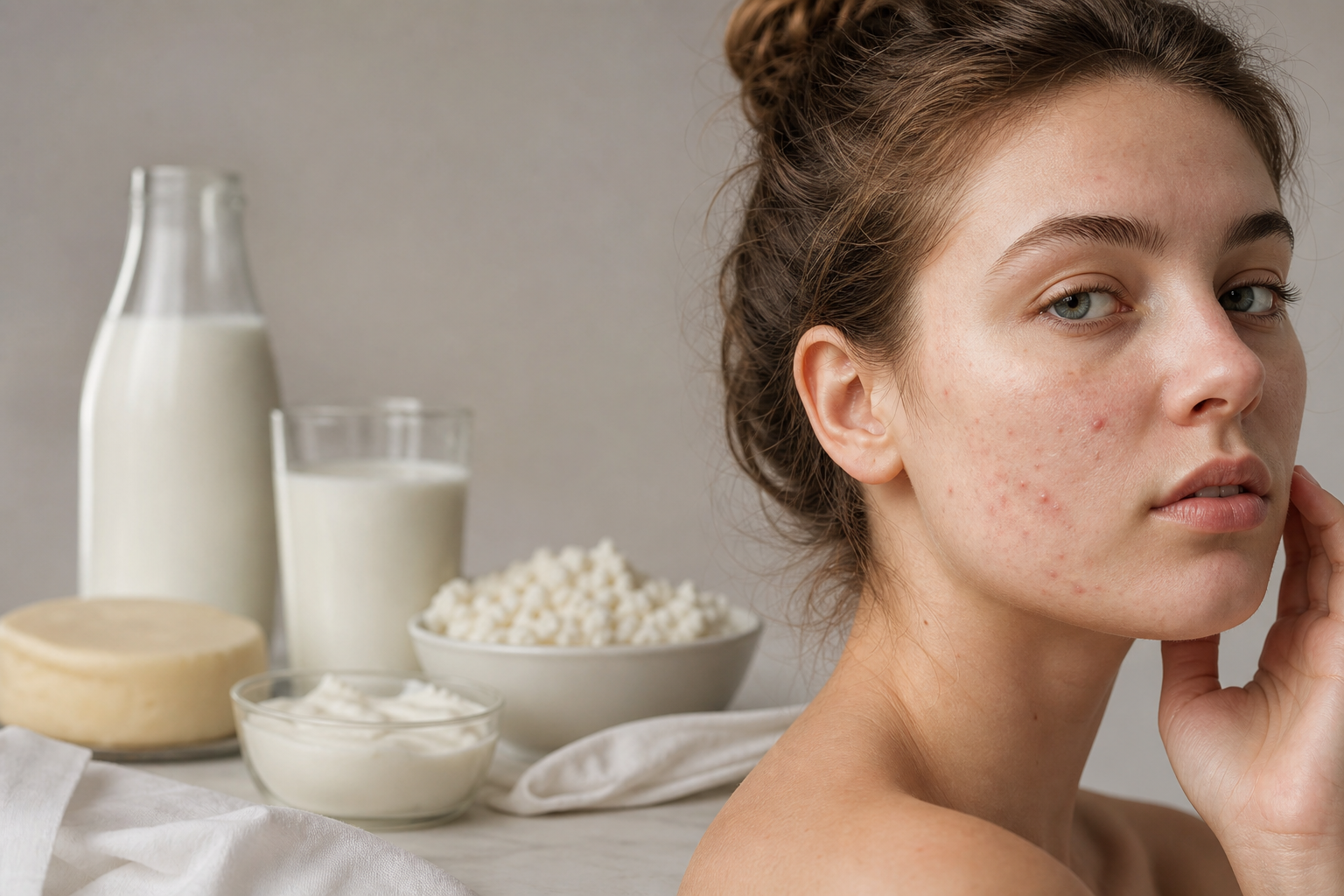
Milk, Dairy Products, and Whey Protein
The connection between dairy and acne is not equally clear for everyone. Some studies have identified an association between frequent milk consumption and a higher likelihood of acne, but this does not prove that milk will cause breakouts in every person.
Skimmed and low-fat milk have received particular attention. The possible relationship may involve more than fat content alone, including the hormonal and metabolic signals associated with milk.
However, the evidence is not straightforward enough to justify advising everyone with acne to eliminate all dairy products.
Fermented products such as unsweetened yoghurt and kefir may not affect the skin in the same way as larger quantities of milk. Cheese has also not been associated with acne as consistently. It is therefore unhelpful to treat every dairy product as nutritionally and biologically identical.
Whey protein deserves separate consideration. Some people notice a sudden increase in acne after introducing whey-based protein powders, particularly on the face, chest, shoulders, and back.
If breakouts began or became significantly worse after starting a whey supplement, a controlled break may help determine whether it is contributing to the problem.
Someone who suspects milk may be affecting their skin could consider a carefully planned trial lasting approximately six to eight weeks. During this period, it is important not to eliminate milk, gluten, eggs, sugar, and several other foods simultaneously, as it would then be impossible to identify what made a difference.
If dairy is restricted over a longer period, alternative sources of protein, calcium, vitamin D, and other important nutrients should be considered.
Do Chocolate, Greasy Food, or Gluten Cause Acne?
Chocolate has been blamed for acne for decades, but the answer may depend on the type of product and the rest of the diet.
Milk chocolate commonly contains sugar, dairy ingredients, and cocoa, making it difficult to determine which component might be relevant. Dark chocolate with a high cocoa content and relatively little sugar is not nutritionally equivalent to a highly sweetened chocolate product.
If someone repeatedly notices that chocolate is followed by a worsening of their acne, reducing it temporarily and monitoring the skin may be reasonable. There is no strong justification, however, for telling every person with acne to avoid chocolate completely.
Greasy food is also frequently misunderstood. Fat from food does not simply travel into the pores and turn into skin oil. Avocado, olive oil, nuts, seeds, and oily fish contain fats that can form part of a nutritious diet.
The potential concern with fast food and heavily processed meals is usually their overall composition: refined carbohydrates, added sugars, salt, and low fibre content, rather than the mere presence of dietary fat.
An occasional fast-food meal will not necessarily trigger acne. Regularly relying on heavily processed food may, however, form part of a broader eating pattern that is less supportive of both general health and skin health.
Gluten has not been established as a universal cause of acne. Avoiding it is medically necessary for people with coeliac disease and may be appropriate in cases of a professionally diagnosed gluten-related condition.
For people without such a condition, following a gluten-free diet does not necessarily improve acne. It may even result in a greater intake of highly processed gluten-free products containing refined starches, added sugar, and relatively little fibre.
Which Foods Can Support Skin Health?
No single food can cure acne. A balanced diet can, however, provide the protein, healthy fats, fibre, vitamins, and minerals required for normal skin function and repair.
A supportive eating pattern may include:
A wide variety of vegetables
Whole fruit rather than sweetened fruit drinks
Beans, lentils, and other pulses
Whole grains
Fish
Eggs and other suitable protein sources
Olive oil
Nuts and seeds
Adequate fluid intake
Fermented foods that are well tolerated
Omega-3 fatty acids, found in oily fish, walnuts, flaxseed, and chia seeds, take part in the body’s regulation of inflammatory processes. Increasing omega-3 intake may support a balanced diet, but it should not be presented as a replacement for appropriate acne treatment.
Zinc is important for immune function and skin repair, but zinc supplements are not risk-free. Excessive doses may cause nausea and digestive symptoms and interfere with copper absorption. Supplementation should not be introduced casually, particularly when several supplements are already being used.
Vitamins A, D, and E also contribute to normal skin function, but high doses are not automatically beneficial. Taking excessive amounts of vitamin A can cause serious adverse effects and is particularly dangerous during pregnancy.
Water is essential for normal body function, but drinking additional litres will not directly unclog pores or cure acne. Adequate hydration supports general health and normal skin function, but it cannot replace evidence-based treatment.
How to Test Whether a Food Is Affecting Your Acne
The most useful strategy is not to eliminate many foods at random, but to observe patterns in a controlled and organised way.
Begin by monitoring the skin for several weeks without making numerous changes. A simple diary can include:
Food and drink
New inflammatory breakouts
The menstrual cycle
Stress levels
Sleep quality
New skincare products
Medications and supplements
Exercise habits
Protein powders and sports supplements
If the same pattern repeatedly appears, one change can be tested at a time. For example, a person may temporarily stop using whey protein or reduce skimmed milk while keeping the rest of their diet and skincare routine reasonably consistent.
The trial should be given enough time. Blemishes already forming beneath the skin will not disappear a few days after a dietary change. A more realistic assessment usually requires several weeks.
Taking photographs under similar lighting conditions can make changes easier to evaluate.
After an elimination period, the food may be reintroduced if it is safe to do so. If acne consistently worsens again, the food may be acting as one of several personal triggers.
Anyone considering substantial dietary restrictions should consult a doctor or registered dietitian, particularly if they are pregnant, have a chronic health condition, have multiple allergies, or have a history of disordered eating.
Diet Is Not a Replacement for Acne Treatment
Even when dietary changes improve the skin, they usually represent only one part of an effective treatment plan.
Moderate and severe acne can lead to permanent scarring and should be treated promptly. Depending on the type and severity of acne, professional treatment may include topical retinoids, benzoyl peroxide, azelaic acid, selected antibiotics, hormonal treatment, or isotretinoin.
A dermatologist should be consulted when acne involves:
Deep and painful lesions
Nodules or cysts
Scarring or persistent dark marks
Significant breakouts on the chest or back
A sudden onset or worsening during adulthood
Irregular menstrual cycles or other signs of hormonal imbalance
A considerable effect on confidence or emotional wellbeing
A person can follow a highly nutritious diet and still experience acne. This does not mean that they have failed or caused the condition through poor choices. Genetics, hormones, and the biology of the skin can have a much stronger influence than any single meal or food.