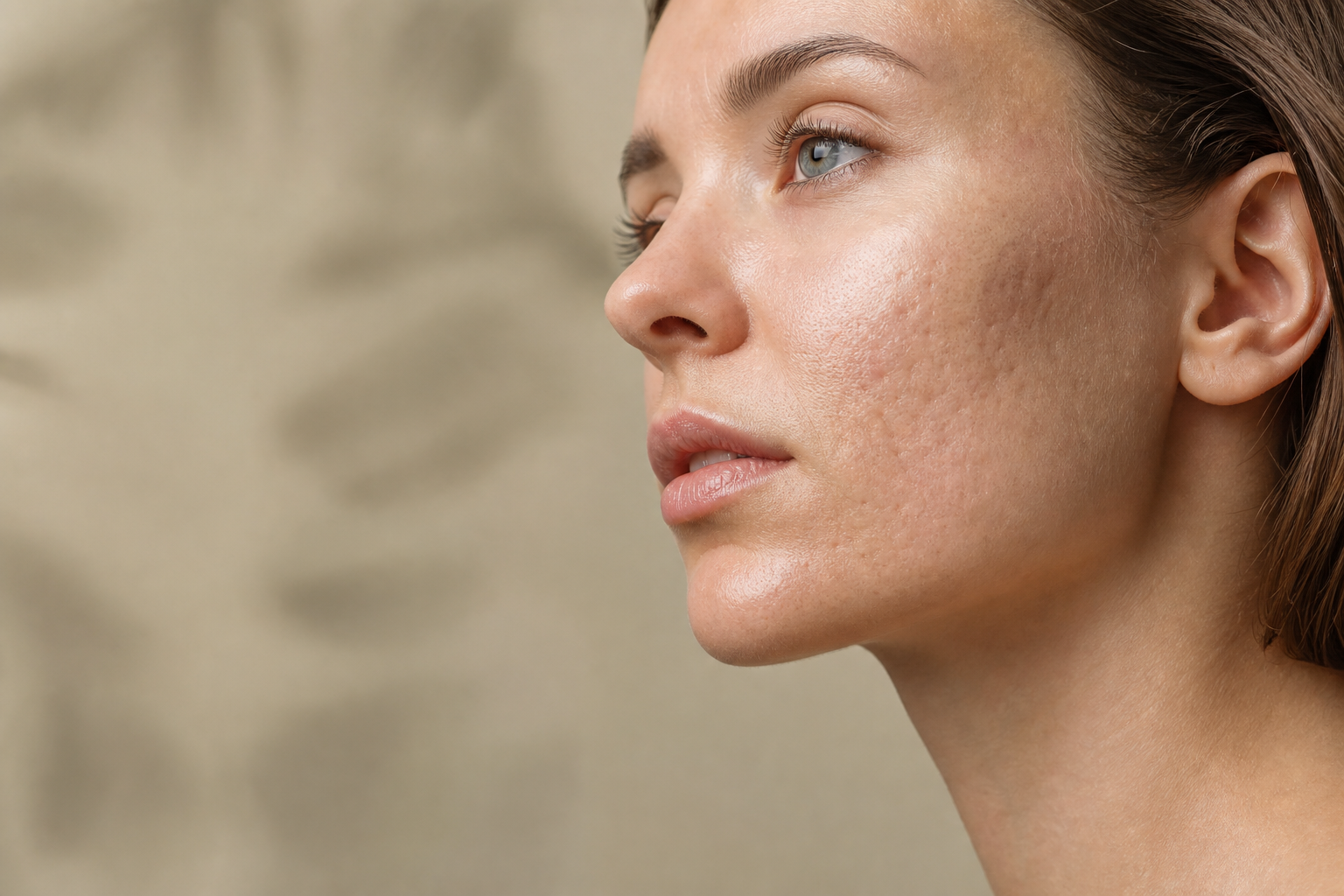
Acne scars are a prevalent and often distressing consequence experienced by many individuals with current or past acne. These marks are permanent skin changes resulting from inflammation and damage during the healing process of acne lesions. While acne itself is not life-threatening, the residual scarring can profoundly affect a person’s self-confidence and overall quality of life. This article provides a detailed, medically informed overview of acne scars, exploring their various types, treatment options, and critical considerations for effective management.
Understanding the nuances of acne scars is essential for anyone seeking to improve their skin’s appearance—whether they are patients, skincare enthusiasts, or professionals in dermatology and esthetic medicine. We will outline the differences between at-home skincare, in-clinic esthetic procedures, and dermatological treatments, emphasizing that precise diagnosis and medical consultation are indispensable before embarking on any therapy. Realistic expectations, safety precautions, and when to seek professional help are also central to the discussion.
Addressing acne scars effectively requires controlling any active acne inflammation first, as treating scars on actively inflamed skin is not advisable. This article aims to guide readers through the complexities of acne scarring with calm expertise, equipping them with knowledge to collaborate confidently with healthcare providers in developing individualized treatment plans.
What Are Acne Scars and How Do They Form?
Acne scars are permanent textural and pigmentary changes in the skin that manifest after acne lesions heal. They arise from damage to the deeper layers of the skin during inflammatory acne episodes. When the skin sustains injury, the natural repair mechanisms can sometimes be inadequate or abnormal, resulting in fibrotic or atrophic changes known as scars.
The severity and nature of scarring depend on multiple factors. These include the depth and intensity of the inflammatory process, genetic predisposition, promptness and adequacy of acne treatment, and the individual’s skin characteristics. Not every person with acne develops scars, highlighting the variable interplay of these elements.
From a dermatological standpoint, understanding the origin of scars is crucial. Managing active acne inflammation diligently is the first and indispensable step before considering scar treatment. If the skin remains inflamed or new lesions continue to emerge, any attempt at scar revision may be ineffective or even harmful.
How Are Acne Scars Classified?
Acne scars are broadly classified into three main categories based on their physical characteristics: atrophic, hypertrophic, and keloid scars. Correctly identifying the scar type guides the selection of the most appropriate and effective treatment modalities.
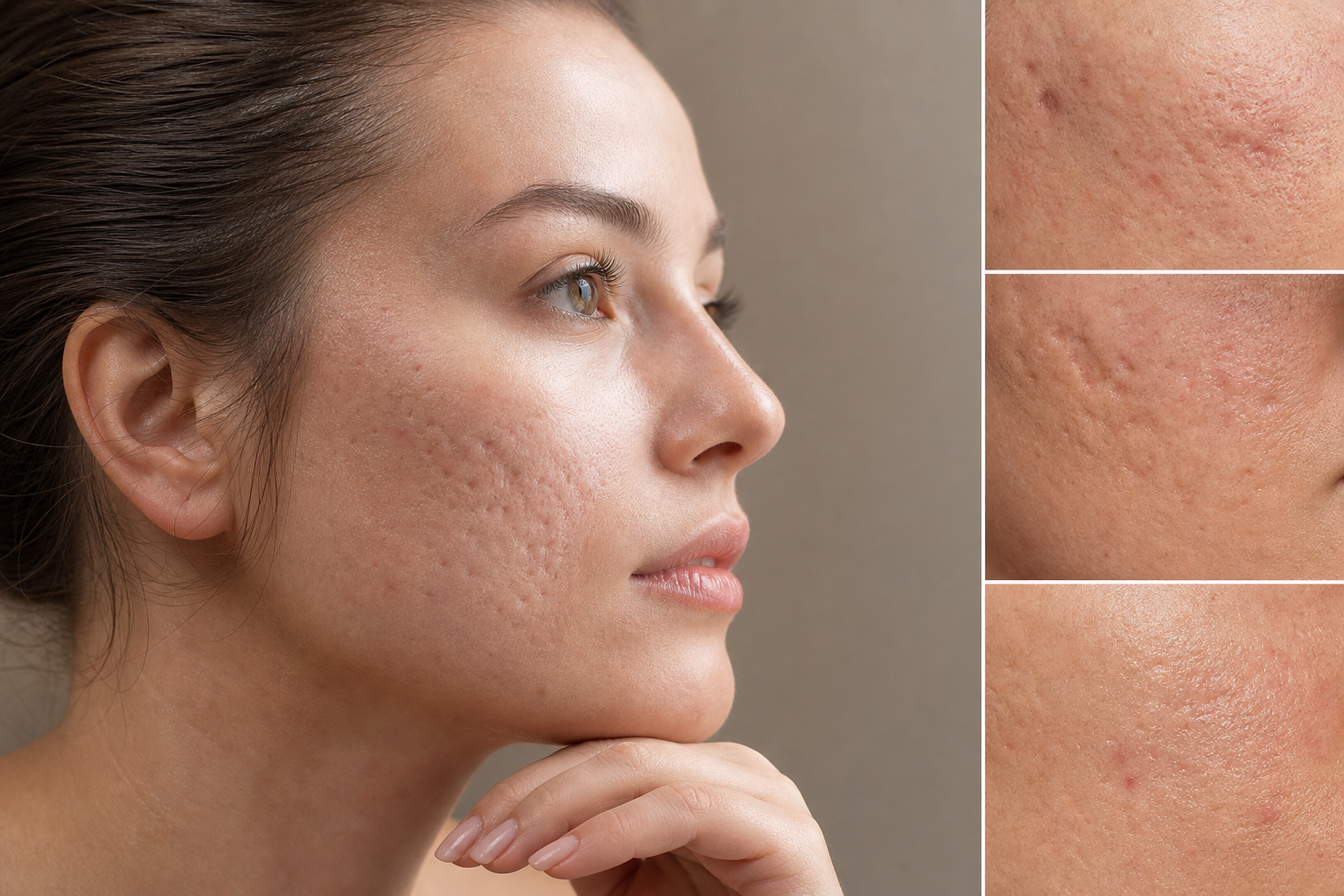
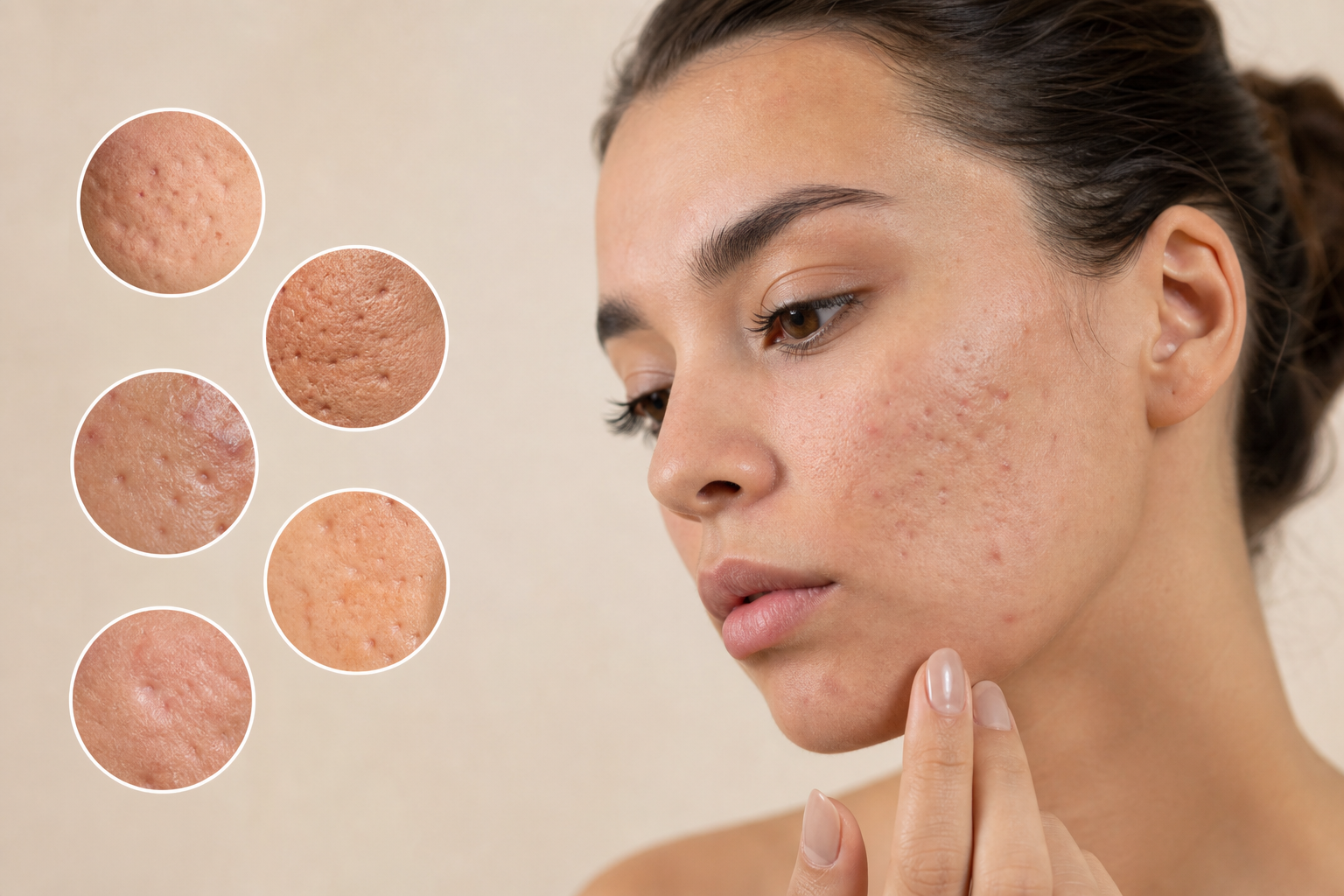
Atrophic scars represent approximately 80–90% of acne scars. These appear as depressions or pits in the skin caused by the loss of underlying tissue and collagen during the healing process. Atrophic scars are further subdivided into three variants:
Ice pick scars are narrow, deep, and resemble punctures from a sharp object. Their depth often makes them challenging to treat with superficial methods.
Boxcar scars have well-defined, round or oval edges with shallow to moderately deep depressions. They create a crater-like appearance and can be more amenable to resurfacing treatments.
Rolling scars are broader, with a wave-like or undulating surface caused by fibrous bands pulling the skin downwards.
Hypertrophic scars develop due to excessive collagen formation but remain confined within the original wound boundary, appearing as raised, often reddish areas on the skin. These scars result from prolonged inflammation during healing and an overactive repair response.
Keloid scars extend beyond the original injury site, growing into surrounding unaffected skin. These scars signify an abnormal fibrotic reaction and tend to be genetically predisposed. They can be raised, firm, and sometimes symptomatic with itching or tenderness.
Why Is Accurate Scar Typing Essential?
Tailoring treatment to the specific type of acne scar is fundamental for optimal outcomes. Each scar type responds differently to various therapies, and misdiagnosis can lead to suboptimal results or adverse effects.
For instance, chemical peels and fractional lasers can effectively improve mild to moderate atrophic scars by stimulating collagen production and resurfacing skin texture. However, deep ice pick scars may necessitate more invasive approaches such as microneedling or punch excision techniques targeting the depth of the lesion.
Conversely, hypertrophic and keloid scars often require therapies focused on reducing excessive scar tissue, including intralesional corticosteroid injections, silicone gel applications, or in some cases surgical removal combined with adjuvant laser treatments. Incorrectly applying ablative treatments to keloids, for example, can exacerbate the scar.
Dermatological examination enables comprehensive evaluation of scar morphology, skin condition, and any ongoing inflammation. This process informs a personalized combination treatment plan that considers patient history, skin type, and therapeutic goals.
What Are the Most Effective Treatments for Acne Scars?
Treatment strategies for acne scars can be grouped into three broad categories: at-home skincare regimens, esthetic clinic procedures, and medical dermatological interventions. Often, a combination approach yields the best results.
At-home skincare focuses on maintaining skin health and improving superficial skin texture. Products containing retinoids, vitamin C, alpha hydroxy acids (AHAs), and hyaluronic acid can promote collagen synthesis, enhance cell turnover, and provide hydration. These ingredients prepare the skin for procedural treatments and support long-term improvement. However, their effects on deep scars are limited and require consistent use over several months.
Esthetic procedures performed in specialized clinics include chemical peels, microneedling, fractional laser therapy, and light-based treatments.
Chemical peels of medium to deep depth can reduce superficial scarring and pigment irregularities by exfoliating the outer skin layers and stimulating regeneration. Microneedling uses fine needles to create controlled micro-injuries, encouraging collagen remodeling. Combining microneedling with radiofrequency enhances these effects, achieving notable improvement in atrophic scars.
Fractional lasers target microzones of skin, creating columns of injury that prompt the body's repair processes to smooth texture and reduce scar depressions. These methods require multiple sessions and entail variable downtime.
Medical dermatological interventions address more severe scarring or complex skin issues. These options include ablative laser resurfacing, punch excision, subcision, intralesional therapies, and systemic medications.
For hypertrophic and keloid scars, corticosteroid injections are commonly used to reduce fibrosis and scar size. In some cases, surgical removal is necessary, often coupled with radiation therapy or silicone dressings to prevent recurrence. Oral or topical medications may support skin remodeling, but should be prescribed with caution.
Systemic therapies, such as isotretinoin, primarily target active acne but may indirectly influence scarring by controlling inflammation. Their use requires thorough medical evaluation due to potential side effects and contraindications.
When Should You Seek Professional Help for Acne Scars?
Professional consultation with a dermatologist or qualified skincare specialist is advisable in several scenarios.
Individuals with persistent, severe, or worsening acne lesions should seek early treatment to prevent scarring. Once scars are present, prompt assessment is important to classify scar types and design an appropriate care plan. Complex scars, such as keloids or hypertrophic lesions, particularly benefit from specialist intervention to prevent progression and address functional or cosmetic concerns.
Professional evaluation is critical before initiating invasive treatments like laser therapy or systemic medications. Contraindications such as pregnancy, breastfeeding, or preexisting medical conditions must be ruled out to ensure patient safety.
Furthermore, any adverse reactions, skin irritation, or unexpected changes during treatment warrant reassessment by a healthcare provider to adjust or discontinue therapy accordingly.
Frequently Asked Questions About Acne Scars
Can acne scars be completely removed?
Complete eradication of acne scars is often challenging. Most treatments aim to minimize scar visibility, improve skin texture, and restore confidence. Outcomes vary based on scar type, skin characteristics, and treatment choices.
How long is recovery after treatments?
Recovery times differ depending on the procedures used. Minimally invasive options like microneedling may require little downtime, whereas chemical peels or laser resurfacing necessitate several days for skin healing. Your specialist will provide guidance tailored to the chosen method.
Is it safe to undergo scar treatments during pregnancy or breastfeeding?
Many potent treatments, particularly systemic medications and aggressive procedures, are contraindicated during pregnancy and lactation. Always consult a healthcare professional to ensure safety.
How should I care for my skin between treatment sessions?
Gentle cleansing, adequate moisturization, sun protection, and use of recommended topical agents support healing and enhance treatment effectiveness.