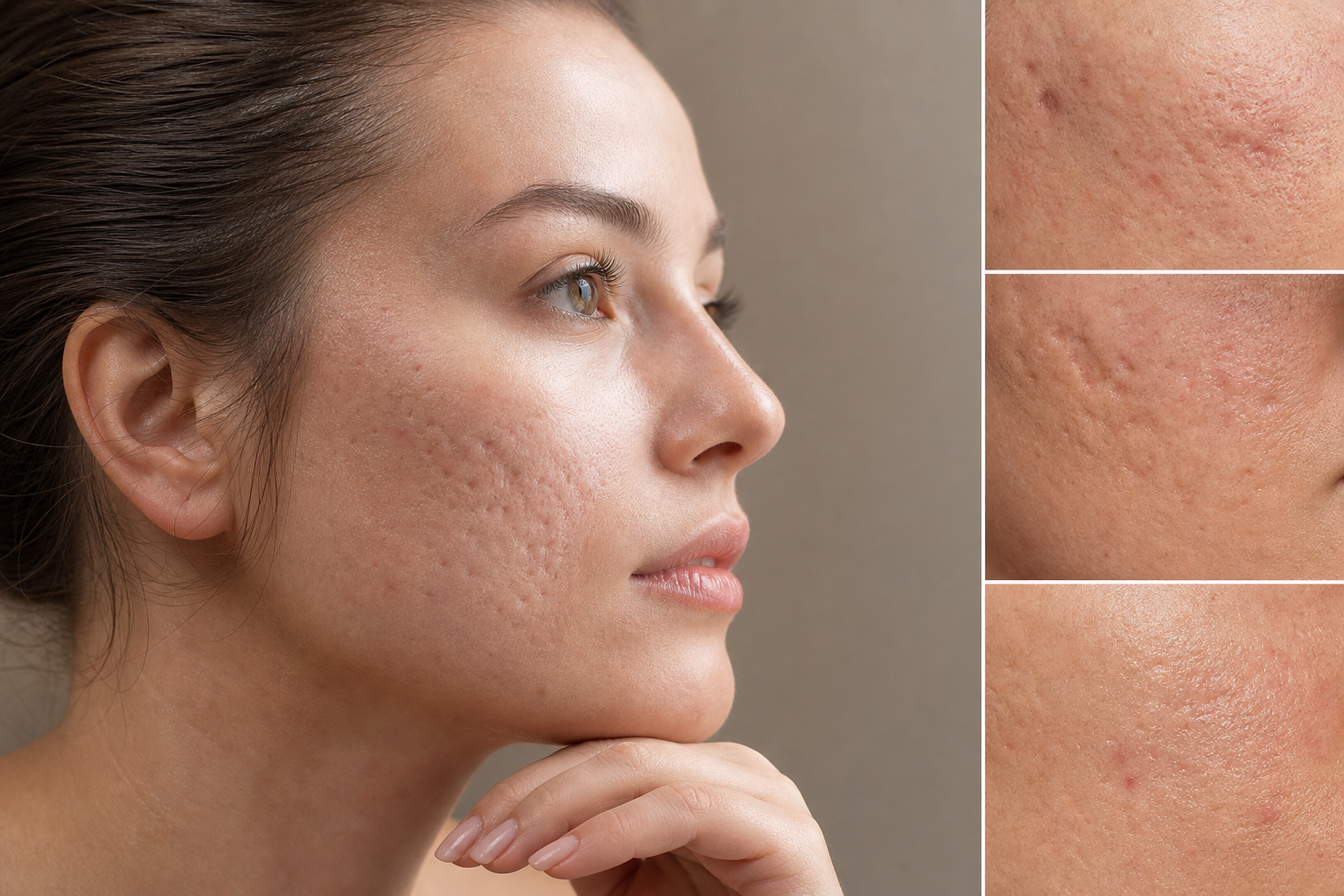
Acne scars represent a persistent and frequently challenging skin concern encountered by individuals who have battled acne, particularly moderate to severe forms. These scars are not merely superficial marks but reflect the skin's healing response to inflammation and damage beneath the surface. Understanding the various types of acne scars is essential not only for those affected but also for skincare professionals who aim to deliver effective, personalized treatments. With the rising interest in non-invasive anti-age facial rituals that improve skin texture and hydration, recognizing the nuances of acne scars helps in selecting therapies that optimize aesthetic outcomes safely and realistically.
This comprehensive guide is crafted for readers seeking an in-depth yet practical understanding of acne scars within the broader context of facial skin care and rejuvenation. It is also intended for dermatologists, estheticians, and skincare specialists who wish to review modern approaches to acne scar management. By exploring the defining characteristics of different scar types, indications for treatment, expected results, and the limitations involved, this article empowers informed decision-making. It underscores when professional consultation is necessary to ensure safety and efficacy in addressing these complex skin changes.
Acne scarring is more than an aesthetic issue—its psychological impact can be significant, especially when scars are on visible areas such as the face. The integration of acne scar treatment into anti-age facial protocols offers a dual advantage: managing residual skin texture irregularities from acne and enhancing overall skin quality with hydration and rejuvenation. In the following sections, we will articulate the classification of acne scars, discuss the pathophysiology behind their formation, and highlight practical treatment strategies aligned with current best practices.
Defining Acne Scars and Their Pathogenesis
Acne scars are permanent textural changes in the skin resulting from the skin's attempt to heal after the inflammatory lesions of acne.
The critical factor in scar development is the extent of inflammation and how deeply it penetrates the dermis. When inflammation is superficial, the skin often heals with minimal disruption; however, deeper inflammation damages collagen and elastin fibers essential for structural integrity. This damage impairs natural regeneration, leading to either loss or excess of tissue, manifesting as various scar types.
Scarring is influenced by individual healing capacities, genetic factors, and the severity and duration of acne. Not all acne lesions will result in scarring, but the risk increases with cystic and nodular acne, as well as with excoriated or manipulated lesions. The scar formation process involves an imbalance between collagen degradation and synthesis, and this dysregulation ultimately defines the scar's morphology.
Who Is Most Affected by Acne Scars?
Individuals who have experienced moderate to severe acne, particularly involving deep nodules and cysts, are most susceptible to scarring.
People with delayed or inadequate acne treatment, frequent lesion picking, or certain skin types may also have a higher likelihood of developing scars. Beyond age and acne severity, darker skin tones sometimes exhibit a tendency towards hyperpigmented scars or keloids, which necessitates cautious treatment planning.
The emotional and psychological toll of acne scarring often affects adolescents and young adults disproportionately, as visible scarring can impact self-esteem and social interactions. Thus, acne scar management should prioritize both physical correction and patient well-being.
What Are the Major Types of Acne Scars?
To develop an effective treatment plan, precise identification of scar types is paramount. Acne scars are broadly categorized based on their shape, depth, and tissue involvement. The primary types include:
Atrophic Scars – these result from tissue loss, creating indentations or depressions on the skin surface. They are further subdivided into:
Ice pick scars: Narrow, deep, and sharply defined scars resembling small holes or punctures on the skin. Their penetrating nature makes them challenging to treat effectively with superficial therapies.
Boxcar scars: Round or oval depressions with well-defined edges and steep vertical sides. Depending on depth, they may vary in size and are often visible on cheeks and temples.
Rolling scars: Characterized by their wave-like appearance due to fibrous bands pulling the skin, causing undulations. They present as wider, shallow depressions with sloping edges, complicating treatment due to their tethered nature.
Hypertrophic and Keloid Scars – unlike atrophic scars, these involve excessive collagen deposition, resulting in raised, firm lesions.
Hypertrophic scars: Elevated scars confined to the original wound boundary, frequently found on the chest, back, or shoulders after severe inflammation.
Keloid scars: Extend beyond the original injury, often growing into larger nodules, particularly in individuals with a genetic predisposition. These require cautious management due to the propensity for growth and recurrence.
How Do These Scar Types Influence Treatment Choices?
An accurate scar assessment guides the selection of treatment modalities, as different scars respond variably to interventions.
Ice pick scars generally require more aggressive resurfacing techniques such as laser therapy or chemical reconstruction, as superficial therapies often cannot reach their full depth.
Boxcar scars respond well to medium-depth treatments, including microneedling combined with radiofrequency or fractional laser therapies.
Rolling scars are complex due to fibrous bands tethering the skin. Subcision—a procedure to release these bands—combined with volume-enhancing treatments like dermal fillers, often yields improvements.
Hypertrophic and keloid scars require specialized approaches such as corticosteroid injections, silicone gel sheets, or laser treatments that target collagen overproduction, with an emphasis on prevention of scar enlargement.
What Are Commonly Used Treatments in Anti-Age Facial Protocols Targeting Acne Scars?
Modern anti-age facial regimens have embraced several non-invasive and minimally invasive procedures to address acne scars effectively, often restoring skin texture while boosting hydration and overall skin vitality.
Microneedling: This technique uses tiny needles to create controlled micro-injuries in the skin, stimulating collagen production and remodeling scar tissue. When combined with radiofrequency (RF), the effects are enhanced, promoting firmer skin and reduced scar depth.
Chemical Peels: Medium-depth peels using agents like trichloroacetic acid (TCA) can resurface the skin, improving the appearance of shallow scars and promoting a smoother texture.
Laser Resurfacing: Fractional ablative and non-ablative lasers work by targeting scar tissue with precision, stimulating neocollagenesis and skin renewal. Selection depends on scar type, skin tone, and patient tolerance.
Subcision: Particularly effective for rolling scars, this minor surgical procedure releases fibrous bands pulling the skin downward, allowing elevation of depressed scars.
Fillers: Injectable dermal fillers can temporarily lift atrophic scars by adding volume, offering immediate cosmetic improvement and complementing other collagen-inducing treatments.
What Safety Considerations and Limitations Should Patients Be Aware Of?
While advancements have made acne scar treatments safer and more accessible, there remain inherent risks and constraints that patients and practitioners must acknowledge.
Procedures carry potential side effects like erythema, swelling, post-inflammatory hyperpigmentation, or, rarely, infection. Skin type is a decisive factor, especially in darker complexions, where certain treatments may provoke pigmentation anomalies if not carefully administered.
No treatment provides an absolute cure; multiple sessions and combination protocols are often necessary to achieve meaningful improvement. Expectations should be managed to understand that scars may soften, diminish, but rarely vanish completely.
Professional evaluation is crucial to tailor therapies, avoid contraindications, and deliver care that aligns with individual health profiles and cosmetic goals.
When Is It Essential to Consult a Qualified Specialist for Acne Scar Management?
Acne scarring involves complex skin changes that necessitate thorough examination and professionally guided interventions.
A consultation with a dermatologist or experienced skincare professional is strongly recommended if scars are pronounced, causing psychological distress, or when prior treatments have failed to produce desired results.
Specialists assess the skin comprehensively, classify scar types accurately, and design customized treatment plans. They are equipped to employ advanced technologies safely and manage possible side effects or complications.
Moreover, if hypertrophic or keloid scars are present, early and expert management is vital to prevent progression and minimize long-term skin alterations.
What Realistic Outcomes Can Patients Expect from Acne Scar Treatments?
Patients engaging in acne scar therapies can generally anticipate noticeable improvements in skin texture, smoothness, and overall appearance.
Many experience enhanced skin hydration and luminosity as adjunct benefits of treatments integrated into anti-age facial rituals. However, because scars are intrinsic changes in skin structure, complete erasure is uncommon.
Improvement timelines vary; collagen remodeling is gradual, with optimal results typically emerging several months post-treatment. Consistency and adherence to follow-up protocols significantly influence outcomes.
Ultimately, a combination of patience, realistic understanding, and expert guidance foster satisfaction with treatment results and contribute to restored confidence.
Integrating Acne Scar Treatment into Holistic Skin Care Regimens
Addressing acne scars within the scope of facial rituals that emphasize skin rejuvenation and anti-aging provides synergistic advantages.
Combining scar-specific interventions with strategies enhancing skin hydration, elasticity, and barrier function amplifies the overall aesthetic benefit. Practices such as regular moisturizing, sun protection, and gentle cleansing support treatment efficacy and prolong results.
Additionally, adopting a comprehensive approach that includes lifestyle modifications, acne prevention measures, and appropriate medical oversight ensures sustained skin health beyond scar management.


