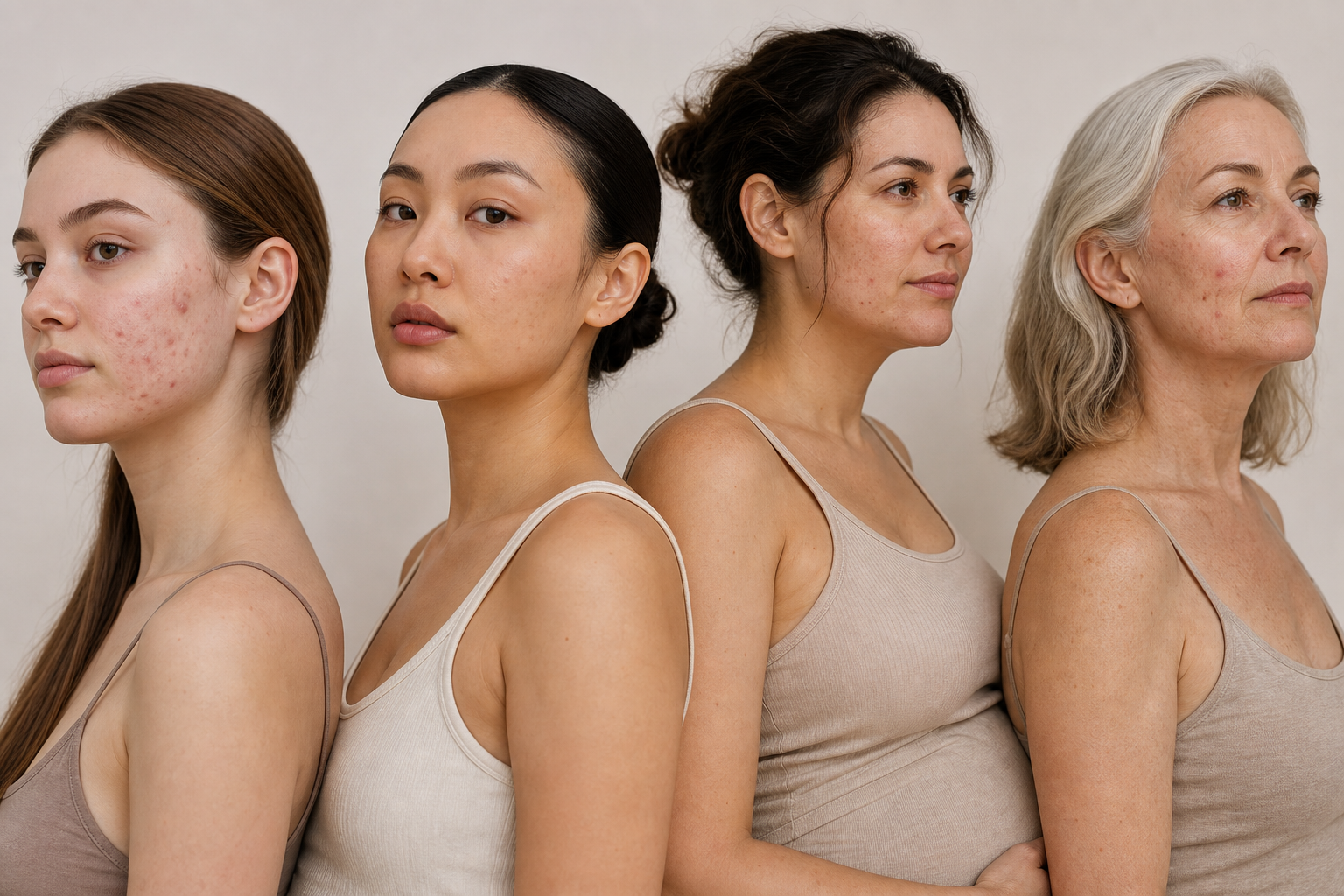
Acne is most commonly associated with puberty, but it can develop at almost any stage of life. It may first appear in adulthood, change throughout the menstrual cycle, worsen during pregnancy, or return during perimenopause. It can also look and behave differently on oily, dry, sensitive, dehydrated, and mature skin.
For this reason, there is no single skincare routine that works for everyone with acne. The approach should be adapted to the person’s age, type of breakouts, condition of the skin barrier, hormonal influences, lifestyle, and any treatment already being used.
It is also important to distinguish occasional blemishes from a persistent skin disorder. A few superficial spots do not require the same approach as widespread inflammation, painful nodules, or acne that is beginning to cause scarring.
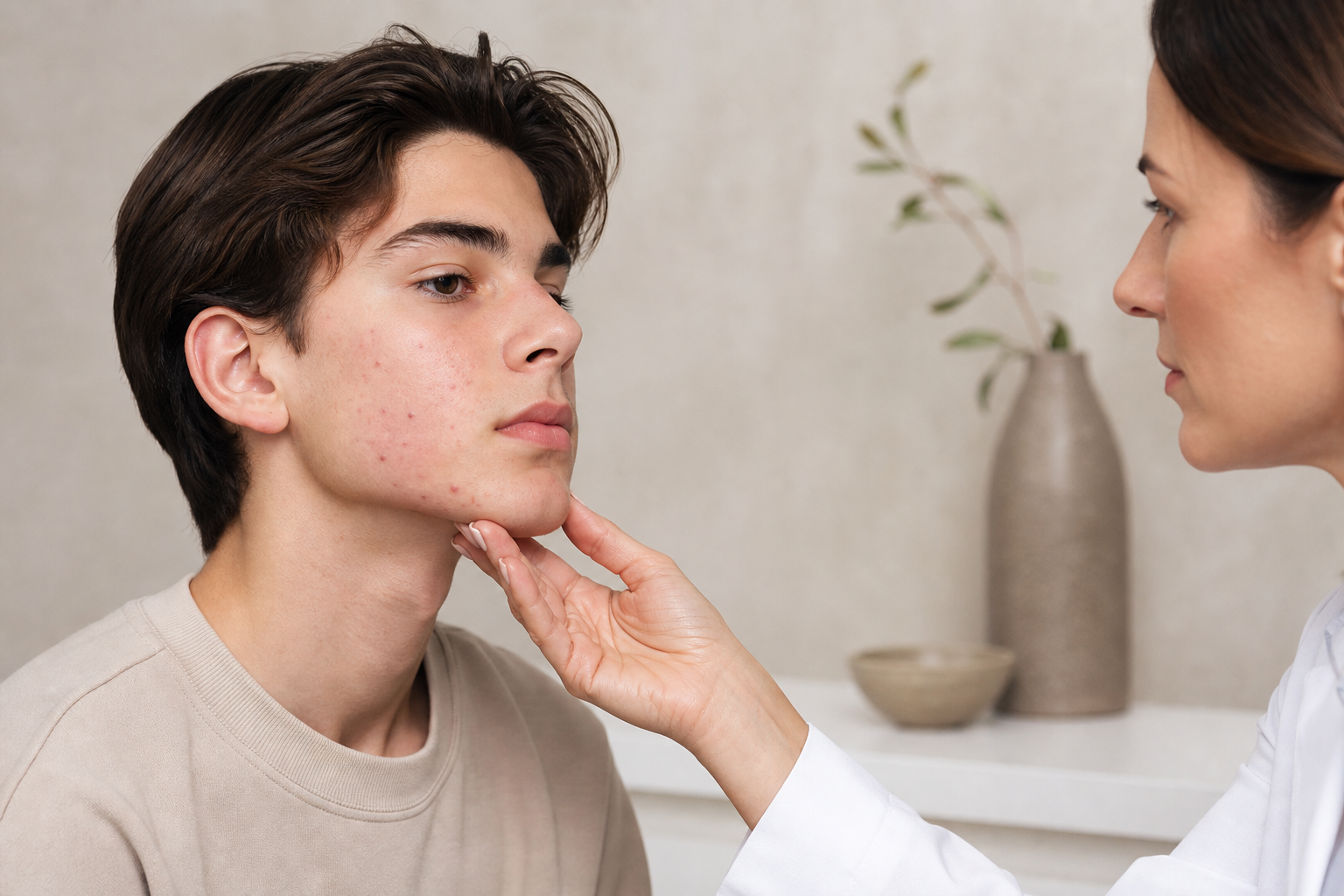
Acne During Childhood and Puberty
Acne-like lesions can occasionally appear in babies, usually on the cheeks, forehead, or chin. These changes should not be treated at home with products intended for teenagers or adults. A baby’s skin is particularly delicate, and similar-looking lesions may have different causes. Assessment by a pediatrician or dermatologist may therefore be necessary.
The appearance of comedones and acne in an older child may be associated with the beginning of hormonal changes. If significant acne develops unusually early or is accompanied by other signs of early puberty, medical evaluation is recommended.
During puberty, increasing androgen activity can stimulate the sebaceous glands and raise sebum production. At the same time, dead skin cells may accumulate inside the follicles, leading to clogged pores, comedones, and inflammation.
Teenage acne frequently affects:
the forehead, nose, and chin;
the cheeks;
the chest and shoulders;
the upper back.
Oily skin, blackheads, closed comedones, and inflammatory spots may all be present at the same time. One of the most common mistakes is attempting to remove all oil with alcohol-based toners, harsh scrubs, and repeated washing.
A basic routine can remain relatively simple: gentle cleansing, a carefully selected active treatment, lightweight hydration, and daily sun protection. If deep or painful lesions, scarring, or rapid worsening are present, professional dermatological care should not be postponed.
Teenage acne can have a significant effect on confidence, social interaction, and emotional wellbeing. Telling a young person that the condition will simply disappear with age may minimize a genuine concern. Even if the active acne eventually settles, scars and pigmentation may remain.
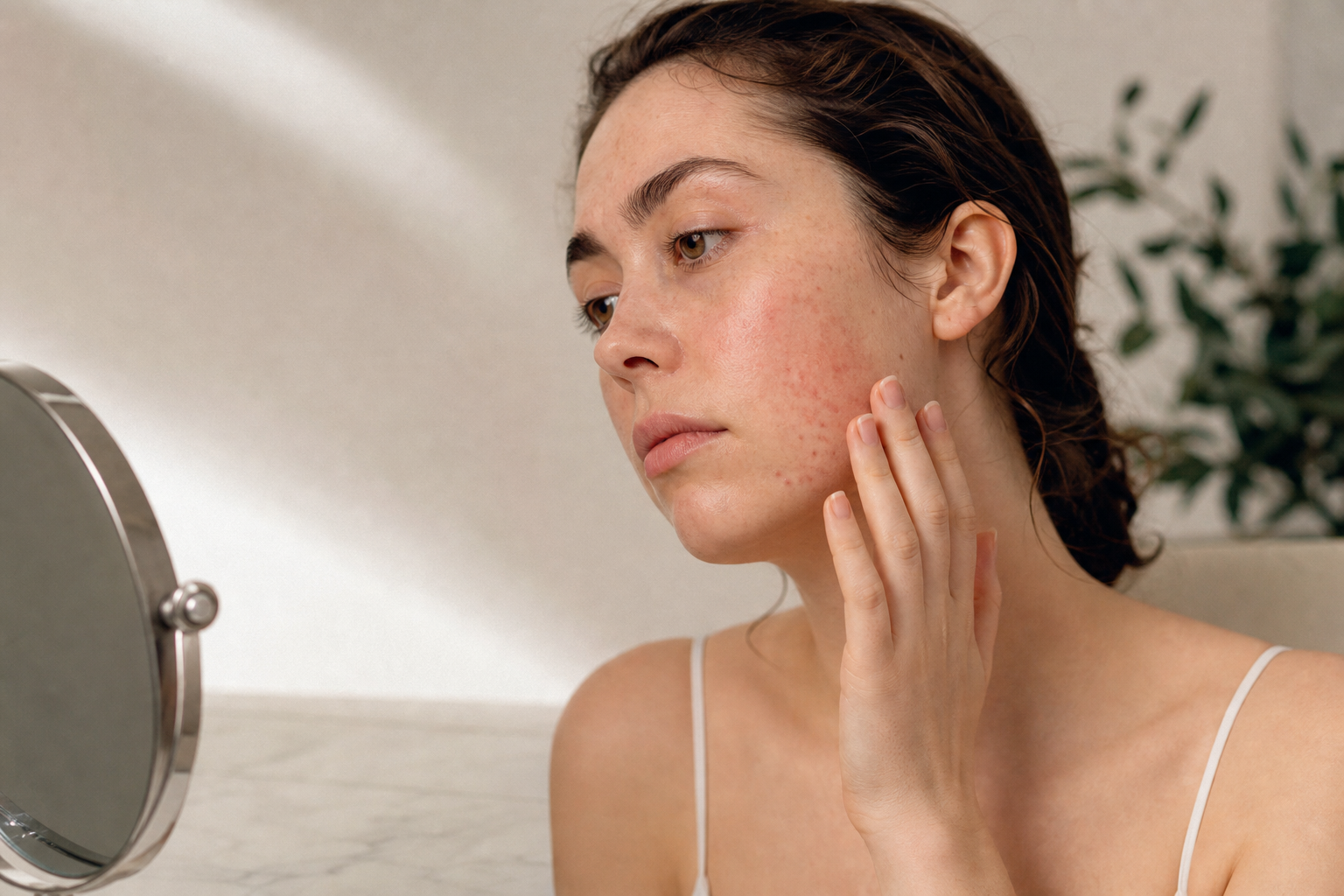
Acne in Adulthood
Adult acne may represent a continuation of adolescent acne or appear for the first time in a person’s twenties, thirties, or forties. It is particularly common in women, although it also affects adult men.
In some individuals, breakouts are concentrated around the lower face, jawline, and neck. Others develop comedones and inflammatory lesions on the forehead, cheeks, chest, or back. Location alone is not enough to determine that the condition is hormonal.
Adult acne may be influenced by:
hormonal fluctuations;
stress and insufficient sleep;
unsuitable skincare or cosmetic products;
heavy makeup and hair products;
certain medications;
occupational exposure;
friction, sweat, and occlusion;
genetic predisposition.
Adult skin is not always as oily as teenage skin. Acne may exist alongside dehydration, sensitivity, pigmentation, and early signs of ageing. An aggressive routine designed for very oily adolescent skin may therefore create additional problems.
The objective should not be limited to controlling sebum. A successful plan should reduce follicular blockage and inflammation, protect the skin barrier, and help prevent persistent marks without causing excessive dryness.
Acne that appears suddenly in adulthood, particularly when accompanied by irregular periods, increased facial or body hair, scalp hair loss, or significant changes in body weight, may require gynecological or endocrinological assessment.
Hormonal Changes, the Menstrual Cycle, and PCOS
For many women, acne changes throughout the menstrual cycle. Breakouts may develop several days before menstruation, often as deeper and more painful lesions around the chin, jawline, or lower cheeks.
Occasional cyclical worsening does not automatically indicate a hormonal disorder. Hormonal fluctuations are a normal part of the menstrual cycle. However, severe or persistent acne accompanied by other symptoms should be evaluated.
Polycystic ovary syndrome may be associated with acne, increased facial or body hair, irregular periods, difficulty managing body weight, and thinning scalp hair. A diagnosis cannot be made from the appearance of the skin alone. It requires a medical history, assessment of other symptoms, and appropriate testing.
When a hormonal component is present, skincare may still reduce clogged pores, irritation, and the visible effects of inflammation. However, topical products cannot always control an ongoing internal hormonal stimulus on their own.
Depending on the symptoms, a dermatologist, gynecologist, or endocrinologist may be involved in treatment. The goal is not simply to dry out existing spots but to establish longer-term control over the factors contributing to their development.
Acne During Pregnancy and After Childbirth
Hormonal changes during pregnancy affect the skin in different ways. Acne improves in some women, while in others it develops for the first time or becomes more pronounced.
Skincare during pregnancy requires particular caution because certain ingredients and medications normally used for acne are not considered appropriate during this period. Retinoids, in particular, must not be used during pregnancy. All active treatments, including non-prescription products, should be discussed with an appropriate healthcare professional.
A pregnancy skincare routine should generally focus on:
gentle cleansing;
maintaining the skin barrier;
safely managing inflammation;
daily sun protection;
preventing pronounced pigmentation.
Skin may become more reactive during pregnancy, so products that were previously well tolerated may begin to cause stinging or redness. Aggressive treatments, unsupervised chemical peels, and random combinations of active ingredients should be avoided.
Further hormonal changes occur after childbirth, while stress and lack of sleep may also influence the skin. During breastfeeding, the safety of active ingredients and medications should again be confirmed with a healthcare professional.
Postpartum acne is often temporary. However, painful or widespread breakouts and acne that is causing scars do not need to be left untreated while waiting for hormones to settle. Skincare and medical treatments can be adapted to this stage of life.
Acne During Perimenopause and on Mature Skin
During perimenopause, the balance of sex hormones begins to change. Falling estrogen levels may make the effects of androgens relatively more noticeable, contributing to breakouts, particularly around the lower face.
At the same time, other characteristics of the skin begin to change. It may become:
drier and thinner;
less elastic;
more prone to irritation;
slower to recover;
more vulnerable to pigmentation.
An aggressive teenage-style acne routine is therefore rarely the best option. Harsh cleansers, frequent exfoliation, and high-alcohol formulas can intensify dryness and weaken an already more vulnerable skin barrier.
Acne care for mature skin should balance the management of clogged pores and inflammation with hydration, sun protection, and support for healthy skin renewal.
Lesions that resemble acne at this stage of life are not always conventional acne. Rosacea, perioral dermatitis, folliculitis, and other skin disorders can look similar. An accurate diagnosis is especially important when new symptoms develop on mature skin.
How Acne Behaves on Different Skin Types
Oily, Acne-Prone Skin
Oily skin produces more sebum and often has more visible pores. Blackheads, closed comedones, and inflammatory lesions may all occur at the same time.
The most common mistake is trying to remove every trace of oil. This can leave the skin dehydrated and irritated without resolving the underlying acne.
A more balanced approach includes gentle cleansing and the gradual introduction of ingredients that target clogged pores and inflammation. Lightweight hydration and sun protection remain important even when the skin becomes noticeably shiny during the day.
Dry Skin with Acne
Acne can also develop on skin that naturally produces less sebum. Dryness may also be caused by aggressive skincare or prescription acne treatment.
Closed comedones, flaking, tightness, and red inflammatory spots may all occur together. Further drying the skin generally reduces treatment tolerance and makes the condition more difficult to manage.
Priority should be given to gentle cleansing, barrier support, and carefully controlled use of active ingredients. Adding more products does not necessarily produce better results.
Sensitive, Acne-Prone Skin
On sensitive skin, acne may be accompanied by pronounced redness, stinging, and intolerance to multiple products. Irritation caused by skincare can sometimes resemble a new breakout.
Active ingredients should be introduced one at a time and used less frequently at first. When acids, retinoids, physical scrubs, and harsh cleansers are all used simultaneously, it becomes difficult to identify what is causing the reaction.
It is also important to distinguish acne from rosacea and perioral dermatitis. A treatment that is suitable for one condition may aggravate another.
Dehydrated Skin with Acne
Dehydration refers to insufficient water in the upper layers of the skin and may affect any skin type. Dehydrated skin can be naturally oily, dry, or combination.
Common signs include tightness after cleansing, superficial flaking, increased shine, sensitivity, and fine lines that become more noticeable when the skin is lacking water.
The solution is not necessarily a heavier or greasier moisturizer. It may be more helpful to reduce irritation, use a mild cleanser, adjust the frequency of active treatments, and choose hydration appropriate for the individual skin type.
Mature Skin with Acne
Mature skin requires simultaneous management of blemishes, hydration, elasticity, and barrier function. An overly aggressive routine can worsen dryness and make fine lines appear more pronounced.
Ingredients that support healthy skin renewal may provide several benefits, but they must be introduced carefully. Daily sun protection is particularly important because acne on mature skin may leave persistent pigmentation.
Conditions That May Look Like Acne
Not every acne-like spot is actually acne. Correctly distinguishing between different conditions is essential because the wrong treatment may cause further irritation or worsening.
Folliculitis is inflammation of the hair follicles and may be associated with bacteria, yeast, friction, shaving, or sweating. The lesions often appear very similar to one another and may be itchy.
Rosacea may cause persistent redness, visible blood vessels, and bumps that resemble pimples, but typical blackheads are usually absent. Aggressive acne treatments may intensify redness and burning.
Perioral dermatitis commonly appears around the mouth, nose, or eyes. It may be associated with inappropriate skincare, heavy creams, or uncontrolled use of topical corticosteroids.
Acne mechanica develops or worsens as a result of pressure, friction, heat, sweat, and occlusion. It may appear beneath a face mask, helmet, tight sports clothing, straps, or protective equipment.
Body breakouts may also be influenced by occlusive lotions, oils, hair products, and remaining in damp or sweaty clothing for extended periods.
Adapting Skincare to Life Stage and Skin Condition
A good routine begins with an assessment of the skin’s current condition rather than simply labeling it as “problematic.” It is important to determine whether the main concern is comedonal acne, superficial inflammation, deep nodules, dryness, sensitivity, or post-acne pigmentation.
The basic routine will usually include:
gentle cleansing;
one appropriate active treatment;
hydration suited to the condition of the skin barrier;
daily broad-spectrum sun protection.
Salicylic acid may help manage excess oil and clogged pores. Benzoyl peroxide is commonly used for inflammatory lesions. Azelaic acid may be beneficial for acne, redness, and post-inflammatory marks. Retinoids play an important role in the management of comedones, but they are not suitable for every stage of life and require correct use.
It is rarely necessary to use all active ingredients at the same time. The selection should be based on the type of acne, age, sensitivity, other skincare products, and any medical treatment being used.
Professional aesthetic treatments may support comedone removal, hydration, skin calming, and the management of post-acne concerns once active inflammation is controlled. They cannot replace dermatological treatment for severe, deep, or scarring acne.