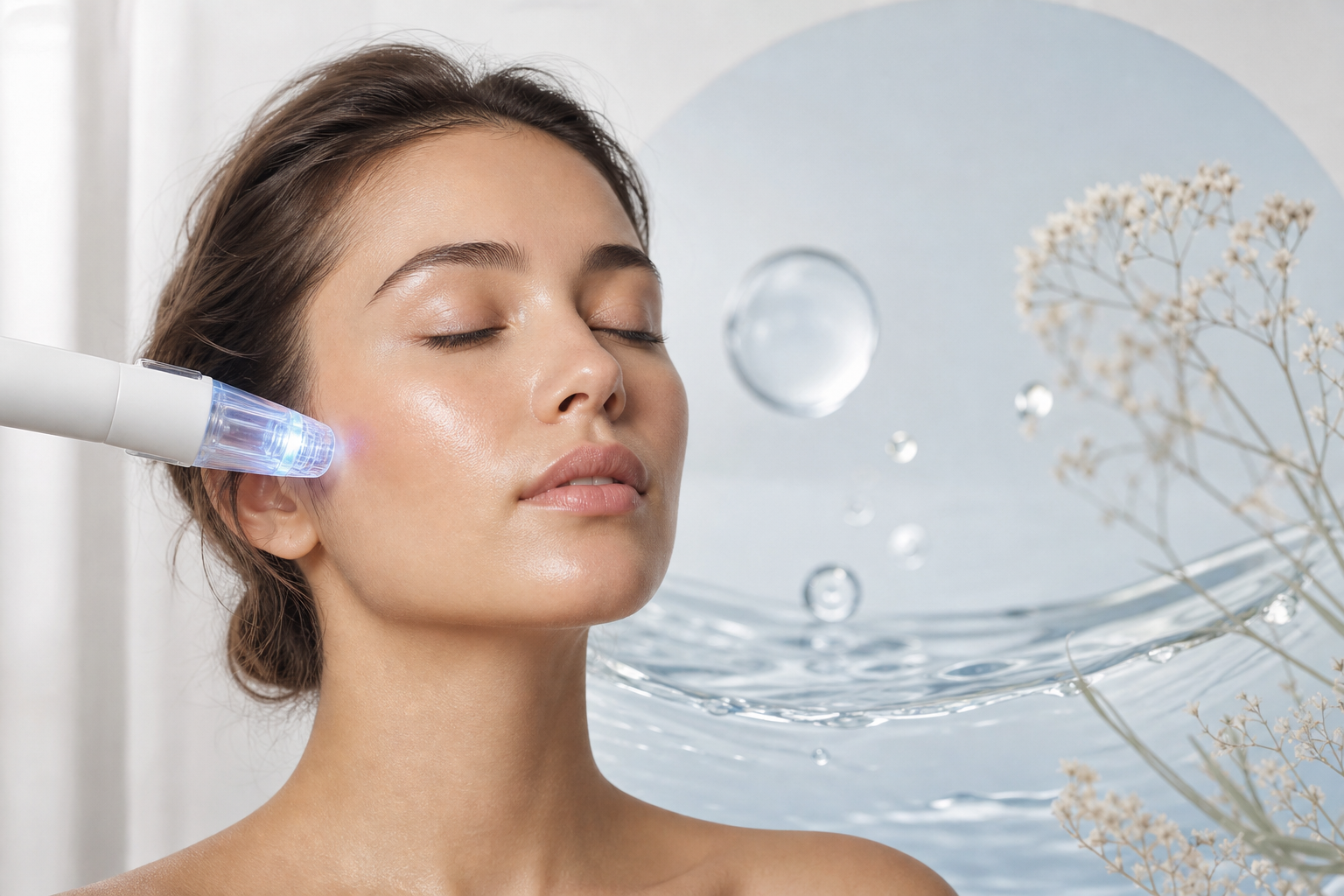
Needle-free mesotherapy has emerged as a compelling innovation in the realm of skin care, appealing profoundly to individuals seeking effective revitalization without the invasiveness of traditional injections. Unlike classical mesotherapy, which involves microinjections to deliver active substances directly beneath the skin, needle-free mesotherapy harnesses advanced technologies such as ultrasound, radiofrequency, and electroporation to facilitate the penetration of hydrating and nourishing compounds through the skin’s surface. This approach caters especially to those who desire a gentle yet efficient skin renewal process — including people sensitive to pain, apprehensive about needles, or simply inclined towards non-invasive aesthetics.
Understanding needle-free mesotherapy—the mechanisms it employs, its suitability for different skin types, realistic outcomes, and inherent limitations—has become increasingly important as more people explore professional skin hydration options that blend safety with visible benefits. This article aims to provide a thorough exploration of this treatment, framing it within the broader context of contemporary facial rituals and hydration therapies. We will delve into how needle-free mesotherapy works, who stands to benefit most, and how it compares to professional skin hydration treatments and other modalities geared towards enhancing the skin’s moisture and radiance.
By shedding light on these aspects, readers will gain clarity about this method’s role in skin care regimens, enabling informed decisions for those aspiring to nurture their complexion through methods that prioritize comfort and minimize downtime without sacrificing quality results.
What Is Needle-Free Mesotherapy and How Does It Function?
Needle-free mesotherapy refers to a suite of non-invasive treatments designed to deliver active ingredients such as hyaluronic acid, vitamins, antioxidants, and minerals into the skin’s deeper layers without employing needles. Its core intention is to enhance hydration, improve elasticity, and stimulate cellular renewal while avoiding the pain and potential risks associated with injections.
To achieve this, the method uses advanced technologies like electroporation, ultrasound sonophoresis, radiofrequency, or mesoporation. These techniques temporarily increase skin permeability by creating microscopic pathways or by stimulating molecular movement, enabling active substances to penetrate the epidermis more effectively. For instance, electroporation applies brief electrical pulses that open transient pores in cell membranes, permitting substances to enter cells without compromising the skin barrier's integrity. Ultrasound sonophoresis utilizes high-frequency sound waves to promote micro-massage and disrupt certain sub-surface structures, further facilitating ingredient absorption.
Radiofrequency complements these delivery methods by generating controlled heat in the dermis, which encourages collagen and elastin synthesis, improving the skin’s resilience and firmness. Unlike traditional mesotherapy, these technologies do not inject substances directly into the dermal or subdermal tissues but rather rely on enhanced permeation through the skin. This fundamental difference results in a procedure that is generally painless, with negligible injury, swelling, or risk of infection.
Ultimately, needle-free mesotherapy presents a modern alternative to address concerns like dehydration, dullness, and early signs of skin aging — especially for those who prioritize non-invasive treatments that entail minimal recovery periods and fewer side effects.
Who Is an Ideal Candidate for Needle-Free Mesotherapy?
The target audience for needle-free mesotherapy is broad but centers primarily on individuals seeking to improve skin hydration and vitality without enduring the discomfort or apprehension associated with needles. This approach is particularly appealing for people with sensitive or reactive skin that might not tolerate conventional injections well, as the absence of needle penetration significantly reduces irritation and trauma.
People experiencing mild to moderate signs of skin aging—such as fine lines, uneven texture, or minor elasticity loss—may find this treatment beneficial as it can help smooth and brighten the complexion by hydrating from within. Additionally, those dealing with dehydrated, fatigued, or lackluster skin can benefit from the infusion of moisturizing and antioxidant-rich compounds, which promote a refreshed and more radiant appearance.
However, needle-free mesotherapy is not universally optimal. Individuals with deep wrinkles, severe skin laxity, or pronounced dermal damage might require more intensive interventions for substantial improvement. Furthermore, pregnant or breastfeeding women, as well as those with certain dermatological conditions or compromised immune responses, should consult with healthcare professionals before undertaking any skin treatment, including needle-free mesotherapy.
Importantly, this treatment suits those who are committed to regular professional sessions combined with consistent home care, as maintaining results often requires an integrated approach involving both in-clinic procedures and appropriate skincare routines.
What Realistic Results Can Be Expected from Needle-Free Mesotherapy?
Needle-free mesotherapy usually yields noticeable improvements in skin hydration and texture after a series of treatments. Users often report a plumper, smoother complexion with increased luminosity and a more even skin tone. The treatment’s stimulation of biological processes—such as collagen remodeling and enhanced circulation—contributes to a more youthful, revitalized look. Fine lines may appear diminished, and skin may feel softer and firmer due to better moisture retention and elastin support.
Despite these advantages, it is crucial to maintain realistic expectations. This modality typically does not penetrate as deeply or provoke as dramatic a tissue remodeling response as invasive mesotherapy injections or other dermatological procedures. Consequently, it is less likely to erase deep wrinkles, sagging skin, or significant pigment irregularities comprehensively.
Results generally emerge gradually, becoming apparent after multiple sessions—commonly between four and six treatments spaced one to two weeks apart—to establish meaningful benefits. Duration of effects depends heavily on individual skin condition, lifestyle factors, and adherence to maintenance protocols involving professional follow-ups and suitable home care products.
Transient sensations during treatment, such as warmth or slight tingling, are typical and reflect activation of the skin by the applied energy sources. Post-treatment erythema or mild swelling may briefly occur but generally resolve quickly, allowing immediate return to daily activities.
What Are the Technical Limitations and Medical Considerations of Needle-Free Mesotherapy?
The primary limitation of needle-free mesotherapy lies in the reduced depth and precision of active ingredient delivery compared to traditional needle-based techniques. Since substances traverse the skin barrier without direct injection, their diffusion is less controlled and typically limited to superficial and mid-dermal layers. This constraint means the intensity of effects is often milder and requires consistent repetition for sustained outcomes.
Safety is a distinct advantage—notably, the minimized risk of infection, bruising, or microtrauma. However, patients may still experience allergic reactions or sensitivities to the ingredients utilized. Therefore, pre-treatment assessments and patch testing are advisable, especially when new formulations or potent active agents are involved.
Another consideration is variability in device quality and operator expertise, both of which significantly influence treatment efficacy. Clinically supervised procedures performed with certified equipment in reputable centers ensure higher success rates and minimize adverse events. Conversely, unsupervised or home use of mesotherapy-like devices without professional guidance may lead to suboptimal results or complications.
How Is a Needle-Free Mesotherapy Session Conducted and What Should One Expect?
A standard session lasts approximately 30 to 60 minutes, tailored to the technology employed and individual skin concerns. The process commences with thorough cleansing and exfoliation to remove impurities, preparing the skin for optimal absorption. Next, a cocktail of active compounds — typically comprising hydrating hyaluronic acid formulations, vitamins, and antioxidants — is applied to the target area.
Subsequently, the selected device—such as an ultrasound wand, electroporation unit, or radiofrequency applicator—is passed over the skin to facilitate substance penetration and simultaneously stimulate dermal activity. The experience is usually painless, though some clients may feel a warming sensation or mild tingling. There is no need for anesthesia or downtime post-treatment.
Immediately afterward, the skin may display slight redness or swelling, which rapidly subsides. Clients are generally advised to protect their skin from sun exposure and avoid harsh exfoliants or cosmetic products for a few days to ensure optimal healing and ingredient integration.
Complementing this in-office care with a diligent skincare regimen—emphasizing moisturization, sun protection, and antioxidant-rich products—maximizes long-term benefits and supports skin health between sessions.
Addressing Common Questions about Needle-Free Mesotherapy
Can needle-free mesotherapy replace conventional injection treatments?
While needle-free methods offer a gentler approach, they do not fully replicate the deeper, more potent effects achievable by traditional needle injections. Instead, they represent a complementary or alternative option for those seeking less invasive care with lower risk and discomfort.
How many treatments are necessary to see improvements?
Typically, multiple sessions—around four to six—are recommended, with maintenance treatments thereafter to prolong results. The exact number depends on skin condition and individual goals.
Is the treatment safe for all skin types?
Generally, yes. The absence of needles reduces the risk of barrier disruption, making it suitable for most individuals. Those with active skin infections or certain dermatologic disorders should seek medical advice before proceeding.
Positioning Needle-Free Mesotherapy Within the Spectrum of Professional Skin Hydration Treatments
Needle-free mesotherapy occupies a vital niche among professional facial hydration options, offering a balance between effectiveness and non-invasiveness. When integrated thoughtfully alongside approaches such as Professional Skin Hydration Treatments: Options and Outcomes or tailored protocols from the Hydration and Skin Renewal: The Complete Guide, it strengthens the arsenal of therapies aimed at restoring skin vitality without relying on injections.
Moreover, synergy with contemporary techniques like Ultrasound Sonophoresis: Enhancing Penetration of Active Ingredients? or Hydrodermabrasion: Combining Deep Cleansing and Hydration in a Single Treatment can further enhance results by preparing and nourishing the skin for improved responsiveness.
For individuals who desire a mild yet consistent rejuvenation method, such as those considering Professional Facial Hydration: What to Expect from the Treatment or exploring the advanced options in HydraFacial: Advanced Hydration Treatment for Radiant Skin, needle-free mesotherapy offers a compelling pathway. It respects the skin’s physiology, reducing trauma while supporting renewal mechanisms crucial for sustained hydration and natural radiance.
The treatment’s role should be understood within the broader context of ongoing skin maintenance where personalized approaches and expert guidance define success. Proper client education about its benefits and limitations ensures satisfaction and optimal outcomes.


