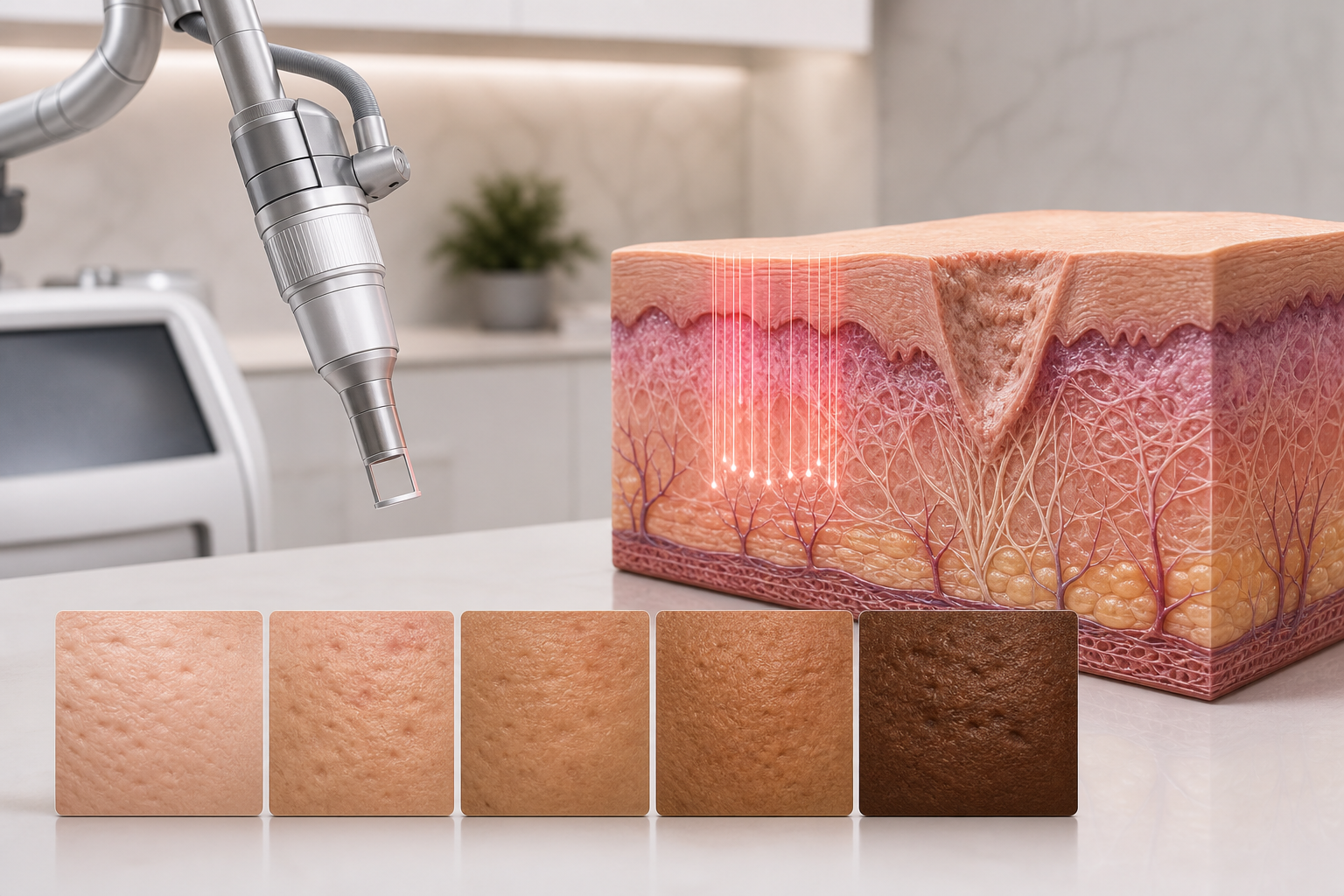
Laser treatments for acne and acne scars represent some of the most advanced and refined options in modern dermatology, offering a non-invasive approach to managing and improving skin affected by these common yet often stubborn conditions. Acne itself is a complex chronic inflammatory disease that affects millions worldwide, manifesting in various forms from mild comedones to painful cystic lesions. The sequelae of acne, which include post-inflammatory erythema (PIE), post-inflammatory hyperpigmentation (PIH), and a variety of scar types such as atrophic, hypertrophic, and keloid scars, further complicate treatment and significantly impact patients' quality of life and self-esteem.
This comprehensive guide is intended for individuals struggling with active acne, those seeking solutions for acne scars and discoloration, and medical professionals looking to deepen their knowledge of laser and light technologies applicable to these concerns. Understanding the nuances among different types of acne-related skin changes and the capabilities and limitations of various laser therapies is crucial. The landscape of laser and light devices is expansive and can be confusing, both for patients and practitioners, making informed guidance essential.
By distinguishing between active acne and the specific post-inflammatory changes—namely PIE, PIH, and differing scar morphologies—and by delving into the principles behind laser and light treatment options, this article aims to clarify which approaches suit particular skin conditions and types, the realistic outcomes patients can expect, and the necessary considerations including risks, recovery, costs, and professional selection. Laser treatments are rarely standalone solutions but an important component of a multidisciplinary, individualized dermatologic plan that empowers effective management while respecting patient safety and expectations.
What Are Active Acne, PIE, PIH, and Different Types of Acne Scars?
A precise understanding of the various conditions laser treatments target is foundational. Active acne encompasses inflammatory and non-inflammatory lesions such as blackheads (open comedones), whiteheads (closed comedones), papules, pustules, nodules, and cysts. Acne pathogenesis involves follicular hyperkeratinization, sebum overproduction, colonization by Cutibacterium acnes, and subsequent inflammation.
Post-inflammatory erythema (PIE) manifests as persistent redness from dilated capillaries after resolved acne inflammation. Unlike pigment changes, PIE is vascular in origin and potentially transient, often responsive to treatments that target blood vessels.
Post-inflammatory hyperpigmentation (PIH) refers to flat, pigmented marks left behind following skin inflammation. These are due to localized excess melanin or abnormal distribution of pigment and are more common in darker skin tones. PIH typically lasts longer than PIE and requires specialized approaches to address pigment deposition.
Acne scars represent permanent structural changes to the skin after deep inflammation damages dermal collagen. They divide mainly into three categories:
- Atrophic scars, which appear as depressions or indentations such as icepick, rolling, or boxcar scars.
- Hypertrophic scars, which are raised but confined to the original boundaries of the wound.
- Keloid scars, which extend beyond the initial injury site and can continue to grow. These scar types have distinct pathophysiology and responses to therapies, requiring tailored treatment strategies.
How Do Laser and Light Technologies Work on Acne and Acne Scars?
Lasers and other light-based therapies target specific components of acne and the resulting skin changes by selectively interacting with skin chromophores such as melanin, hemoglobin, or water. This targeted action underlies their efficacy and relative safety.
In active acne, laser and light treatments aim to reduce bacterial load (particularly Cutibacterium acnes), suppress sebaceous gland activity to decrease oil production, and attenuate inflammation. These mechanisms contribute to improved acne control and prevention of new lesions.
For PIE, therapies focus on ablation or constriction of dilated blood vessels, using wavelengths absorbed by hemoglobin to reduce redness.
PIH treatments leverage laser energies that selectively disrupt melanin to fade hyperpigmented areas, facilitating more uniform skin tone.
When addressing acne scars, laser interventions stimulate dermal collagen remodeling through controlled micro-injury, promoting skin regeneration and improving texture and scar appearance. Ablative lasers remove the upper skin layers to provoke extensive remodeling, while non-ablative lasers penetrate deeper without disturbing the epidermis, leading to collagen induction with minimal downtime.
Light-based technologies extend beyond traditional lasers and include Intense Pulsed Light (IPL) and photopulsed devices. IPL emits a broad spectrum of light wavelengths and can be adjusted for vascular or pigmentary targets, making it versatile for PIE and PIH. Blue light therapy is recognized for its antibacterial benefits in active acne.
Which Laser Treatments Are Most Suitable for Active Acne?
Management of active acne with laser therapy typically involves non-ablative platforms that minimize skin disruption while modulating contributing factors. Devices such as non-ablative fractional lasers and IPL systems emitting specific wavelengths target inflammation and bacterial colonization.
Blue light therapy, operating predominantly at wavelengths absorbed by porphyrins produced by Cutibacterium acnes, has demonstrated a capacity to reduce bacterial populations and inflammation. Photodynamic therapy combines photosensitizing agents with light exposure to intensify bacterial eradication and sebaceous gland modulation.
IPL can also contribute by reducing redness and inflammation, though its role is adjunctive. Importantly, laser and light therapies function best as components of comprehensive acne management plans that include topical and systemic medications, emphasizing the necessity of dermatological evaluation and personalized treatment regimens.
In What Ways Do Laser Treatments Address PIE and PIH?
The distinction between vascular redness (PIE) and pigmentary discoloration (PIH) dictates different laser approaches. For post-inflammatory erythema, pulsed dye lasers (PDL) operating in the green spectrum are preferred for targeting hemoglobin to diminish redness. IPL, with vascular settings, may also be effective, especially in light- to medium-toned skin.
Post-inflammatory hyperpigmentation requires lasers that preferentially affect melanin. Q-switched Nd:YAG lasers and non-ablative fractional lasers can fragment excess pigment, promoting clearance. Treatment protocols must be carefully tailored, as aggressive intervention risks exacerbating pigmentation, notably in higher Fitzpatrick skin phototypes.
Careful patient selection and test spots are prudent for optimizing efficacy and safety in pigmentation management using laser technologies.
How Are Lasers Utilized for Treating Different Types of Acne Scars?
Treatment of acne scars depends upon scar morphology and depth. Ablative fractional lasers such as CO2 or Er:YAG remove microscopic columns of tissue, promoting profound collagen remodeling with significant improvement in atrophic scar depth and skin texture. Recovery can involve redness, peeling, and sensitivity lasting several days to weeks.
Non-ablative fractional lasers induce thermal injury below the epidermis without removing skin layers, resulting in reduced downtime and a gentler approach while stimulating collagen production. Such lasers are generally preferred for milder scars or skin types sensitive to prolonged healing.
Hypertrophic and keloid scars pose a treatment challenge. While some laser modalities can reduce erythema and thickness, they usually require combination therapy with intralesional corticosteroids, silicone sheets, or other interventions to optimize outcomes.
How Does Skin Phototype Influence Laser Treatment Selection?
The Fitzpatrick skin phototype classification, ranging from type I (very fair) to type VI (deeply pigmented dark skin), critically directs safe and effective laser treatment choices. Darker skin contains more melanin, elevating risks for burns, hyperpigmentation, or hypopigmentation with certain laser modalities.
For lighter skin types (I-III), ablative lasers and PDLs are generally safe and effective. In contrast, darker phototypes (IV-VI) are better suited for non-ablative fractional lasers, IPL with caution, and Q-switched lasers with calibrated settings to mitigate risks. Thorough dermatological evaluation, testing, and conservative protocols enhance treatment safety across all skin types.
What Realistic Outcomes Can Patients Expect from Laser Treatments?
It is essential that patients maintain measured expectations. While laser and light therapies can significantly improve active acne symptoms, reduce inflammation, fade discolorations like PIE and PIH, and soften scar appearance, they rarely eradicate these conditions entirely. Acne scars, especially deep or keloid scars, may persist to some degree despite optimal treatment.
Visible improvements typically require multiple treatment sessions spaced over months. Results vary based on individual skin biology, scar age, previous treatments, and adherence to post-procedure care. Patience and collaboration with a knowledgeable dermatologist enhance satisfaction and maximize benefits.
What Is Recovery Like and What Risks Should Patients Be Aware Of?
Post-laser recovery varies by treatment intensity and modality. Ablative treatments may produce redness, swelling, crusting, and peeling lasting several days to weeks. Non-ablative methods usually entail milder effects such as transient redness or swelling.
Infection, scarring, prolonged erythema, and pigmentary changes are potential adverse events, though infrequent when performed by skilled professionals who provide clear aftercare guidance including sun protection and skin care.
Patients should communicate openly with their dermatologists about any side effects or complications to ensure prompt management.
Can Laser Treatments Be Combined with Other Therapies for Better Results?
Yes, integrating laser and light therapies with adjunctive modalities such as chemical peels, microneedling, topical retinoids, and systemic acne medications is common to address multiple pathophysiological facets simultaneously.
Combination treatments allow for synergistic effects: peeling to enhance skin turnover, microneedling to promote collagen, and topical agents to modulate inflammation and pigmentation. This multimodal strategy can enrich clinical outcomes, reduce treatment duration, and optimize skin texture and tone.
Nevertheless, these combined regimens require individualized design and close monitoring to avoid over-treatment and adverse reactions.
What Are the Cost Considerations and How to Choose a Dermatologist or Clinic?
Laser treatments vary in cost depending on factors such as technology type, number of sessions, geographic region, and clinic reputation. While pricing is a consideration, quality of care and safety must take precedence.
Patients should seek board-certified dermatologists or experienced practitioners with expertise in laser therapies for acne and scars. Evaluating provider credentials, experience, patient testimonials, and ensuring access to a clean, accredited facility mitigates risks and fosters trust.
Consultations provide opportunities to discuss goals, expected outcomes, treatment planning, and financial aspects transparently.
Why Is Individualized Medical Assessment Critical Before Laser Therapy?
The efficacy and safety of laser treatments hinge on a thorough individual evaluation encompassing skin type, acne severity, scar characteristics, medical history, and prior treatments. This personalized assessment informs the choice of devices, parameters, session frequency, and post-care protocols.
One-size-fits-all laser protocols risk suboptimal results or complications. Dermatologists integrate clinical expertise, patient preferences, and evidence-based protocols to customize interventions, ensuring the highest standard of care and patient satisfaction.


