Botox treatment has become one of the most sought-after procedures in modern aesthetic medicine, celebrated for its ability to smooth facial wrinkles and rejuvenate appearance with minimal invasiveness. This popular treatment appeals to a broad spectrum of people, from those noticing the first subtle signs of aging to individuals aiming to maintain a youthful look proactively. Understanding the step-by-step process of Botox application is essential for anyone considering this procedure, as it demystifies its mechanisms, clarifies realistic outcomes, and underscores safety considerations intrinsic to effective treatment.
At its core, Botox involves the precise injection of botulinum toxin into specific facial muscles responsible for dynamic wrinkles caused by repetitive expressions. Its effects are temporary yet powerful, offering visible softening of lines on the forehead, around the eyes, and between the eyebrows. This editorial guide delves deeply into the preparation stages, procedural sequence, expected results, and aftercare associated with Botox, empowering readers to make informed decisions and engage confidently with their aesthetic care providers.
In the following sections, we explore how each treatment phase—starting from thorough consultations to post-procedure maintenance—plays a pivotal role in ensuring optimal and safe outcomes. By elucidating the science behind Botox’s mechanism and setting clear expectations, this comprehensive overview aims to foster patient awareness and professional standards within the realm of cosmetic treatments.
Comprehensive Preparation: Setting the Foundation for a Successful Botox Treatment
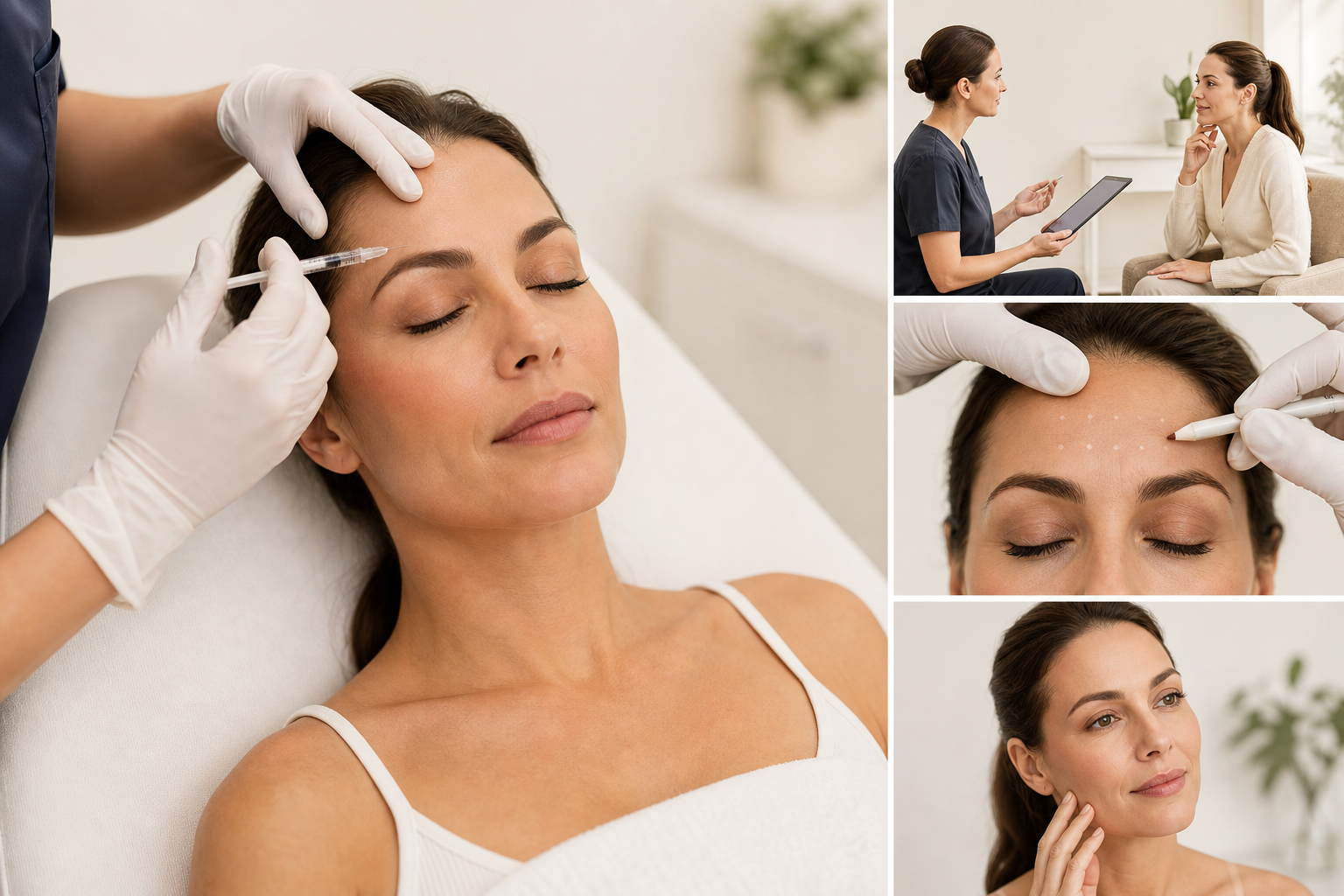
The journey toward effective Botox treatment begins well before the injection needle touches the skin. Preparation involves both patient education and medical assessment to tailor the treatment precisely to individual needs and health conditions. An initial, detailed consultation with a qualified specialist — preferably a dermatologist or plastic surgeon experienced in aesthetic procedures — serves as the cornerstone of this preparation. This session includes a thorough evaluation of facial anatomy, wrinkle type, skin condition, and the patient’s personal goals. Such meticulous appraisal ensures that expectations align realistically with what Botox can achieve.
Patients are also guided on lifestyle adjustments leading up to the procedure to minimize potential complications. For instance, it is advisable to avoid blood-thinning medications and supplements such as aspirin, ibuprofen, vitamin E, and omega-3 fatty acids several days prior because they may increase the tendency to bruise. Additionally, abstaining from alcohol and avoiding intense sun exposure help maintain skin integrity and reduce inflammation risks surrounding the treatment day.
Transparency during consultation is vital. Patients should communicate all current medications, allergies, underlying neurological conditions, and pregnancy status, as Botox is contraindicated in some scenarios. The clinician will also provide instructions for skin care immediately before the treatment, typically emphasizing a clean face free of makeup or creams to prevent infection and ensure treatment accuracy.
Initial Assessment and Facial Mapping: Precision in Targeting Muscle Activity
On the day of the Botox session, the practitioner conducts an interactive and nuanced assessment focused on muscular dynamics that contribute to wrinkle formation. By asking the patient to perform specific facial expressions—such as raising eyebrows, squinting, or frowning—the clinician identifies key muscles responsible for unwanted lines. This mapping is critical in determining precise injection points, dosages, and distribution patterns needed for a harmonious and natural-looking outcome.
During this phase, the skin’s health and texture are re-examined to note any irregularities or areas that may require special attention. The clinician records these findings along with photographic documentation, which serves both as a treatment guide and a baseline for post-treatment comparison. This personalized strategy distinguishes professional Botox application from generic or uninformed approaches, reducing the risk of side effects like asymmetry or unwanted muscle paralysis.
Execution of Botox Injections: Technique, Timing, and Patient Comfort
The Botox injection procedure itself is typically brief, often completed within 15 to 30 minutes depending on the treatment area and complexity. It is performed in a sterile clinical environment to uphold safety standards. After thoroughly cleansing and disinfecting the skin, the specialist uses extremely fine needles to administer small quantities of botulinum toxin into the targeted muscles.
Thanks to the minimally invasive nature and the slender design of the injection apparatus, discomfort during the procedure is usually minimal. However, patients with heightened sensitivity may receive topical anesthetic creams or cold compresses beforehand to enhance comfort. The number of injections is calibrated carefully to achieve optimal muscle relaxation without compromising natural facial expressions, ensuring the face retains its vitality and uniqueness.
The hallmark of Botox’s action lies in its ability to block nerve signals that trigger muscle contractions. By temporarily inhibiting these impulses, the involved muscles relax, leading to the softening of dynamic wrinkles caused by habitual facial movements. It is important to note that results are not immediate; the full effect generally unfolds progressively over 7 to 14 days as the muscles settle into a reduced activity state.
Post-Treatment Care and Recovery: Safeguarding Results and Minimizing Risks
One of Botox’s advantages is the minimal downtime associated with the procedure. Patients can usually resume normal activities immediately after treatment. Nonetheless, adhering to recommended aftercare improves safety and efficacy. For at least 24 hours post-injection, avoiding rubbing or massaging treated areas is paramount to prevent displacement of the toxin from targeted sites.
Other protective measures include steering clear of intense sun exposure, saunas, vigorous exercise, and activities that cause excessive sweating during the initial few days. Such precautions help ensure Botox remains localized, optimizing the intended muscle relaxation effect without compromising adjacent tissues.
Occasionally, minor side effects like redness, mild swelling, or small bruises may appear at injection sites but typically resolve quickly without intervention. The longevity of Botox effects generally spans three to six months, after which repeat treatments can be considered to maintain smooth, youthful skin. Regular follow-up with the treating physician supports ongoing assessment and adjustment of the treatment plan based on evolving patient needs.
Ensuring Safety and Efficacy Through Professional Expertise and Patient Collaboration
Despite Botox’s widespread reputation as a safe cosmetic intervention, its success and risk profile are intimately tied to the competence of the administering practitioner. Unauthorized or inadequately trained individuals may inadvertently cause complications such as drooping eyelids, facial asymmetry, or excessive muscle stiffness. Therefore, selecting a licensed specialist with proven expertise is critical.
Open communication between patient and clinician is equally important to identify contraindications and tailor the treatment responsibly. Patients should disclose all relevant medical history, understand the limitations and benefits of Botox, and follow pre- and post-treatment instructions diligently. Through this collaborative partnership, potential adverse effects can be minimized, and the rejuvenation objectives achieved authentically.
In certain conditions like neuromuscular disorders, allergic reactions to botulinum toxin, or during pregnancy, Botox application is contraindicated and must be deferred. Such precautions underscore the necessity of comprehensive medical evaluation before proceeding.
Time Commitment and Evolution of Results: Understanding What to Expect
The entire Botox treatment appointment, from consultation through injection, is conveniently brief, accommodating even busy schedules. This efficient approach makes it accessible for routine maintenance or initial aesthetic enhancements without significant disruption to daily life.
Initially, subtle skin changes may be noticeable just days after the procedure, reflecting the gradual onset of muscle relaxation. The full aesthetic improvement, characterized by smoothed wrinkles and refreshed skin texture, typically peaks within two weeks. Patients appreciate the balance achieved between diminished lines and preserved expressiveness, avoiding the unnatural "frozen" look.
Temporary side effects like mild redness or small bruising around injection sites are common but transient. Importantly, Botox does not restructure the skin itself; it targets the muscle activity responsible for dynamic wrinkles, making it particularly effective in early to moderate stages of aging.
Setting Realistic Goals: Botox in the Landscape of Modern Aesthetic Treatments
While Botox is a powerful tool for mitigating dynamic facial wrinkles, it is not a panacea for all signs of aging. Deep static wrinkles, significant skin laxity, or volume loss necessitate complementary procedures for comprehensive facial rejuvenation. For these reasons, Botox is often integrated with treatments like dermal fillers, laser resurfacing, or chemical peels to create synergistic effects tailored to the patient’s unique anatomy and goals.
Patients should approach Botox with a clear understanding that results are temporary and maintenance treatments are essential to sustain youthful contours over time. With prudent and professional application, Botox remains a cornerstone of non-surgical facial aesthetics, helping millions to confidently embrace age with grace and refreshed vibrancy.


