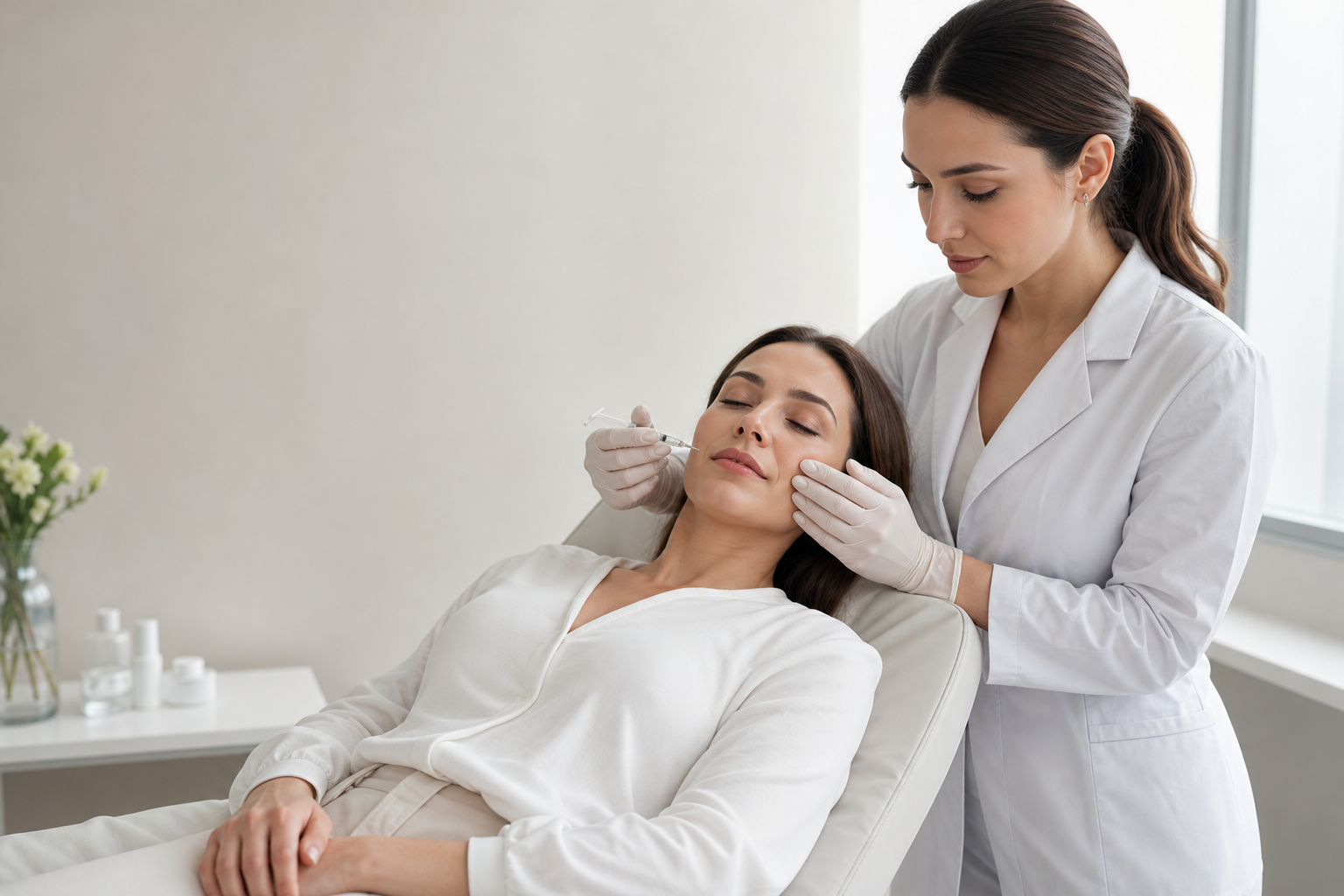
In the realm of aesthetic medicine, the terms Botox and dermal fillers are frequently mentioned together, often leading to confusion about their similarities and differences. While both treatments are minimally invasive procedures designed to rejuvenate the face and combat signs of aging, their mechanisms, applications, and effects diverge significantly. Understanding these distinctions is crucial for anyone considering cosmetic enhancement to make informed decisions that align with their goals, expectations, and safety.
This comprehensive editorial delves into the nuanced relationship between Botox and dermal fillers, clarifying what each treatment entails, whom they best suit, and why this knowledge matters in the pursuit of safe and effective aesthetic outcomes. Whether you are new to anti-aging therapies, have encountered conflicting information, or seek to refine your approach after previous unsatisfactory experiences, this article offers a detailed, practical guide. It covers the biological activities that underpin Botox and filler actions, realistic outcome expectations, limitations, safety considerations, and the paramount importance of expert consultation.
Botox and dermal fillers occupy pivotal yet distinct roles within cosmetic procedures, shaping how the skin ages and how it can be artistically restored. The ability to differentiate these tools empowers patients and practitioners alike to personalize treatment plans that enhance natural beauty, maintain facial harmony, and foster long-term satisfaction.
Fundamental Differences Between Botox and Dermal Fillers
At the core, Botox and dermal fillers serve complementary but non-interchangeable purposes. Botox, a purified form of botulinum toxin, functions primarily by inhibiting muscle activity. When carefully injected in minute quantities into targeted muscles, it blocks nerve signals responsible for muscle contractions. This temporary paralysis reduces the repetitive movements that cause dynamic wrinkles—lines that appear during expressions such as frowning, squinting, and smiling.
Dynamic wrinkles are most commonly found on the upper face: between the eyebrows (glabellar lines), horizontally across the forehead, and around the eyes (crow’s feet). Botox’s role here is preventive and corrective, softening the appearance of these lines by relaxing the underlying muscles without fundamentally altering the skin’s volume or texture.
Dermal fillers, conversely, are injectable substances designed to restore volume and structure lost due to aging or environmental factors. The most prevalent fillers are composed of hyaluronic acid, a naturally occurring molecule in the body renowned for its ability to bind water and provide skin with hydration and plumpness. When injected beneath the skin, fillers physically fill in static wrinkles—those visible even when the face is at rest—as well as enhance facial contours and correct volume deficiencies.
Areas commonly treated with fillers include nasolabial folds (the lines running from the nose to the mouth corners), marionette lines, cheeks, lips, and jawline. Unlike Botox, fillers do not affect muscle movement; their benefit lies in replenishing lost fullness to smooth folds and sculpt facial features.
Recognizing that Botox targets muscle behavior while fillers address volume loss is essential. Their applications are tailored accordingly, and the choice between them—or an intelligent combination—depends on the nature of wrinkles, the patient’s facial anatomy, and desired outcomes.
The Mechanism of Botox and Understanding Treatment Outcomes
Botox leverages the properties of botulinum toxin type A, a neurotoxin that, in controlled medical doses, inhibits the release of acetylcholine at the neuromuscular junction. This interruption in neurotransmission prevents the targeted muscle from contracting, thus smoothing the overlying skin and reducing wrinkle visibility.
After injection, the smoothing effect usually manifests within 3 to 5 days, reaching its peak around two weeks later. The benefits generally last between 3 and 6 months, though duration can vary based on factors like treatment area, dosage, and individual metabolism. After the effect diminishes, muscle activity gradually returns, and wrinkles may reappear, necessitating retreatment to maintain the desired look.
Botox’s success is often measured by its ability to soften expression lines without creating an unnatural or “frozen” appearance—a common myth. When administered by a competent injector with an in-depth understanding of facial anatomy, Botox subtly relaxes muscles, preserving natural expressions and facial dynamics. Overuse or incorrect injection technique, however, can lead to adverse effects such as drooping eyelids or an overly smooth face lacking expressiveness.
Patients sometimes express concerns about developing dependency on Botox or achieving permanent wrinkle eradication. Medically, Botox does not cause addiction; however, individuals may become psychologically accustomed to the refreshed look, leading to ongoing treatments. Furthermore, Botox effects are temporary and do not eliminate wrinkles forever. It works by controlling the muscular causes of dynamic lines, not by reversing skin aging itself.
Ultimately, Botox is a tool for managing the progression of facial wrinkles and maintaining a youthful appearance through regular interventions aligned with realistic expectations.
The Role of Dermal Fillers in Facial Contouring and Rejuvenation
Fillers offer a versatile option for rebuilding facial volume lost through aging, weight loss, or natural bone remodeling. With age, skin loses elasticity, underlying fat pads diminish, and bony structures resorb subtly, culminating in sagging, hollowing, and deepened wrinkles. Dermal fillers restore turgor and definition by physically occupying space beneath the skin.
The immediate volumizing effect after filler injections can lift sagging cheeks, smooth deep nasolabial folds, contour the jawline, and enhance the lips subtly or dramatically, depending on preference. This instant transformation often makes fillers appealing for individuals seeking a swift rejuvenation without surgery.
Effects from hyaluronic acid fillers commonly last between 6 and 18 months, after which the material is gradually absorbed and metabolized by the body. Maintenance treatments sustain results and can be tailored to evolving aesthetic goals.
While fillers are adept at addressing static wrinkles and volume loss, they do not prevent the formation of new dynamic lines caused by muscle movement. Thus, they complement Botox rather than replace it—many treatment plans incorporate both modalities to achieve harmonious and comprehensive facelift benefits without incisions.
Common Myths and Realistic Expectations Surrounding Botox and Fillers
Misinformation about Botox and dermal fillers can lead to unrealistic expectations or hesitation toward treatment. One widespread misconception is that Botox invariably results in a toy-like, expressionless face; in reality, careful dosing allows patients to retain natural and nuanced facial expressions.
Another myth suggests that fillers can stop skin aging permanently—while fillers improve volume and smoothness temporarily, ongoing skin care, sun protection, and lifestyle choices remain vital components of sustained skin health.
Some believe that these treatments have immediate, flawless outcomes, yet subtle swelling or mild bruising may temporarily obscure final results. Understanding the typical treatment course helps patients prepare mentally and physically for their aesthetic journey.
Equally important is recognizing that the outcomes depend on an individual’s anatomy, skin quality, and the practitioner’s skill rather than the product alone. Hence, selecting experienced clinicians and discussing personalized goals openly is indispensable for satisfaction.
Safety Considerations and the Imperative of Professional Consultation
Safety is paramount in aesthetic medicine, especially regarding injectable treatments. Both Botox and dermal fillers are FDA-approved and generally regarded as safe when administered by qualified professionals. Yet, no medical procedure is without risk.
Potential side effects include localized swelling, redness, bruising, and, in rare cases, asymmetry or unintended spread of toxin or filler material causing functional or aesthetic disturbances. Such complications are minimized when the injector possesses thorough anatomical knowledge, uses sterile techniques, and sources reliable products.
Before proceeding with treatment, a detailed consultation with a board-certified dermatologist or plastic surgeon is essential. This visit should include a comprehensive health assessment, discussion of expectations, contraindications (such as pregnancy or certain neuromuscular conditions), and a customized treatment plan.
Open communication and realistic goal-setting help align patient and provider perspectives, enhancing safety and the likelihood of pleasing results. Follow-up care and adjustments as needed further contribute to a positive experience.
Integrating Botox and Fillers for Optimal Facial Rejuvenation
While Botox and fillers function differently, their combined use often yields the most natural and balanced facial rejuvenation. Botox effectively smooths dynamic wrinkles caused by muscle motion, whereas fillers restore volume and address static wrinkles and contour deficiencies.
Treatment strategies leveraging both allow practitioners to treat multiple layers and causes of facial aging simultaneously, tailoring interventions per region. For instance, a patient may receive Botox in the forehead and around the eyes to soften expression lines, complemented by fillers in the cheeks and lips to enhance youthful fullness.
This integrative approach aims to preserve and enhance natural facial expression and character while mitigating wrinkles and sagging. It also supports a gradual, subtle transformation that reduces the risk of artificial or exaggerated outcomes.
Choosing combined treatments reinforces the significance of professional expertise, as injection techniques must be meticulously sequenced and adjusted for each individual’s anatomy and goals.
Understanding When and Why Botox and Fillers Are Appropriate Choices
Prospective patients should recognize that not all wrinkles or facial concerns are ideally addressed by Botox or fillers alone—or at all. Early dynamic lines are prime candidates for Botox, while volume loss and deep static creases call for fillers. Some skin conditions or very advanced aging signs might require alternative or adjunctive treatments like laser therapy, chemical peels, or surgical facelift.
Additionally, patient factors such as age, skin type, medical history, and personal aesthetic preferences play pivotal roles in treatment selection. Individuals seeking subtle preventive interventions may focus on Botox, while those desiring structural enhancement might prioritize fillers.
The best outcomes emerge from individualized treatment planning grounded in thorough patient evaluation and education. Embracing a long-term vision that combines treatments with skin maintenance routines maximizes results and patient contentment.


